
Quick project answer
Facility teams often inherit movable partition systems after the room layout has already been fixed. Staff training partition stacking sequence gives those teams a shared way to review how panels are stored, how the floor is treated and how finishes are cared for. This article explains the planning points that belong in that training, using the confirmed EBUNGE top-hung system as the reference.
Why the Top-Hung Principle Changes Staff Planning
The EBUNGE movable partition system is top-hung. That single fact changes what staff should look for during planning and handover. The system has no continuous floor running track or operating hardware in the finished floor along the partition line.
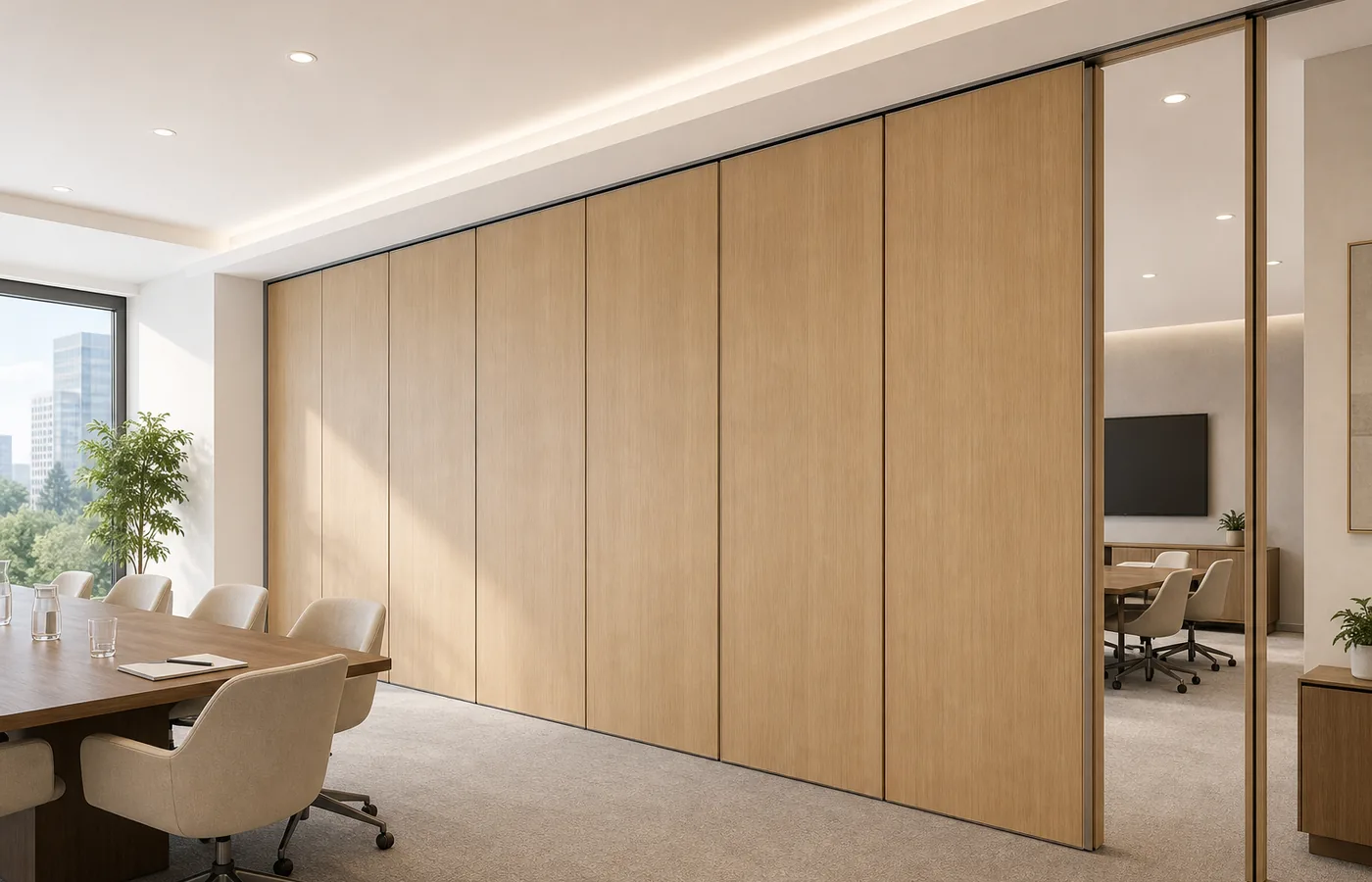
Because the floor is not cut or damaged for a floor track, the finished floor remains physically uninterrupted by the maintained EBUNGE top-hung system. Staff training partition stacking sequence should begin with this principle so teams understand which parts of the room are fixed and which parts are not.
The exact route, junction arrangement, continuous overhead path and parking position must be confirmed from the coordinated project drawings.
What Staff Training Partition Stacking Sequence Should Cover
A useful training outline connects the top-hung principle to daily facility planning. It should not present a generic operating procedure, because the confirmed facts do not support one. Instead, it should help staff read the drawings and understand the approved layout.
Staff training partition stacking sequence can include the following planning topics, each tied to the coordinated project drawings rather than to a universal sequence.
- How the top-hung system relates to the finished floor along the partition line.
- Where the approved parking arrangement is shown on the coordinated drawings.
- How the parking area is intended to coordinate with the surrounding space design.
- Which finish materials were selected and what care methods apply to them.
- Which application areas the movable partitions serve in the facility.
Each topic should be reviewed against the project drawings. Staff training partition stacking sequence is a planning habit, not a fixed script that applies to every project.
Parking Planning and the Stacking Area
Panel parking style can be customized to the customer layout and project requirements, subject to coordinated drawings. A suitable approved parking arrangement can use the stacking area more compactly and coordinate with the space design.
The exact track, support and panel layout still require project drawings. Staff training partition stacking sequence should therefore treat the parking area as a drawing-led decision, not as a default location chosen on site.
When the parking area is planned early, facility teams can review how it relates to adjacent rooms and circulation. The exact route, junction arrangement, continuous overhead path and parking position must be confirmed from the coordinated project drawings.
Finish and Care Coordination in Training
Finish materials can be customized, and cleaning and maintenance methods vary with the selected finish. That means staff training partition stacking sequence should include a finish review step before any care routine is written.
Different finishes call for different care methods. Training should direct staff to the selected finish and its specific care guidance rather than to a single method for all panels.
Finish review also belongs in the parking discussion. The stacking area and the selected finish should be considered together during planning so the care approach matches what was installed.
Non-Limiting Applications for Movable Partitions
Movable partitions can be used wherever flexible space division, combination or reconfiguration is required. Application examples are not limiting, so training should not treat one room type as the only valid use.
EBUNGE has completed many types of hotel-related movable-partition projects. Ballrooms, wedding halls and multifunction halls are non-limiting examples. No customer names, locations, quantities, ratings, certifications or outcomes may be inferred from that statement.
Staff training partition stacking sequence can use these examples to prompt discussion about how a facility might divide, combine or reconfigure its own spaces. The examples illustrate range, not a fixed product list.
Buyer Inputs and Drawing Approvals
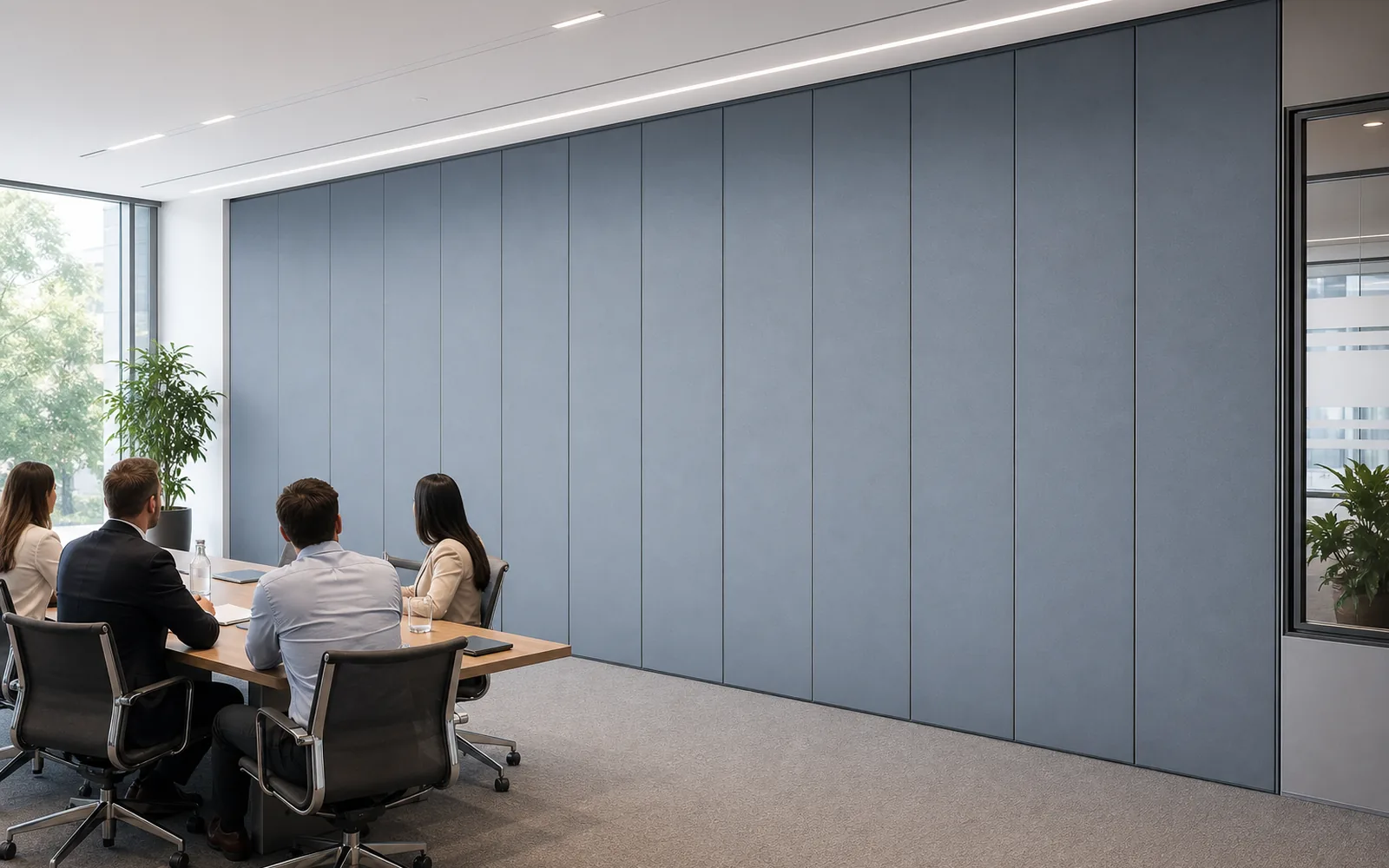
Buyers and facility teams provide the layout information that shapes the coordinated drawings. Panel parking style can be customized to the customer layout and project requirements, subject to coordinated drawings.
Staff training partition stacking sequence should identify who reviews those drawings and who confirms the approved parking arrangement. The exact track, support and panel layout still require project drawings.
The exact route, junction arrangement, continuous overhead path and parking position must be confirmed from the coordinated project drawings.
Training records can note which drawing revision was reviewed. That practice keeps facility planning aligned with the approved layout as the project develops.
How to Structure the Training Session
A practical session can move from principle to drawing review to finish care. The order below keeps the discussion grounded in confirmed information.
- Introduce the top-hung principle and the physically uninterrupted floor.
- Review the coordinated drawings for the approved parking arrangement.
- Confirm the selected finish and its specific care methods.
- Discuss the facility’s own space division, combination or reconfiguration needs.
- Record which drawing revision was used in the session.
This structure supports staff training partition stacking sequence without presenting a universal operating sequence. It also keeps the focus on planning inputs rather than on unconfirmed performance claims.
Common Planning Questions
What is staff training partition stacking sequence?
It is a planning approach that helps facility teams review how top-hung movable partitions are stored, how the floor is treated and how finishes are cared for, using the coordinated project drawings.
Does the EBUNGE system need a floor track?
No. The EBUNGE movable partition system is top-hung and has no continuous floor running track or operating hardware in the finished floor along the partition line.
Can the parking style be customized?
Yes. Panel parking style can be customized to the customer layout and project requirements, subject to coordinated drawings.
Do cleaning methods change with the finish?
Yes. Finish materials can be customized, and cleaning and maintenance methods vary with the selected finish.
Where can movable partitions be used?
Movable partitions can be used wherever flexible space division, combination or reconfiguration is required. Application examples are not limiting.

What must be confirmed from project drawings?
The exact route, junction arrangement, continuous overhead path and parking position must be confirmed from the coordinated project drawings.
Reviewing the Top-Hung System and Project Pages
Facility teams can review the operable wall system page for the top-hung principle before training begins. Project references are also available on the projects page.
The suitability of each route and parking arrangement depends on the approved layout, circulation, ceiling interfaces and operating sequence. That shared review keeps facility planning consistent as spaces are divided, combined or reconfigured.
The exact route, junction arrangement, continuous overhead path and parking position must be confirmed from the coordinated project drawings.
Continue Exploring
More Operable Wall System Guides
- Newer guideUniversity Auditorium Partition Stacking: Ceiling Light Grids Clearance
- Earlier guideCompare Healthcare Training Room Partition Stacking for Lab vs Lecture
- Related guideEvacuation Chair Routes Where Operable Walls Cross Accessible Paths
- Related guidePhase Operable Wall Work When a Renovation Adds a New Wing