
Why Training Centers Need a Different Acoustic Movable Partition Approach
Quick project answer
Training centers host a mix of instruction, group work, and quiet study. The exact overhead route and support arrangement must be confirmed by the responsible project team from coordinated drawings. The partition itself must fit the room and the way the space is used.
Unlike a hotel ballroom, a training center may reconfigure several times a day. Panel handling and the operating sequence must be confirmed for the selected layout and project conditions. This article explains why seals and sealing details need different attention in training settings.
The Top-Hung Principle and the Physically Uninterrupted Floor
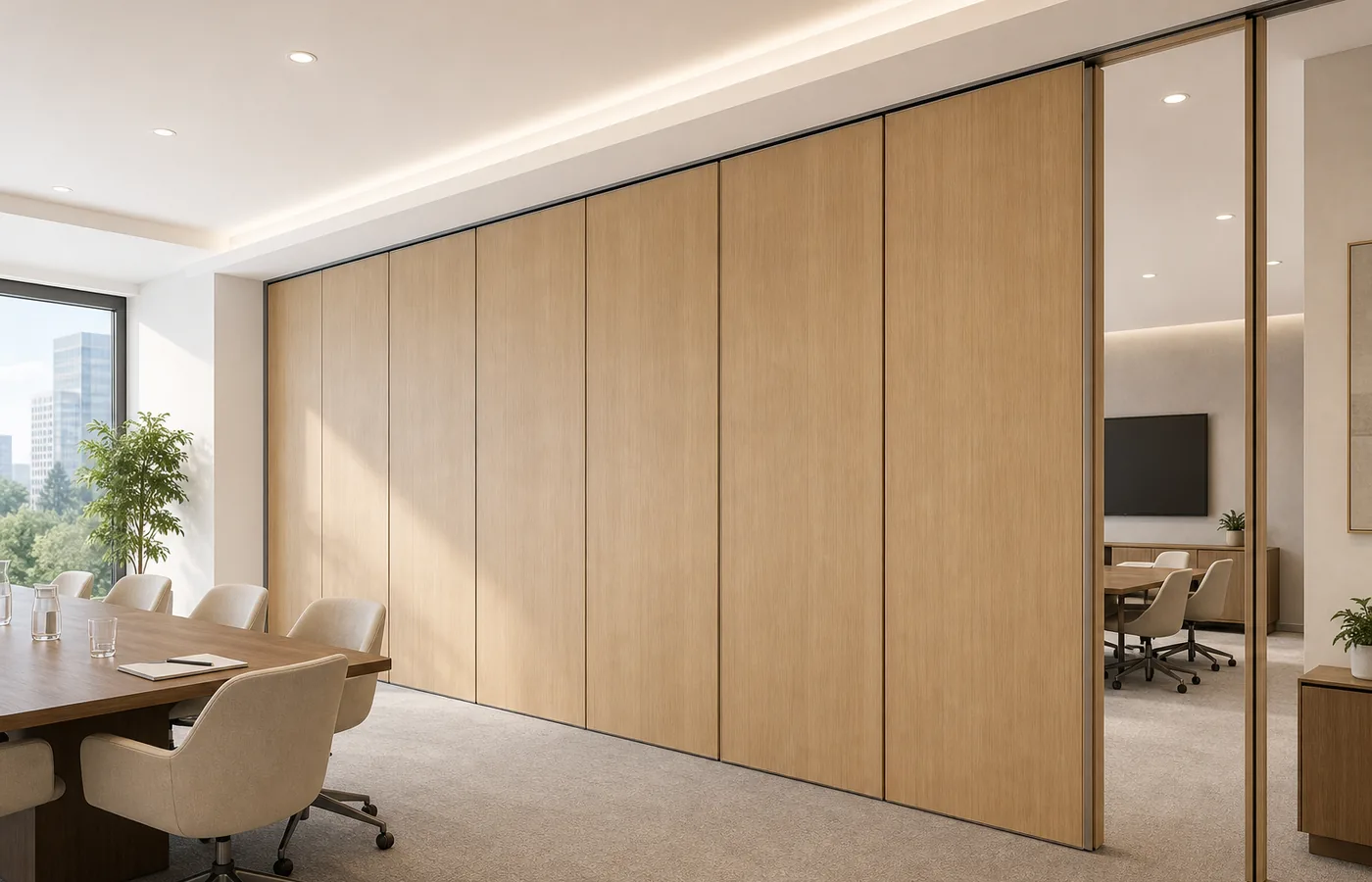
The EBUNGE movable partition system is top-hung. It has no continuous floor running track or operating hardware in the finished floor along the partition line. The floor is not cut or damaged for a floor track. It remains physically uninterrupted by the maintained EBUNGE top-hung system.
This matters for training centers because the floor often carries tables, chairs, and equipment. A floor track would interrupt that surface and collect debris. The partition line can be crossed without a track underfoot.
The exact route, junction arrangement, continuous overhead path and parking position must be confirmed from the coordinated project drawings. This boundary applies to every project.
Why Acoustic Seals Differ in Training Center Layouts
Seals are the contact points between panels and between the partition and the surrounding structure. Each junction can require a different sealing approach.
The seal detail at the top, sides, and between panels must be coordinated with those conditions. The exact route, junction arrangement, continuous overhead path and parking position must be confirmed from the coordinated project drawings.
Training centers also use spaces in different ways. A room may be one large hall in the morning and three small classrooms in the afternoon. That is why seals are not a single universal detail.
Parking Planning for Acoustic Movable Partition Panels
Panel parking style can be customized to the customer layout and project requirements, subject to coordinated drawings. A suitable approved parking arrangement can use the stacking area more compactly and coordinate with the space design. The exact track, support and panel layout still require project drawings.
In a training center, parking space competes with storage, circulation, and teaching areas. That parking zone should be planned early with the room layout.
The following inputs help the project team plan parking:
- Room dimensions and the intended open and closed configurations.
- Location of doors, windows, and fixed equipment.
- Available wall or alcove space for stacking panels.
- Ceiling height and overhead structure above the partition line.
- Finish preferences for the partition and surrounding surfaces.
These inputs are not a substitute for coordinated drawings.
Finish and Care Coordination for Training Environments
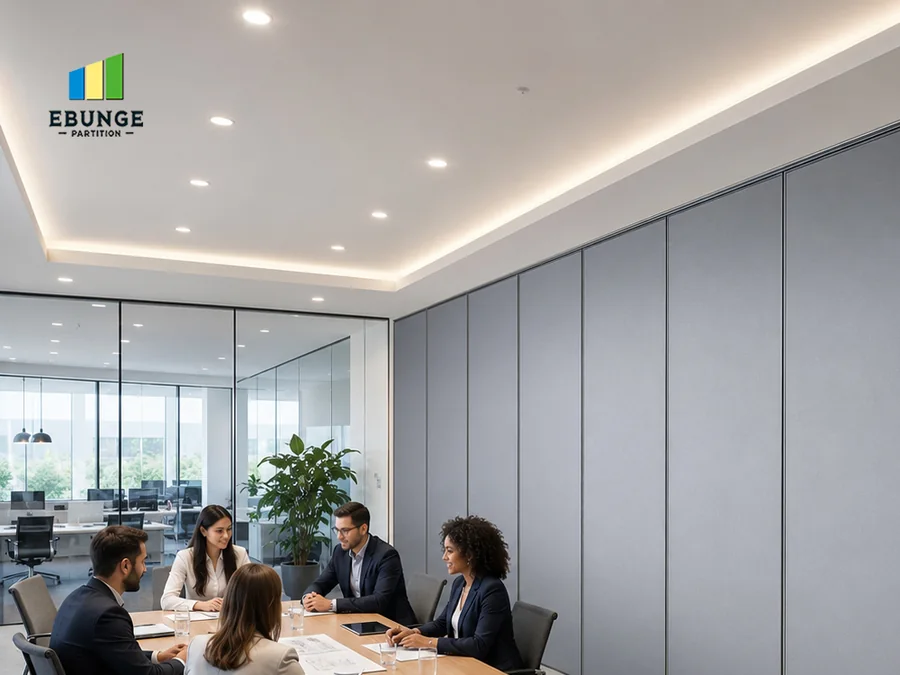
Finish materials can be customized, and cleaning and maintenance methods vary with the selected finish. Training centers may prefer surfaces that suit daily use, but the care method depends on the chosen finish. The project team should confirm the finish and the corresponding care approach.
The finish choice should reflect the room’s activity. Because care methods vary, the facility team should receive guidance for the selected finish. This is a coordination item, not a universal rule.
The exact route, junction arrangement, continuous overhead path and parking position must be confirmed from the coordinated project drawings. Finish coordination should happen alongside that drawing review.
Non-Limiting Applications for Acoustic Movable Partition Systems
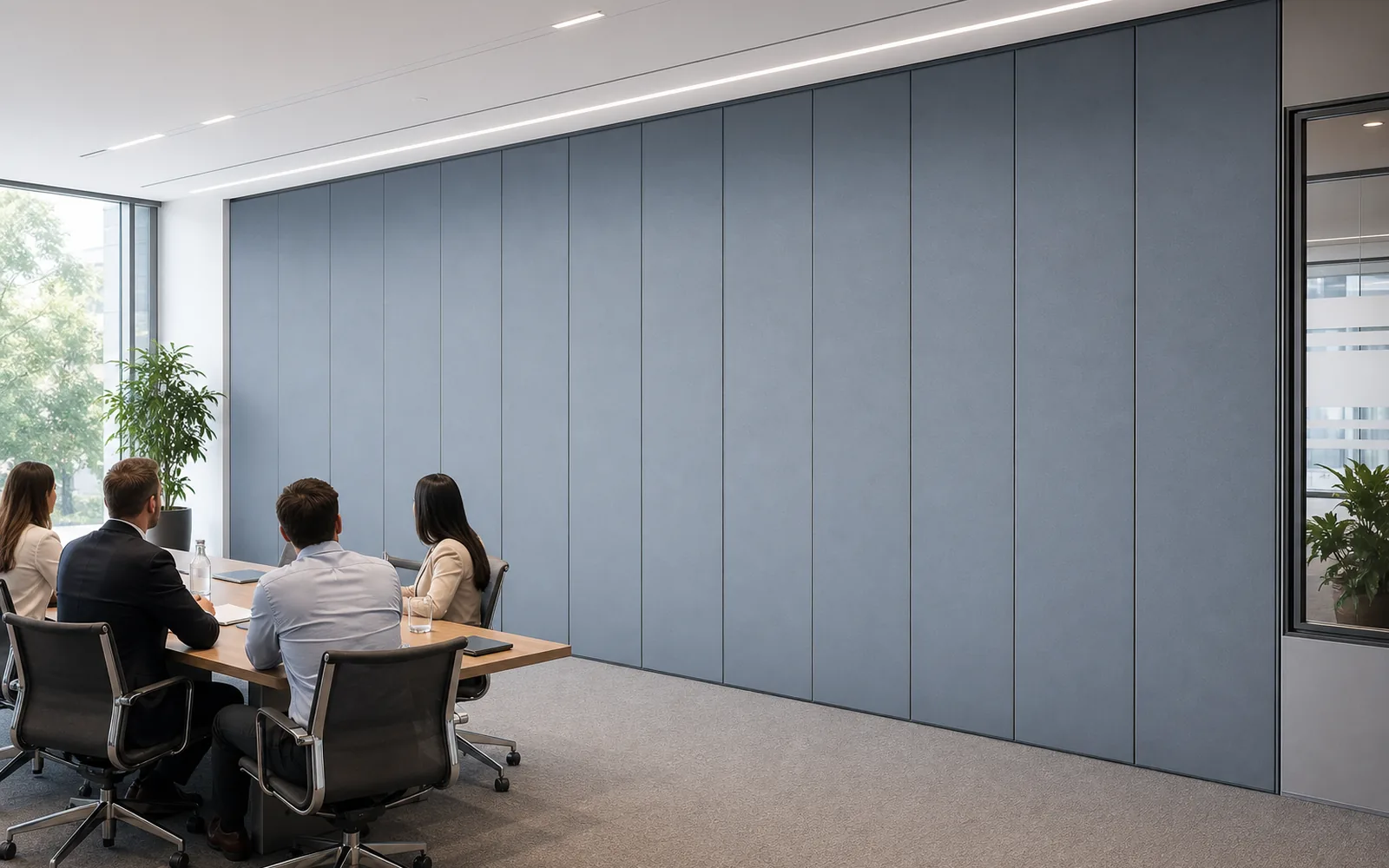
Movable partitions can be used wherever flexible space division, combination or reconfiguration is required. Application examples are not limiting. Training centers are one example among many.
EBUNGE has completed many types of hotel-related movable-partition projects. Ballrooms, wedding halls and multifunction halls are non-limiting examples. No customer names, locations, quantities, ratings, certifications or outcomes may be inferred.
The same top-hung principle can support training rooms, seminar spaces, and multipurpose areas. The specific configuration still depends on the project drawings.
Buyer Inputs and Drawing Approvals
Buyers should gather room plans, intended uses, and finish preferences before requesting a quote. They also support the parking and sealing discussion.
The exact route, junction arrangement, continuous overhead path and parking position must be confirmed from the coordinated project drawings. Approval of those drawings is a key step before production. Buyers should review the drawings against the room’s actual conditions.
These resources show how the top-hung approach is applied in different settings.
Frequently Asked Questions
For further context, review related project guidance and additional planning resources before preparing the coordinated project brief.
What makes acoustic movable partition seals different in a training center?
Training centers often have varied wall types, ceiling heights, and floor finishes. The exact route, junction arrangement, continuous overhead path and parking position must be confirmed from the coordinated project drawings.
Does a top-hung acoustic movable partition need a floor track?
No. The EBUNGE movable partition system is top-hung and has no continuous floor running track or operating hardware in the finished floor along the partition line. The floor remains physically uninterrupted by the maintained EBUNGE top-hung system.
How is parking planned for acoustic movable partition panels?
Panel parking style can be customized to the customer layout and project requirements, subject to coordinated drawings. A suitable approved parking arrangement can use the stacking area more compactly and coordinate with the space design. The exact track, support and panel layout still require project drawings.
Can finishes be customized for a training center acoustic movable partition?
Finish materials can be customized, and cleaning and maintenance methods vary with the selected finish. The project team should confirm the finish and the corresponding care approach during drawing review.
Are training centers the only application for acoustic movable partition systems?
No. Movable partitions can be used wherever flexible space division, combination or reconfiguration is required. Application examples are not limiting. Training centers are one example among many.
What should buyers prepare before requesting an acoustic movable partition quote?
Buyers should prepare room plans, intended uses, and finish preferences. These inputs support the parking and sealing discussion. The exact route, junction arrangement, continuous overhead path and parking position must be confirmed from the coordinated project drawings.
Continue Exploring
More Acoustic Partition Guides
- Newer guideWhat Acoustic Seal Layout Questions to Ask for University Seminar Room
- Earlier guideWhat Architectural Drawings Specify Movable Partition Seals
- Related guideAcoustic Partition Ceiling Interface Zone Confirmation
- Related guideWho Confirms Ceiling Grid Line Before Acoustic Partition Track