
Why Finish Choice Matters in Auditorium Partition Planning
Quick project answer
Finish selection sits at the meeting point of daily room use, cleaning routines and the visual character of a hall. For university auditorium partition finishes mobile lectern arrangements depend on, the finish is the surface people see and touch most often.
This article compares finish considerations without ranking materials or promising outcomes. It explains how finish decisions interact with a top-hung system, an uninterrupted floor and a planned parking area.
Readers who need product background can review the movable partition wall overview before comparing finishes.
The Top-Hung Principle Behind Finish Comparisons
The EBUNGE movable partition system is top-hung. It has no continuous floor running track and no operating hardware in the finished floor along the partition line.
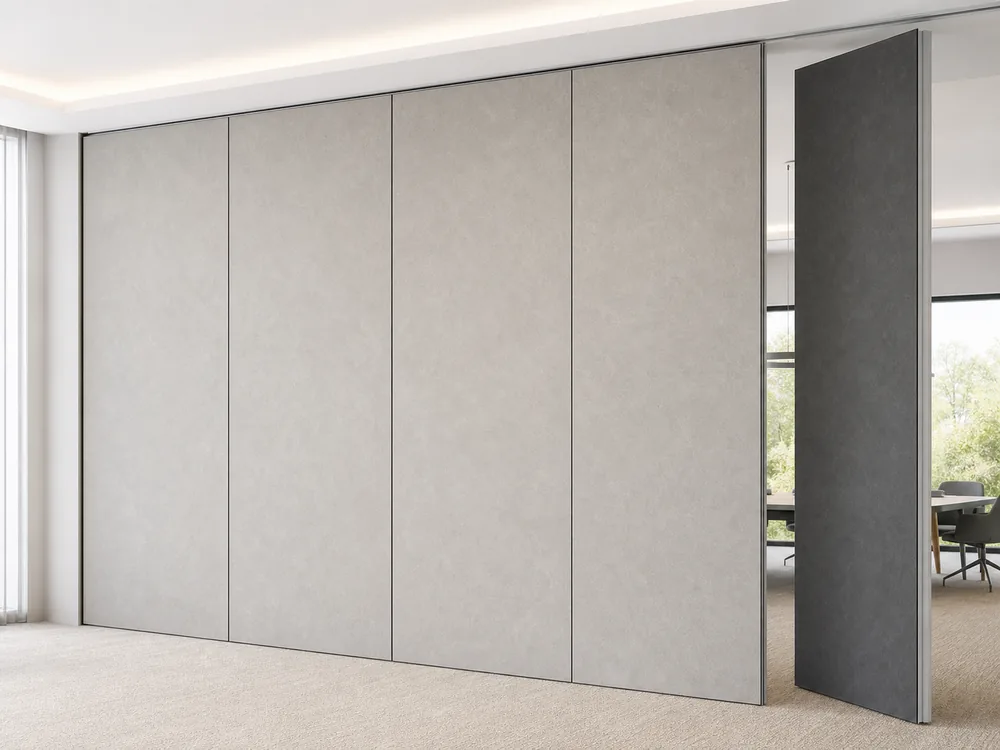
Because the operating path sits above, the finish conversation focuses on the panel face and the surrounding room surfaces rather than on floor hardware. That distinction shapes how university auditorium partition finishes mobile lectern zones are reviewed.
The exact route, junction arrangement, continuous overhead path and parking position must be confirmed from the coordinated project drawings.
Finish materials can be customized, and cleaning and maintenance methods vary with the selected finish. Those two confirmed points frame every comparison in this article.
What a Physically Uninterrupted Floor Means for Finishes
The floor is not cut or damaged for a floor track and remains physically uninterrupted by the maintained EBUNGE top-hung system. That fact changes how finish samples are assessed.
With no floor track along the partition line, the floor finish can be read as one continuous surface across the hall. Designers comparing university auditorium partition finishes mobile lectern positions often start from that continuity.
An uninterrupted floor also means the finish comparison stays focused on panel surfaces, adjacent wall treatments and the parking zone rather than on floor inserts or cover plates.
Any statement beyond these confirmed points belongs to the drawing review. The exact route, junction arrangement, continuous overhead path and parking position must be confirmed from the coordinated project drawings.
Parking Area Planning and Finish Coordination
Panel parking style can be customized to the customer layout and project requirements, subject to coordinated drawings. Parking therefore becomes part of the finish conversation, not a separate topic.
A suitable approved parking arrangement can use the stacking area more compactly and coordinate with the space design. The exact track, support and panel layout still require project drawings.
When teams compare university auditorium partition finishes mobile lectern setups, they should check how the parked panels relate to sightlines, wall finishes and the lectern position.
The exact route, junction arrangement, continuous overhead path and parking position must be confirmed from the coordinated project drawings.
Finish and Care Coordination
Finish materials can be customized, and cleaning and maintenance methods vary with the selected finish. That single sentence carries most of the practical weight in this comparison.
A finish that suits a formal lecture may call for different care than a finish chosen for a busy multifunction hall. The suitability of each route and parking arrangement depends on the approved layout, circulation, ceiling interfaces and operating sequence.
Teams should ask suppliers to state the care method for the specific finish under consideration. Generic cleaning advice is not a substitute for finish-specific guidance.
Because university auditorium partition finishes mobile lectern areas are handled daily, the care routine should be agreed before the finish is fixed.
Comparing Finish Options at a Glance
The table below sets out comparison prompts rather than recommendations. It is a checklist for discussion during finish selection.
| Comparison point | Question to raise | Confirmed basis |
|---|---|---|
| Customization | Which finish options fit the room concept? | Finish materials can be customized |
| Care routine | What cleaning method suits this finish? | Care methods vary with the selected finish |
| Floor interface | Does the floor stay uninterrupted? | No floor track along the partition line |
| Parking | How does the stacking area relate to finishes? | Parking style is customizable, subject to drawings |
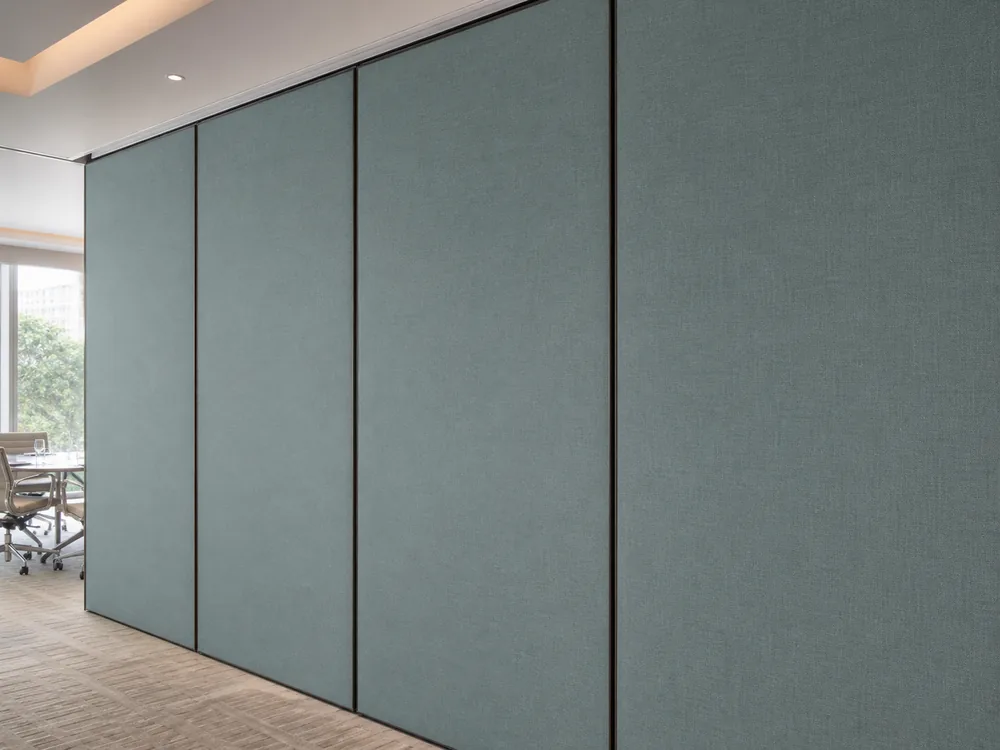
Each row points back to a confirmed fact. Anything beyond those facts should be resolved through the coordinated drawings.
Non-Limiting Applications to Keep in View
Movable partitions can be used wherever flexible space division, combination or reconfiguration is required. Application examples are not limiting.
EBUNGE has completed many types of hotel-related movable-partition projects. Ballrooms, wedding halls and multifunction halls are non-limiting examples.
Those examples show the range of settings where finish and care questions arise. They do not imply that any specific finish suits every room.
For university auditorium partition finishes mobile lectern planning, the same logic applies: the setting informs the finish discussion, and the drawings confirm the arrangement.
Project references are available through the projects page for readers who want to see completed work.
Buyer Inputs That Shape the Finish Decision
Useful inputs include the room’s daily pattern, the care resources available and the visual direction of the hall. These inputs narrow the finish shortlist before drawings are issued.
Buyers should also confirm how the parking area will be treated, since parked panels remain visible in many layouts. Parking style can be customized to the customer layout and project requirements, subject to coordinated drawings.
A short list of inputs helps the project team compare university auditorium partition finishes mobile lectern arrangements on equal terms.
- Daily use pattern of the hall and adjacent rooms
- Care method associated with each candidate finish
- Visual relationship between panel faces and surrounding walls
- Treatment of the parking or stacking area
- Coordination points that require drawing confirmation
This list is a starting point for discussion, not a specification. The exact route, junction arrangement, continuous overhead path and parking position must be confirmed from the coordinated project drawings.
Drawing Approvals and Finish Sign-Off
Finish selection and drawing approval move together. The finish cannot be finalized in isolation from the parking layout and the overhead path.
Teams should expect the coordinated drawings to resolve the route, the parking position and the panel layout before finishes are locked. The exact track, support and panel layout still require project drawings.
Once those points are agreed, the finish and its care method can be recorded for the project.
Finish materials can be customized, and cleaning and maintenance methods vary with the selected finish. Confirm both against the coordinated project drawings.
Frequently Asked Questions
Does the partition need a floor track for these finish options?
No. The EBUNGE movable partition system is top-hung and has no continuous floor running track or operating hardware in the finished floor along the partition line.
Will the floor be cut or damaged during installation?
The floor is not cut or damaged for a floor track and remains physically uninterrupted by the maintained EBUNGE top-hung system.
Can the finish be customized for a university auditorium?
Finish materials can be customized. The selected finish should be confirmed alongside the coordinated project drawings.
Do all finishes share the same cleaning method?
No. Cleaning and maintenance methods vary with the selected finish, so the care routine should be agreed for the specific finish chosen.
How is the parking area decided?
Panel parking style can be customized to the customer layout and project requirements, subject to coordinated drawings. A suitable approved parking arrangement can use the stacking area more compactly and coordinate with the space design.
Where can movable partitions be used?
Movable partitions can be used wherever flexible space division, combination or reconfiguration is required. Application examples are not limiting.
Continue Exploring
More Materials and Finishes Guides
- Newer guideImpact Mapping for University Auditorium Partition Finishes
- Earlier guideAirport Public vs Staff-Only Zones Movable Partition Finish Planning
- Related guideWho Verifies Partition Handover Records When Trades Finish at Different
- Related guideMovable Partition Finish Sample Coordination Guide for Interior