
When planning a university training room that combines an operable wall with wall-mounted simulator interfaces, the university training room operable wall seals simulators must be considered together from the earliest layout stages. The presence of simulators—whether for healthcare, engineering, or flight training—introduces wall-mounted panels, screens, and control boxes that can interrupt the continuous sealing line of a movable partition. Without early coordination, even a high-performance operable wall may fail to deliver the acoustic separation the room requires. This article explains why the interaction between seals and simulator interfaces demands careful review, and how EBUNGE’s approach to movable partitions supports such complex environments.

The Role of Operable Walls in University Training Rooms
University training rooms often serve dual purposes: a large lecture hall that can be divided into smaller simulation labs or seminar spaces. Operable walls—also known as movable partitions—offer the flexibility to reconfigure space quickly. Unlike fixed walls, these partitions are suspended from a top track and can be moved individually to cross an opening without a floor track, parking neatly at a planned stacking position when not in use. This design allows for smooth transitions between open and divided configurations.
In training rooms, the acoustic performance of the operable wall is critical. Instructors may be running a simulation on one side while another group is studying on the other. The wall must minimize sound transmission to maintain concentration and confidentiality. However, the wall’s performance is only as good as its seals—the components that close the gaps between panels and around the perimeter. If a simulator interface protrudes through the wall plane, it creates a potential sound leak.
Understanding Seals and Acoustic Performance
Seals are the flexible elements that compress against adjacent panels, floors, ceilings, and walls to block sound paths. They are essential for achieving a high Sound Transmission Class (STC) or Weighted Sound Reduction Index (Rw). STC and Rw are rating systems that indicate how well a partition reduces airborne sound, but they are not a direct measure of decibels—they are a standardized curve. A higher rating generally means better sound insulation, but the actual performance depends on installation quality and flanking paths.
Share the track plan, ceiling plan and fixed-service locations.
In an operable wall, seals must be continuous. Any interruption—such as a gap around a wall-mounted simulator interface—creates a flanking path that reduces the overall acoustic effectiveness. Therefore, the design must ensure that the wall’s seals can close tightly even when obstructions are present.
The Unique Challenge of Wall-Mounted Simulator Interfaces
Simulators often require wall-mounted displays, control panels, or interactive screens. These are typically fixed to the structural wall, not to the operable wall itself. However, when the operable wall is in its closed position, it may need to seal against or around these interfaces. The challenge is that the simulator interface creates a physical protrusion that can prevent the wall’s edge seal from making full contact.
There are several scenarios:
- The operable wall may be designed to enclose the simulator, meaning the wall’s edge must seal against the wall surface where the interface is mounted.
- The wall may pass in front of the simulator, requiring a cutout or a recess in the wall panel to accommodate the interface.
- The simulator may be mounted on the operable wall itself, which is rare but possible with lightweight, non-structural fixtures.
Each scenario requires a different coordination approach. For example, if the wall seals against a wall with a protruding control box, the seal may need to be adjusted or a custom block-out may be required. If the wall panel must have a cutout, the panel’s structural integrity and acoustic performance must be maintained.
Why Early Coordination is Essential
Early coordination between the operable wall supplier and the simulator vendor is crucial. The operable wall’s layout and stacking routes must be reviewed to ensure that the wall can move freely without conflicting with the simulator interfaces. Straight, turning, and stacking routes all need to be considered. If a simulator interface is placed in a location where the wall must turn, it may obstruct the wall’s path.
Additionally, the acoustic sealing strategy must be planned. For example, if a simulator is mounted on the wall, the operable wall may need to incorporate a pass-door or a special seal detail around the interface. Pass-door requirements can be discussed with EBUNGE to ensure that access to the simulator is possible even when the wall is closed.
Sealing Strategies for Simulator Interfaces
Several strategies can be employed to maintain acoustic separation when simulator interfaces are present:
Recessed Mounting
One approach is to recess the simulator interface into the structural wall so that its face is flush with the wall surface. This allows the operable wall’s edge seal to close against a flat surface, ensuring a continuous seal. This is often the simplest solution but may require additional construction work to create the recess.
Custom Seal Adaptations
If recessing is not possible, custom seal adaptations can be designed. For example, the seal at the wall edge can be shaped to conform around the interface, or an additional sealing strip can be added to bridge the gap. These adaptations must be carefully engineered to maintain acoustic performance.

Pass-Doors and Access Panels
If the simulator needs to be accessed frequently, a pass-door can be integrated into the operable wall. Pass-doors are small doors within the partition that allow entry without moving the entire wall. They can be equipped with seals to maintain acoustic performance. The location and size of the pass-door must be coordinated with the simulator’s position.
Check the route, supports and clearances on coordinated drawings.
Coordination with Wall-Mounted Equipment
In some cases, the simulator interface may be mounted on a separate structure that is independent of the operable wall. This can be a freestanding frame or a ceiling-suspended unit. This approach avoids any conflict with the wall’s sealing line but may require additional floor space.
Acoustic Considerations Beyond the Wall
It’s important to remember that the operable wall is only one part of the acoustic system. Flanking paths can occur through the ceiling plenum, HVAC ducts, and even the structural wall itself. The simulator interface may introduce additional flanking paths if it penetrates the wall. Therefore, a holistic acoustic design is necessary.
EBUNGE’s movable partitions are designed to work within a broader acoustic strategy. The seals are an integral part of the system, but their effectiveness depends on the surrounding construction. We recommend that project teams conduct a comprehensive acoustic review, including site measurements and mock-up testing, to ensure that the final installation meets the required performance.
Documentation and Project Coordination
Proper documentation is key to a successful project. EBUNGE can provide detailed drawings and specifications that show the interaction between the operable wall and simulator interfaces. We encourage project teams to share these documents with all stakeholders, including the simulator vendor, to ensure that everyone is aligned.
During the design phase, EBUNGE reviews the layout to confirm that straight, turning, and stacking routes are feasible. We also discuss pass-door requirements and any special sealing details. This collaborative approach helps avoid costly changes during construction.
Finish and Aesthetic Integration
In a university setting, aesthetics are as important as functionality. EBUNGE offers a range of finish options, including laminate, melamine, fabric, leather, glass, and other approved surfaces. These finishes can be coordinated with the simulator interfaces to create a cohesive look. For example, the operable wall can be finished with a laminate that matches the simulator’s enclosure, or a glass panel can be used to allow visibility into the simulation area.
The choice of finish does not affect the acoustic performance, but it does affect the visual integration. EBUNGE works with clients to select finishes that meet both design and functional requirements.
FAQ
Can an operable wall seal effectively if a simulator is mounted on the wall?
Yes, but it requires careful coordination. The simulator interface must be positioned so that it does not interrupt the wall’s sealing line. This may involve recessing the interface or using custom seal adaptations. EBUNGE can review the layout and recommend solutions.
What is the best way to integrate a wall-mounted simulator with an operable wall?
The best approach depends on the specific situation. Recessing the simulator into the wall is often the most straightforward, but if that’s not possible, a pass-door or custom seal can be used. Early coordination with EBUNGE is essential to determine the optimal solution.
Do simulator interfaces affect the acoustic performance of the operable wall?
Yes, if they create gaps or flanking paths. The seals are designed to be continuous, so any interruption can reduce performance. However, with proper planning and custom detailing, the impact can be minimized.
Can EBUNGE provide operable walls with pass-doors for simulator access?
Yes, pass-door requirements can be discussed with EBUNGE. Pass-doors can be integrated into the partition to allow access without compromising acoustic performance.
What documentation does EBUNGE provide for coordination with simulator vendors?
EBUNGE can provide detailed drawings and specifications that show the wall layout, sealing details, and interface points. These documents are intended for sharing with all project stakeholders.
Conclusion
The integration of operable walls and wall-mounted simulator interfaces in university training rooms is a complex task that requires early and thorough coordination. The seals are the most critical component for acoustic performance, and they must be designed to work around any obstructions. EBUNGE’s movable partitions offer flexibility and a range of finish options, but their success depends on a collaborative design process.
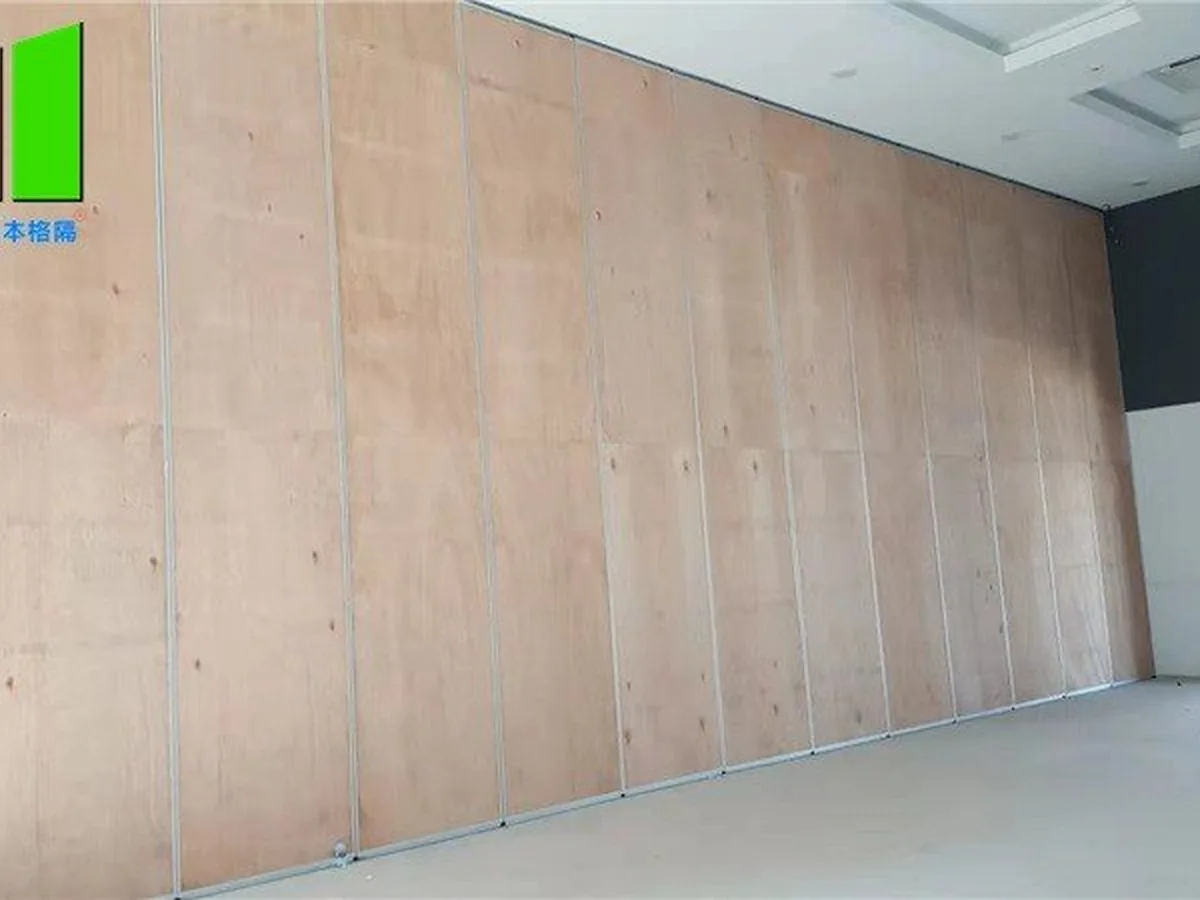
If you are planning a training room with simulators and an operable wall, contact EBUNGE to discuss your specific requirements. Our team can review your layout, advise on sealing strategies, and provide the documentation you need for a seamless installation. Explore our acoustic movable partition solutions and see how we can support your project. For more examples of our work, visit our projects page. Confirm your project-specific support, acoustic, and dimensional requirements with our specialists to ensure the best outcome.
Continue Exploring
More Acoustic Partition Guides
- Newer guideHow to Plan Hotel Banquet Partition Seals for Split-Banquet Acoustic Privacy
- Earlier guideWhy Airport Holdroom Partition Seals Need Coordination with Flight Information Displays
- Related guideHow to Coordinate Office Meeting Suite Partition Seals with Wall-Mounted Video Bar Swing Paths
- Related guideHow to Coordinate Hotel Banquet Partition Seals with Ceiling-Mounted Rigging Point Access Panels