
Top-Hung Principle for Acoustic Seal Layouts Sports Hall
Quick project answer
The EBUNGE movable partition system is top-hung and has no continuous floor running track or operating hardware in the finished floor along the partition line. The exact overhead route and support arrangement must be confirmed by the responsible project team from coordinated drawings. The floor is not cut or damaged for a floor track and remains physically uninterrupted by the maintained EBUNGE top-hung system.
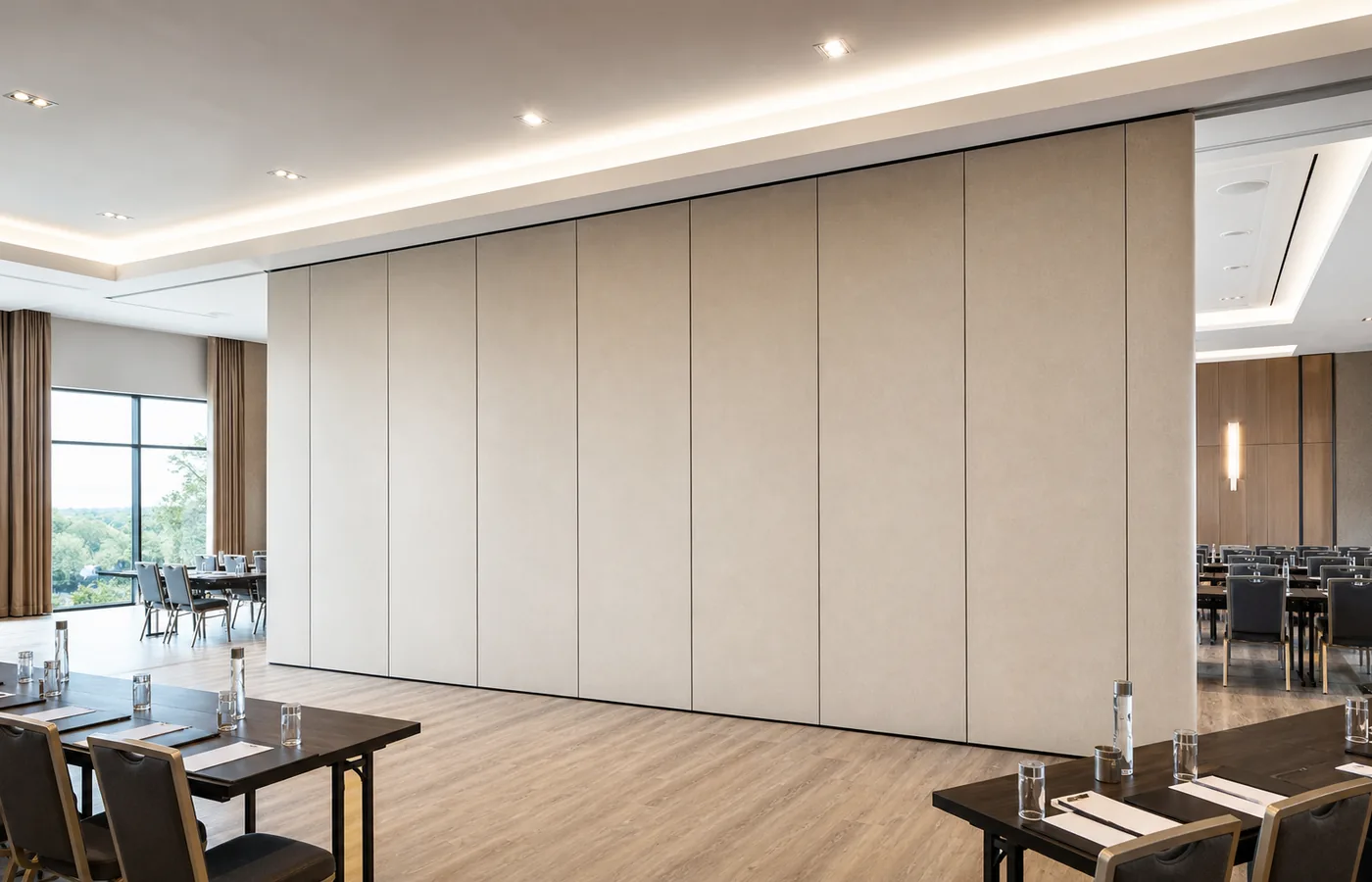
For sports halls, this means the playing surface stays continuous. For community halls, the same top-hung approach supports flexible room division without floor cuts.
Because the system is top-hung, the floor plane is not modified along the partition line. This is a key difference from systems that require floor tracks.
Physically Uninterrupted Floor in Sports and Community Halls
A physically uninterrupted floor is a direct result of the top-hung design. In sports halls, this supports continuous court surfaces. In community halls, it allows flexible use of the same floor area for different activities. The floor is not cut or damaged for a floor track and remains physically uninterrupted by the maintained EBUNGE top-hung system.
This uninterrupted floor condition applies wherever the top-hung system is used. It does not depend on the room type.
Planners should note that the floor remains free of operating hardware along the partition line. This is a confirmed feature of the EBUNGE top-hung system.
Parking Planning for Acoustic Seal Layouts Sports Hall
Panel parking style can be customized to the customer layout and project requirements, subject to coordinated drawings. A suitable approved parking arrangement can use the stacking area more compactly and coordinate with the space design. The exact track, support and panel layout still require project drawings.
In sports halls, parking may be planned near a wall or in a dedicated recess. In community halls, parking may be integrated with storage or circulation areas.
Parking planning must be confirmed from the coordinated project drawings. The exact route, junction arrangement, continuous overhead path and parking position must be confirmed from the coordinated project drawings. This applies to both sports halls and community halls.
Finish and Care Coordination for Acoustic Seal Layouts Sports Hall
Finish materials can be customized, and cleaning and maintenance methods vary with the selected finish. This means the care approach for a sports hall may differ from a community hall based on the chosen finish.
For sports halls, finishes may be selected for durability and ease of cleaning. For community halls, finishes may be chosen for appearance and versatility. The exact finish and care method depend on the project requirements.
Cleaning and maintenance methods vary with the selected finish. This is a confirmed fact.
Non-Limiting Applications for Acoustic Seal Layouts Sports Hall
Movable partitions can be used wherever flexible space division, combination or reconfiguration is required; application examples are not limiting. Sports halls and community halls are two examples among many.
EBUNGE has completed many types of hotel-related movable-partition projects; ballrooms, wedding halls and multifunction halls are non-limiting examples. No customer names, locations, quantities, ratings, certifications or outcomes may be inferred.
Other applications may include educational spaces, offices or event venues. The top-hung principle and uninterrupted floor remain consistent.
Buyer Inputs and Drawing Approvals for Acoustic Seal Layouts Sports Hall
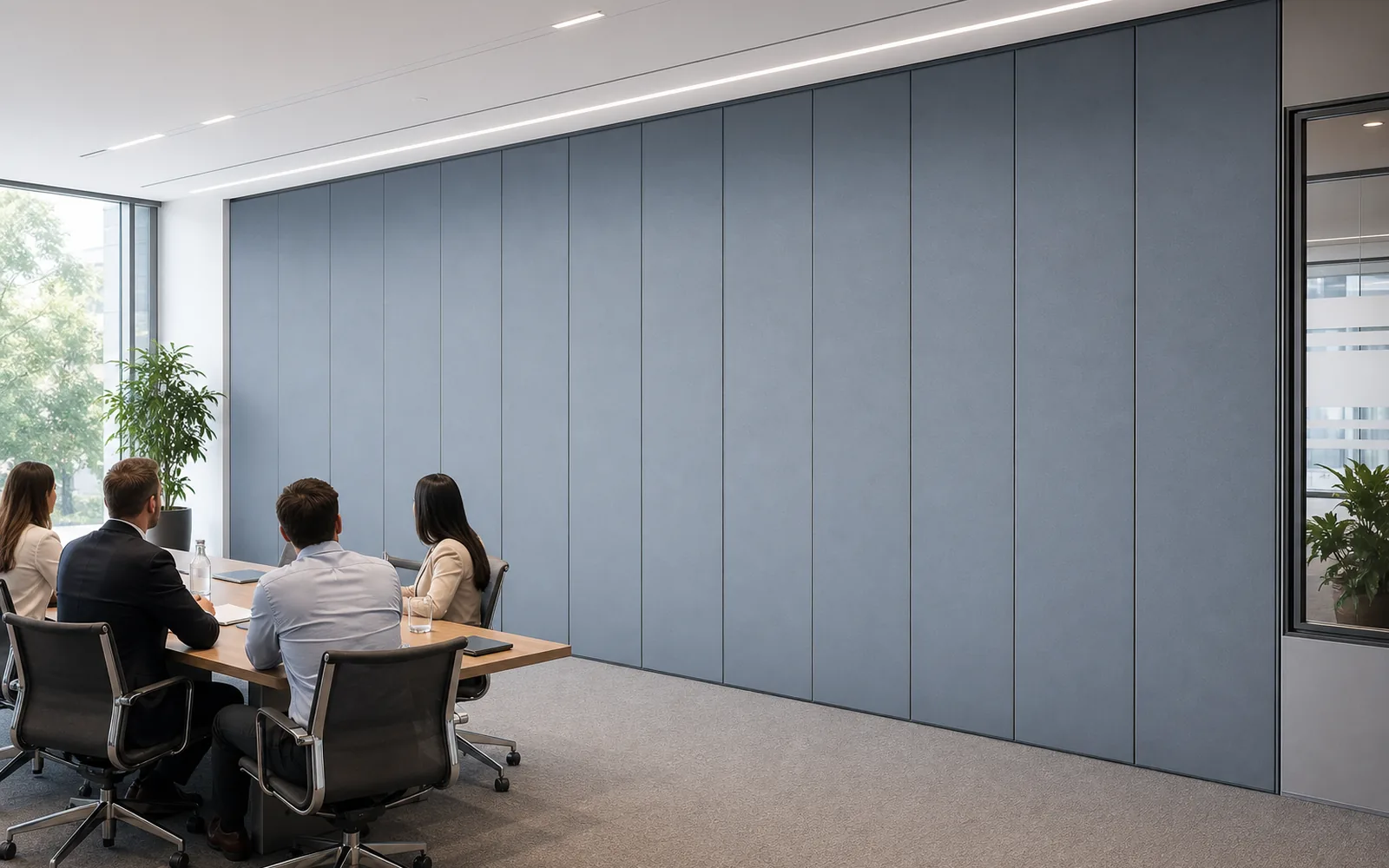
Buyers should provide layout requirements, parking preferences and finish selections. The exact track, support and panel layout still require project drawings.
Coordinated drawings are essential for confirming the parking arrangement and finish details. The exact route, junction arrangement, continuous overhead path and parking position must be confirmed from the coordinated project drawings. This step applies to both sports halls and community halls.
Approved drawings ensure that the top-hung system integrates with the space. No universal installation sequence is prescribed here.
Frequently Asked Questions
What is the main difference between acoustic seal layouts sports hall and community hall projects?
The main difference lies in how parking and finishes are coordinated with the space. Both use the top-hung EBUNGE system with an uninterrupted floor.
Does the top-hung system require a floor track?
No. The EBUNGE movable partition system is top-hung and has no continuous floor running track or operating hardware in the finished floor along the partition line. The floor is not cut or damaged for a floor track and remains physically uninterrupted.
Can parking be customized for acoustic seal layouts sports hall?
Yes. Panel parking style can be customized to the customer layout and project requirements, subject to coordinated drawings. A suitable approved parking arrangement can use the stacking area more compactly and coordinate with the space design.
How do finishes affect maintenance in community halls?
Finish materials can be customized, and cleaning and maintenance methods vary with the selected finish. The care approach should be planned according to the chosen finish for each project.
Are sports halls and community halls the only applications?
No. Movable partitions can be used wherever flexible space division, combination or reconfiguration is required; application examples are not limiting. EBUNGE has completed many types of hotel-related movable-partition projects, but no specific outcomes may be inferred.
Key Planning Considerations
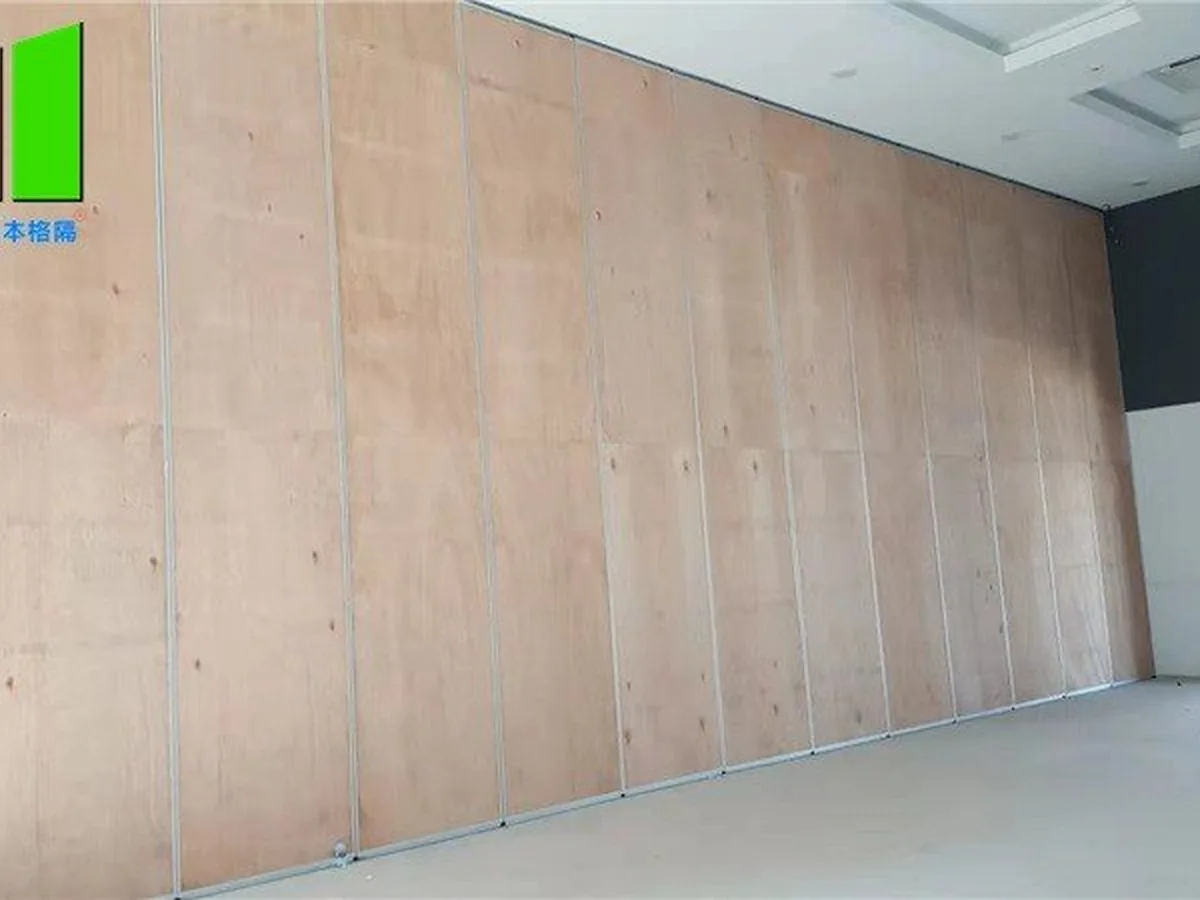
- Top-hung system keeps the floor physically uninterrupted.
- Parking style is customized per project drawings.
- Finish materials and care methods vary by selection.
- Coordinated drawings confirm track, support and parking layout.
Summary of Acoustic Seal Layouts Sports Hall vs Community Halls
Differences arise in parking coordination and finish selection. The exact route, junction arrangement, continuous overhead path and parking position must be confirmed from the coordinated project drawings.
For more information, see our products and projects pages.
Continue Exploring
More Acoustic Partition Guides
- Newer guideConvention Hall Partition Seals: Exhibit Noise vs Conference Acoustics
- Earlier guideCoordinating Sports Hall Operable Wall Seals with Wall Padding
- Related guideAcoustic Partition Ceiling Interface Zone Confirmation
- Related guideWho Confirms Ceiling Grid Line Before Acoustic Partition Track