
Quick project answer
Training center partition finishes impact how rooms are divided, combined and reconfigured. Impact mapping connects the finish decision to the top-hung system, the floor condition and the parking area. This article explains the confirmed principles and the inputs that must be coordinated before drawings are approved.
Start with the top-hung principle
The EBUNGE movable partition system is top-hung. The panels are supported from above, so there is no continuous floor running track or operating hardware in the finished floor along the partition line. This principle shapes every finish decision because the floor remains a single uninterrupted surface.
Because the system is top-hung, the training center partition finishes impact the visual line where panels meet the floor. The finish at that line must be considered together with the overhead support and the parking position. The exact route, junction arrangement, continuous overhead path and parking position must be confirmed from the coordinated project drawings.
Physically uninterrupted floor
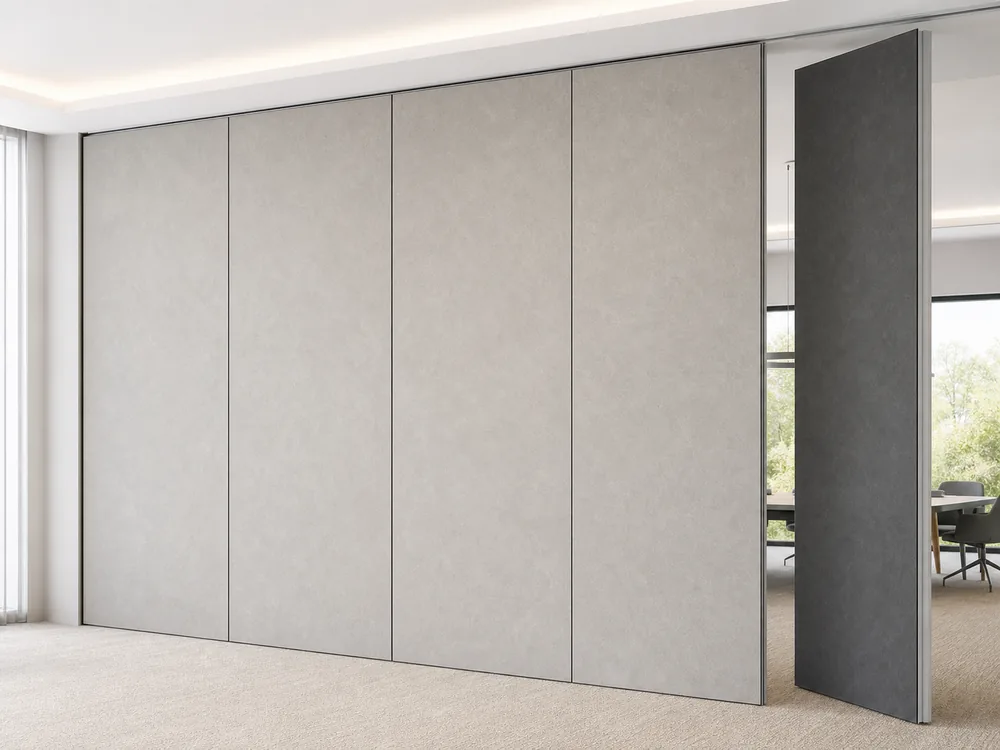
The floor is not cut or damaged for a floor track and remains physically uninterrupted by the maintained EBUNGE top-hung system. This means the training center partition finishes impact the floor only at the surface, not through embedded hardware. The floor can continue as one plane across the partition line.
An uninterrupted floor supports flexible use because the room can change function without a fixed track crossing the space. The training center partition finishes impact how that floor reads in both open and divided states. Finish selection should therefore consider the floor material, the panel face and the parking area as one coordinated set.
Parking planning and finish coordination
Panel parking style can be customized to the customer layout and project requirements, subject to coordinated drawings. A suitable approved parking arrangement can use the stacking area more compactly and coordinate with the space design. The training center partition finishes impact the parking zone because stacked panels occupy a defined area that must be planned with the room layout.
The exact track, support and panel layout still require project drawings. Parking planning is not a generic sequence; it is a project-specific coordination task. The training center partition finishes impact the visibility of the parking area, so the finish of the panels and the surrounding surfaces should be reviewed together.
Finish and care coordination
Finish materials can be customized, and cleaning and maintenance methods vary with the selected finish. This is the core of the training center partition finishes impact: the chosen finish determines how the surface is cared for over time. Different finishes call for different cleaning approaches, so the care method must be confirmed for each selection.
Because cleaning and maintenance methods vary with the selected finish, the project team should record the approved finish and its care method together. The training center partition finishes impact the long-term appearance of the partition line and the parking area. Finish coordination is therefore a documentation task as much as a design task.
Non-limiting applications
Movable partitions can be used wherever flexible space division, combination or reconfiguration is required; application examples are not limiting. EBUNGE has completed many types of hotel-related movable-partition projects; ballrooms, wedding halls and multifunction halls are non-limiting examples. No customer names, locations, quantities, ratings, certifications or outcomes may be inferred.
For training centers, the same principle applies: the training center partition finishes impact how a room can shift between a single large space and smaller divided spaces. The application list is illustrative, not exhaustive. Each project still depends on its own coordinated drawings and approved layout.
Buyer inputs for impact mapping
Buyers should prepare a clear brief that covers the room layout, the intended parking area and the preferred finish direction. The training center partition finishes impact the brief because finish choices affect care planning and visual coordination. A complete brief helps the project team align the top-hung system with the floor and the parking zone.
Useful inputs include the room dimensions, the location of the parking area and any finish preferences for the surrounding surfaces. The training center partition finishes impact how these inputs are translated into drawings. Buyers should also confirm who will approve the finish and care method before coordination proceeds.
Drawing approvals and project coordination
The exact route, junction arrangement, continuous overhead path and parking position must be confirmed from the coordinated project drawings. This boundary applies to every engineering detail that is not already confirmed. The training center partition finishes impact the drawing set because finish notes must match the approved layout.
Approval should cover the top-hung support, the parking arrangement and the finish selection as a single coordinated package. The training center partition finishes impact the final documentation, so the approved finish and its care method should be recorded with the drawings. The suitability of each route and parking arrangement depends on the approved layout, circulation, ceiling interfaces and operating sequence.
Scannable planning checklist
- Confirm the top-hung principle and the uninterrupted floor condition.
- Define the parking area and its relationship to the room layout.
- Select finish materials and record the matching care method.
- List non-limiting applications to frame the flexible-use intent.
- Prepare buyer inputs for the coordinated drawing set.
- Route all engineering details through the approved drawings.
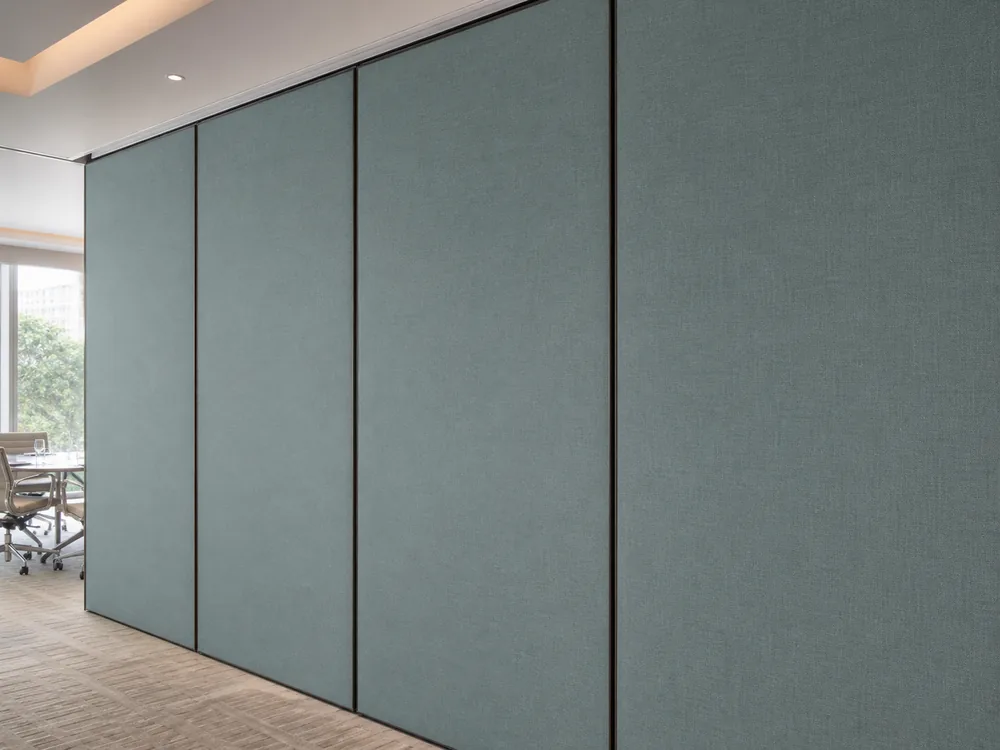
Comparison of coordination topics
| Topic | Confirmed position | Drawing dependency |
|---|---|---|
| Floor condition | No continuous floor track; floor not cut or damaged | None for the confirmed principle |
| Parking style | Customizable to layout and requirements | Coordinated drawings required |
| Finish materials | Customizable; care varies by finish | Approved finish and care method |
| Engineering route | Not confirmed in this article | Coordinated project drawings required |
The exact route, junction arrangement, continuous overhead path and parking position must be confirmed from the coordinated project drawings.
Frequently asked questions
What does training center partition finishes impact mean in practice?
It means the finish choice affects the floor line, the parking area and the care method. The training center partition finishes impact how the top-hung system is coordinated with the room layout and the approved drawings.
Does the EBUNGE system require a floor track?
No. The EBUNGE movable partition system is top-hung and has no continuous floor running track or operating hardware in the finished floor along the partition line. The floor is not cut or damaged for a floor track.
Can panel parking be customized?
Panel parking style can be customized to the customer layout and project requirements, subject to coordinated drawings. A suitable approved parking arrangement can use the stacking area more compactly and coordinate with the space design.
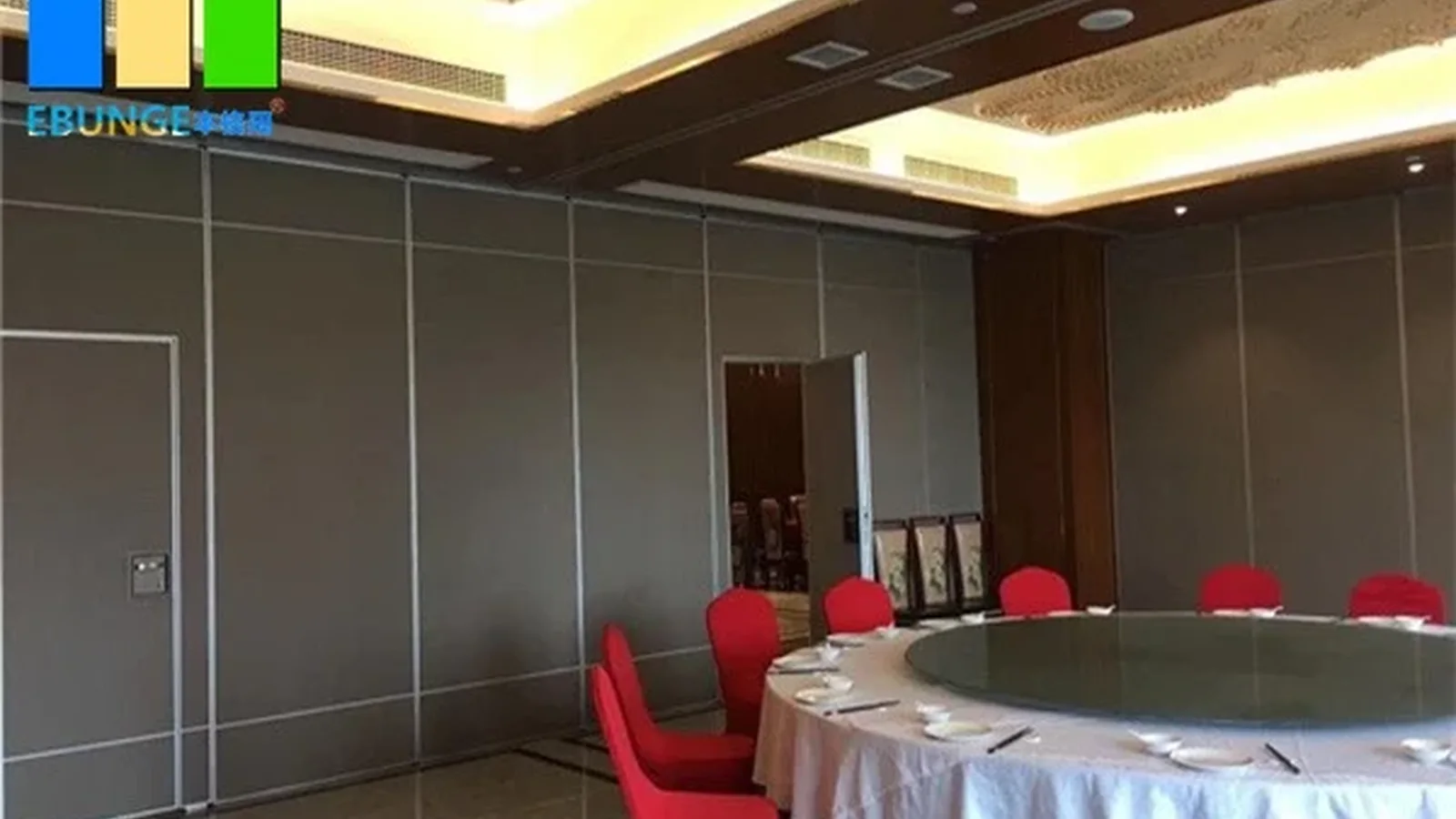
Are finish materials customizable?
Finish materials can be customized, and cleaning and maintenance methods vary with the selected finish. The approved finish and its care method should be recorded with the coordinated drawings.
Where can movable partitions be used?
Movable partitions can be used wherever flexible space division, combination or reconfiguration is required; application examples are not limiting. EBUNGE has completed many types of hotel-related movable-partition projects, with ballrooms, wedding halls and multifunction halls as non-limiting examples.
What must be confirmed from project drawings?
The exact route, junction arrangement, continuous overhead path and parking position must be confirmed from the coordinated project drawings. The exact track, support and panel layout also require project drawings.
For related reading, see movable partition wall and projects. Impact mapping for training center partition finishes keeps the top-hung principle, the uninterrupted floor, the parking plan and the finish care method aligned through drawing approval.
Continue Exploring
More Materials and Finishes Guides
- Newer guideComparing Operable Wall Finishes for Training Center Lectern Use
- Earlier guideAirport Holdroom Operable Wall Finishes: Luggage Cart Impact Mapping
- Related guideWho Verifies Partition Handover Records When Trades Finish at Different
- Related guideMovable Partition Finish Sample Coordination Guide for Interior