
Why airport holdroom operable wall finishes need impact mapping
Quick project answer
Airport holdrooms combine waiting areas, boarding zones and occasional flexible spaces. Luggage carts, trolleys and passenger flow create repeated contact risks along partition lines. When specifying airport holdroom operable wall finishes, planners map where carts travel and where panels rest. This impact mapping helps coordinate finish choices with real traffic patterns.
The EBUNGE movable partition system is top-hung and has no continuous floor running track or operating hardware in the finished floor along the partition line. That single fact changes how impact mapping works. The floor is not cut or damaged for a floor track and remains physically uninterrupted by the maintained EBUNGE top-hung system.
The top-hung principle and its effect on holdroom floors
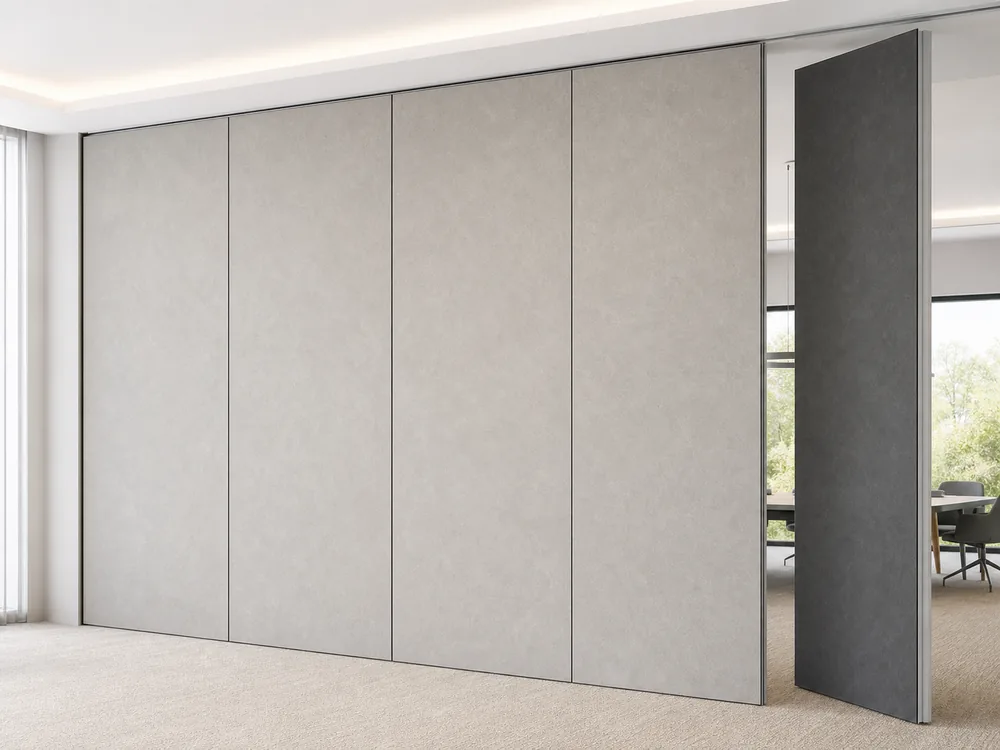
In a top-hung system, the panels hang from an overhead structure rather than rolling on a floor guide. This approach means the finished floor along the partition line stays continuous. For airport holdrooms, that continuity matters because luggage carts roll across open floor areas without encountering a recessed track or raised hardware.
Impact mapping for airport holdroom operable wall finishes should therefore focus on panel faces, edges and parking zones rather than floor tracks. The floor itself is not a wear point from a continuous track because none exists in the maintained EBUNGE top-hung system.
Planners can mark cart routes on holdroom drawings and compare them with panel storage positions. This comparison helps identify where finish protection may deserve attention. The exact route, junction arrangement, continuous overhead path and parking position must be confirmed from the coordinated project drawings.
Physically uninterrupted floor and cart movement
A physically uninterrupted floor allows luggage carts to move across the holdroom without a floor track interruption. This condition supports general circulation and reduces the number of floor details that must be cleaned or maintained along the partition line.
For airport holdroom operable wall finishes, the absence of a floor track means impact mapping can concentrate on vertical surfaces. Cart corners, wheels and handles may contact panel faces during busy periods. Finish selection and care planning can address those contact zones.
The floor is not cut or damaged for a floor track and remains physically uninterrupted by the maintained EBUNGE top-hung system. That statement applies to the maintained system and should be verified against project drawings for each holdroom layout.
Parking planning for operable walls in holdrooms
Panel parking style can be customized to the customer layout and project requirements, subject to coordinated drawings. In an airport holdroom, parking may compete with seating, queuing or circulation space. A suitable approved parking arrangement can use the stacking area more compactly and coordinate with the space design.
Impact mapping should include the parking zone because carts may pass near stacked panels. The exact track, support and panel layout still require project drawings. Planners can review how parked panels relate to cart routes and passenger paths.
Movable partitions can be used wherever flexible space division, combination or reconfiguration is required; application examples are not limiting. Parking planning is therefore a project-specific exercise rather than a fixed rule.
Finish and care coordination for airport holdroom operable wall finishes
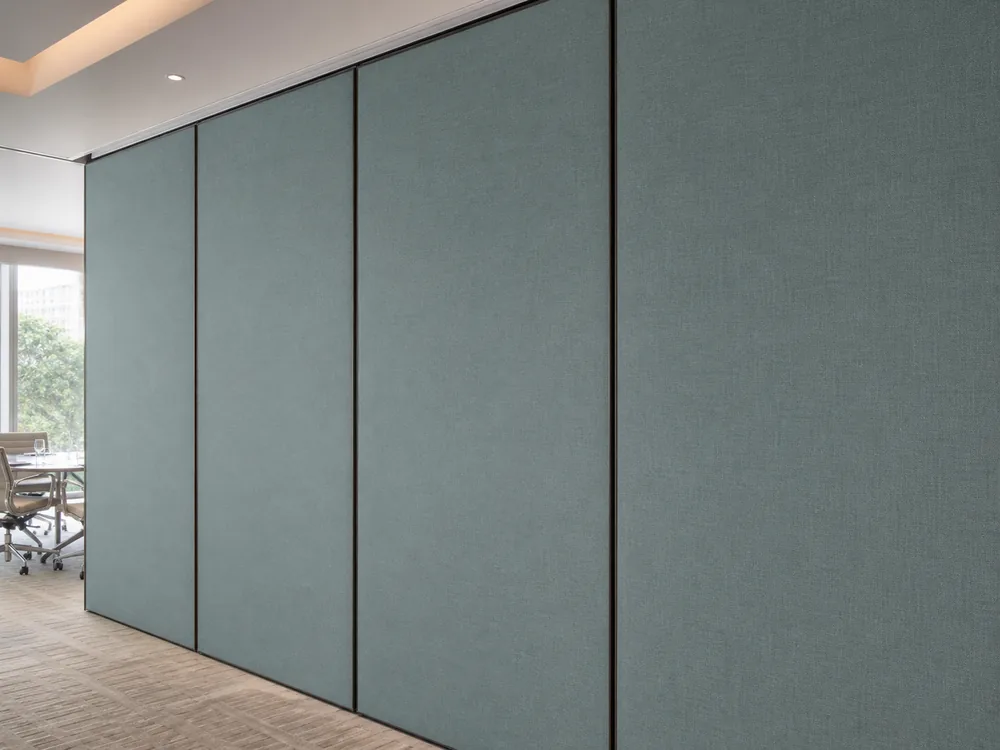
Finish materials can be customized, and cleaning and maintenance methods vary with the selected finish. This fact links finish choice directly to care planning. Airport holdrooms may see frequent cleaning, so the selected finish should be discussed with the cleaning team.
Impact mapping can identify high-contact areas on panel faces. Those areas may need a care approach that matches the chosen finish. Because cleaning methods vary, the project team should confirm products and techniques for each finish type.
Finish coordination also involves reviewing how panels meet adjacent surfaces. The exact route, junction arrangement, continuous overhead path and parking position must be confirmed from the coordinated project drawings.
Non-limiting applications and holdroom flexibility
Movable partitions can be used wherever flexible space division, combination or reconfiguration is required; application examples are not limiting. Airport holdrooms may use partitions to separate boarding groups, create quiet zones or support airline operations.
EBUNGE has completed many types of hotel-related movable-partition projects; ballrooms, wedding halls and multifunction halls are non-limiting examples. That experience does not imply specific airport outcomes, but it shows familiarity with flexible-space projects.
For airport holdroom operable wall finishes, the same top-hung principle applies. The floor remains uninterrupted, and parking can be planned around holdroom furniture and cart routes.
Buyer inputs and drawing approvals
Buyers should provide holdroom layouts, cart route information and preferred parking locations. These inputs help the project team coordinate the top-hung system with the space. Finish preferences and cleaning methods should also be shared early.
Panel parking style can be customized to the customer layout and project requirements, subject to coordinated drawings. A suitable approved parking arrangement can use the stacking area more compactly and coordinate with the space design.
Approval drawings should show the overhead path, parking position and finish schedule. The exact track, support and panel layout still require project drawings. The exact route, junction arrangement, continuous overhead path and parking position must be confirmed from the coordinated project drawings.
Impact mapping checklist for project teams
- Mark luggage cart routes on holdroom plans.
- Identify panel parking zones near cart paths.
- List finish choices for panel faces and edges.
- Confirm cleaning methods for each selected finish.
- Review overhead path and parking on coordinated drawings.
Questions to resolve before finish selection
- Where do luggage carts travel most often?
- Which panel faces may receive repeated contact?
- How will parked panels relate to seating and queuing?
- What cleaning methods suit the chosen finish?
- Which drawings confirm the overhead path and parking?
Comparing finish care considerations
| Consideration | Planning note |
|---|---|
| Cart traffic | Map routes near panel faces and parking zones. |
| Finish choice | Finish materials can be customized. |
| Cleaning | Methods vary with the selected finish. |
| Floor condition | No continuous floor track in the maintained EBUNGE top-hung system. |
The exact route, junction arrangement, continuous overhead path and parking position must be confirmed from the coordinated project drawings.
FAQ: Airport holdroom operable wall finishes
Does a top-hung movable partition require a floor track?
The EBUNGE movable partition system is top-hung and has no continuous floor running track or operating hardware in the finished floor along the partition line.
How does the floor remain uninterrupted?
The floor is not cut or damaged for a floor track and remains physically uninterrupted by the maintained EBUNGE top-hung system.
Can parking style be customized for an airport holdroom?
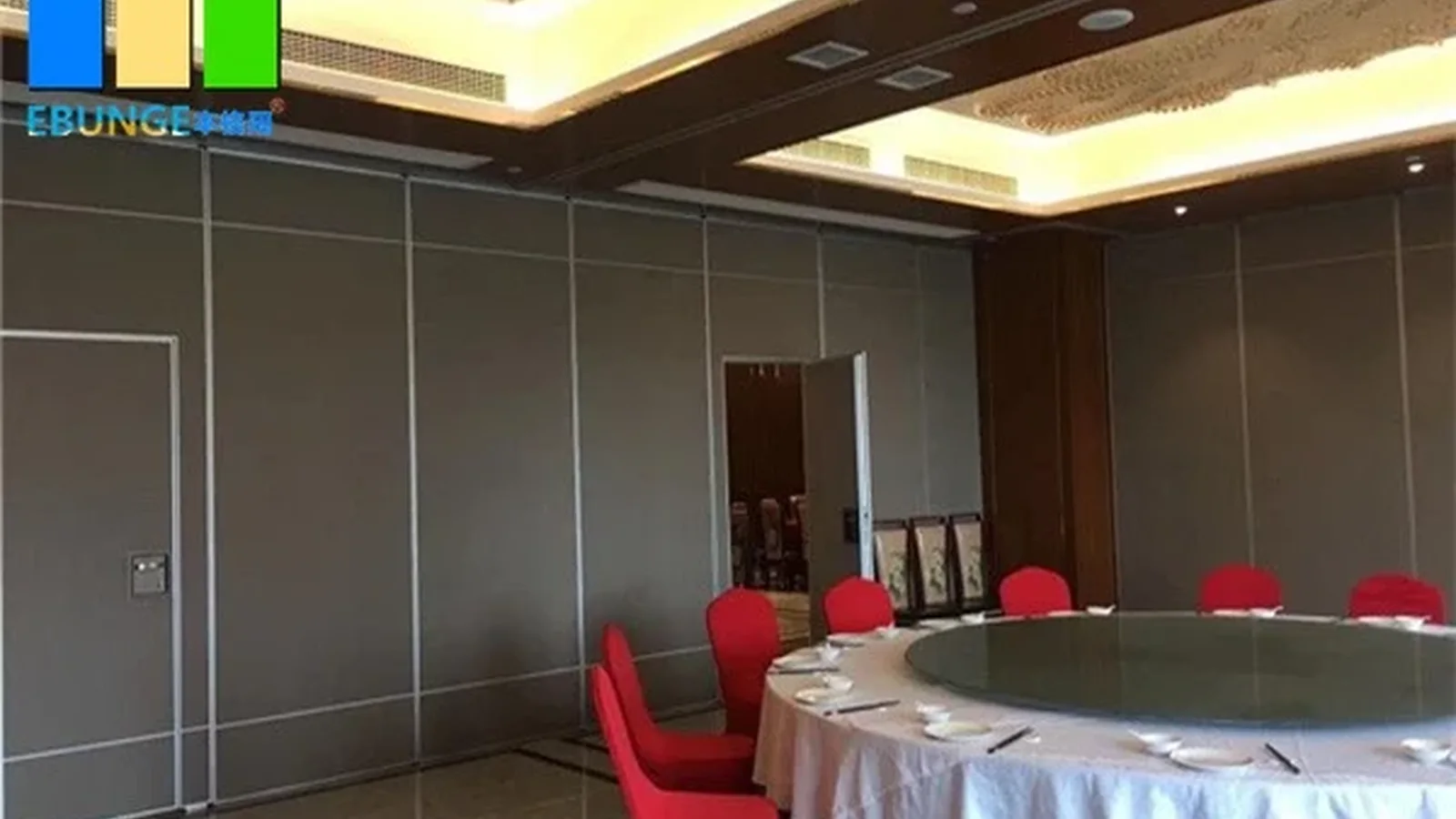
Panel parking style can be customized to the customer layout and project requirements, subject to coordinated drawings.
Are finish materials customizable?
Finish materials can be customized, and cleaning and maintenance methods vary with the selected finish.
Where can movable partitions be used?
Movable partitions can be used wherever flexible space division, combination or reconfiguration is required; application examples are not limiting.
What should buyers provide for coordination?
Buyers should provide holdroom layouts, cart route information and preferred parking locations. The exact track, support and panel layout still require project drawings.
For related products, see /products/. For project examples, see /projects/.
Continue Exploring
More Materials and Finishes Guides
- Newer guideImpact Mapping for Training Center Partition Finishes
- Earlier guideImpact Mapping for Sports Hall Partition Finishes
- Related guideWho Verifies Partition Handover Records When Trades Finish at Different
- Related guideMovable Partition Finish Sample Coordination Guide for Interior