
Quick project answer
Training center operable wall finishes affect how a lectern-focused room is planned, maintained and coordinated with the surrounding space. This article compares finish and care considerations for top-hung movable partition systems, without prescribing a universal product or installation sequence.
For buyers, the comparison is not only about appearance. It is about how the finish, the parking arrangement and the drawing set work together for a room where a lectern anchors the front of the space.
Why the Top-Hung Principle Matters for Training Center Operable Wall Finishes
The EBUNGE movable partition system is top-hung. That single design fact shapes how training center operable wall finishes are reviewed, because the partition line does not rely on a continuous floor running track or operating hardware in the finished floor.
For a training center with a lectern, the floor often carries seating, cable covers, lectern placement and circulation routes. A top-hung arrangement keeps the finished floor along the partition line physically uninterrupted by the maintained EBUNGE top-hung system.
Finish selection still matters. Finish materials can be customized, and cleaning and maintenance methods vary with the selected finish. The finish choice should therefore be reviewed alongside the room’s daily use and the care method that will be applied.
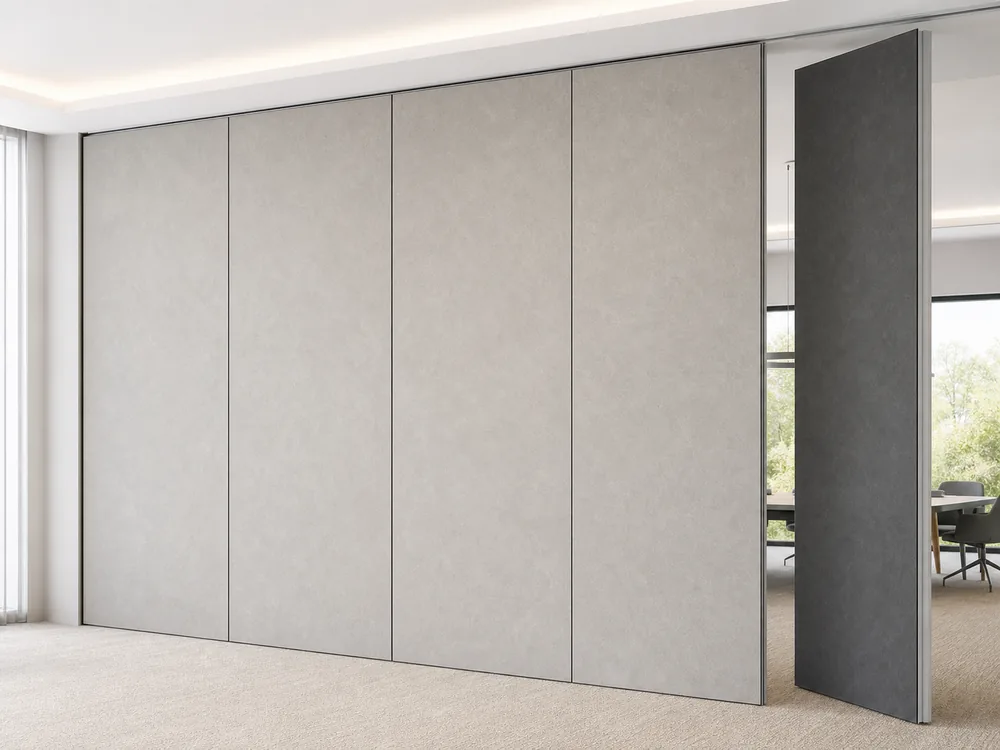
A lectern room may also host different layouts across a week. The finish review should therefore consider how the room is arranged when the partition is open, closed or parked, without assuming one fixed configuration.
The top-hung principle also means the finish review for training center operable wall finishes can focus on the partition face and the surrounding room surfaces, while the floor along the partition line remains physically uninterrupted by the maintained system.
Physically Uninterrupted Floor and Finish Coordination
Because the floor is not cut or damaged for a floor track, training center operable wall finishes can be considered without treating the floor as a track zone. The floor remains physically uninterrupted by the maintained EBUNGE top-hung system.
This does not remove the need for coordination. The exact route, junction arrangement, continuous overhead path and parking position must be confirmed from the coordinated project drawings.
Finish coordination should also account for how the lectern area is used. A lectern may sit near a partition line, a seating row or a circulation path, so the finish review should reflect the actual room layout rather than a generic assumption.
Where the finish meets adjacent surfaces, the drawing set should show the intended relationship. Training center operable wall finishes are part of that drawing review, not a separate afterthought.
Coordination also covers how the finish relates to the overhead path. The drawing set should show the intended relationship between the finish and the route that the top-hung system follows.
Parking Planning and Finish Protection
Panel parking style can be customized to the customer layout and project requirements, subject to coordinated drawings. A suitable approved parking arrangement can use the stacking area more compactly and coordinate with the space design.
The exact track, support and panel layout still require project drawings. For training center operable wall finishes, parking planning affects how the stacked panels relate to nearby finishes and to the lectern zone.
Finish care should be considered for both the in-use partition and the parked position. Cleaning and maintenance methods vary with the selected finish, so the care approach should match the finish that is actually approved.
Parking planning is also a drawing exercise. The stacking area, the route to it and the relationship to adjacent finishes should be shown in the coordinated set before the finish is finalized.
Finish and Care Comparison for Training Center Operable Wall Finishes
The table below compares review points rather than prescribing a single finish. It is intended to help buyers organize questions before drawings are finalized.
| Review point | What to confirm | Why it matters for a lectern room |
|---|---|---|
| Finish customization | Finish materials can be customized | Supports coordination with the training center interior |
| Cleaning method | Cleaning and maintenance methods vary with the selected finish | Care routines should match the approved finish |
| Parking position | Parking style can be customized, subject to coordinated drawings | Stacking area should coordinate with the room layout |
| Floor condition | No continuous floor running track or operating hardware in the finished floor | Floor remains physically uninterrupted by the maintained system |
| Drawing approval | Exact track, support and panel layout require project drawings | Confirms the route, junction arrangement and parking position |
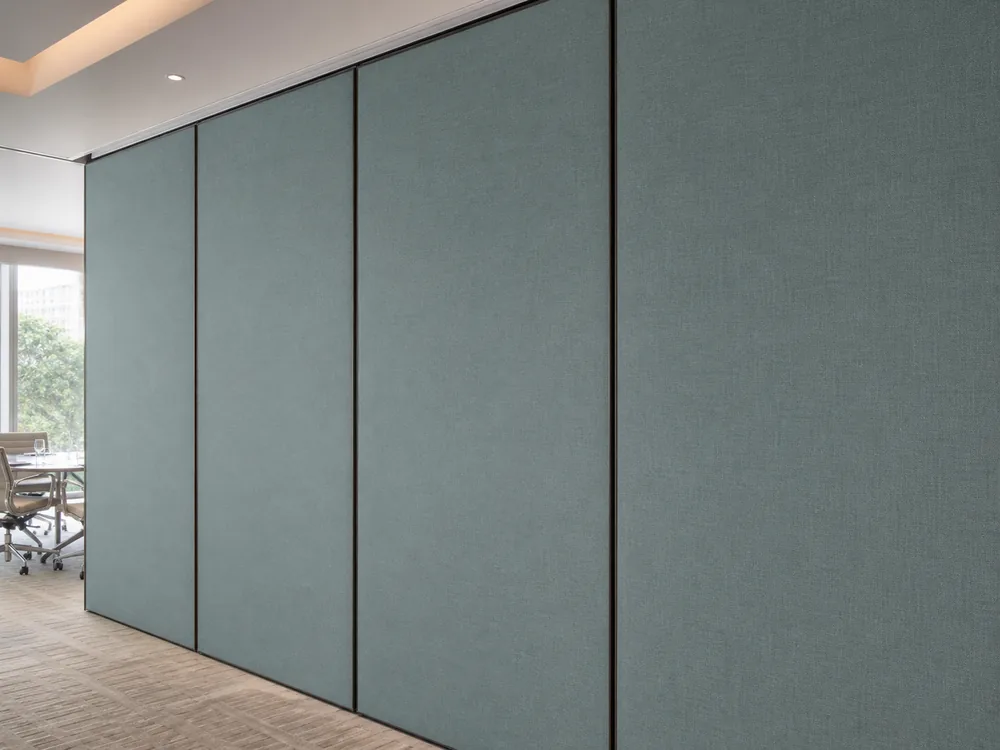
The comparison is a starting point. The final finish and care approach should follow the coordinated drawings and the approved parking arrangement.
Non-Limiting Applications for Movable Partitions
Movable partitions can be used wherever flexible space division, combination or reconfiguration is required. Application examples are not limiting.
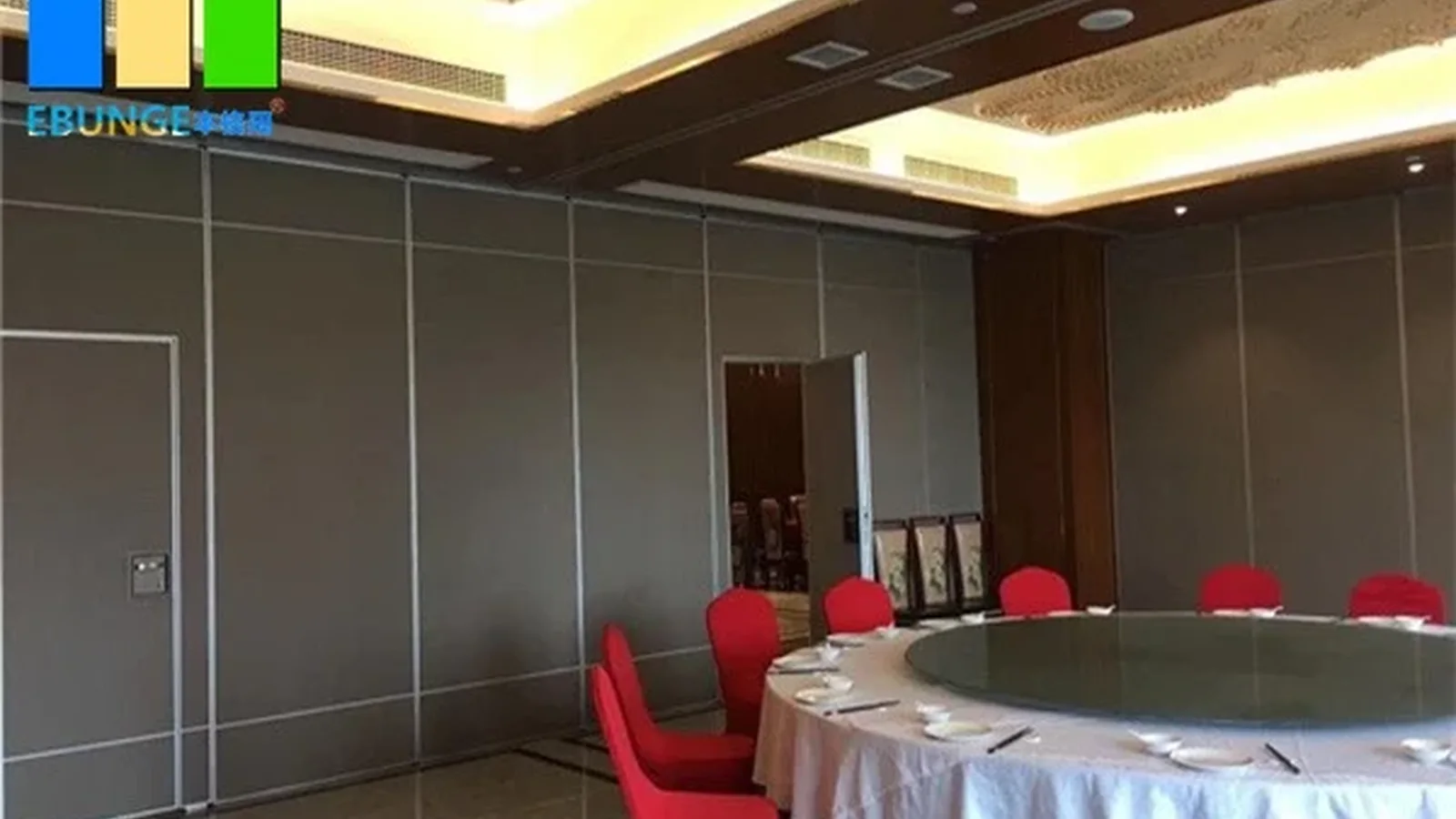
EBUNGE has completed many types of hotel-related movable-partition projects. Ballrooms, wedding halls and multifunction halls are non-limiting examples.
No customer names, locations, quantities, ratings, certifications or outcomes may be inferred from that experience. The relevant point for training center operable wall finishes is that the finish and parking review follows the same drawing-led approach.
Training centers, meeting rooms and similar spaces can also be considered, but the examples above are not limiting and do not imply a specific outcome.
Buyer Inputs Before Finish Selection
Buyers should gather room layout information, lectern position, seating arrangement and the intended parking area. These inputs help frame the finish discussion without assuming a universal configuration.
Buyers should also confirm the care method that will be used. Since cleaning and maintenance methods vary with the selected finish, the care plan should be aligned with the finish under review.
A short checklist can keep the review focused:
- Room layout and lectern position
- Intended parking area and stacking approach
- Preferred finish direction for training center operable wall finishes
- Cleaning and maintenance method for the selected finish
- Drawing inputs for route, junction arrangement and parking position
Buyers should also note that the exact track, support and panel layout still require project drawings. The suitability of each route and parking arrangement depends on the approved layout, circulation, ceiling interfaces and operating sequence.
Drawing Approvals and the Confirmed Boundary
Finish selection does not replace drawing approval. The exact route, junction arrangement, continuous overhead path and parking position must be confirmed from the coordinated project drawings.
The exact track, support and panel layout still require project drawings. This applies to training center operable wall finishes as much as to any other movable partition application.
Reviewers can use the movable partition wall reference and the projects page to frame questions before drawings are issued.
Finish materials can be customized, and cleaning and maintenance methods vary with the selected finish.
Buyers should keep the drawing set as the reference point for training center operable wall finishes, the parking position and the route, so the comparison stays tied to the project.
FAQ: Training Center Operable Wall Finishes
Are training center operable wall finishes customizable?
Yes. Finish materials can be customized, and cleaning and maintenance methods vary with the selected finish.
Does the system require a floor track?
No. The EBUNGE movable partition system is top-hung and has no continuous floor running track or operating hardware in the finished floor along the partition line.
Is the floor cut for a track?
No. The floor is not cut or damaged for a floor track and remains physically uninterrupted by the maintained EBUNGE top-hung system.
Can parking be adapted to the room layout?
Panel parking style can be customized to the customer layout and project requirements, subject to coordinated drawings.
What must be confirmed from drawings?
The exact route, junction arrangement, continuous overhead path and parking position must be confirmed from the coordinated project drawings.
Where can movable partitions be used?
Movable partitions can be used wherever flexible space division, combination or reconfiguration is required, and application examples are not limiting.
Continue Exploring
More Materials and Finishes Guides
- Newer guideOffice Suites Partition Finish: Glass vs Solid Panels
- Earlier guideImpact Mapping for Training Center Partition Finishes
- Related guideWho Verifies Partition Handover Records When Trades Finish at Different
- Related guideMovable Partition Finish Sample Coordination Guide for Interior