
Understanding Office Partition Finishes: Glass and Solid Options
Quick project answer
When planning flexible space division, the choice between glass and solid panels is a common consideration. The term office partition finishes glass solid refers to the surface materials applied to movable partition panels. Each option offers different visual and functional characteristics. This article explores how these finishes interact with a top-hung movable partition system, focusing on planning and coordination.
The Top-Hung Principle and Its Impact on Finish Selection
The EBUNGE movable partition system is top-hung. This means the panels are supported from an overhead track rather than a floor-based system. Consequently, there is no continuous floor running track or operating hardware in the finished floor along the partition line. The floor remains physically uninterrupted. This design consideration is important when selecting office partition finishes glass solid, as it influences both installation and daily use.
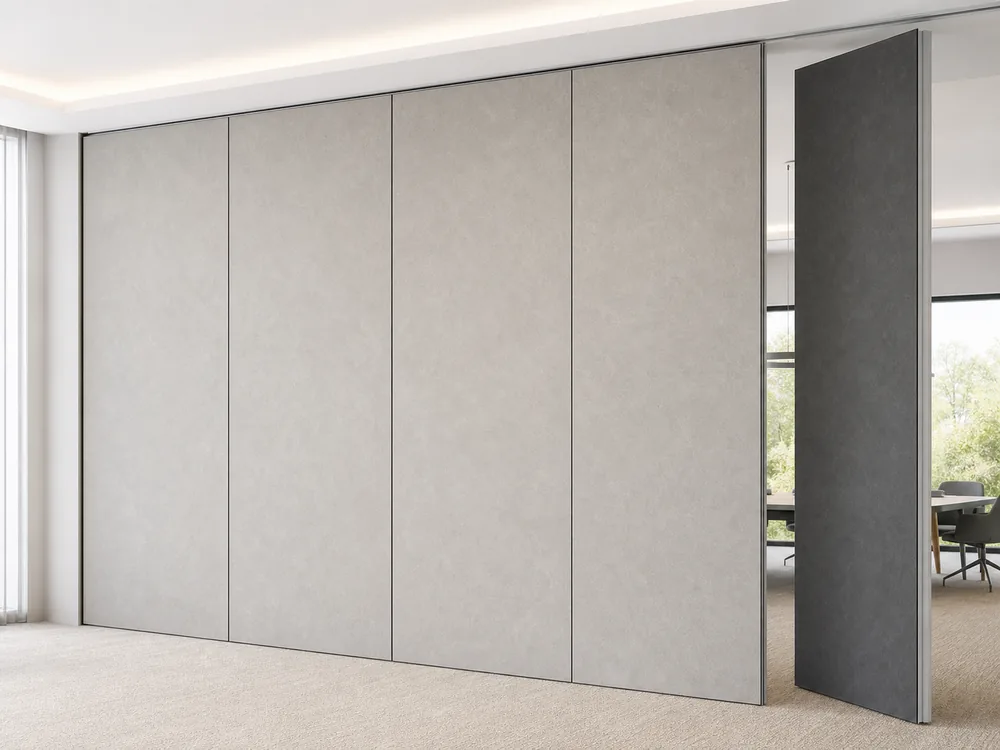
Because the floor is not cut or damaged for a floor track, the choice of finish does not affect floor integrity. Whether you choose glass or solid panels, the top-hung principle ensures a clean floor line. This can be particularly relevant in spaces where floor finishes are continuous or where underfloor services exist.
Physically Uninterrupted Floor: A Key Benefit for Finish Coordination
A physically uninterrupted floor means no tracks or hardware protrude into the walking area. The suitability of each route and parking arrangement depends on the approved layout, circulation, ceiling interfaces and operating sequence. For office partition finishes glass solid, the absence of a floor track allows for a consistent floor surface across the entire space. This can be advantageous in open-plan offices or multifunctional rooms.
The top-hung system also means that the partition line does not require floor cutting or damage. This preserves the integrity of the floor finish, whether it is carpet, tile, or another material. When considering office partition finishes glass solid, the floor remains a continuous element, unaffected by the partition system.
Parking Planning for Movable Partitions
Panel parking style can be customized to the customer layout and project requirements, subject to coordinated drawings. A suitable approved parking arrangement can use the stacking area more compactly and coordinate with the space design. The exact track, support and panel layout still require project drawings.
When planning office partition finishes glass solid, consider how panels will be parked when not in use. The parking area should be integrated into the overall space design. The choice of finish may influence the visual impact of the parked panels. Coordination with the project drawings is essential to ensure the parking solution meets the layout needs.
Finish and Care Coordination
Finish materials can be customized, and cleaning and maintenance methods vary with the selected finish. This applies to both glass and solid options. For office partition finishes glass solid, it is important to understand that care requirements differ. Glass may require specific cleaners, while solid finishes may need different treatments.
Coordination with the finish supplier and the partition system provider is recommended. The exact cleaning and maintenance methods should be confirmed based on the selected finish. This ensures that the office partition finishes glass solid remain in good condition over time.
Non-Limiting Applications for Movable Partitions
Movable partitions can be used wherever flexible space division, combination or reconfiguration is required. Application examples are not limiting. EBUNGE has completed many types of hotel-related movable-partition projects; ballrooms, wedding halls and multifunction halls are non-limiting examples. However, no customer names, locations, quantities, ratings, certifications or outcomes may be inferred.
When considering office partition finishes glass solid, these applications demonstrate the versatility of movable partitions. The choice of finish can be tailored to the specific environment, whether it is a corporate office, hotel, or other space. The top-hung system supports a range of finishes without compromising floor integrity.
Buyer Inputs and Drawing Approvals
Successful projects require careful planning and coordination. Buyers should provide input on layout, finish preferences, and parking requirements. The exact route, junction arrangement, continuous overhead path and parking position must be confirmed from the coordinated project drawings.
For office partition finishes glass solid, the drawings will specify the track layout, support, and panel configuration. Approval of these drawings is a critical step before production. This ensures that the system meets the project requirements and that the finishes are correctly specified.
Comparing Glass and Solid Panels
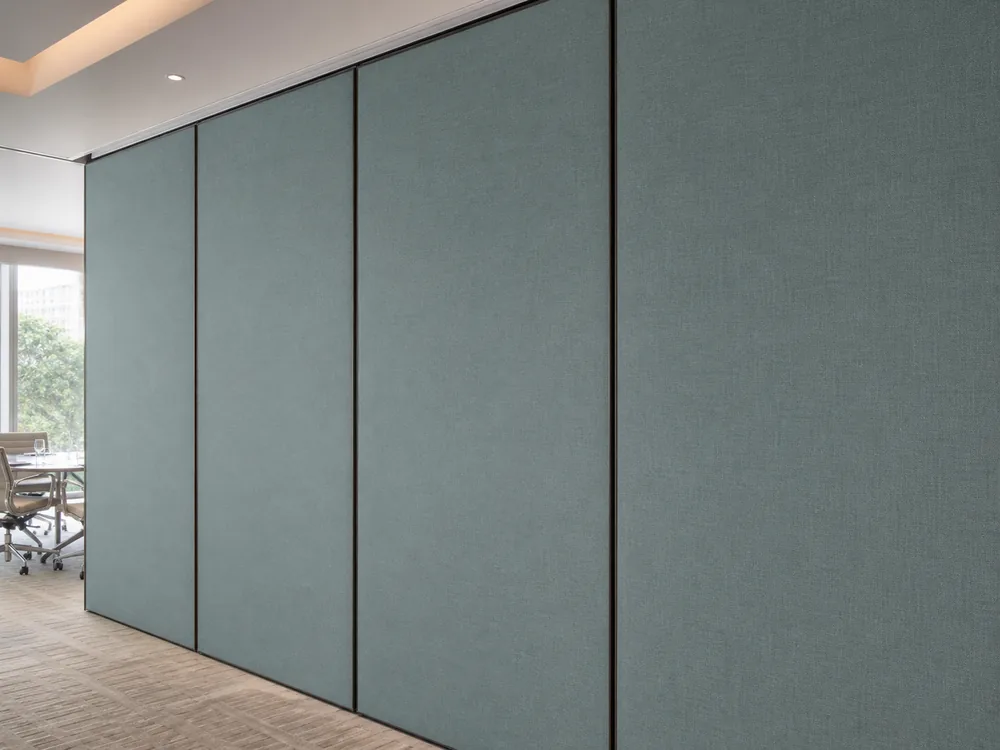
| Consideration | Glass Panels | Solid Panels |
|---|---|---|
| Visual impact | Transparent, open feel | Opaque, private feel |
| Cleaning | Specific glass cleaners | Depends on solid finish |
| Customization | Finish materials can be customized | Finish materials can be customized |
| Floor impact | No floor track (top-hung) | No floor track (top-hung) |
Key Planning Steps for Office Partition Finishes Glass Solid
- Define the space division requirements and frequency of reconfiguration.
- Select finish preferences for glass and solid panels based on aesthetics and care.
- Coordinate parking style with the layout and project drawings.
- Confirm the exact route, junction arrangement, continuous overhead path and parking position from the coordinated project drawings.
- Approve drawings before production.
Frequently Asked Questions
What is the difference between glass and solid panels in office partition finishes glass solid?
Glass panels offer transparency, while solid panels provide opacity. Both are finish options for movable partitions. The choice depends on visual and functional needs.
Does the top-hung system require a floor track?
No, the EBUNGE movable partition system is top-hung and has no continuous floor running track or operating hardware in the finished floor along the partition line.
Can finish materials be customized for office partition finishes glass solid?
Yes, finish materials can be customized. Cleaning and maintenance methods vary with the selected finish.
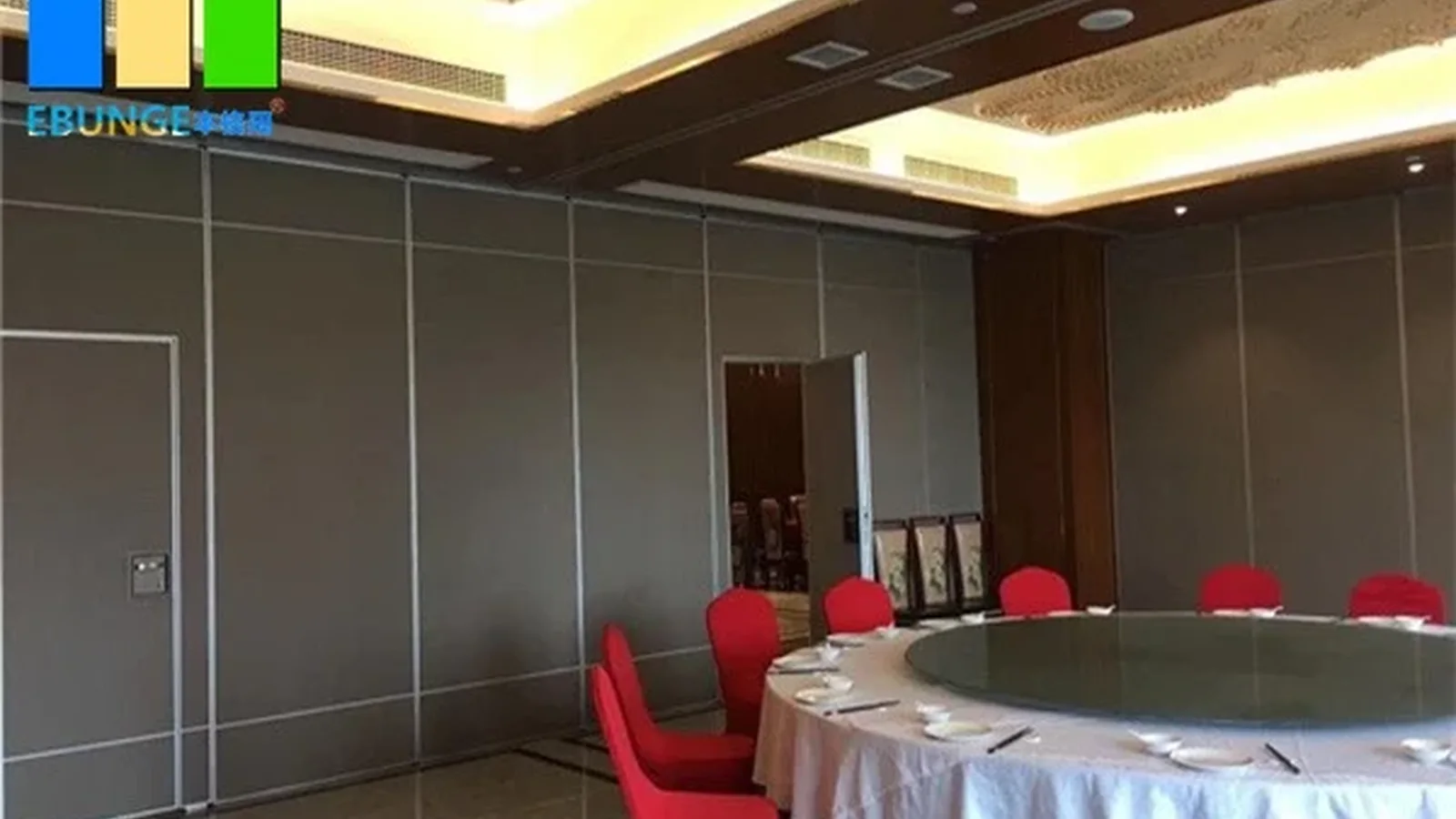
How is parking planned for movable partitions?
Panel parking style can be customized to the customer layout and project requirements, subject to coordinated drawings. A suitable approved parking arrangement can use the stacking area more compactly and coordinate with the space design.
What applications are suitable for movable partitions?
Movable partitions can be used wherever flexible space division, combination or reconfiguration is required. Application examples are not limiting.
Conclusion
Choosing between glass and solid panels for office partition finishes glass solid involves considering visual impact, care requirements, and integration with a top-hung system. The physically uninterrupted floor and customizable parking options provide flexibility. For project-specific details, refer to the coordinated drawings. Explore our solutions and projects for more information.
Continue Exploring
More Materials and Finishes Guides
- Newer guideSchool Auditorium Partition Finish Abrasion Planning for Stacked Chairs
- Earlier guideComparing Operable Wall Finishes for Training Center Lectern Use
- Related guideWho Verifies Partition Handover Records When Trades Finish at Different
- Related guideMovable Partition Finish Sample Coordination Guide for Interior