
Quick project answer
An office meeting suite partition seal maintenance checklist helps facilities teams keep a movable partition system ready for daily reconfiguration. The checklist should reflect the actual product, finish and layout. For an EBUNGE top-hung system, the floor remains physically uninterrupted along the partition line. This guide covers practical checks, parking planning, finish care and the buyer inputs needed before drawings are approved.
Start with the top-hung principle
The EBUNGE movable partition system is top-hung. It has no continuous floor running track or operating hardware in the finished floor along the partition line. That single fact shapes the entire maintenance approach for an office meeting suite partition seal. There is no floor track to sweep, no floor channel to clear and no floor-mounted operating hardware to inspect along the partition line.
Because the system is top-hung, the finished floor is not cut or damaged for a floor track. The floor remains physically uninterrupted by the maintained EBUNGE top-hung system. Maintenance attention therefore focuses on the visible panel faces, the finish surfaces and the parking area rather than on a floor guide. The exact route, junction arrangement, continuous overhead path and parking position must be confirmed from the coordinated project drawings.
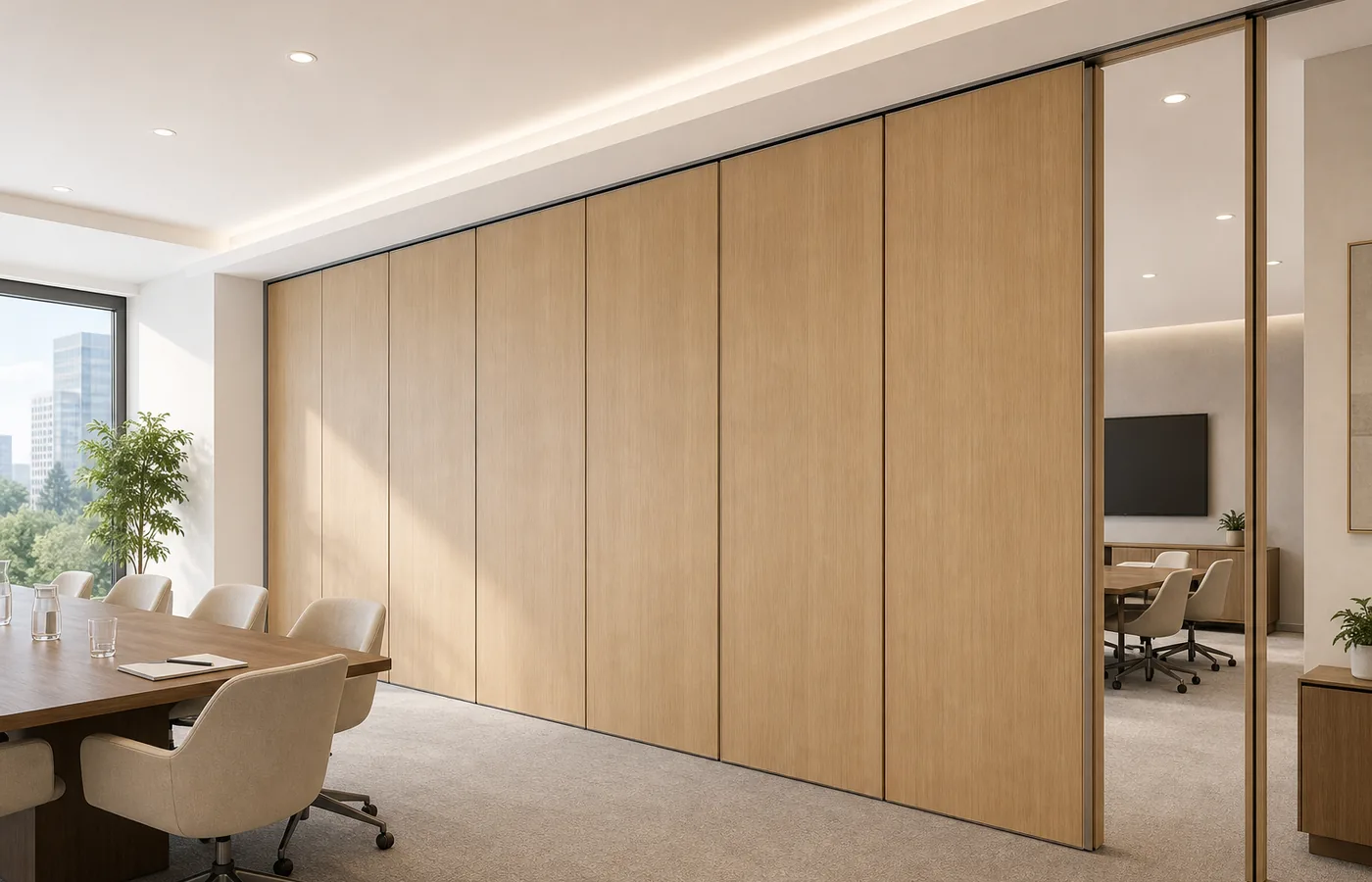
Confirm the physically uninterrupted floor
A physically uninterrupted floor is a practical advantage in meeting suites. Chairs, tables and cable covers can cross the partition line without meeting a floor channel. Cleaning crews can treat the floor as one continuous surface. The office meeting suite partition seal checklist should record that no floor track exists, so new staff do not look for one.
When the partition is open, the floor along the line stays clear. When the partition is closed, the same floor remains uncut. This matters for carpet tiles, stone, timber and resilient finishes because no floor track interrupts them. The exact route, junction arrangement, continuous overhead path and parking position must be confirmed from the coordinated project drawings.
Plan the parking arrangement
Panel parking style can be customized to the customer layout and project requirements, subject to coordinated drawings. A suitable approved parking arrangement can use the stacking area more compactly and coordinate with the space design. The exact track, support and panel layout still require project drawings.
For an office meeting suite, parking often sits at one end of the room or in an adjacent alcove. The checklist should confirm the approved parking position and keep that zone free of stored furniture. The exact route, junction arrangement, continuous overhead path and parking position must be confirmed from the coordinated project drawings.
Finish and care coordination
Finish materials can be customized, and cleaning and maintenance methods vary with the selected finish. The office meeting suite partition seal checklist should name the approved finish and the care method that matches it. A method that suits one finish may not suit another, so the checklist should not assume a single universal routine.
Before any cleaning product is used, confirm it against the approved finish guidance. Keep the checklist specific to the installed surfaces. Where the finish is not yet confirmed, leave the care step open until the coordinated drawings and finish schedule are available. The exact route, junction arrangement, continuous overhead path and parking position must be confirmed from the coordinated project drawings.
Non-limiting application examples
Movable partitions can be used wherever flexible space division, combination or reconfiguration is required. Application examples are not limiting. In an office setting, a meeting suite may combine two rooms into one, divide a training area or reconfigure a client presentation space.
EBUNGE has completed many types of hotel-related movable-partition projects. Ballrooms, wedding halls and multifunction halls are non-limiting examples. No customer names, locations, quantities, ratings, certifications or outcomes may be inferred from those examples. The office meeting suite partition seal checklist should stay focused on the installed system and its approved drawings.
Buyer inputs before drawings
Useful buyer inputs include the room layout, the required opening width, the preferred parking side and the approved finish direction. These inputs help the project team prepare coordinated drawings. The office meeting suite partition seal checklist should record who supplies each input and when it is needed.
Buyers should also confirm the ceiling zone available for the overhead path and the intended use pattern for the suite. The exact route, junction arrangement, continuous overhead path and parking position must be confirmed from the coordinated project drawings. No production or installation step should be assumed before those drawings are approved.
Drawing approvals and handover
Coordinated drawings are the reference point for the installed system. They show the approved route, parking position and panel layout. The office meeting suite partition seal checklist should be tied to those drawings rather than to a generic sequence.
At handover, confirm that the installed layout matches the approved drawings. Record the approved finish and the care method that applies to it. Keep the checklist with the project file so future maintenance follows the same reference. The exact route, junction arrangement, continuous overhead path and parking position must be confirmed from the coordinated project drawings.
Routine checks for the office meeting suite partition seal
A routine check keeps the office meeting suite partition seal area presentable and ready for use. The checks below are visual and finish-focused. They do not replace the coordinated drawings or the approved care guidance.
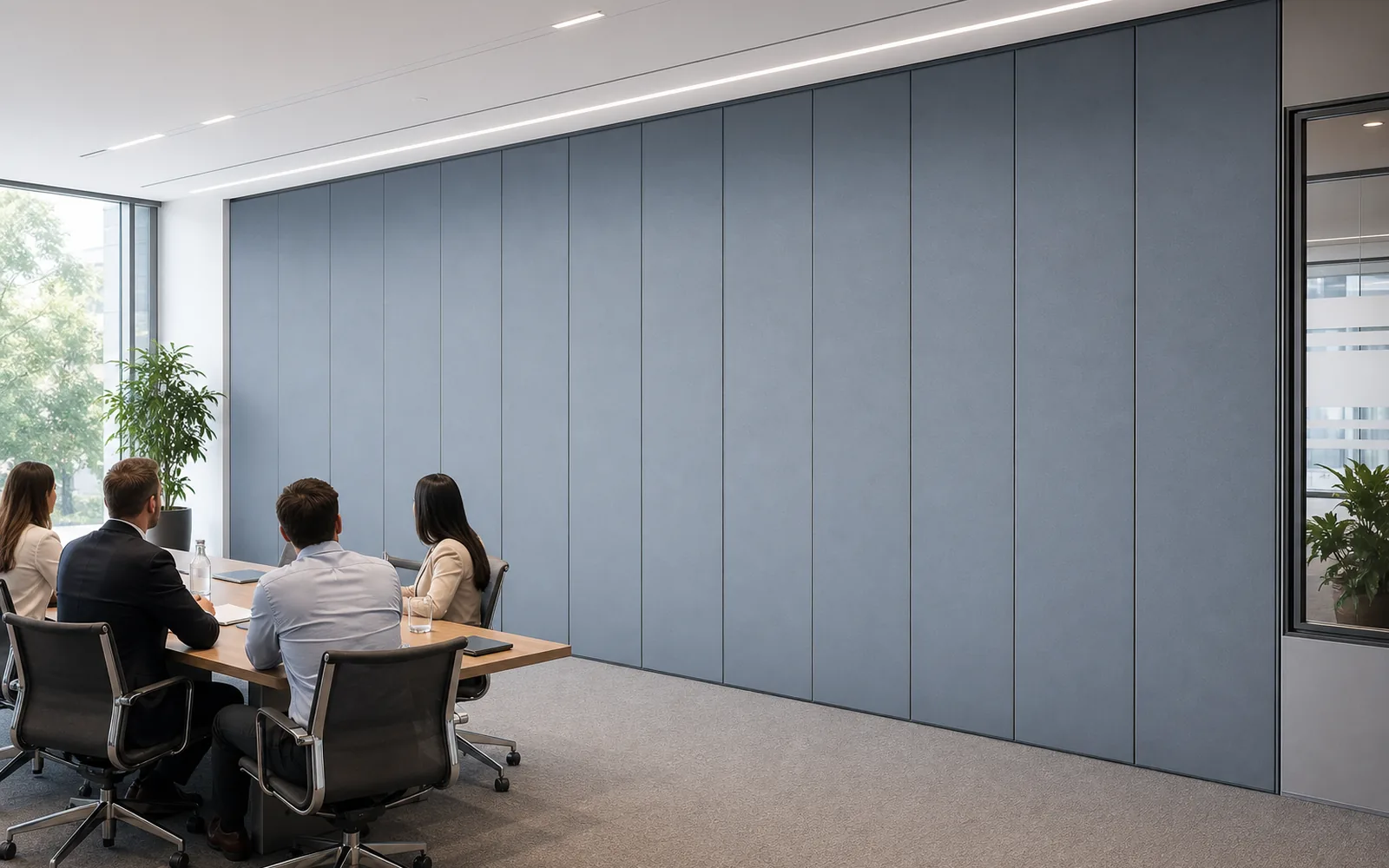
- Confirm the floor along the partition line remains uncut and free of a floor track.
- Check that the approved parking zone is clear of stored items.
- Review visible panel faces for marks that need the approved finish care method.
- Confirm the installed layout still matches the coordinated drawings.
- Record any change in room use that may affect the approved parking position.
Cleaning steps by finish
Cleaning steps depend on the selected finish. Use the approved method for that finish and avoid mixing products. The office meeting suite partition seal checklist should list the approved method beside the finish name.
- Identify the approved finish from the project file.
- Select the care method that matches that finish.
- Clean only the visible surfaces covered by that method.
- Return the parking zone to its approved clear condition.
- Note any surface change for review against the finish guidance.
Quick reference table
| Checklist item | What to confirm |
|---|---|
| Floor line | No continuous floor track or floor-cut channel along the partition line. |
| Parking zone | Approved parking position kept clear and matching the coordinated drawings. |
| Finish care | Cleaning method matched to the approved finish. |
| Drawings | Installed layout consistent with the approved coordinated drawings. |
Planning note for project teams
The exact route, junction arrangement, continuous overhead path and parking position must be confirmed from the coordinated project drawings.
This note applies to every office meeting suite partition seal checklist. It keeps planning tied to approved documents rather than to assumptions. The exact overhead route and support arrangement must be confirmed by the responsible project team from coordinated drawings.
Frequently asked questions
For further context, review related project guidance and additional planning resources before preparing the coordinated project brief.
Does the office meeting suite partition seal require a floor track?
No. The EBUNGE movable partition system is top-hung and has no continuous floor running track or operating hardware in the finished floor along the partition line.

Is the floor cut or damaged for a floor track?
No. The floor is not cut or damaged for a floor track and remains physically uninterrupted by the maintained EBUNGE top-hung system.
Can the parking arrangement be customized?
Panel parking style can be customized to the customer layout and project requirements, subject to coordinated drawings. The exact track, support and panel layout still require project drawings.
Do cleaning methods change with the finish?
Yes. Finish materials can be customized, and cleaning and maintenance methods vary with the selected finish. Confirm the approved method for the installed finish.
Where can movable partitions be used?
Movable partitions can be used wherever flexible space division, combination or reconfiguration is required. Application examples are not limiting.
What should buyers provide before drawings?
Buyers should provide the room layout, opening requirements, preferred parking side and finish direction. The exact route, junction arrangement, continuous overhead path and parking position must be confirmed from the coordinated project drawings.
Continue Exploring
More Acoustic Partition Guides
- Newer guideMaintenance Inspection Checklist for School Auditorium Partition Seals
- Earlier guideOffice Suites Partition Seals: Conference vs Huddle Room Acoustics
- Related guideAcoustic Partition Ceiling Interface Zone Confirmation
- Related guideWho Confirms Ceiling Grid Line Before Acoustic Partition Track