
Why floor junctures matter for restaurant function room partition seals
Quick project answer
Floor junctures are a practical inspection point for restaurant function room partition seals because they sit at the boundary between the finished floor and the partition line. In busy hospitality spaces, this line receives foot traffic, trolley wheels and cleaning equipment. A clear understanding of the partition type helps teams plan inspections without disturbing the floor.
The EBUNGE movable partition system is top-hung and has no continuous floor running track or operating hardware in the finished floor along the partition line. That confirmed fact changes what an inspection should look for. Instead of checking a floor track, teams verify that the floor remains physically uninterrupted and that the partition line is free of unintended damage.
This article covers the top-hung principle, floor continuity, parking planning, finish care coordination, non-limiting applications, buyer inputs and drawing approvals. It does not describe a generic operating procedure or hidden hardware. For engineering details outside confirmed facts, use this boundary sentence: The exact route, junction arrangement, continuous overhead path and parking position must be confirmed from the coordinated project drawings.
The top-hung principle and what it means at floor level
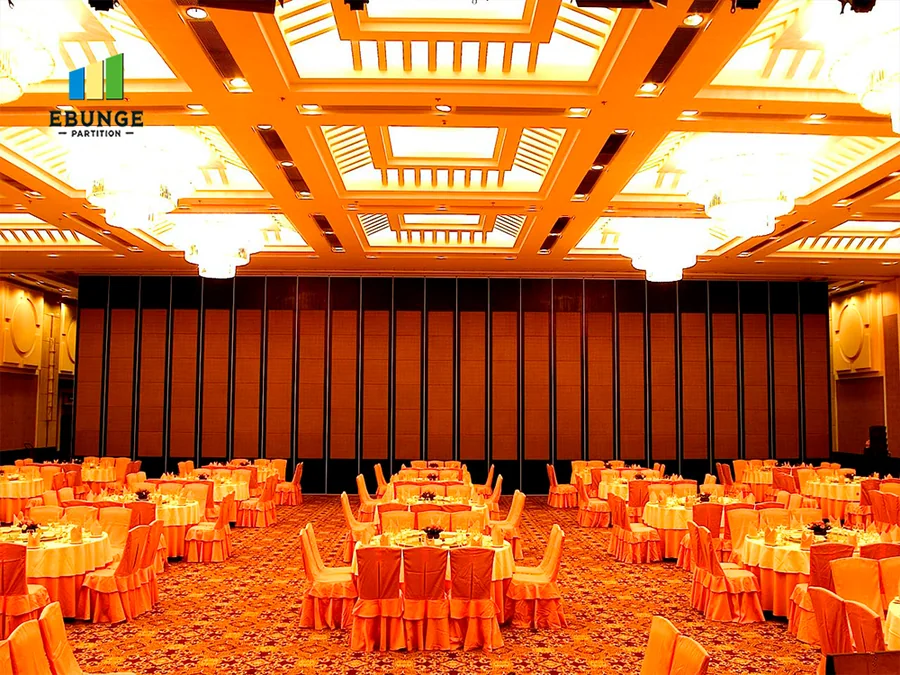
A top-hung movable partition carries its panels from an overhead structure rather than from a track set into the floor. For restaurant function room partition seals, this principle matters because the finished floor is not cut for a floor track. The floor remains physically uninterrupted by the maintained EBUNGE top-hung system.
Inspectors should therefore treat the floor juncture as a continuity check, not a track check. Look for surface damage, lifted finishes or debris that could interfere with panel movement along the partition line. Do not assume a floor track exists. Do not prescribe inspection of hidden hardware.
Cost and maintenance requirements depend on the selected configuration, finish and project conditions and require project-specific confirmation. Cleaning and maintenance methods vary with the selected finish. A finish-specific care plan should be agreed before routine inspections begin.
Inspecting the physically uninterrupted floor
The floor is not cut or damaged for a floor track and remains physically uninterrupted by the maintained EBUNGE top-hung system. During inspection, confirm that this continuity is preserved. Check for new cuts, grooves or fixings that may have been added after handover.
Any unauthorized floor modification can affect how the partition line performs in daily use. If a cut or fixing is found, record it and refer to the coordinated project drawings. The exact route, junction arrangement, continuous overhead path and parking position must be confirmed from the coordinated project drawings.
For restaurant function room partition seals, the inspection should also note floor finish condition along the full partition line. Uneven surfaces, loose tiles or lifted edges are finish issues, not track issues. They should be reported for finish-specific care.
Parking planning and floor juncture coordination
Panel parking style can be customized to the customer layout and project requirements, subject to coordinated drawings. A suitable approved parking arrangement can use the stacking area more compactly and coordinate with the space design. The exact track, support and panel layout still require project drawings.
When reviewing restaurant function room partition seals, parking planning affects the floor juncture because stacked panels concentrate activity in one area. Inspectors should confirm that the parking zone remains clear of obstructions and that the floor finish there is suitable for the approved arrangement.
The exact route, junction arrangement, continuous overhead path and parking position must be confirmed from the coordinated project drawings. Parking decisions belong in the coordinated drawings, where the continuous overhead path and parking position are confirmed.
Finish and care coordination for floor junctures
Finish materials can be customized, and cleaning and maintenance methods vary with the selected finish. This confirmed fact is central to floor juncture care. A finish that suits a restaurant function room may require specific cleaning products and methods.
Inspection teams should record the selected finish and follow the agreed care method. Do not prescribe a universal cleaning outcome. Do not claim cleaning benefits. The goal is to keep the floor juncture clean and undamaged without altering the finish.
For restaurant function room partition seals, finish care also includes checking for debris that could interfere with the partition line. Small objects, food particles or cleaning residue should be removed using the approved method for that finish.
Non-limiting applications in hospitality spaces
Movable partitions can be used wherever flexible space division, combination or reconfiguration is required; application examples are not limiting. EBUNGE has completed many types of hotel-related movable-partition projects; ballrooms, wedding halls and multifunction halls are non-limiting examples.
Restaurant function rooms are another context where restaurant function room partition seals may be inspected. The same top-hung principle applies: no continuous floor running track and no operating hardware in the finished floor along the partition line.
Because applications are not limiting, inspection checklists should be adapted to the specific layout. Use the coordinated project drawings as the reference for the exact route, junction arrangement, continuous overhead path and parking position.
Buyer inputs and drawing approvals
Buyers should provide clear inputs on layout, finish preferences and parking expectations. These inputs feed into coordinated drawings. The exact track, support and panel layout still require project drawings before any floor juncture decision is finalized.
For restaurant function room partition seals, drawing approvals should confirm the partition line, parking zone and finish care method. Do not prescribe a universal installation sequence or a post-approval production step.
Approved drawings become the reference for inspection. If field conditions differ, record the difference and refer back to the drawings. The exact route, junction arrangement, continuous overhead path and parking position must be confirmed from the coordinated project drawings.
Scannable inspection checklist

- Confirm the partition is top-hung and has no continuous floor running track.
- Check that the finished floor remains physically uninterrupted along the partition line.
- Look for new cuts, grooves or fixings added after handover.
- Record floor finish condition and any loose or lifted areas.
- Verify the parking zone is clear and matches the approved arrangement.
- Confirm the finish-specific cleaning method is being followed.
- Refer any deviation to the coordinated project drawings.
Questions to ask before inspection
- What finish is installed along the floor juncture, and what care method applies?
- Where is the approved parking zone, and how is it coordinated with the space design?
- Have any floor modifications occurred since handover?
- Do the coordinated drawings show the continuous overhead path and parking position?
- Who is responsible for recording and reporting floor juncture findings?
Drawing reference table
| Item | What to confirm | Reference |
|---|---|---|
| Partition line | No continuous floor running track | Coordinated drawings |
| Floor continuity | No cuts or fixings added after handover | Site inspection |
| Parking zone | Approved arrangement and clear area | Coordinated drawings |
| Finish care | Method matches selected finish | Finish-specific care plan |
The exact route, junction arrangement, continuous overhead path and parking position must be confirmed from the coordinated project drawings.
Frequently asked questions
What are restaurant function room partition seals?
They are the inspection points along the floor juncture where the partition line meets the finished floor. For a top-hung EBUNGE system, there is no continuous floor running track or operating hardware in the finished floor.
Does a top-hung partition require a floor track?
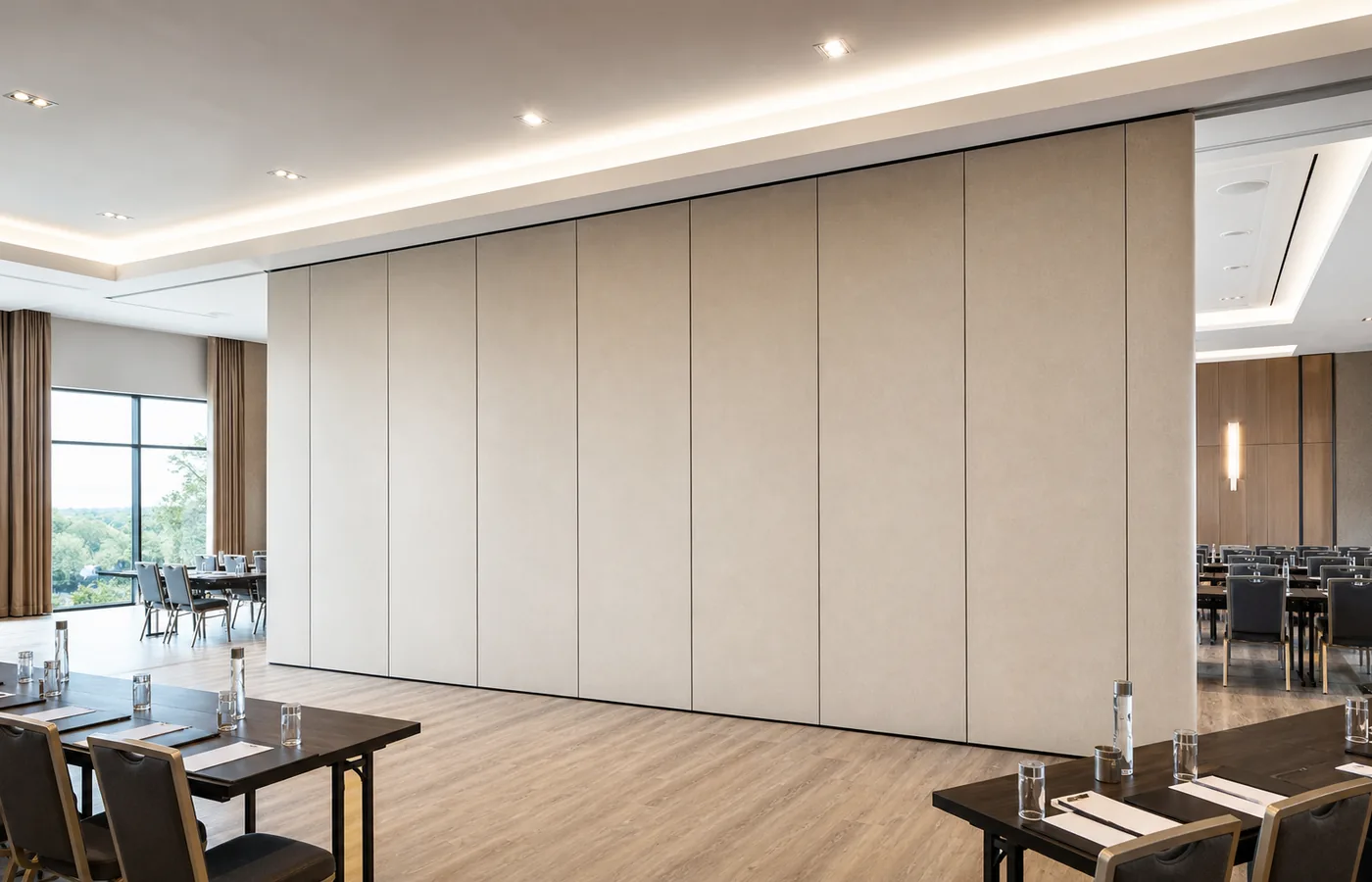
No. The EBUNGE movable partition system is top-hung and has no continuous floor running track or operating hardware in the finished floor along the partition line. The floor remains physically uninterrupted.
How often should floor junctures be inspected?
Inspection frequency depends on the venue and finish. Cleaning and maintenance methods vary with the selected finish. A finish-specific care plan should define the routine.
Can panel parking affect the floor juncture?
Panel parking style can be customized to the customer layout and project requirements, subject to coordinated drawings. A suitable approved parking arrangement can use the stacking area more compactly and coordinate with the space design.
What should buyers provide for drawing approvals?
Buyers should provide layout, finish preferences and parking expectations. The exact track, support and panel layout still require project drawings. The exact route, junction arrangement, continuous overhead path and parking position must be confirmed from the coordinated project drawings.
Are restaurant function rooms the only application?
No. Movable partitions can be used wherever flexible space division, combination or reconfiguration is required; application examples are not limiting. EBUNGE has completed many types of hotel-related movable-partition projects.
Related resources
For more on movable partition systems, see operable wall system. For project context, see projects.
Continue Exploring
More Acoustic Partition Guides
- Newer guideRestaurant Room Partition Manual Operation: Ceiling Condenser Unit Noise
- Earlier guideSchool Auditorium Partition Seals: Wall-Mounted Stage Pin Rail Systems
- Related guideAcoustic Partition Ceiling Interface Zone Confirmation
- Related guideWho Confirms Ceiling Grid Line Before Acoustic Partition Track