
Why Abrasion Mapping Matters for Healthcare Training Room Partitions
For project teams, healthcare training room partition finishes abrasion should be reviewed against the opening, ceiling interface, operating sequence and approved finish requirements. In healthcare training rooms, movable partitions are often used to divide large simulation labs, debriefing areas, and classroom spaces. These rooms are dynamic: instructors move equipment, students practice procedures, and heavy mobile simulator dollies—used to train on patient handling or emergency scenarios—are frequently repositioned. Each time a dolly is wheeled past a partition, it may brush against the surface, especially in tight turns or when the dolly is loaded. Over time, this repeated contact can cause visible wear, scuffing, or even deeper abrasion on the partition finish. This is why healthcare training room partition finishes abrasion must be considered during the planning phase, not as an afterthought.
EBUNGE movable wall panels are individually movable and suspended from a top track, crossing the opening without a floor track. This design offers flexibility, but it also means that the panel surfaces are exposed to the same daily traffic as the room itself. By mapping out where dollies will travel, where they will pivot, and where they will be parked, you can identify high-risk zones for abrasion. This process—abrasion mapping—allows you to select finishes that will withstand the specific demands of your training environment. It is a proactive approach that protects your investment and maintains a professional appearance over time.
Understanding Abrasion in Training Environments
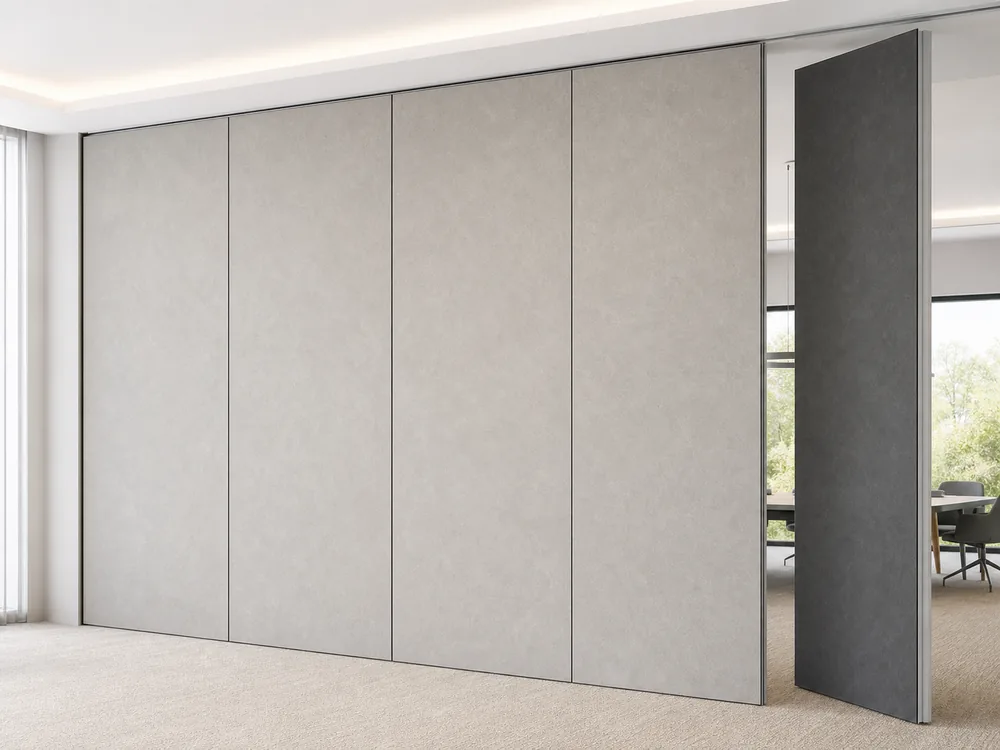
Abrasion is the mechanical wearing away of a surface caused by friction. In a healthcare training room, the primary source of abrasion is the movement of wheeled equipment. Simulator dollies are often heavy and may have wheels that can leave marks or scratch surfaces. Even if the dolly is pushed carefully, accidental bumps or turns can cause the dolly to rub against the partition. The severity of abrasion depends on several factors: the weight of the dolly, the speed of movement, the frequency of contact, and the angle at which contact occurs.
Share elevations, finish references and cleaning requirements.
Another factor is the nature of the training itself. Some simulations involve rapid movements or emergency scenarios where staff may not have time to maneuver carefully. This increases the likelihood of impact. Additionally, training rooms may be used for multiple purposes—from lectures to hands-on practice—so partitions may be moved frequently, exposing different surfaces to potential abrasion. Understanding these dynamics is the first step in developing an effective abrasion mapping strategy.
Types of Abrasion to Consider
There are two main types of abrasion to consider: surface scuffing and deep scratching. Scuffing is a light mark that can often be wiped off or cleaned, but if it occurs repeatedly, it can dull the finish. Deep scratching is more serious and may require refinishing or replacement. The type of abrasion depends on the finish material and the force of contact. For example, a soft fabric finish may show scuffing more readily than a hard laminate, but it may also be more forgiving on impact. A glass finish might scratch less easily but could chip if struck sharply.
How Abrasion Mapping Works
Abrasion mapping involves plotting the movement patterns of mobile equipment within the training room. This includes the paths dollies take from storage to simulation areas, the turning radius required, and any areas where the dolly might come into close proximity with partitions. You can create a simple floor plan and mark these routes. Then, identify where the partition surfaces are most likely to be contacted. These are your high-risk zones.
Once you have identified these zones, you can evaluate which finishes will perform best in those areas. For example, if a dolly regularly passes a particular panel during a turn, that panel may need a more durable finish. Alternatively, you might decide to position the partition so that the high-risk side faces a less trafficked area, or you could install protective bumpers. The goal is to match the finish to the expected level of wear.
Straight, Turning, and Stacking Routes
EBUNGE movable wall systems can be designed to accommodate straight, turning, and stacking routes, as reviewed from the layout. When planning abrasion mapping, consider each of these route types. Straight routes are the most predictable, but turning routes can cause the dolly to swing and contact the partition. Stacking routes—where panels are parked at a planned position—may involve more frequent movement, increasing the chance of accidental contact. By understanding these routes, you can anticipate where abrasion is most likely to occur.
Finish Options for Healthcare Training Rooms
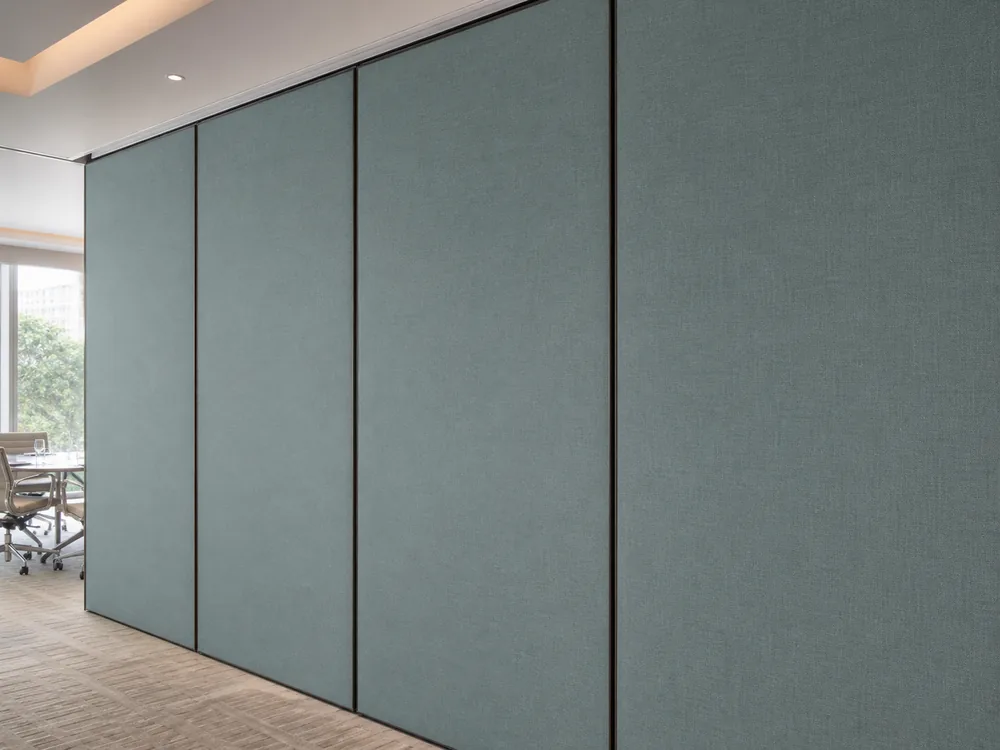
EBUNGE offers a range of finish options, including laminate, melamine, fabric, leather, glass, and other approved surfaces. Each has distinct characteristics that affect its resistance to abrasion. Laminate and melamine are hard, non-porous surfaces that are generally resistant to scuffing and easy to clean. Fabric and leather offer a softer, more acoustically absorptive surface, but they may be more susceptible to abrasion and require more careful maintenance. Glass is highly durable and scratch-resistant, but it can be more expensive and may show fingerprints or smudges.
When selecting a finish, consider not only abrasion resistance but also hygiene requirements, acoustic performance, and aesthetic preferences. Healthcare training rooms often require surfaces that can be easily disinfected, which may rule out porous materials. The choice of finish should be made in consultation with EBUNGE experts, who can provide guidance based on your specific needs.
Balancing Abrasion Resistance and Acoustic Performance
There is often a trade-off between abrasion resistance and acoustic performance. Hard surfaces like laminate or glass reflect sound, which can increase noise levels in a training room. Soft surfaces like fabric or leather absorb sound, improving acoustics, but they may be less durable. This is where abrasion mapping becomes crucial: if you know that a particular area is high-risk, you might choose a more durable finish there, even if it means sacrificing some acoustic performance. In lower-risk areas, you can use softer finishes to enhance sound control. EBUNGE can discuss acoustic concepts generically, but specific acoustic performance should be confirmed for your project.
Compare approved samples and panel-route clearances.
Planning for Pass Doors and Access
In healthcare training rooms, pass doors are often required to allow staff and equipment to move through partitions without opening the entire wall. Pass-door requirements can be discussed with EBUNGE to ensure that the door swing and hardware do not interfere with dolly movement. The area around a pass door may be especially vulnerable to abrasion, as dollies may pass through frequently. Abrasion mapping should include these zones, and the finish around the door may need to be more robust.
Project Documentation and Collaboration
Effective abrasion mapping requires collaboration between the design team, the facility manager, and the partition manufacturer. EBUNGE can assist with project documentation, including detailed drawings and specifications, to ensure that the selected finishes meet the operational demands of the training room. By discussing your needs early, you can avoid costly mistakes and ensure that the partition system performs well for years.
It is also important to consider future changes. Training programs may evolve, and new equipment may be introduced. Abrasion mapping should be flexible enough to accommodate these changes. For example, if you anticipate that a new simulator dolly will be heavier or have different wheels, you might select a more durable finish initially.
Common Questions About Partition Finishes and Abrasion
What is abrasion mapping and why is it important?
Abrasion mapping is the process of identifying where and how often mobile equipment will contact partition surfaces. It is important because it helps you select finishes that will withstand the wear and tear of daily use, avoiding premature damage and maintenance costs.
Which finish is most resistant to abrasion?
Hard finishes like laminate, melamine, and glass tend to be more abrasion-resistant than soft finishes like fabric or leather. However, the best choice depends on your specific environment, including the type of dollies and the frequency of contact. EBUNGE can help you evaluate options.
Can fabric finishes be used in high-traffic areas?
Fabric finishes are more susceptible to abrasion and may show marks more easily. If you prefer a fabric finish, consider using it in lower-risk areas or adding protective measures. Alternatively, use a more durable finish in high-risk zones.
How do I determine the high-risk zones in my training room?
Start by mapping the movement routes of your dollies, including straight paths, turns, and parking areas. Observe where the dollies come closest to the partitions and where contact is most likely. You can also use protective films or tape to test for potential contact points.
Does EBUNGE provide guidance on finish selection?
Yes, EBUNGE can discuss finish options and help you plan for abrasion resistance based on your layout and usage. It is recommended to confirm your specific requirements with our team.
Conclusion: Plan for Durability with Abrasion Mapping
Healthcare training rooms are demanding environments where equipment movement can take a toll on partition finishes. By conducting abrasion mapping early in the planning process, you can select finishes that balance durability, hygiene, acoustics, and aesthetics. EBUNGE movable wall systems offer flexibility and a variety of finish options to meet your needs. However, every project is unique, and it is essential to confirm project-specific support, acoustic, and dimensional requirements with our team.
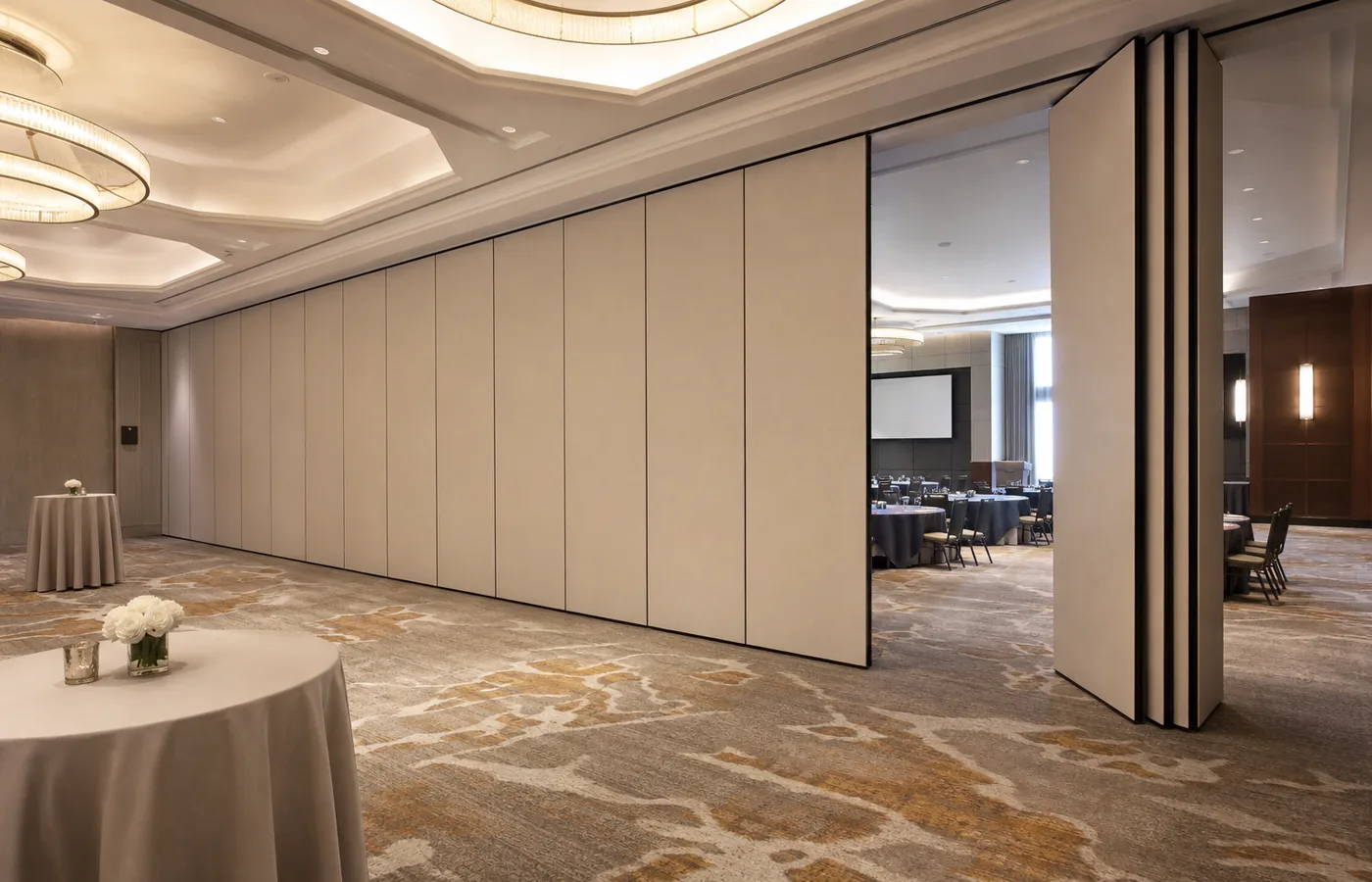
Ready to discuss your healthcare training room partition needs? Contact EBUNGE today to speak with our experts. We can help you review your layout, plan for abrasion, and select the right finishes. For more information about our movable wall systems, visit our movable partition wall page or explore recent projects.
Continue Exploring
More Materials and Finishes Guides
- Newer guideBallroom Finish Samples: A Coordination Checklist for Interior Designers
- Earlier guideHow to Plan Healthcare Training Room Partition Finishes for Wall-Mounted Simulation Monitor Arms
- Related guideComparing Healthcare Training Room Partition Finishes for Wall-Mounted Whiteboard vs Tackable Zones
- Related guideWhy Sports Hall Partition Finishes Need Abrasion Mapping for Wall-Mounted Hurdle Storage Racks