
Why Finish Selection Matters for Office Meeting Suite Partitions
When planning an office meeting suite, the choice between marker board and tackable finishes on movable partitions affects how the space functions daily. This office meeting suite partition finishes marker tackable comparison helps architects, interior designers, and facility teams evaluate options without assuming hidden performance. The right finish supports collaboration, presentation, and brainstorming—but only when matched to the actual room layout and usage patterns.
EBUNGE movable partition panels are individually movable and suspended from a top track. They cross the opening without a floor track, leaving the floor clear. Panels park at a planned stacking position when not in use. This system allows flexible room division, but the finish you choose must work with the panel’s movement and stacking behavior.
Before comparing finishes, confirm the project’s spatial requirements. Straight, turning, and stacking routes are reviewed from the layout. The finish is applied to the panel surface, so it must withstand the intended use—whether that is frequent marker writing or pinning materials. No finish should be selected without understanding the project’s specific needs.
Understanding Marker Board Finishes
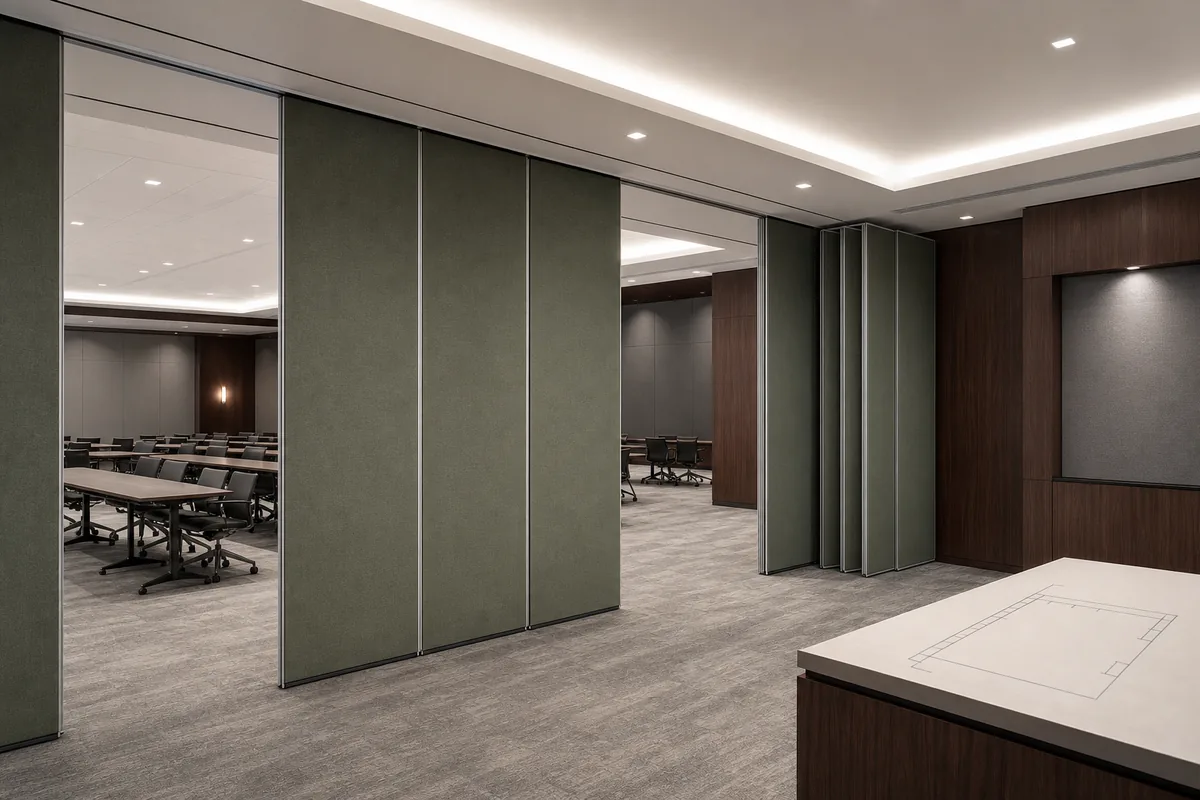
Marker board finishes are designed for dry-erase writing. They are common in meeting rooms, training areas, and presentation spaces. The surface allows users to write, erase, and rewrite multiple times. However, not all marker board surfaces perform identically. The actual writing experience depends on the finish material, the markers used, and maintenance practices.
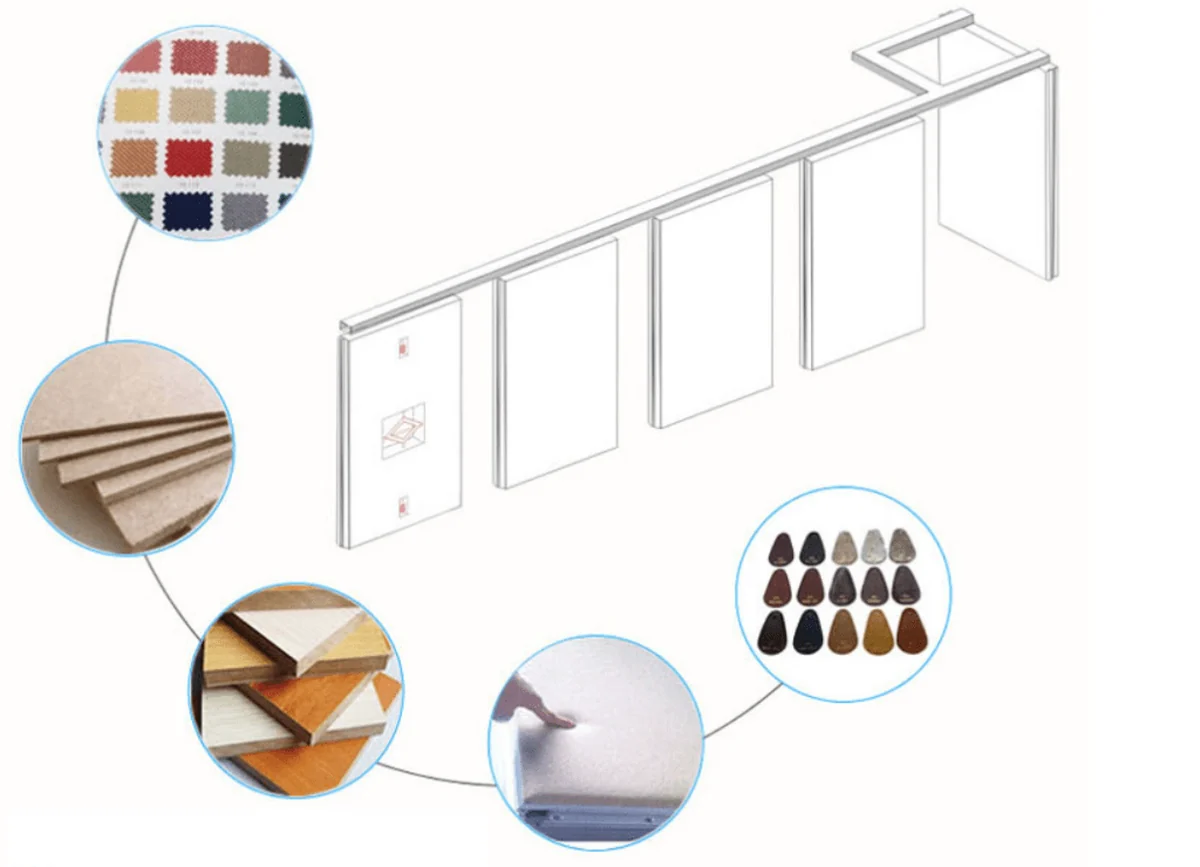
EBUNGE offers laminate, melamine, and other approved surfaces. Some of these can be specified as marker board finishes. The choice between laminate and melamine may affect durability and appearance, but specific performance data must be confirmed with the manufacturer for each project.
Laminate Marker Board Surfaces
Laminate finishes are common in movable partitions. They are available in many colors and patterns. For marker board use, a laminate with a smooth, non-porous surface is typical. Laminate can be durable and easy to clean, but the exact resistance to ghosting or staining depends on the product. Project teams should request samples and test with the markers they plan to use.
Melamine Marker Board Surfaces
Melamine is another option for marker board zones. Cost and maintenance requirements depend on the selected configuration, finish and project conditions and require project-specific confirmation. Melamine surfaces can work well for dry-erase, but they may be more susceptible to scratching or staining. Again, project-specific testing is essential. Do not assume that all melamine finishes are identical.
Share the opening dimensions, room layout and intended operating sequence for review.
Understanding Tackable Finishes
Tackable finishes allow users to pin documents, charts, and notes directly to the surface. They are useful for project walls, brainstorming areas, and collaborative zones. Tackable surfaces are typically made from fabric or leather, but other materials may be available. The finish must be able to accept pins without visible damage and hold them securely.
EBUNGE offers fabric and leather finishes, among others. These can be specified for tackable zones. The choice between fabric and leather affects aesthetics, maintenance, and pin retention. Again, project-specific confirmation is required.
Fabric Tackable Surfaces
Fabric finishes provide a soft, textile appearance. They are available in many colors and textures. Fabric can be tackable if the underlying panel construction supports pinning. However, the density and thickness of the fabric and the panel core influence how well pins hold. Do not assume that any fabric finish is tackable. Confirm with the manufacturer.
Leather Tackable Surfaces
Leather finishes offer a premium look and feel. They are durable and easy to wipe clean. Leather can also be tackable, but the surface may show pin holes more visibly than fabric. The choice between fabric and leather often comes down to aesthetics and maintenance preferences. Again, confirm tackability with the manufacturer.
Comparing Marker Board vs Tackable Finishes for Meeting Suites
When comparing marker board and tackable finishes, consider the primary function of each zone. A meeting suite may have areas for presentation, collaboration, and informal discussion. Marker board finishes suit presentation walls where writing is frequent. Tackable finishes suit areas where visual display is important, such as project timelines or brainstorming walls.
Some projects combine both finishes on different panels or on opposite sides of the same panel. This approach allows the space to serve multiple purposes. However, the layout must accommodate the different surfaces. For example, a marker board zone may require a clear area in front for users to write, while a tackable zone may have furniture nearby.
Functional Considerations
Marker board finishes require a smooth, erasable surface. Tackable finishes require a surface that can accept pins. The two functions are not interchangeable. A marker board finish may not be tackable, and a tackable finish may not be writable. Confirm the intended use for each panel face.
Aesthetic and Branding Considerations
The finish also affects the visual identity of the space. Laminate and melamine offer a wide range of colors and patterns. Fabric and leather provide texture and warmth. The choice should align with the overall interior design. EBUNGE offers laminate, melamine, fabric, leather, glass, and other approved surfaces. Glass can be used for marker board or as a decorative element, but it is not tackable.
Project Coordination for Finish Selection
Selecting the right finish is not a solo decision. It requires coordination among the architect, interior designer, contractor, and the partition manufacturer. The project team must review the layout, the movement routes, and the stacking positions. The finish must be applied to panels that move and park correctly. Any conflict between the finish and the panel mechanics must be resolved early.
Reviewing the Layout and Movement Routes
Straight, turning, and stacking routes are reviewed from the layout. The finish does not affect the movement, but the layout determines which panels are visible and how they are used. For example, a panel that parks in a stack may have a finish that is only seen when the panel is in use. The stacking position may also protect the finish from damage.
Documentation and Approvals
Project documentation is essential. The manufacturer should provide drawings and specifications that show the panel layout, finish locations, and movement paths. The project team should review these documents and approve the finish schedule. Any changes to the finish should be documented and communicated.
Acoustic and Sealing Considerations
Review the ceiling interface, panel route and stacking position together.
The suitability of each route and parking arrangement depends on the approved layout, circulation, ceiling interfaces and operating sequence. Visible references can support layout discussion but do not verify hidden construction or performance. These ratings are measured in controlled conditions and depend on the entire partition assembly, not just the finish.
The seals, the panel construction, and the installation all contribute to the final result.
Maintenance and Durability Expectations
Marker board and tackable finishes have different maintenance needs. Marker board surfaces should be cleaned with appropriate dry-erase cleaners. Tackable surfaces may require vacuuming or spot cleaning. The durability of the finish depends on the material and the intensity of use. Do not expect a finish to last indefinitely without proper care. Confirm maintenance recommendations with the manufacturer.
FAQ: Office Meeting Suite Partition Finishes
Can a single movable partition have both marker board and tackable finishes?
Yes, it is possible to specify different finishes on different panels or on opposite sides of the same panel. However, the layout must accommodate the different functions. Confirm the finish schedule with the manufacturer.
Are all fabric finishes tackable?
No. Tackability depends on the fabric type and the panel construction. Some fabrics are designed for tackable use, while others are not.
What is the difference between laminate and melamine marker board finishes?
Laminate and melamine are both surface materials that can be used for marker board. Laminate is often more durable and available in more designs. The actual writing performance may vary. Test samples with your markers.
Does the finish affect the acoustic performance of the partition?
What project information is needed to compare finishes?
You need the room layout, the intended use of each zone, the movement routes, and the stacking positions. Share this information with the manufacturer to get accurate recommendations.
Can glass finishes be used for marker board?
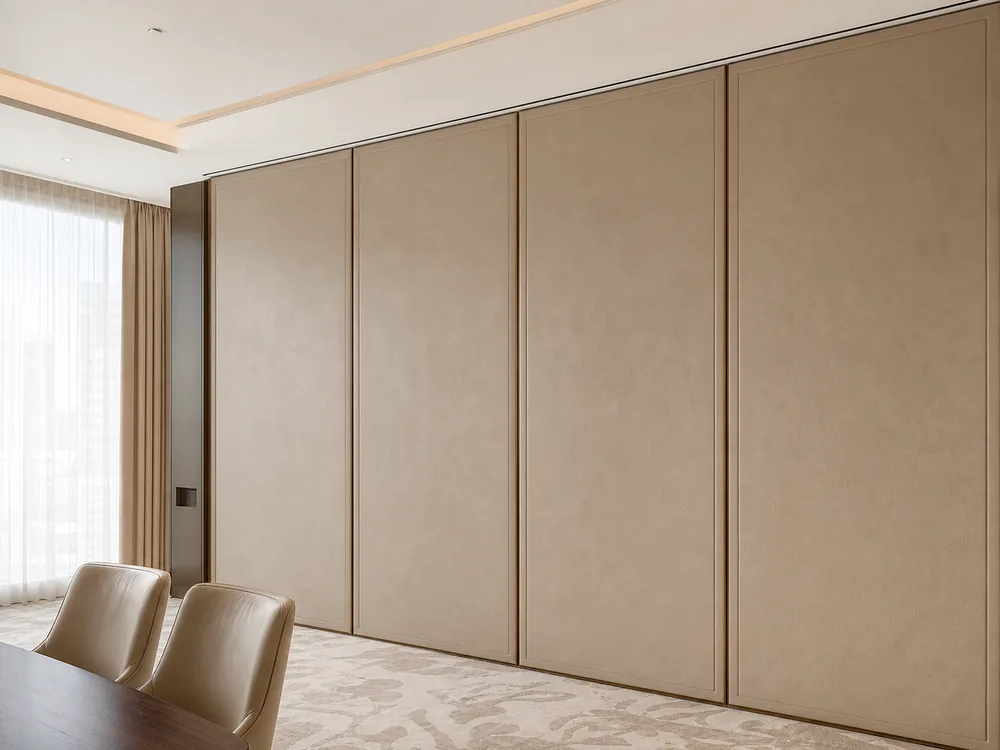
Yes, glass can be used as a marker board surface. It is durable and easy to clean. However, glass is not tackable. If you need both functions, consider combining glass with a tackable finish on another panel.
Conclusion and Next Steps
Comparing marker board and tackable finishes for office meeting suite partitions requires a clear understanding of the project’s functional and aesthetic goals. EBUNGE movable partitions offer flexibility with top-hung panels that move without floor tracks, but the finish choice must be coordinated with the layout and usage.
Start by defining the zones: where will people write, where will they pin, and where will they present? Then review the movement routes and stacking positions. Finally, confirm the finish options with the manufacturer.
For any project, the manufacturer should provide documentation that specifies the finish schedule, movement paths, and installation details. Do not rely on assumptions about performance.
Ready to discuss your office meeting suite partition finishes? Contact EBUNGE Partition to review your layout and finish options. Our team can help you evaluate marker board and tackable finishes for your specific project. Visit our movable partition wall page for more product information, or explore project examples to see how others have used flexible partitions.
Continue Exploring
More Materials and Finishes Guides
- Newer guideHow to Compare School Auditorium Partition Finishes for Wall-Mounted Folded Chair Storage Zones
- Earlier guideWhy Hotel Banquet Partition Finishes Need Coordination with Ceiling-Mounted Rigging Point Swings
- Related guideComparing Healthcare Training Room Partition Finishes for Wall-Mounted Whiteboard vs Tackable Zones
- Related guideWhy Sports Hall Partition Finishes Need Abrasion Mapping for Wall-Mounted Hurdle Storage Racks