
Why Finish Selection Matters in Restaurant Kitchen Zones
When planning a restaurant layout that uses movable partitions, the finish you choose for panels near cooking or dishwashing areas is not just a visual decision. It affects how the surface responds to the environment, how it can be cleaned, and how it will look over time. This restaurant partition finishes comparison for kitchen zones helps architects, interior designers, and contractors evaluate options without assuming hidden performance.
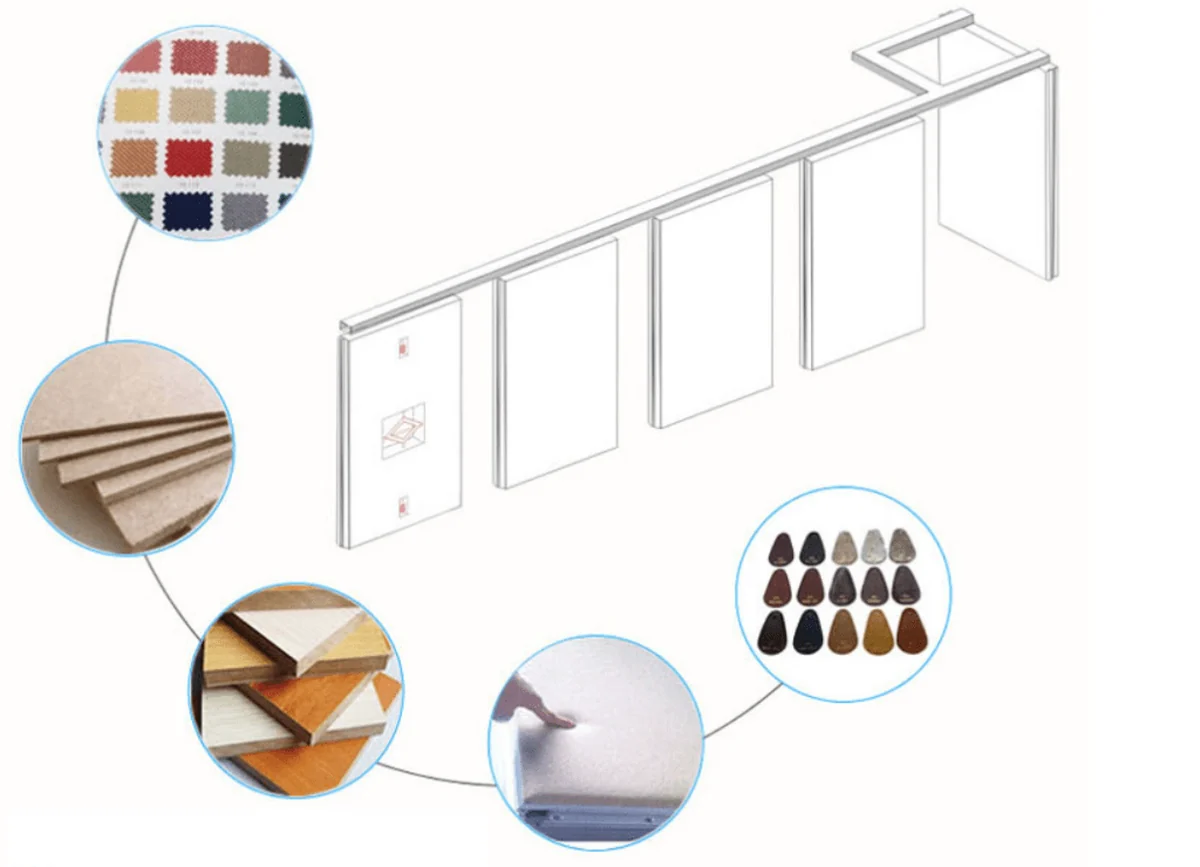
EBUNGE movable partition panels are individually movable and top-hung from an overhead track. The suitability of each route and parking arrangement depends on the approved layout, circulation, ceiling interfaces and operating sequence. Panels park at a planned stacking position when not in use. The finish is part of the panel specification, and it must be chosen with the project’s specific conditions in mind.
In a restaurant, two common zones create different challenges: areas exposed to grease vapor (near cooking lines, grills, or fryers) and areas exposed to steam and moisture (near dishwashers, steam tables, or pot washing). Each zone may require a different finish approach. This article provides a comparison framework, not a one-size-fits-all answer.
Understanding Grease Vapor and Steam Abrasion Zones
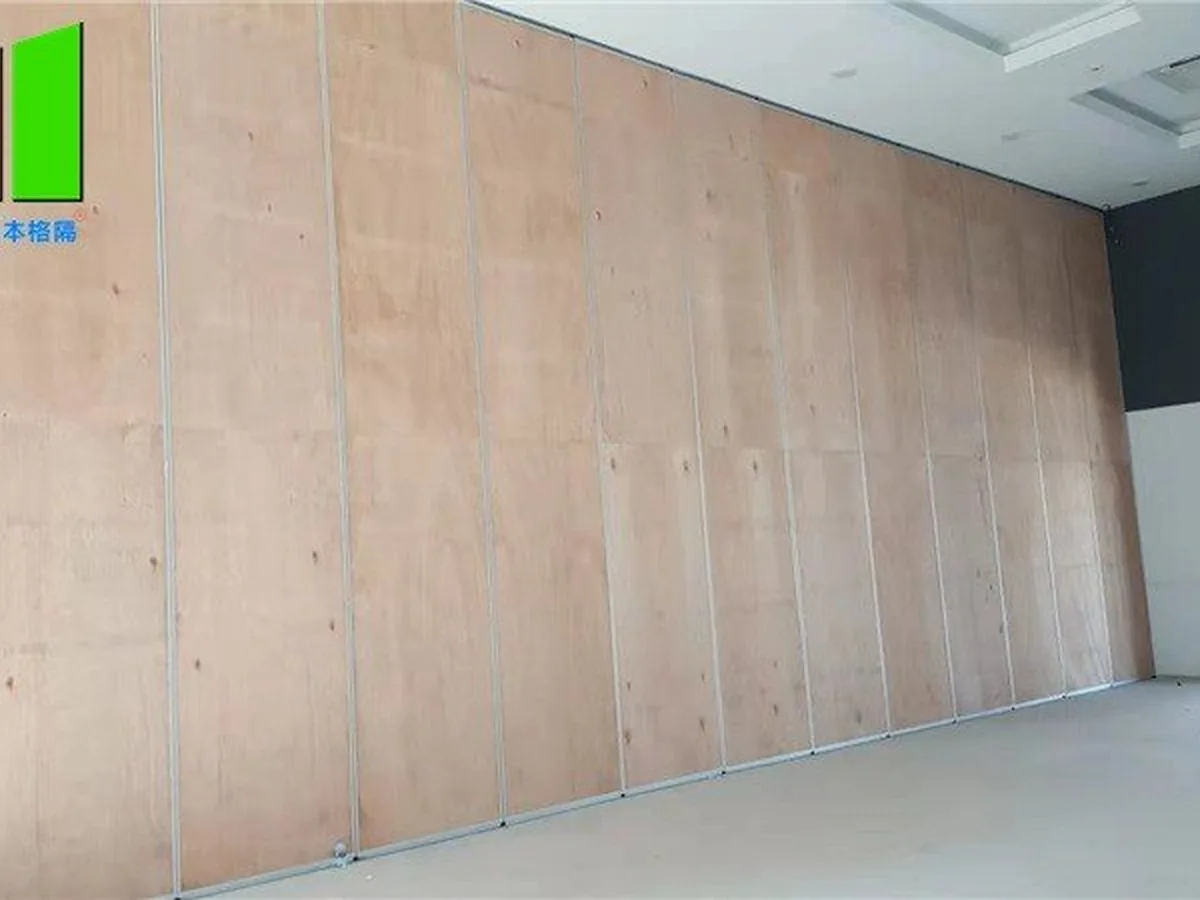
Grease vapor zones are typically near cooking equipment where airborne oils can settle on surfaces. Steam abrasion zones are areas with high humidity, condensation, or direct water spray. Both can affect the appearance and maintenance of partition finishes, but in different ways.
Grease Vapor Characteristics
Grease vapor is sticky and can attract dust. It may require frequent cleaning with degreasers. The finish should be able to withstand repeated wiping without dulling or discoloring. However, the actual resistance depends on the specific finish and the cleaning chemicals used, which must be confirmed with the manufacturer.
Steam and Moisture Exposure
Steam can cause swelling or peeling if the substrate is not properly sealed. In these zones, the finish and the panel construction must be suitable for high humidity. Again, project-specific confirmation is essential.
EBUNGE Movable Partition Finish Options
EBUNGE offers a range of finish options for movable partitions, including laminate, melamine, fabric, leather, glass, and other approved surfaces. Each has different visual and tactile qualities, and each may be more or less suitable for certain environments. However, the suitability must be evaluated on a project-by-project basis.
Share the opening dimensions, room layout and intended operating sequence for review.
Laminate and Melamine
They are available in many colors and patterns. In steam zones, the edges and seams must be properly sealed to prevent moisture ingress.
Fabric and Leather
Leather or leatherette can be more resistant to staining, but still requires proper maintenance. These finishes are often used in front-of-house areas rather than near cooking or dishwashing.
Glass and Other Surfaces
Glass panels can be sleek and easy to clean, but they may show fingerprints and require frequent polishing. Other approved surfaces might include metal or specialty coatings. The choice depends on the design intent and the operational requirements of the space.
Comparing Finishes for Grease Vapor Zones
When comparing finishes for grease vapor zones, consider how the surface will interact with oil and cleaning agents. However, the actual performance depends on the finish’s formulation and the cleaning protocol.
Ease of Cleaning
But even among laminates, there are differences in surface texture. Test samples in the actual environment if possible.
Resistance to Staining
Some finishes are more resistant to oil-based stains than others. Leather and certain laminates may resist staining, but fabric can absorb grease.
Long-Term Appearance
Repeated cleaning can wear down some finishes over time. Abrasive cleaners or scrubbing pads can dull a glossy surface. Cost and maintenance requirements depend on the selected configuration, finish and project conditions and require project-specific confirmation. This is a project-specific decision that should be discussed with the supplier.
Comparing Finishes for Steam Abrasion Zones
In steam abrasion zones, the primary concern is moisture resistance. The finish must protect the panel core from water damage.
Moisture Resistance
Laminate and melamine are generally more moisture-resistant than fabric or leather, provided the edges are sealed. Glass is inherently moisture-resistant. However, the panel’s internal construction also matters. Confirm that the panel is suitable for high-humidity environments.
Edge and Seam Integrity
Water can seep into edges and seams. In steam zones, it is crucial that all edges are properly sealed. This is a detail that should be reviewed in the project documentation. The finish alone does not guarantee water resistance; the entire panel system must be designed for the environment.
Cleaning and Maintenance

Steam zones may require frequent cleaning to prevent soap scum or mineral deposits. Avoid textured finishes that can trap moisture and promote mold growth. Again, confirm the cleaning protocol with the facility manager.
Project-Specific Coordination and Documentation
Choosing the right finish is not a standalone decision. It must be coordinated with the overall partition system, including the track route, stacking position, and ceiling interface. EBUNGE reviews straight, turning, and stacking routes from the layout. This ensures that the panels can move as intended.
Layout and Route Review
Before finalizing finishes, the project team should review the proposed layout with EBUNGE. This includes the path the panels will travel, the stacking area, and any pass-door requirements. This review helps identify potential issues with finish durability, such as panels that may be more exposed to grease or steam.
Review the ceiling interface, panel route and stacking position together.
Documentation and Approvals
Project documentation, including drawings and specifications, should clearly indicate the finish for each panel or zone. This avoids confusion during installation. EBUNGE can discuss project documentation requirements to ensure all parties are aligned.
Pass-Door Requirements
If a pass-door is needed within the partition, the finish must be compatible with the door hardware and operation. This is another detail that should be confirmed during the design phase.
Acoustic Considerations in Finish Selection
Visible references can support layout discussion but do not verify hidden construction or performance. Fabric finishes can absorb sound, while hard surfaces like glass or laminate reflect sound.
These ratings are determined through standardized tests and depend on the entire panel construction, not just the finish. Do not assume that a particular finish will achieve a certain STC or Rw value.
Frequently Asked Questions
What finish is best for a movable partition near a deep fryer?
There is no universal answer. Consult with EBUNGE and the finish manufacturer for project-specific recommendations.
Can fabric finishes be used in a restaurant kitchen?
If fabric is desired, consider its location and maintenance plan carefully.
Do EBUNGE movable partitions require a floor track?
No. EBUNGE movable partition panels are top-hung and move without a continuous floor running track or floor hardware along the partition line.
How do I know if a finish is suitable for steam exposure?
You need to confirm the finish’s moisture resistance with the manufacturer. Also, ensure that the panel edges and seams are properly sealed. EBUNGE can discuss project-specific requirements and documentation.
Can I mix different finishes on different panels in the same partition?
Yes, it is possible to have different finishes on different panels, but this must be coordinated with the layout and stacking design. For example, panels that park in a grease zone might have a different finish than those in a steam zone. Discuss this with EBUNGE during the layout review.
What is the difference between STC and Rw?
STC and Rw are both ratings that describe the sound insulation of a partition. STC is commonly used in North America, while Rw is used internationally. They are measured differently but serve a similar purpose.
Conclusion and Next Steps
Comparing restaurant partition finishes for kitchen zones requires a careful evaluation of the environment, cleaning protocols, and the partition system’s capabilities. EBUNGE movable partitions offer flexibility and a range of finish options, but the final selection must be based on project-specific evidence.
To ensure your restaurant project succeeds, engage EBUNGE early in the design process. Review the layout, discuss finish options, and confirm all technical requirements.
Contact EBUNGE today to discuss your project and get expert guidance on finish selection and partition configuration. You can also explore our movable partition wall page for more information, or view project examples to see how EBUNGE partitions have been used in various settings.
Continue Exploring
More Materials and Finishes Guides
- Newer guideWhy Function Room Partition Finishes Need Abrasion Mapping for Mobile Stage Deck Dollies
- Earlier guideHow to Coordinate School Auditorium Partition Finishes with Wall-Mounted Chalk Tray Edges
- Related guideComparing Healthcare Training Room Partition Finishes for Wall-Mounted Whiteboard vs Tackable Zones
- Related guideWhy Sports Hall Partition Finishes Need Abrasion Mapping for Wall-Mounted Hurdle Storage Racks