
Why Finish Selection Matters in Healthcare Training Rooms
When planning a healthcare training room, the partition finish is more than a visual choice. It directly affects how the space can be used for teaching, collaboration, and presentation. Two common functional zones are wall-mounted whiteboard surfaces and tackable surfaces. Cost and maintenance requirements depend on the selected configuration, finish and project conditions and require project-specific confirmation.
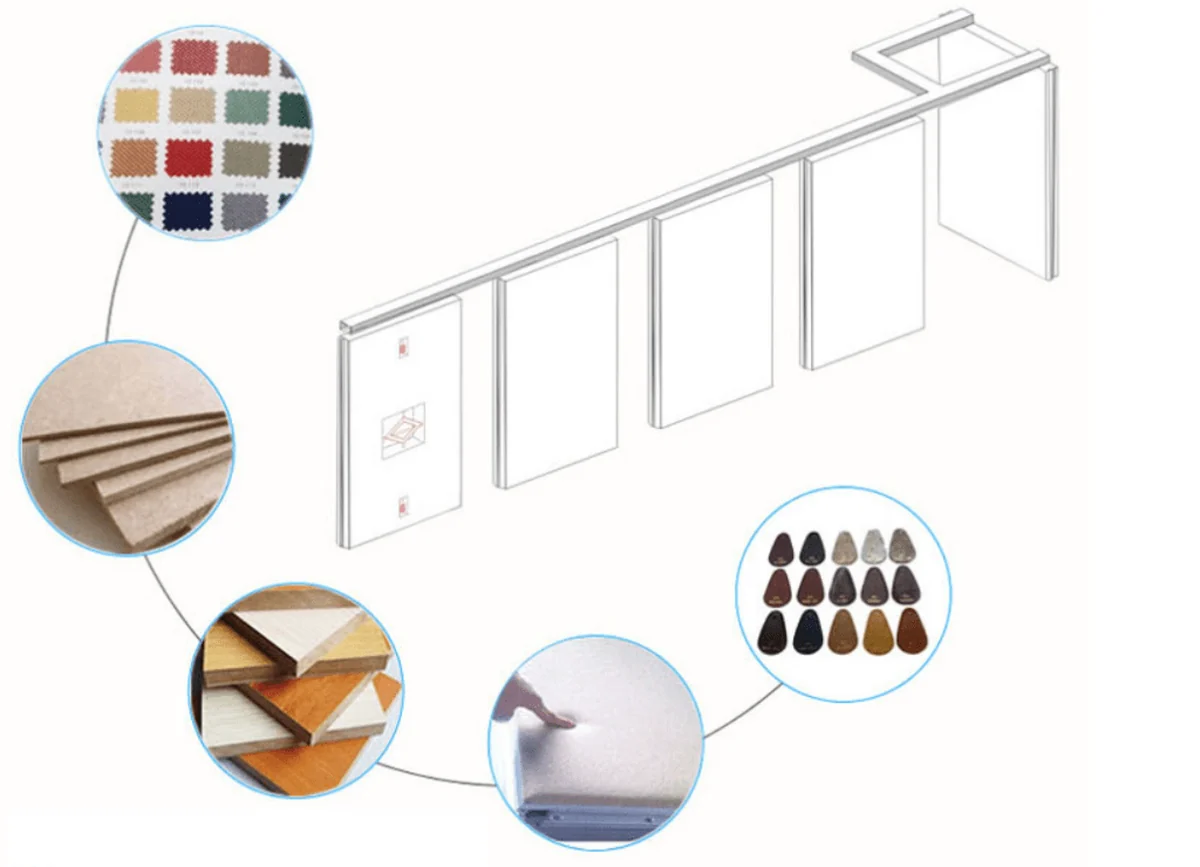
Movable partitions from EBUNGE are top-hung and move without a continuous floor track, which opens design possibilities. The suitability of each route and parking arrangement depends on the approved layout, circulation, ceiling interfaces and operating sequence. Every finish option—laminate, melamine, fabric, leather, glass, or other approved surfaces—has different implications for how you can use the wall. This guide explains what to consider and what project-specific information you must confirm.
Understanding Movable Partition Finishes
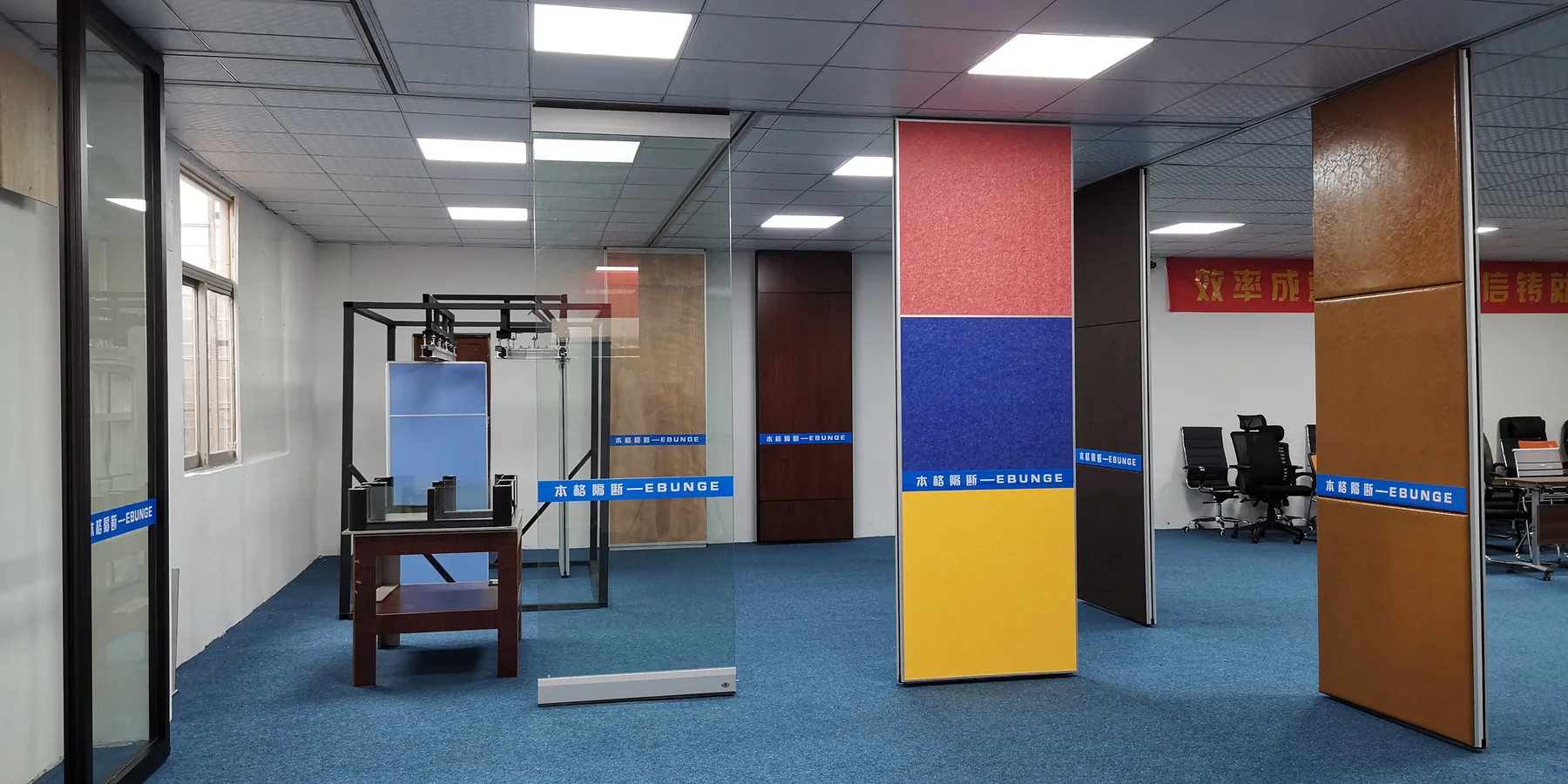
EBUNGE movable wall panels are individually movable and suspended from a top track. They cross the opening without a floor track and park at a planned stacking position. The finish is applied to the panel face, and it can be customized to meet the room’s functional needs.
Whiteboard Finishes
Whiteboard finishes allow you to write directly on the partition surface. Common options include laminate, melamine, or glass with a whiteboard-compatible coating.
Tackable Finishes
Tackable finishes let you pin or attach documents, charts, and visual aids. Fabric and leather are typical tackable surfaces, but some laminates and melamine can also be tackable if specified. These zones are useful for displaying reference materials or patient education posters.
Many training rooms combine both zones on different panels or even on the same panel with a split finish.
Share the opening dimensions, room layout and intended operating sequence for review.
Key Differences Between Whiteboard and Tackable Zones
To make an informed decision, compare the functional characteristics of each finish type. Remember that specific performance data, such as durability or cleanability, must be confirmed with the manufacturer for your project.
Writing and Erasing
Whiteboard surfaces are designed for repeated writing and erasing. They require a smooth, non-porous surface. Tackable surfaces are not suitable for writing; they are meant for pinning.
Attachment Methods
Tackable zones allow push pins or hook-and-loop fasteners, depending on the material. Whiteboard zones do not accept pins without damaging the surface. If you need both, plan separate zones.
Maintenance and Cleaning
Tackable fabrics can collect dust and may require vacuuming or spot cleaning. Confirm cleaning compatibility with the finish supplier.
Planning Your Layout and Movement Routes
Before selecting finishes, you must review the proposed layout with your EBUNGE representative. The partition’s movement path—straight, turning, and stacking routes—must be continuous and supported by the overhead track. This affects which panels can have which finishes, especially if you want whiteboard on one side and tackable on the other.
Stacking Positions and Finish Exposure
When panels park in a stacking area, the finish on each side may be visible. If you have a whiteboard zone on one side and tackable on the other, consider how they will appear when stacked. The stacking configuration is customized to your layout, so discuss your finish zones early.
Pass-Door Integration
If your training room requires a pass-door, the door panel’s finish must match the adjacent panels. Pass-door requirements can be discussed with EBUNGE to ensure the door swing and hardware do not interfere with the finish.
Acoustic Considerations for Finish Selection
Sound insulation is influenced by the panel’s core, seals, and installation, not just the surface material.
These ratings are measured under specific conditions and cannot be inferred from a finish sample.
Project Documentation and Coordination
Every finish selection must be documented in your project drawings and specifications. EBUNGE provides technical documents that cover track routes, stacking, ceiling interfaces, and finish options. Your project team should review these documents to ensure the partition integrates with the room’s lighting, HVAC, and ceiling grid.
What to Confirm with EBUNGE
- Finish availability and any restrictions for your chosen panel type.
- Compatibility of the finish with the panel’s movement and stacking.
- Pass-door requirements and how they affect finish placement.
- Cleaning and maintenance guidelines for the selected finish.
Review the ceiling interface, panel route and stacking position together.
Do not rely on generic product brochures alone. Your project’s unique layout and usage will determine the final specification.
Practical Tips for Healthcare Training Room Projects
Here are actionable steps to ensure your partition finishes meet your training needs.
Define Your Functional Zones Early
List the activities that will occur in the room. Will instructors need to write extensively? Will participants pin up group work? This will help you decide the ratio of whiteboard to tackable area.
Coordinate with Interior Designers and Architects
Your design team should specify the finish on the partition schedule, just like any other wall finish. They must coordinate with the partition supplier to ensure the finish is achievable on a movable panel.
Request Samples and Mock-ups
Before finalizing, request physical samples of the finish. Test writing and erasing on whiteboard samples, and try pinning on tackable samples. This is the only way to verify that the finish meets your expectations.
Frequently Asked Questions
Can I have whiteboard and tackable finishes on the same partition system?
Yes, it is possible to have different finishes on different panels or even on opposite sides of the same panel. However, you must coordinate with EBUNGE to ensure the finish is compatible with the panel’s movement and stacking.
Do fabric finishes improve acoustic performance?
Are glass finishes suitable for whiteboard use?
Some glass finishes are designed for whiteboard use, but not all. You must specify a whiteboard-compatible glass finish and confirm it with the manufacturer.
How do I choose between laminate and melamine for a whiteboard surface?
Both laminate and melamine can be manufactured with a whiteboard surface. The choice may affect durability and cost, but you should confirm the specific product’s performance with the supplier.
What project information does EBUNGE need to provide finish recommendations?
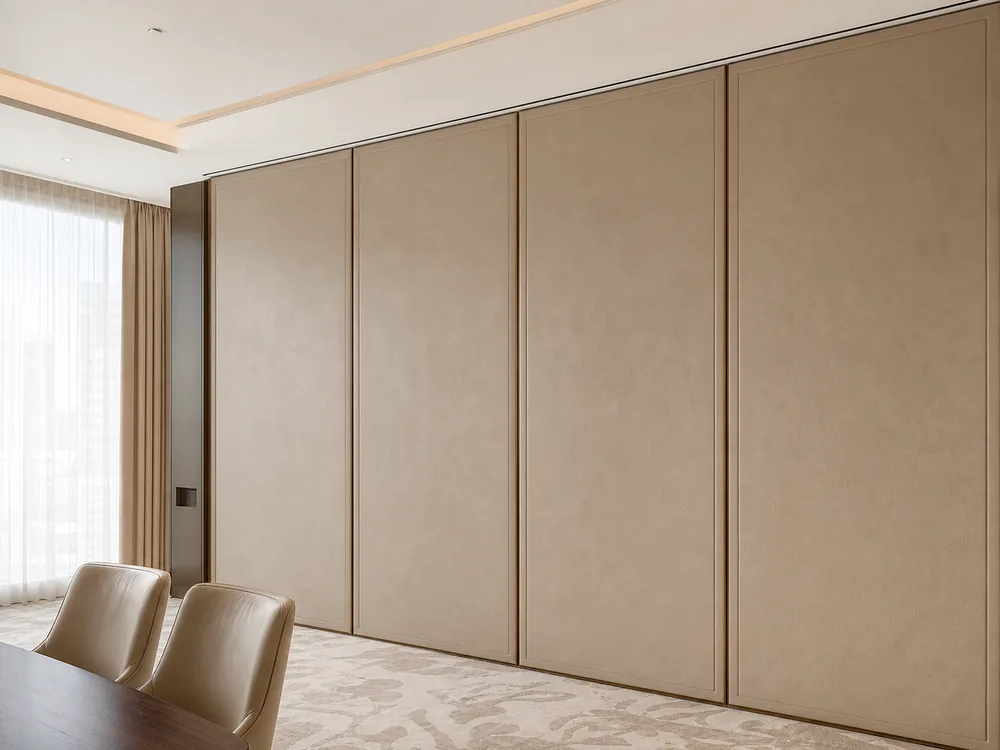
EBUNGE needs your room layout, including partition movement routes and stacking positions, as well as your functional requirements for whiteboard and tackable zones.
Conclusion and Next Steps
Selecting the right partition finishes for a healthcare training room requires careful planning and coordination. By understanding the differences between whiteboard and tackable zones, reviewing your layout and movement routes, and confirming project-specific details with EBUNGE, you can create a flexible and functional space.
Remember that every project is unique. Do not rely on assumptions about performance or compatibility.
Ready to discuss your healthcare training room partition project? Contact EBUNGE to speak with our team and request a layout review. You can also explore our operable wall system and view past projects for inspiration.
Continue Exploring
More Materials and Finishes Guides
- Earlier guideWhy Sports Hall Partition Finishes Need Abrasion Mapping for Wall-Mounted Hurdle Storage Racks
- Related guideWhy Hotel Banquet Partition Finishes Need Coordination with Ceiling Light Rigging Abrasion
- Related guideHow to Compare University Multipurpose Room Partition Finishes for Tackable vs Marker Board Surfaces
- Related guideWhy University Lecture Hall Partition Finishes Need Abrasion Mapping for Mobile Lectern Traffic