
Quick project answer
A movable partition wall is a flexible space-division system that allows a room to be reconfigured without permanent construction. Instead of a fixed stud wall, the partition consists of panels that can be moved, stored and rearranged according to how the space is used. The EBUNGE movable partition system is top-hung, meaning the panels are supported from an overhead track rather than from the floor. This single principle shapes how the system works, how the floor is treated, how panels are parked and what must be confirmed before production.
What Does Top-Hung Mean for a Movable Partition Wall?
In a top-hung movable partition wall, the operating hardware is located above the finished ceiling line or within a coordinated head detail. The panels hang from that overhead structure and travel along it. Because the load path is overhead, the finished floor along the partition line does not need a continuous floor running track or operating hardware set into it. This is a defining characteristic of the EBUNGE system and one of the main reasons specifiers consider it for flexible rooms.
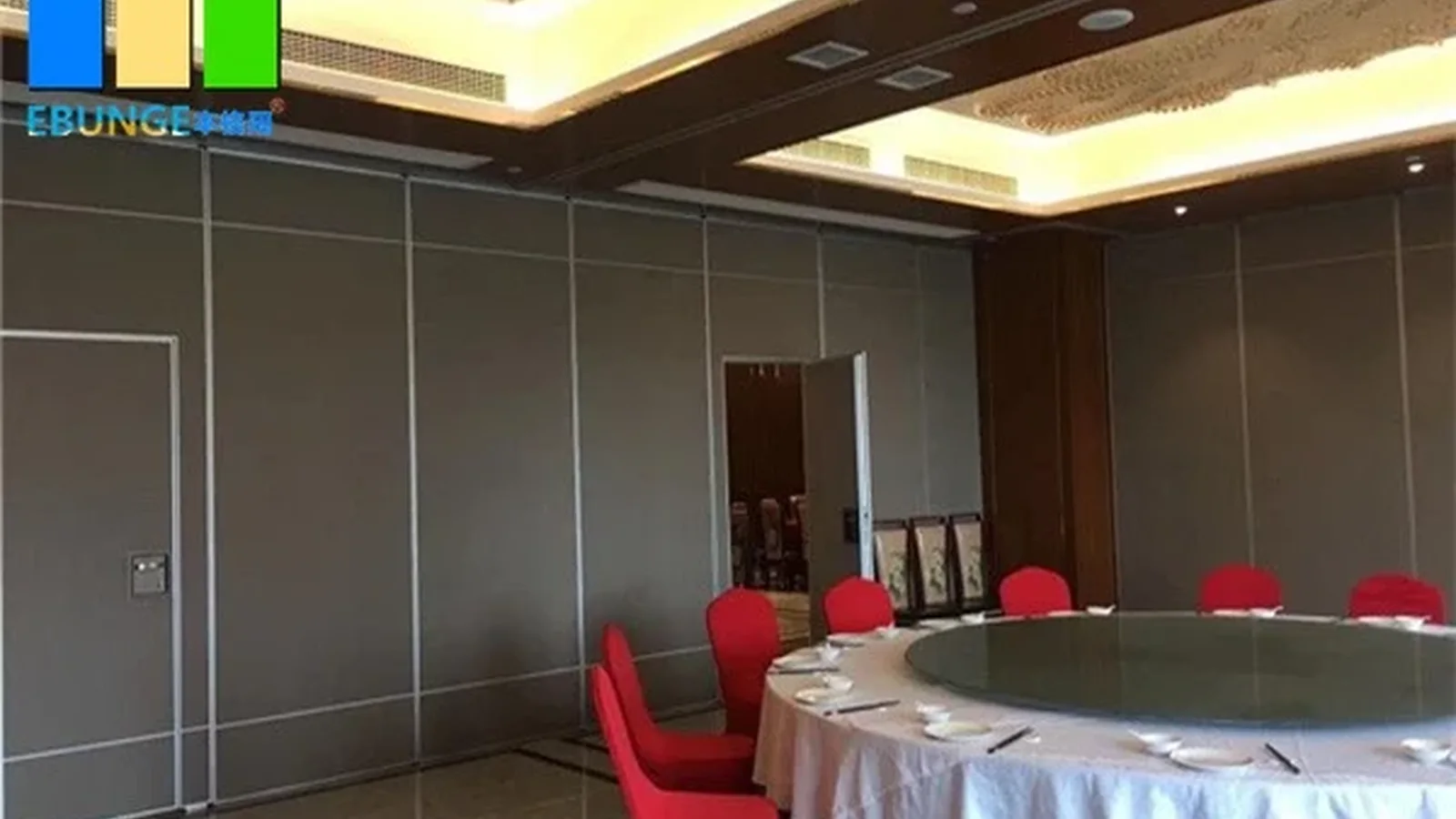
The top-hung principle also affects how the partition relates to the surrounding architecture. The overhead track must follow a coordinated route, and the panels must be able to move from their open position to their stored position without conflicting with fixed elements. The exact route, junction arrangement, continuous overhead path and parking position must be confirmed from the coordinated project drawings. No generic description can replace that project-specific coordination.
Why the Floor Remains Physically Uninterrupted
With the EBUNGE top-hung system, the floor is not cut or damaged for a floor track. The finished floor remains physically uninterrupted along the partition line. This matters in spaces where the floor finish is continuous, where a change of level is not desired, or where the floor is part of the interior design intent. Because there is no continuous floor running track, there is also no operating hardware in the finished floor along the partition line.
It is important to distinguish between the absence of a floor track and the presence of other floor conditions. The floor itself is not modified for the partition system, but the overall room may still have thresholds, transitions or adjacent finishes that are part of the base building. Those conditions are separate from the partition operating system and should be reviewed in the coordinated drawings. The confirmed fact remains that the maintained EBUNGE top-hung system leaves the floor physically uninterrupted by the partition line.
How Panel Parking Is Planned for a Movable Partition Wall
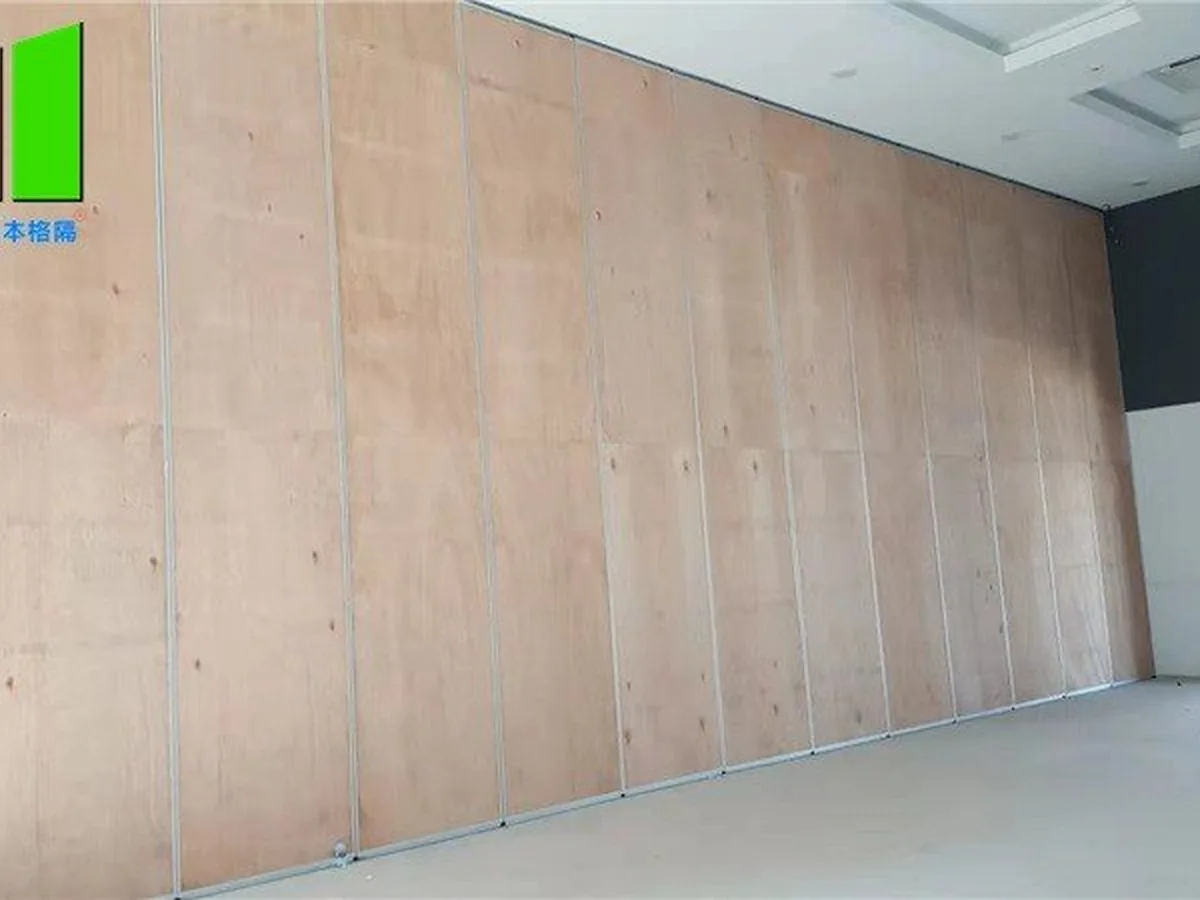
Panel parking style can be customized to the customer layout and project requirements, subject to coordinated drawings. Parking is the arrangement used to store the panels when the room is open. A suitable approved parking arrangement can use the stacking area more compactly and coordinate with the space design. This is a planning exercise rather than a fixed catalog choice, because the available stacking area, the ceiling profile and the room geometry all influence what can be approved.
The exact track, support and panel layout still require project drawings. This means the parking concept should be developed alongside the architectural layout, not after it. When parking is considered early, the stacking area can be coordinated with adjacent functions such as circulation, service zones or fixed joinery. The goal is a workable arrangement that fits the project, not a universal solution applied to every room.
Finish Options and Care Coordination
Finish materials can be customized, and cleaning and maintenance methods vary with the selected finish. This is a practical point for anyone specifying a movable partition wall. The finish affects not only the visual character of the panels but also how the surface should be cared for over time. A finish that suits a hospitality environment may call for different care than a finish selected for a corporate training room.
Because care methods vary, the finish selection and the care plan should be coordinated together. The project team should confirm which finish is being used, how it should be cleaned and what maintenance approach is appropriate for that specific material. This is not a universal procedure; it follows from the finish chosen for the project. The exact route, junction arrangement, continuous overhead path and parking position must be confirmed from the coordinated project drawings.
Where a Movable Partition Wall Can Be Used
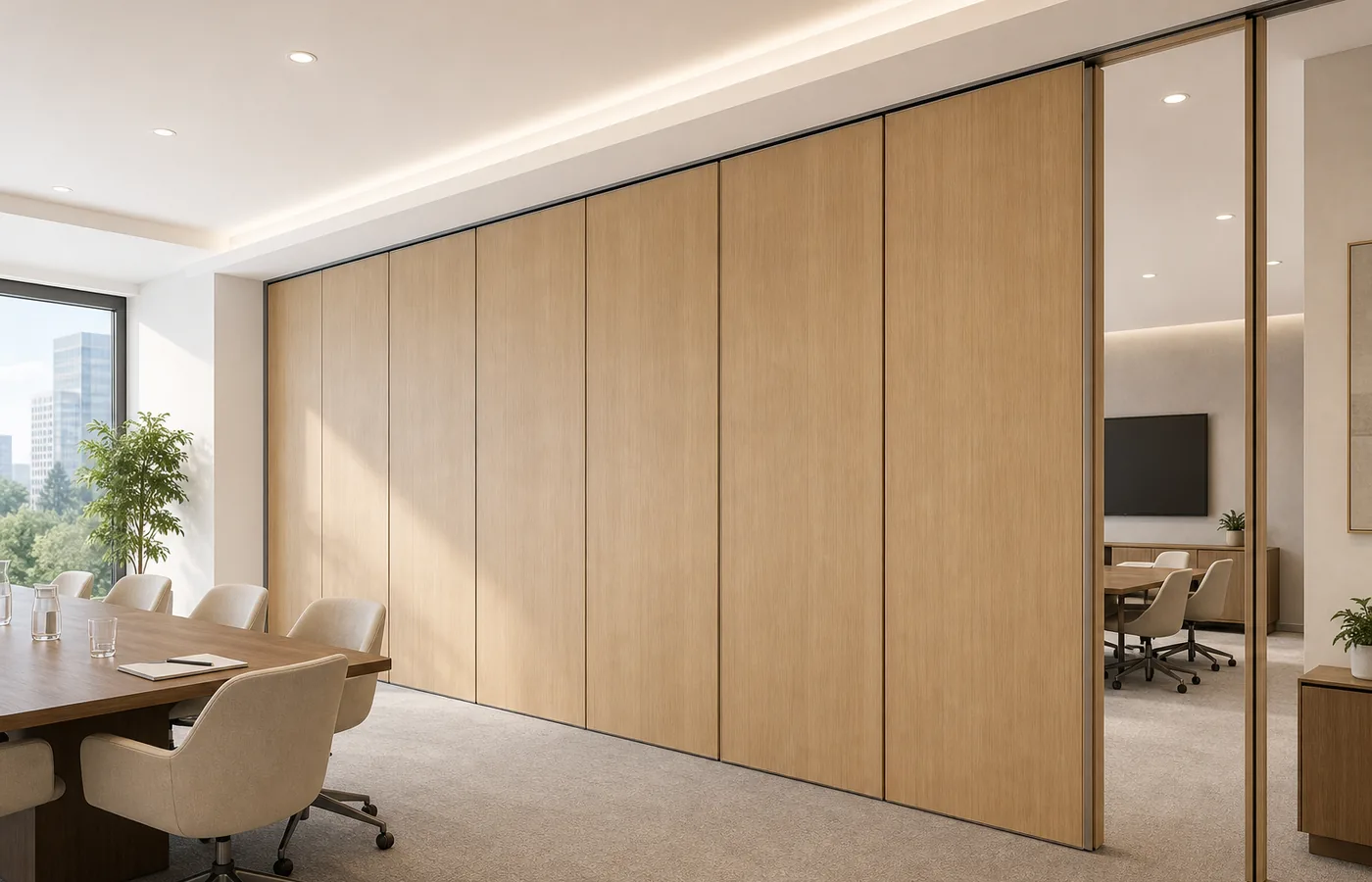
Movable partitions can be used wherever flexible space division, combination or reconfiguration is required. Application examples are not limiting. EBUNGE has completed many types of hotel-related movable-partition projects. Ballrooms, wedding halls and multifunction halls are non-limiting examples. These spaces often need to shift between a large open layout and smaller divided layouts, which is a natural fit for a movable partition wall.
Beyond hotels, the same principle applies to conference centers, training facilities, banquet venues and other spaces where room size needs to change. The list is illustrative rather than exhaustive. What matters is whether the project benefits from flexible division and whether the overhead route and parking can be coordinated. The exact route, junction arrangement, continuous overhead path and parking position must be confirmed from the coordinated project drawings.
What Buyers Should Prepare Before Drawing Approval
Because the system is top-hung and project-specific, buyers should prepare a clear set of inputs before drawings are approved. The following checklist covers the main items that affect the partition layout and parking plan.
- Room plan showing the open and divided configurations.
- Preferred parking location and the stacking area available.
- Ceiling profile and the coordinated head detail for the overhead track.
- Finish direction and any care requirements tied to that finish.
- Any fixed elements that the partition route must respect.
These inputs allow the project team to develop a coordinated drawing set. The exact track, support and panel layout still require project drawings. Without those drawings, no responsible statement can be made about the route, junctions or parking position.
How the Drawing Approval Process Works
Drawing approval is the stage where the top-hung principle becomes a specific project solution. The coordinated drawings define the overhead path, the parking arrangement and the relationship between the partition and the surrounding construction. The exact route, junction arrangement, continuous overhead path and parking position must be confirmed from the coordinated project drawings.
A practical approval sequence looks like this:
- Confirm the room layouts and the required open and divided states.
- Confirm the parking style and the stacking area available.
- Confirm the overhead route and the head detail with the project team.
- Confirm the finish selection and the associated care approach.
- Review and approve the coordinated drawings before production.
This sequence is a coordination framework, not a universal operating procedure. Each project will have its own conditions, and the approved drawings are the controlling document. For a broader overview of system types and planning considerations, see the movable partition wall overview and the movable partition wall guide.
Common Questions About a Movable Partition Wall
Does a movable partition wall need a floor track?
Not in the EBUNGE top-hung system. The panels are supported from an overhead track, and the finished floor along the partition line does not contain a continuous floor running track or operating hardware.
Is the floor cut or damaged for the partition?
With the maintained EBUNGE top-hung system, the floor is not cut or damaged for a floor track and remains physically uninterrupted along the partition line.
Can the parking arrangement be customized?
Yes. Panel parking style can be customized to the customer layout and project requirements, subject to coordinated drawings. A suitable approved parking arrangement can use the stacking area more compactly and coordinate with the space design.
Can the finish materials be customized?
Yes. Finish materials can be customized, and cleaning and maintenance methods vary with the selected finish. The care approach should be coordinated with the chosen finish.
Where can a movable partition wall be used?
Movable partitions can be used wherever flexible space division, combination or reconfiguration is required. Application examples are not limiting. EBUNGE has completed many types of hotel-related movable-partition projects, including ballrooms, wedding halls and multifunction halls as non-limiting examples.
What must be confirmed before production?
The exact route, junction arrangement, continuous overhead path and parking position must be confirmed from the coordinated project drawings. The exact track, support and panel layout still require project drawings.
Continue Exploring
More Movable Partition Guide Guides
- Newer guideMovable Walls vs Fixed Partitions: What Changes in Space Planning?
- Earlier guideMovable Partition Wall Guide: Types, Uses, Materials, Selection
- Related guideHow Architects Run a Partition Coordination Workflow Across Consultant
- Related guideRoom Scheduling Rules That Decide When Movable Partitions Stay Open