
Quick project answer
Ordering a movable wall system involves choices that affect daily use, floor condition, and long-term care. The right questions before ordering a movable wall system help you compare options and prepare accurate project information. This article presents ten questions, with context on top-hung operation, parking planning, finishes, and drawing approvals. The focus is on confirmed product facts and on the information a supplier needs to coordinate a suitable arrangement.
Why These Questions Matter
A movable partition can divide, combine, or reconfigure a room when flexible space use is required. Because every building layout differs, the answers to key questions before ordering a movable wall system shape the track route, parking area, and finish selection. Asking early reduces assumptions and supports a coordinated design. The questions below are grouped by theme, and each one can be discussed with your supplier using your own project drawings.
1. Is the System Top-Hung?
The EBUNGE movable partition system is top-hung. That means the panels are supported from above rather than from a floor-mounted track. This principle influences how the partition line interacts with the finished floor and what information the supplier needs. When you ask questions before ordering a movable wall system, confirm the suspension principle first because it affects many later decisions.
2. Does the Floor Remain Physically Uninterrupted?
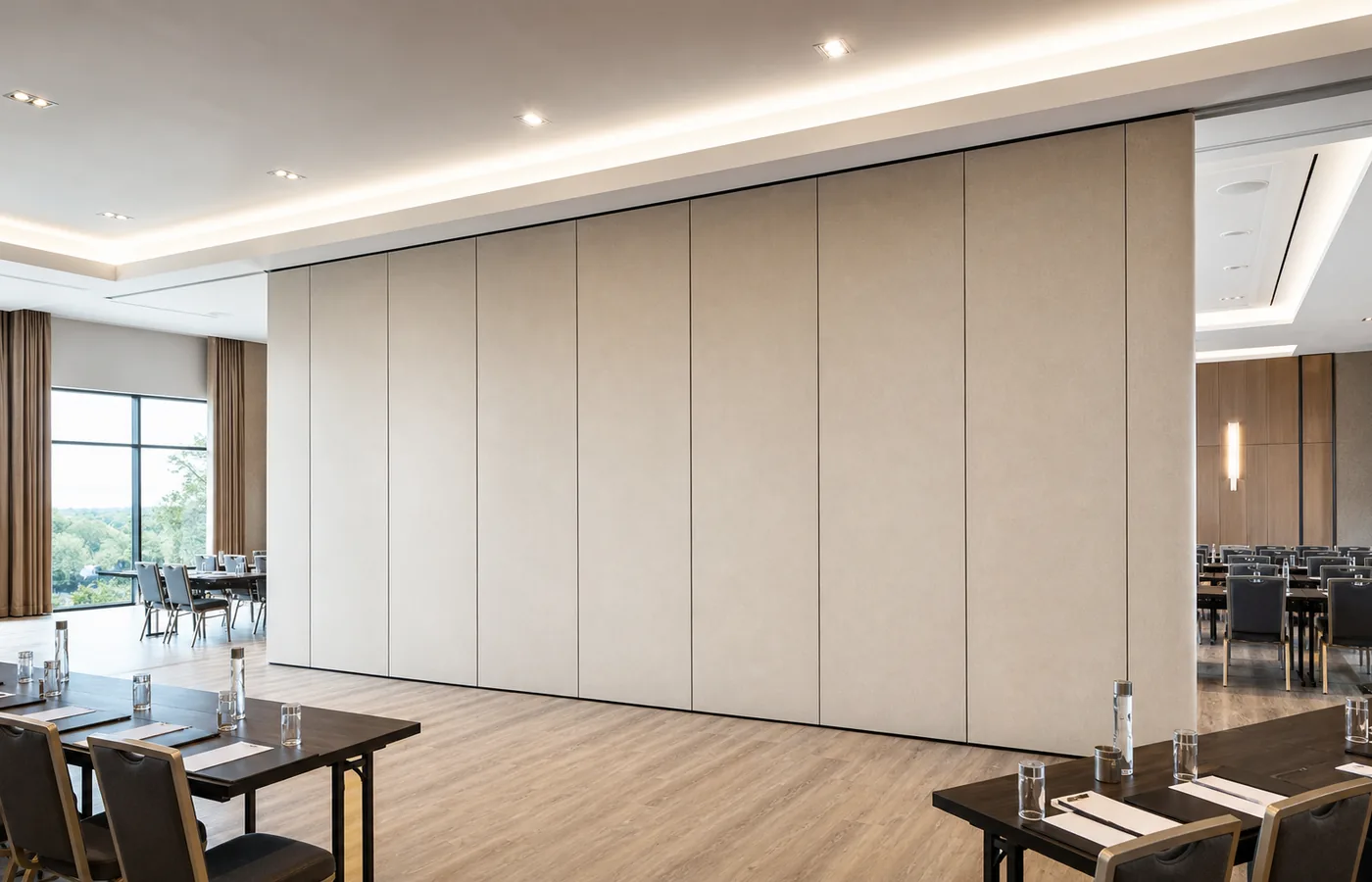
With the maintained EBUNGE top-hung system, there is no continuous floor running track or operating hardware in the finished floor along the partition line. The floor is not cut or damaged for a floor track and remains physically uninterrupted. This is a central point among the questions before ordering a movable wall system, especially where floor finishes are already installed or where a clean floor line is preferred.
3. How Will Panels Park When Not in Use?
Panel parking style can be customized to the customer layout and project requirements, subject to coordinated drawings. A suitable approved parking arrangement can use the stacking area more compactly and coordinate with the space design. The exact track, support and panel layout still require project drawings. Parking is therefore one of the practical questions before ordering a movable wall system, because the stacking area must fit the room and the intended use.
4. What Finish Options Are Available?
Finish materials can be customized, and cleaning and maintenance methods vary with the selected finish. This means the finish choice and the care routine are linked. When you ask questions before ordering a movable wall system, request finish samples and care guidance for each candidate finish so that the selected surface matches the project’s maintenance approach.
5. Where Can Movable Partitions Be Used?
Movable partitions can be used wherever flexible space division, combination or reconfiguration is required. Application examples are not limiting. EBUNGE has completed many types of hotel-related movable-partition projects; ballrooms, wedding halls and multifunction halls are non-limiting examples. No customer names, locations, quantities, ratings, certifications or outcomes may be inferred. These questions before ordering a movable wall system should therefore focus on your own space needs rather than on a fixed list of room types.
6. What Inputs Should the Buyer Provide?
Accurate buyer inputs support a coordinated design. Useful information includes the intended room layout, the desired parking area, the selected finish direction, and any known constraints on the partition line. Providing these details early helps the supplier prepare drawings that reflect the project. Among the questions before ordering a movable wall system, this one is about preparing your own project information rather than about a universal sequence.
7. What Must Be Confirmed in the Coordinated Drawings?
The exact route, junction arrangement, continuous overhead path and parking position must be confirmed from the coordinated project drawings. This boundary applies to engineering details that are outside the confirmed product facts. When you review questions before ordering a movable wall system, treat the coordinated drawings as the document that resolves these details for your project.
8. How Should Finishes and Care Be Coordinated?
Because finish materials can be customized and cleaning and maintenance methods vary with the selected finish, coordinate the finish choice with the care plan. Ask which care method suits the chosen finish and how that method fits the room’s routine. This is one of the questions before ordering a movable wall system that connects design selection with everyday upkeep.
9. What Should Be Avoided in Early Assumptions?
Avoid assuming features that are not confirmed for your project. The exact overhead route and support arrangement must be confirmed by the responsible project team from coordinated drawings. These questions before ordering a movable wall system help separate confirmed facts from unverified expectations.
10. What Is the Next Step After the Questions?
After gathering answers, the next step is to review the coordinated project drawings and confirm the parking arrangement, finish direction, and any project-specific details. The exact route, junction arrangement, continuous overhead path and parking position must be confirmed from the coordinated project drawings. This final item among the questions before ordering a movable wall system keeps the process grounded in project documentation.
Quick Reference: Question Themes
- Top-hung principle and its effect on the partition line.
- Physically uninterrupted floor with no continuous floor track.
- Parking style customized to layout, subject to coordinated drawings.
- Customizable finishes with finish-specific cleaning and maintenance.
- Non-limiting applications for flexible space division.
- Buyer inputs and coordinated drawing approvals.
Checklist for Buyer Inputs
- Describe the room layout and how the space will be divided or combined.
- Identify the intended parking area and how it coordinates with the space design.
- Select a finish direction and request the corresponding care guidance.
- List any known constraints along the partition line.
- Prepare to review the coordinated project drawings for the exact route, junction arrangement, continuous overhead path and parking position.
Example Parking and Finish Coordination
| Item | What to Confirm |
|---|---|
| Parking style | Customized to the customer layout and project requirements, subject to coordinated drawings. |
| Stacking area | A suitable approved parking arrangement can use the stacking area more compactly and coordinate with the space design. |
| Finish | Finish materials can be customized; cleaning and maintenance methods vary with the selected finish. |
| Engineering details | The exact route, junction arrangement, continuous overhead path and parking position must be confirmed from the coordinated project drawings. |
Ask questions before ordering a movable wall system so that the top-hung principle, parking plan, and finish care are aligned with your project drawings.
Frequently Asked Questions
Is the EBUNGE movable partition system top-hung?
Yes. The EBUNGE movable partition system is top-hung, so the panels are supported from above. The exact route, junction arrangement, continuous overhead path and parking position must be confirmed from the coordinated project drawings.
Does the floor need a track for a top-hung movable partition?
No continuous floor running track or operating hardware is placed in the finished floor along the partition line with the maintained EBUNGE top-hung system. The floor is not cut or damaged for a floor track and remains physically uninterrupted.
Can panel parking be customized?
Panel parking style can be customized to the customer layout and project requirements, subject to coordinated drawings. A suitable approved parking arrangement can use the stacking area more compactly and coordinate with the space design. The exact track, support and panel layout still require project drawings.
Are finish materials customizable?
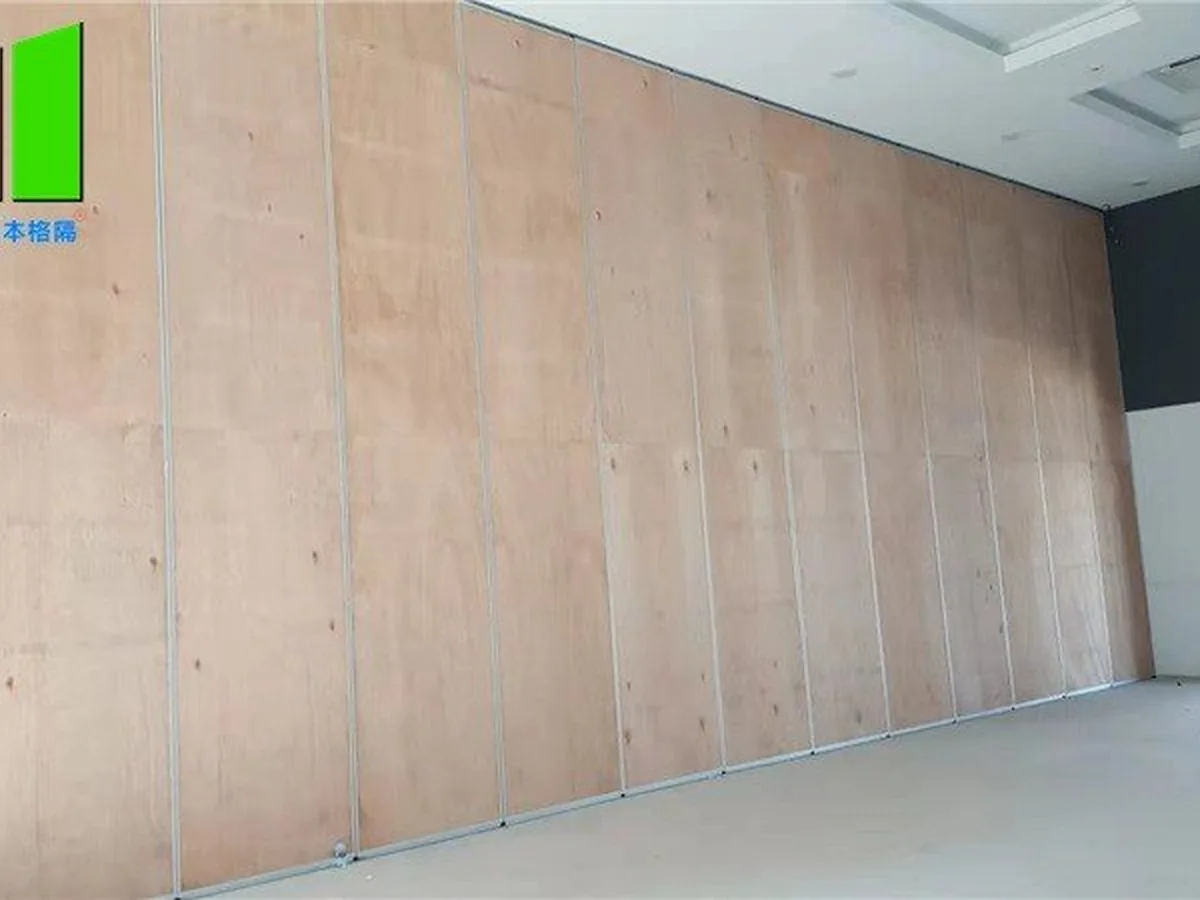
Finish materials can be customized, and cleaning and maintenance methods vary with the selected finish. Request care guidance for the finish you select so that the maintenance approach matches the surface.
Where can movable partitions be used?
Movable partitions can be used wherever flexible space division, combination or reconfiguration is required. Application examples are not limiting. EBUNGE has completed many types of hotel-related movable-partition projects; ballrooms, wedding halls and multifunction halls are non-limiting examples.
What should be confirmed in the coordinated drawings?
The exact route, junction arrangement, continuous overhead path and parking position must be confirmed from the coordinated project drawings. These details are resolved for each project rather than assumed in advance.
For related information, see the movable partition wall page and the projects page. You can also review the FAQ for additional context. Asking the ten questions before ordering a movable wall system helps you prepare a coordinated, project-specific request.
Continue Exploring
More Movable Partition Guide Guides
- Newer guideFactory-Direct Movable Partition Supplier: What Should Buyers Verify?
- Earlier guideHow to Choose a Movable Partition Manufacturer for a Commercial Project
- Related guideHow Architects Run a Partition Coordination Workflow Across Consultant
- Related guideRoom Scheduling Rules That Decide When Movable Partitions Stay Open