
Quick project answer
Flexible room planning depends on dividing and recombining space without committing the floor plan to a single layout. The exact overhead route and support arrangement must be confirmed by the responsible project team from coordinated drawings. The guidance below focuses on planning principles, confirmed system characteristics and the information that helps a project team move from concept to coordinated drawings.
What an acoustic movable partition is used for
That description is deliberately broad because the application list is not limiting. A venue may need to separate a large hall into smaller rooms for part of the day and restore the larger volume later. A training centre may need to combine rooms for a plenary session and divide them for breakout work. A hotel may need to adjust ballroom, wedding hall or multifunction hall layouts across a season of events.
These topics matter as much as the panel face itself, because they influence how the room performs in daily use.
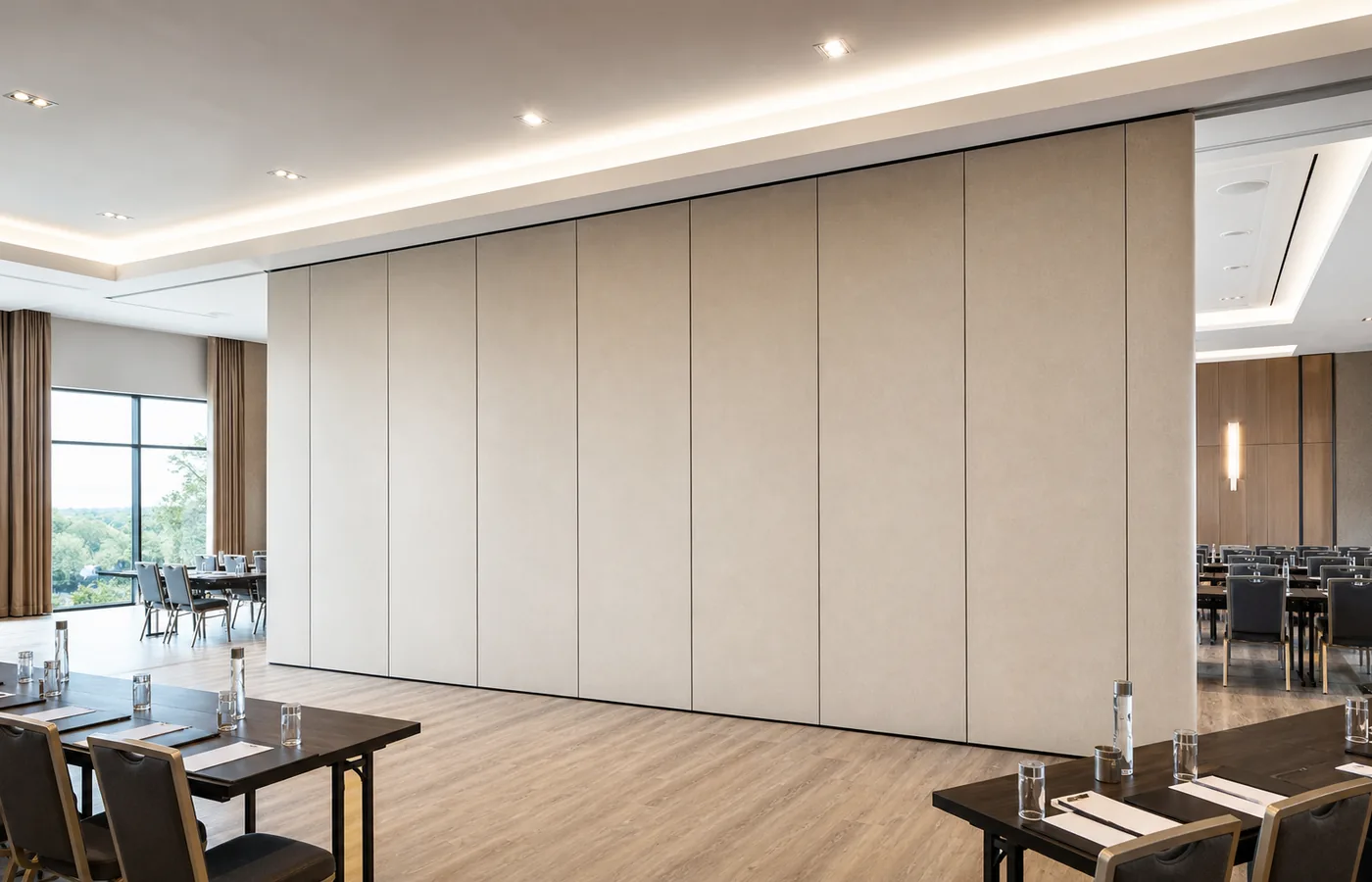
The top-hung principle in acoustic movable partition design
The EBUNGE movable partition system is top-hung. This means the operating principle is based on support from above rather than from a continuous floor running track.
The exact route, junction arrangement, continuous overhead path and parking position must be confirmed from the coordinated project drawings. This boundary applies to every project, because the overhead path and parking location depend on the room geometry, the intended panel layout and the way the space is used.
The project team needs to review the relationship between the partition line, the surrounding construction and the parking area before the design is fixed.
Why a physically uninterrupted floor matters
With the maintained EBUNGE top-hung system, there is no continuous floor running track or operating hardware in the finished floor along the partition line. The floor is not cut or damaged for a floor track and remains physically uninterrupted.
It allows the floor finish to run continuously through the space, and it means the partition line does not introduce a permanent groove or channel into the finished floor. The floor remains a single surface from the perspective of the room layout.
This does not remove the need for coordination. The exact route, junction arrangement, continuous overhead path and parking position must be confirmed from the coordinated project drawings. The floor may be uninterrupted, but the overhead path and parking position still require project-specific review.
Parking and stacking planning for an acoustic movable partition
Panel parking style can be customized to the customer layout and project requirements, subject to coordinated drawings. A suitable approved parking arrangement can use the stacking area more compactly and coordinate with the space design. The exact track, support and panel layout still require project drawings.
The stacking position affects adjacent rooms, circulation routes and the way the space is furnished. A parking arrangement that is coordinated with the interior design can help the partition system fit the room rather than dominate it.
The following inputs are useful when discussing parking with a supplier:
- The intended open and closed configurations.
- The location where panels may be parked when the space is open.
- The relationship between the parking area and adjacent finishes or joinery.
- The coordinated drawings that show the overhead path and parking position.
These inputs do not replace project drawings. They help the project team ask the right questions before the layout is finalised.
Finish selection and care coordination
Finish materials can be customized, and cleaning and maintenance methods vary with the selected finish. The finish affects the appearance of the partition and the care routine that follows.
Because cleaning and maintenance methods vary with the selected finish, the project team should confirm the care approach for the specific finish chosen. The suitability of each route and parking arrangement depends on the approved layout, circulation, ceiling interfaces and operating sequence. The finish supplier or the partition supplier can clarify what is appropriate for the selected material.
The panel faces, the parking area and the adjacent wall finishes should be considered together so that the movable partition reads as part of the room design.
Applications where an acoustic movable partition supports flexibility
Movable partitions can be used wherever flexible space division, combination or reconfiguration is required, and application examples are not limiting. EBUNGE has completed many types of hotel-related movable-partition projects. Ballrooms, wedding halls and multifunction halls are non-limiting examples.
No customer names, locations, quantities, ratings, certifications or outcomes may be inferred from that statement. The point is simply that hotel-related work is part of the experience base, and the same planning principles apply to other sectors that need flexible rooms.
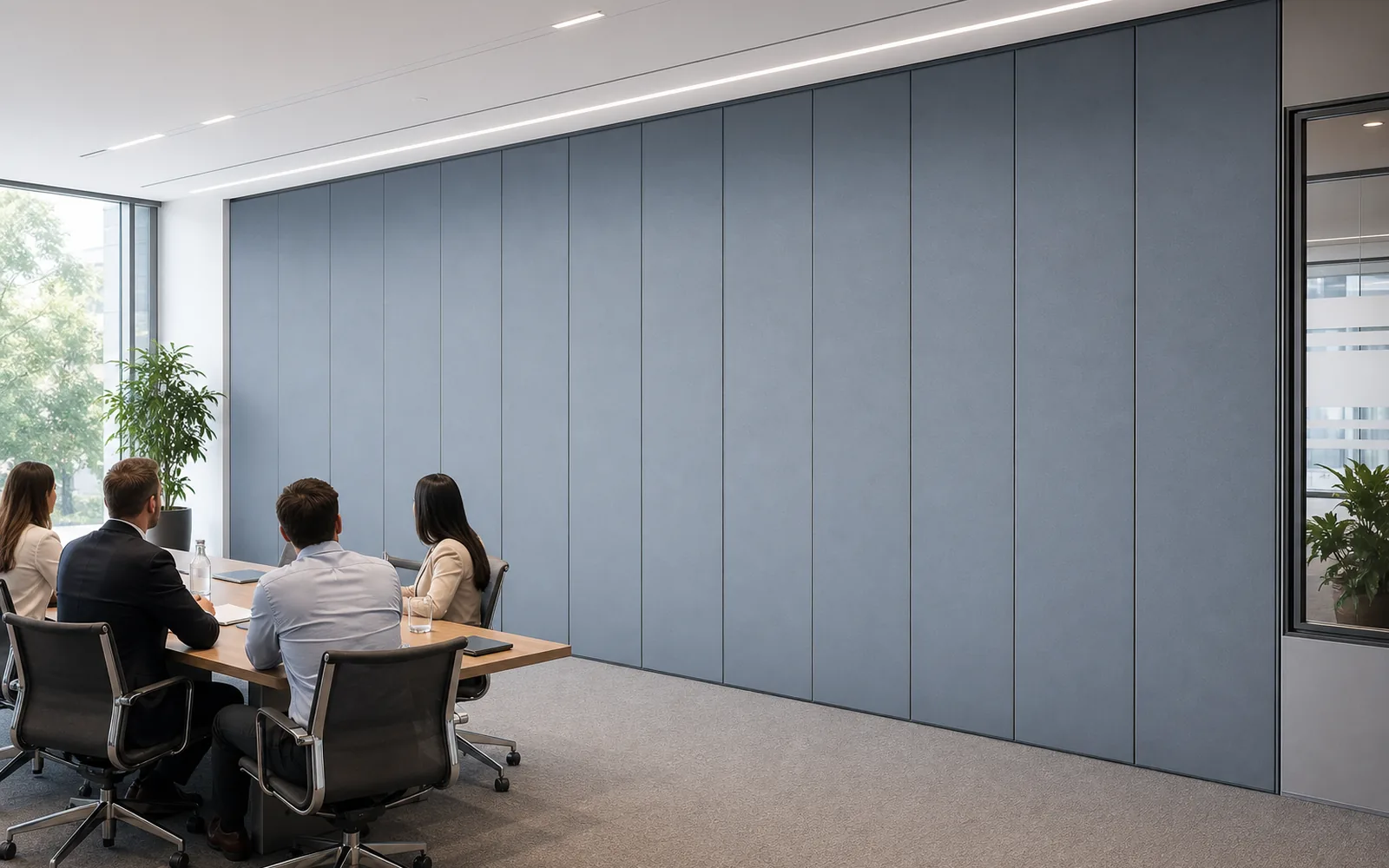
Each application still depends on the coordinated project drawings and the confirmed system characteristics.
Buyer inputs that support acoustic movable partition planning
The following inputs help a supplier understand the requirement:
- The room plan and the intended flexible configurations.
- The location of the partition line and the adjacent construction.
- The preferred parking position and the space available for stacking.
- The finish direction and the expected care routine.
- The drawing approval process and the parties responsible for coordination.
These inputs are not a substitute for the coordinated project drawings. They are the starting point for a technical review that confirms the exact route, junction arrangement, continuous overhead path and parking position.
Drawing approvals and project coordination
The exact route, junction arrangement, continuous overhead path and parking position must be confirmed from the coordinated project drawings. This sentence is the boundary for every engineering detail that sits outside the confirmed facts.
Project teams should expect a drawing review stage before the partition layout is fixed. The review confirms how the top-hung system relates to the overhead path and where panels will be parked. It also confirms that the finish and care requirements are understood.
Because panel parking style can be customized to the customer layout and project requirements, subject to coordinated drawings, the parking discussion belongs in the same review. A suitable approved parking arrangement can use the stacking area more compactly and coordinate with the space design. The exact track, support and panel layout still require project drawings.
Common questions about acoustic movable partition planning
For further context, review related project guidance before preparing the coordinated project brief.
Does an acoustic movable partition require a floor track?
With the maintained EBUNGE top-hung system, there is no continuous floor running track or operating hardware in the finished floor along the partition line. The floor is not cut or damaged for a floor track and remains physically uninterrupted.
Can the parking arrangement be customized?
Panel parking style can be customized to the customer layout and project requirements, subject to coordinated drawings. A suitable approved parking arrangement can use the stacking area more compactly and coordinate with the space design.
Can the finish materials be customized?
Finish materials can be customized, and cleaning and maintenance methods vary with the selected finish. The care approach should be confirmed for the specific finish chosen.
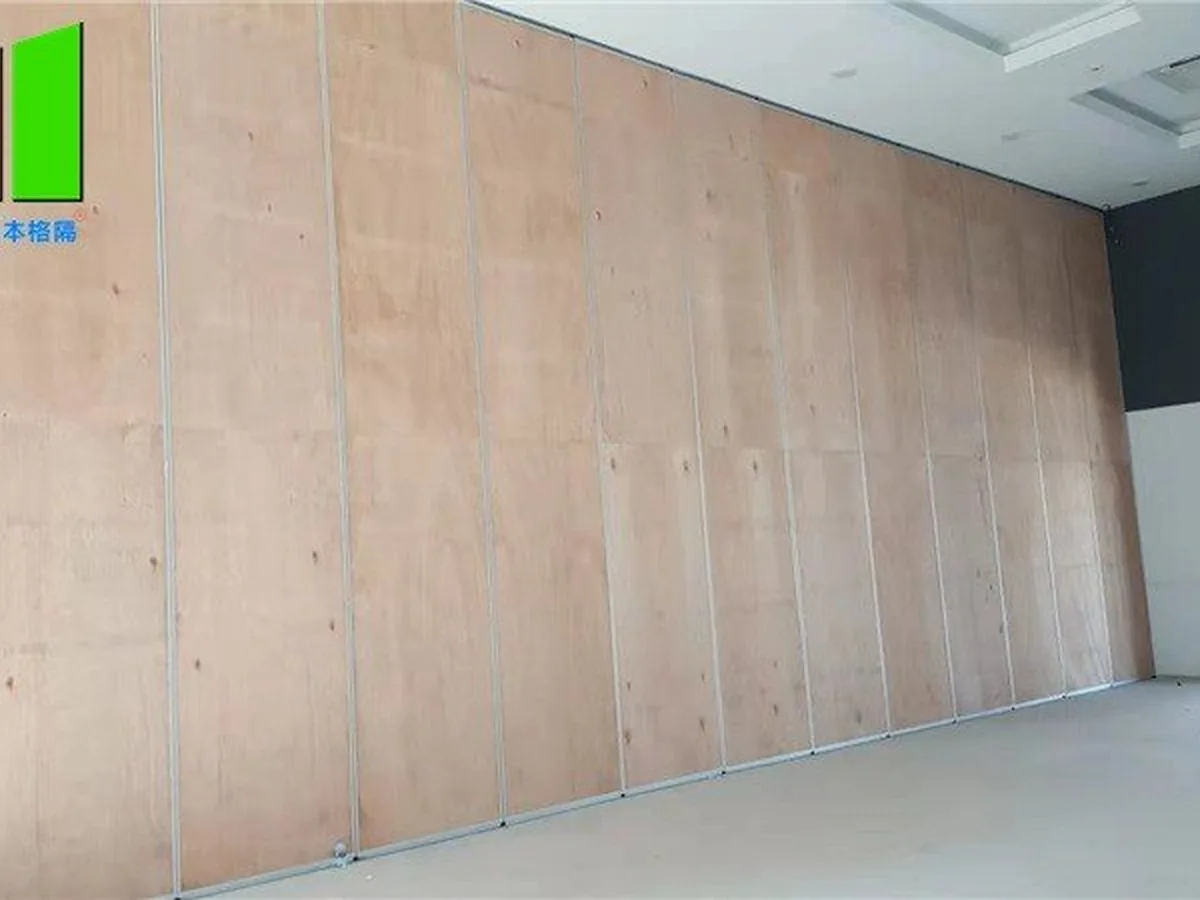
Where can an acoustic movable partition be used?
Movable partitions can be used wherever flexible space division, combination or reconfiguration is required. Application examples are not limiting, and hotel-related projects are part of the experience base.
What information is needed before drawings are approved?
The exact route, junction arrangement, continuous overhead path and parking position must be confirmed from the coordinated project drawings. The project team should also confirm the finish direction and the intended parking layout.
Related reading for flexible room planning
For hotel-specific planning, the hotel ballroom partition page provides additional context. Both resources should be read alongside the coordinated project drawings, because the exact route, junction arrangement, continuous overhead path and parking position must be confirmed from those drawings.
The confirmed facts in this guide provide a starting point, while the project drawings provide the detail that every installation depends on.
Continue Exploring
More Acoustic Partition Guides
- Newer guideHow Acoustic Movable Partitions Support Sound-Control Planning
- Related guideAcoustic Partition Ceiling Interface Zone Confirmation
- Related guideWho Confirms Ceiling Grid Line Before Acoustic Partition Track
- Related guideWho Confirms Ceiling Void Depth Before Acoustic Partition Track