
Quick project answer
A training center movable partition finish affects how rooms read, how floors wear and how panels store between sessions. This guide covers the top-hung principle, floor continuity, parking planning, finish care and the inputs buyers should prepare before drawings are approved.
Start With the Top-Hung Principle
The EBUNGE movable partition system is top-hung. Panels hang from overhead support rather than rolling on hardware set into the finished floor along the partition line. That single fact shapes much of the early planning for a training center movable partition finish.
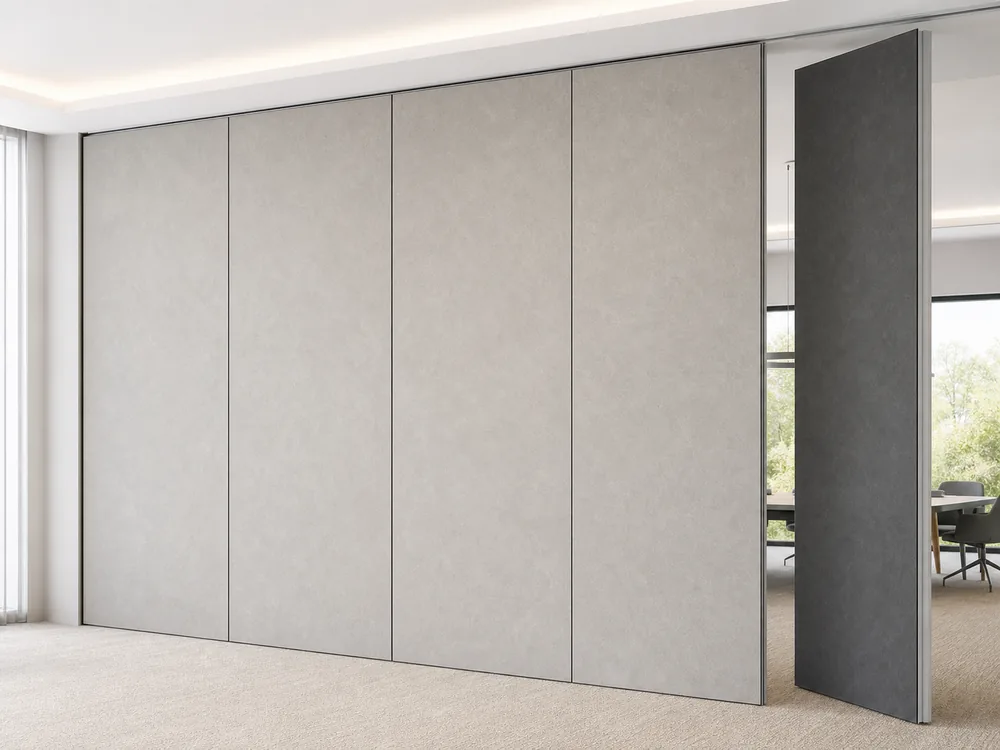
Because support comes from above, the floor line is not cut for a running track. The floor stays physically uninterrupted by the maintained EBUNGE top-hung system. For training rooms, that continuity matters when chairs, tables and equipment cross the same zone every week.
The exact route, junction arrangement, continuous overhead path and parking position must be confirmed from the coordinated project drawings.
Why a Physically Uninterrupted Floor Helps
Training centers often share one floor plate between classrooms, breakout zones and circulation. A floor that is not cut or damaged for a floor track keeps that plate visually and physically continuous along the partition line.
This does not remove every planning question. It does mean the finished floor itself is not interrupted by operating hardware for the maintained EBUNGE top-hung system. The exact route, junction arrangement, continuous overhead path and parking position must be confirmed from the coordinated project drawings.
Where a training center movable partition finish must suit heavy foot traffic, the finish choice and its care method should be discussed together. Cleaning and maintenance methods vary with the selected finish.
Parking Planning for Training Center Layouts
Panel parking style can be customized to the customer layout and project requirements, subject to coordinated drawings. A suitable approved parking arrangement can use the stacking area more compactly and coordinate with the space design.
Parking decisions influence sightlines, storage corners and the usable edge of a training room. They also influence how the training center movable partition finish reads when panels sit open or closed.
The exact track, support and panel layout still require project drawings. Buyers should treat parking as a drawing-stage decision, not a fixed assumption carried into procurement.
Finish and Care Coordination
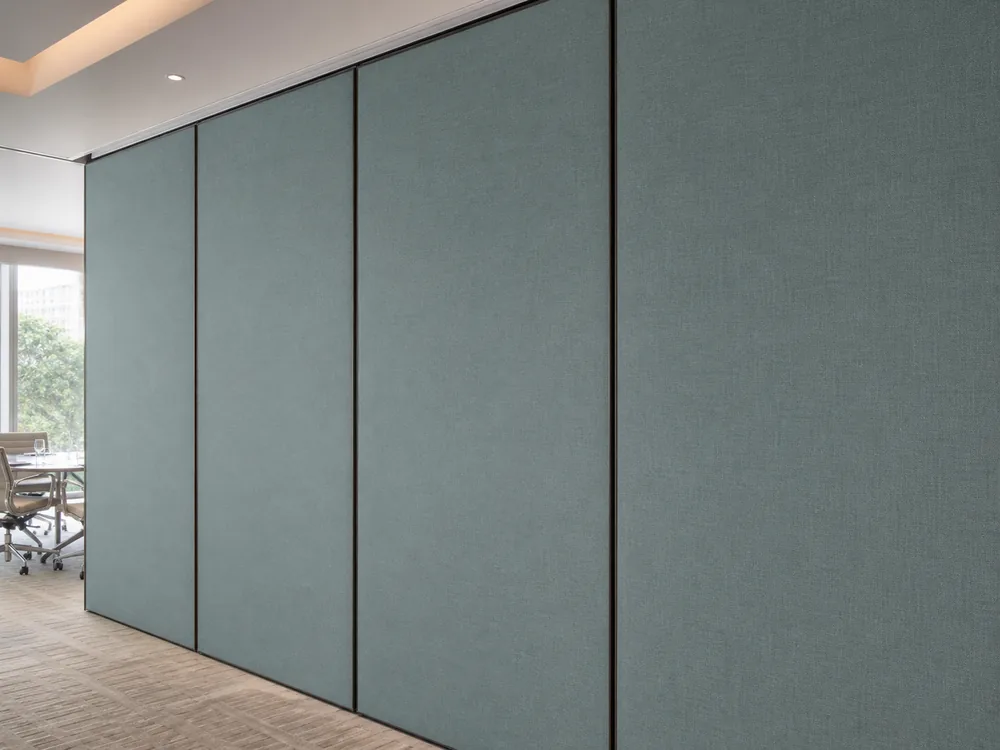
Finish materials can be customized, and cleaning and maintenance methods vary with the selected finish. That pairing should be settled early, because a finish chosen for one training environment may call for a different care routine in another.
Useful inputs include expected daily use, nearby food or drink service, and how often the room is reset. These inputs help the project team compare finish options without assuming a universal care method.
For a training center movable partition finish, ask which care method matches each candidate finish. Record the answer with the finish selection so operations teams can follow it later.
Applications Are Not Limiting
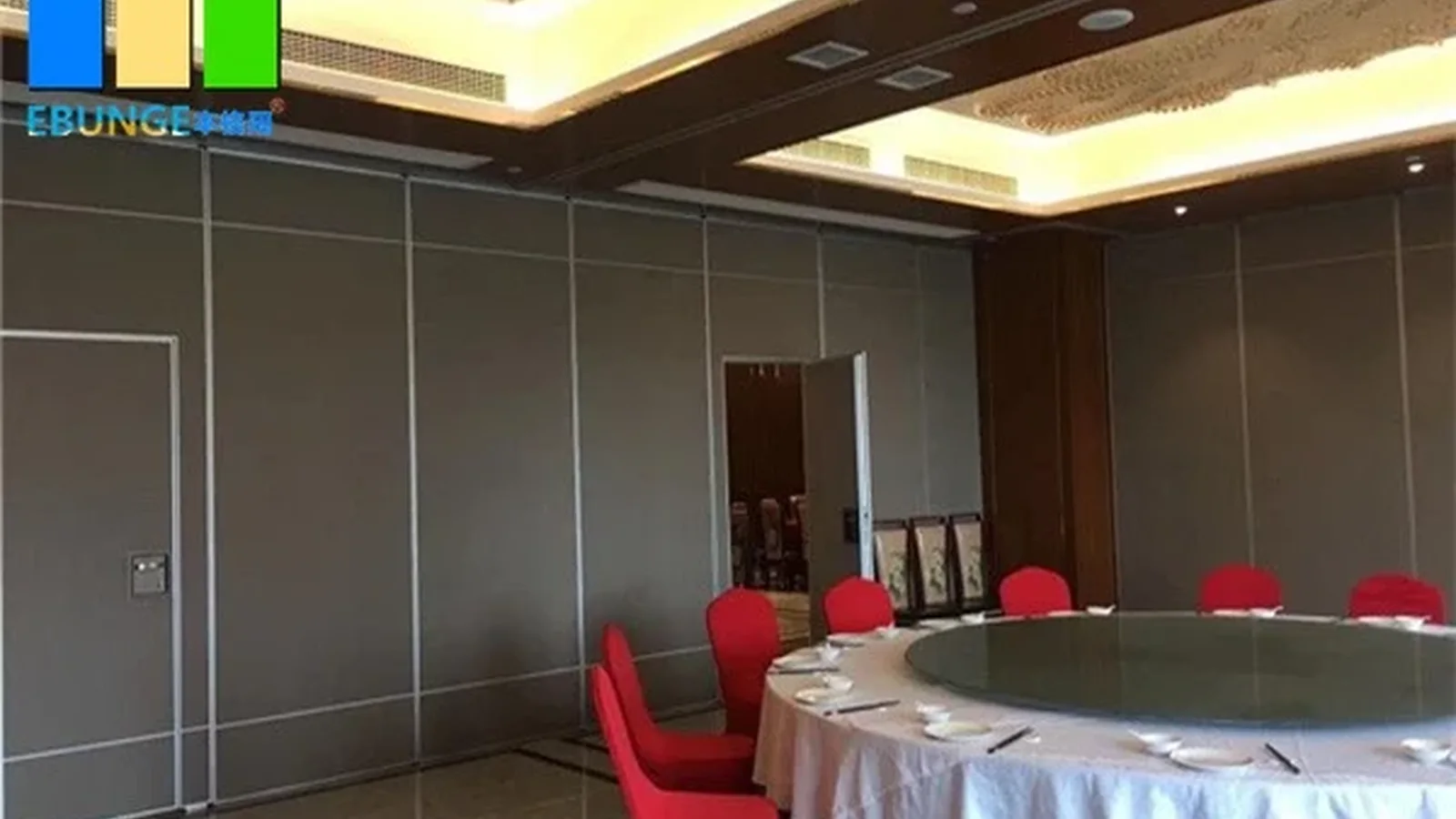
Movable partitions can be used wherever flexible space division, combination or reconfiguration is required. Application examples are not limiting, so a training center is one case among many.
EBUNGE has completed many types of hotel-related movable-partition projects. Ballrooms, wedding halls and multifunction halls are non-limiting examples. No customer names, locations, quantities, ratings, certifications or outcomes may be inferred from that experience.
Training centers can borrow the same planning discipline: define room states, confirm parking, then align the training center movable partition finish with daily use.
Buyer Inputs to Prepare
Before drawings are coordinated, gather the room schedule, the states each space must support and the zones where panels will park. Note floor finishes along the partition line and any adjacent transitions.
List finish preferences and the care methods your team can realistically follow. State whether the training center movable partition finish must match existing interior finishes or stand apart.
Then confirm who approves the coordinated drawings. Approval should cover the overhead path, parking position and finish selection together, because these items interact.
Drawing Approvals and Open Items
Drawings turn intent into a buildable arrangement. They should show the overhead path, the parking zone and the finish schedule for the training center movable partition finish.
Any question outside confirmed product facts should be routed to the project team. The exact route, junction arrangement, continuous overhead path and parking position must be confirmed from the coordinated project drawings.
Keep a short open-items list. It helps reviewers see which decisions are settled and which still depend on coordinated drawings before any commitment is made.
Quick Reference Modules
- The exact overhead route and support arrangement must be confirmed by the responsible project team from coordinated drawings.
- Floor continuity: the floor is not cut or damaged for a floor track along the partition line.
- Parking: style can be customized to the customer layout, subject to coordinated drawings.
- Finish: materials can be customized, and care methods vary with the selected finish.
Planning Sequence at a Glance
- Define the room states the training center must support.
- Confirm the overhead path and parking position on coordinated drawings.
- Select the training center movable partition finish and its care method.
- Record approvals and remaining open items for the project team.
Finish and Care Question Map
| Planning item | Question to resolve |
|---|---|
| Finish selection | Which customizable finish suits the training room? |
| Care method | Which cleaning and maintenance method matches that finish? |
| Floor line | Is the finished floor kept uninterrupted along the partition line? |
| Parking | Where will panels stack, per the coordinated drawings? |
For a training center movable partition finish, confirm the finish and its care method together, then verify the overhead path and parking position on the coordinated project drawings.
Frequently Asked Questions
Does a training center movable partition finish require a floor track?
No floor track is required for the maintained EBUNGE top-hung system. The floor is not cut or damaged for a floor track and remains physically uninterrupted along the partition line.
Can the finish materials be customized?
Finish materials can be customized, and cleaning and maintenance methods vary with the selected finish. The finish schedule should be confirmed with the coordinated project drawings.
How is panel parking decided?
Panel parking style can be customized to the customer layout and project requirements, subject to coordinated drawings. The exact track, support and panel layout still require project drawings.
Are movable partitions only for training centers?
No. Movable partitions can be used wherever flexible space division, combination or reconfiguration is required, and application examples are not limiting.
What should buyers prepare before approval?
Prepare the room schedule, required room states, parking zones, floor finishes along the partition line, finish preferences and the care methods your team can follow. Then confirm the coordinated drawings.
Where can I see related project context?
Review the movable partition wall overview and the projects page for general context before drawing coordination.
Planning a training center movable partition finish is mainly a coordination task. Confirm the top-hung principle, keep the floor line uninterrupted, settle parking on drawings, and pair each finish with its care method. The exact route, junction arrangement, continuous overhead path and parking position must be confirmed from the coordinated project drawings.
Continue Exploring
More Materials and Finishes Guides
- Newer guideAuditorium Operable Wall Finish Planning for High-Traffic Areas
- Earlier guideHow to Compare Movable Partition Finishes for Training Center Durability
- Related guideWho Verifies Partition Handover Records When Trades Finish at Different
- Related guideMovable Partition Finish Sample Coordination Guide for Interior