
html body.single-post main#content.site-main{box-sizing:border-box!important;width:calc(100% – 32px)!important;max-width:900px!important;margin-left:auto!important;margin-right:auto!important;padding-left:0!important;padding-right:0!important}
Quick project answer
Review focus: movable partition tender.
Movable partition tender whole-life cost scoring is often treated as a single price column, but the more useful approach is to score the decisions that shape cost over time. For a top-hung system, panels move individually, cross the opening without a floor track and park at a planned stacking position. Those facts already tell you which tender questions matter: route geometry, parking space, finish durability expectations and the evidence behind each claim. This article gives procurement teams a defensible framework without inventing performance, service life or financial returns.
Why Whole-Life Cost Scoring Fails in Partition Tenders
Project review term: movable partition tender.
Most tender failures are not arithmetic errors. They happen when a scoring model rewards statements that no bidder can substantiate. Cost and maintenance requirements depend on the selected configuration, finish and project conditions and require project-specific confirmation.
Whole-life cost scoring should separate three things: what is confirmed about the product, what must be confirmed against project drawings, and what remains a commercial assumption. When those categories are mixed, the lowest headline price can win even when the layout, parking or finish requirements are poorly understood.
Start With the Movement Route, Not the Price
Coordination scope: movable partition tender.
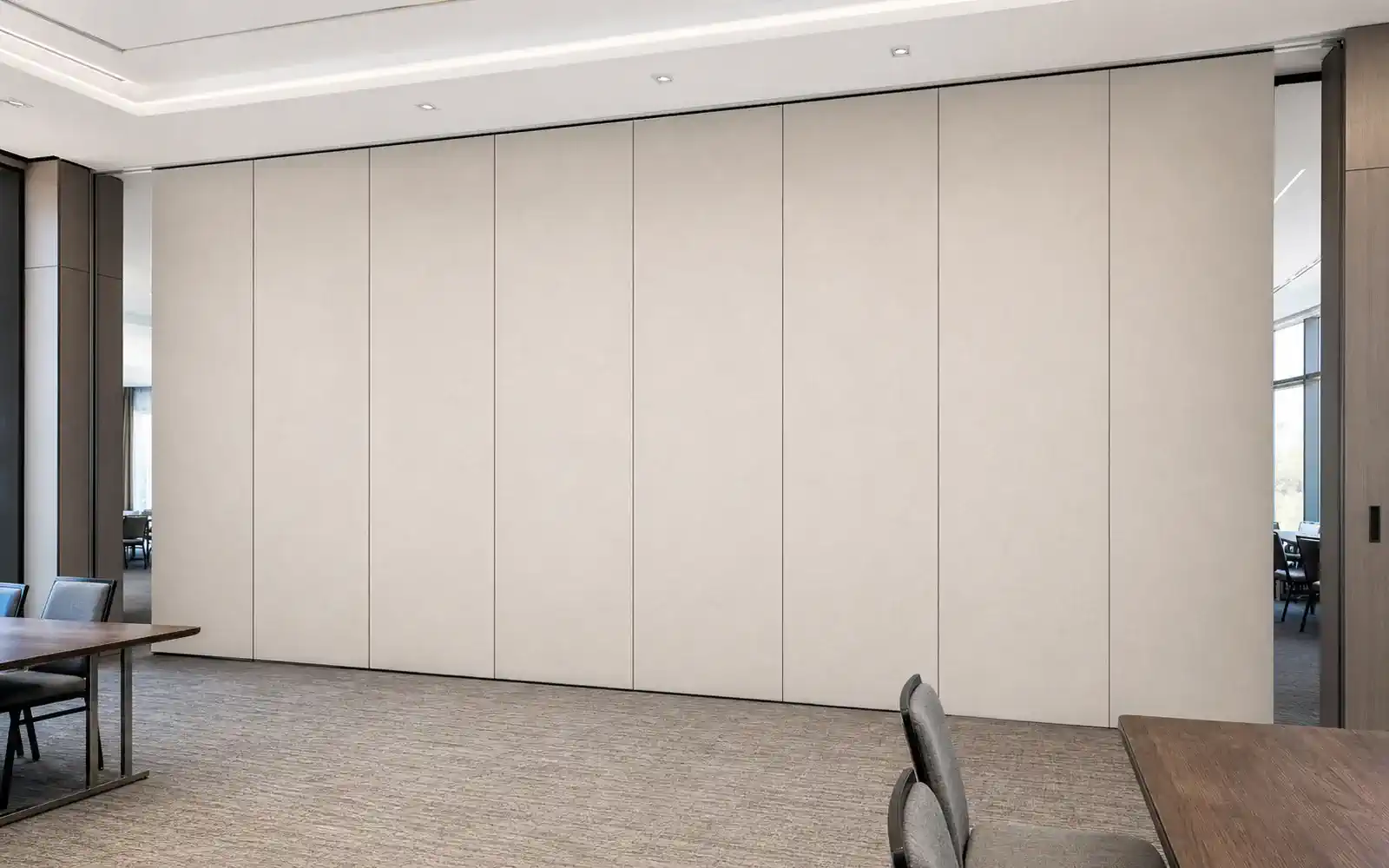
Straight, turning and stacking routes should be reviewed from the layout before scoring begins. A panel that crosses an opening without a floor track still needs a continuous connected overhead route and project-specific support review. If the tender does not ask for route drawings, the scoring model is evaluating a product in isolation rather than a working installation.
Questions to put in the tender return
- Provide a marked-up plan showing the straight, turning and stacking routes for each partition line.
- Confirm the planned parking position and whether compact stacking is required by the layout.
- The exact route, junction arrangement, continuous overhead path and parking position must be confirmed from the coordinated project drawings.
- State which finish surfaces are proposed for each room and why.
- List the documents that will be issued for project-specific confirmation.
These questions do not require bidders to invent engineering outcomes. They require them to show how the proposed system fits the actual room geometry. That is the first place where whole-life cost scoring becomes meaningful rather than theoretical.
Build a Weighted Scoring Model Around Evidence
Checklist focus: movable partition tender.
A defensible model assigns weights to criteria that can be reviewed, not to vague promises. The table below is a starting structure. Adjust the weights to suit the project, but keep the evidence column visible so evaluators know what a high score actually means.

| Criterion | What to score | Evidence to request |
|---|---|---|
| Route and layout fit | How clearly the proposed system follows the reviewed straight, turning and stacking routes | Marked-up layout drawings and parking position |
| Finish suitability | Whether laminate, melamine, fabric, leather, glass or another approved surface matches the room use | Finish schedule and sample references |
| Acoustic concept | How seals and acoustic separation are described conceptually, without reducing STC or Rw to a simple count | Project-specific acoustic requirement and confirmation boundary |
| Pass-door coordination | Whether pass-door requirements are identified and discussed early | Door location, swing and access notes |
| Documentation quality | Completeness of project documentation and confirmation steps | Drawing set, finish list and open-item register |
The suitability of each route and parking arrangement depends on the approved layout, circulation, ceiling interfaces and operating sequence. They ask for evidence of coordination. That keeps the tender comparable and reduces the risk of awarding a high score to an unsupported claim.
How to Treat Acoustic and Sealing Statements
Review focus: movable partition tender.
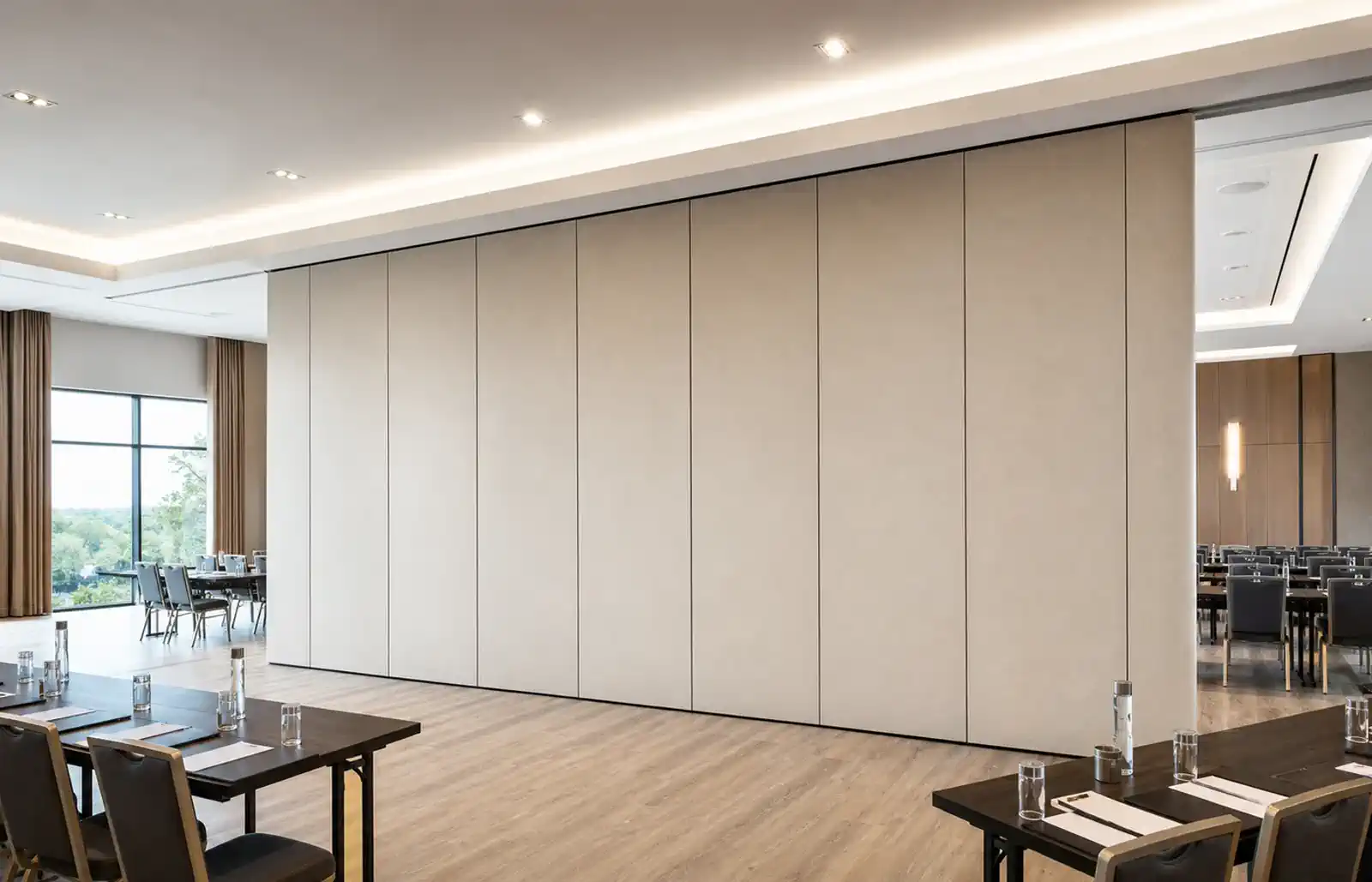
A tender can ask how seals are described conceptually and how the acoustic requirement will be confirmed, but it should not treat a generic finish or application example as acoustic evidence.
Evidence note
Score the presence of a project-specific acoustic confirmation path, not an inferred performance level. If the tender cannot state the requirement and the confirmation method, the criterion is not ready to be weighted.
This boundary protects both the buyer and the bidder. It also keeps the evaluation focused on what can be reviewed before award.
Coordinate Procurement With Design and Operations
Project review term: movable partition tender.
Whole-life cost scoring is a coordination exercise. Procurement teams should work with architects, interior designers and operations staff to confirm how each room will be used, how often the layout may change and which finishes are appropriate. The movable partition wall page provides maintained product context, while project references can help teams frame questions without assuming a application reference matches their own.
Operations input matters because parking position and route design affect daily use. Scoring should reward bidders who identify these conflicts early and propose a review path.
A Practical Checklist Before You Weight Any Criterion
- Confirm the room list and the flexible-space requirement for each area.
- Review straight, turning and stacking routes from the layout drawings.
- Identify pass-door requirements and any access constraints.
- List the finish options under consideration and the rooms they apply to.
- State the acoustic requirement and the project-specific confirmation method.
- Define which documents bidders must submit with their tender return.
- Agree the evaluation panel and the evidence standard for each weight.
This checklist does not produce a cost figure by itself. It produces a scoring structure that can survive scrutiny, which is the point of whole-life cost evaluation.
Common Scoring Mistakes to Avoid
One common mistake is weighting “maintenance” without defining what maintenance means for the project. A third is allowing bidders to describe routes without showing them on a drawing.
Each of these mistakes pushes the evaluation toward assumptions. The correction is to require visible evidence and to mark any unconfirmed item as an open point for project-specific review. That approach keeps the tender honest and makes the final comparison more useful to the owner.
FAQ: Movable Partition Tender Whole-Life Cost Scoring
What information is required for movable partition tender whole-life cost scoring?
You need the room list, layout drawings showing straight, turning and stacking routes, parking position, finish preferences, pass-door requirements and the project-specific acoustic requirement. The tender should also state which documents bidders must provide for review.
Which statements need project-specific evidence?
The exact overhead route and support arrangement must be confirmed by the responsible project team from coordinated drawings. Generic finish examples and application photos are not evidence of performance.
How should teams coordinate scoring without inferring hidden performance?
Score the evidence submitted, not the impression created by a sample or drawing. If a criterion cannot be confirmed from the tender return, record it as an open item and request clarification before weighting it.
Can STC or Rw be used directly in the scoring model?
Use them only with project-specific confirmation and the correct test context.
Do movable partitions need a floor track?
EBUNGE movable partition panels are top-hung and move without a continuous floor running track or floor hardware along the partition line.
When should pass-door requirements be discussed?
Pass-door requirements should be discussed during tender review, before the scoring model is finalised. Early discussion helps bidders coordinate access, swing and route planning with the rest of the layout.
Conclusion: Score Evidence, Not Assumptions
Whole-life cost scoring works when every weighted criterion is tied to something a reviewer can see. Confirm the movement routes, parking position, finish schedule and acoustic confirmation path before you assign weights. Keep unsupported performance, service-life and financial claims out of the model, and treat every unconfirmed item as an open point for project-specific review.
To discuss pass-door requirements, project documentation or a tender review framework for your next flexible-space project, contact the EBUNGE team. We can help you frame the questions that belong in the tender without inventing answers that the drawings have not yet confirmed.
Continue Exploring
More Cost and Planning Guides
- Newer guideDetect Unbalanced Bid Pricing in Movable Partition Tender Returns
- Earlier guideRed-Flag Movable Partition Tender Drawings Before Pricing
- Related guideBenchmark a Movable Partition Tender Against Prior Award Data
- Related guideRead a Movable Partition Tender Pricing Schedule for Hidden