
html body.single-post main#content.site-main{box-sizing:border-box!important;width:calc(100% – 32px)!important;max-width:900px!important;margin-left:auto!important;margin-right:auto!important;padding-left:0!important;padding-right:0!important}
Quick project answer
Review focus: unbalanced bid pricing.
Movable partition tender unbalanced bid pricing is a common procurement risk: a return may look competitive overall while individual line items are priced unevenly. That pattern can create cost surprises when quantities change, scope is clarified or site conditions differ from the tender assumption. This guide gives overseas contractors, architects, interior designers, owners and renovation teams a practical review framework. It stays within confirmed product facts and visible evidence limits, and it points every uncertain item back to project-specific drawing review and written confirmation.
What Unbalanced Bid Pricing Looks Like in a Movable Partition Return
Project review term: unbalanced bid pricing.
Unbalanced pricing is not simply a high or low total. It is a distribution pattern. One or more line items may be priced unusually low to improve the headline number, while related items are priced high enough to recover margin later. The risk is not the arithmetic alone; it is the mismatch between the priced scope and the application reference requirement.
In movable partition tenders, common line items include panels, top track, stacking arrangement, finish selection, pass doors and project documentation. Because these systems are top-hung and move without a continuous floor track, the overhead route and support condition matter to the layout review. A bid that treats the track or stacking zone as a minor allowance may be hiding a scope gap rather than offering a genuine saving.
Why the Overall Total Can Mislead
A low total may reflect a narrower scope, an omitted coordination item or an assumption that does not match the drawings. A high total may include legitimate project-specific work. The review task is to compare like with like, not to rank totals alone.
Start With the Tender Scope and Drawing Set
Coordination scope: unbalanced bid pricing.
Before comparing prices, confirm that every return is priced against the same scope. Ask for a line-item breakdown that follows the tender schedule. If the schedule is vague, the comparison will be unreliable regardless of the totals.
- Confirm the opening dimensions and the intended stacking position.
- Confirm whether the route is straight, turning or a combination.
- Confirm the finish category requested: laminate, melamine, fabric, leather, glass or another approved surface.
- Confirm pass-door requirements and how they are described in the drawings.
- Confirm which project documentation is required with the return.
These items are not performance claims. They are scope markers. When a bid is silent on one of them, treat the silence as a question to resolve, not as an assumed inclusion.
A Practical Checklist for Reviewing Each Bid Line

Checklist focus: unbalanced bid pricing.
Use the same checklist for every bidder so that differences are visible. The goal is to identify where a price depends on an unstated assumption.
| Review area | What to look for | Evidence to request |
|---|---|---|
| Panel and finish scope | Finish category and quantity match the schedule | Written finish confirmation against the tender list |
| Top track and route | Route described as straight, turning or mixed | Layout review notes referencing the drawings |
| Stacking arrangement | Parking position and stacking zone identified | Coordinated layout confirmation |
| Pass doors | Included, excluded or listed as an option | Written scope statement |
| Documentation | Drawings, schedules and coordination notes listed | Document register or submittal list |
If a line is marked as an allowance, ask what it covers and what would change it. If a line is omitted, ask whether it is excluded or included elsewhere. These questions expose unbalanced pricing without requiring any assumption about hidden performance.
How to Compare Bids Without Inferring Hidden Performance
Visible references can support layout discussion but do not verify hidden construction or performance. The suitability of each route and parking arrangement depends on the approved layout, circulation, ceiling interfaces and operating sequence. Where acoustic separation matters, the requirement must be confirmed for the specific project, room and construction.
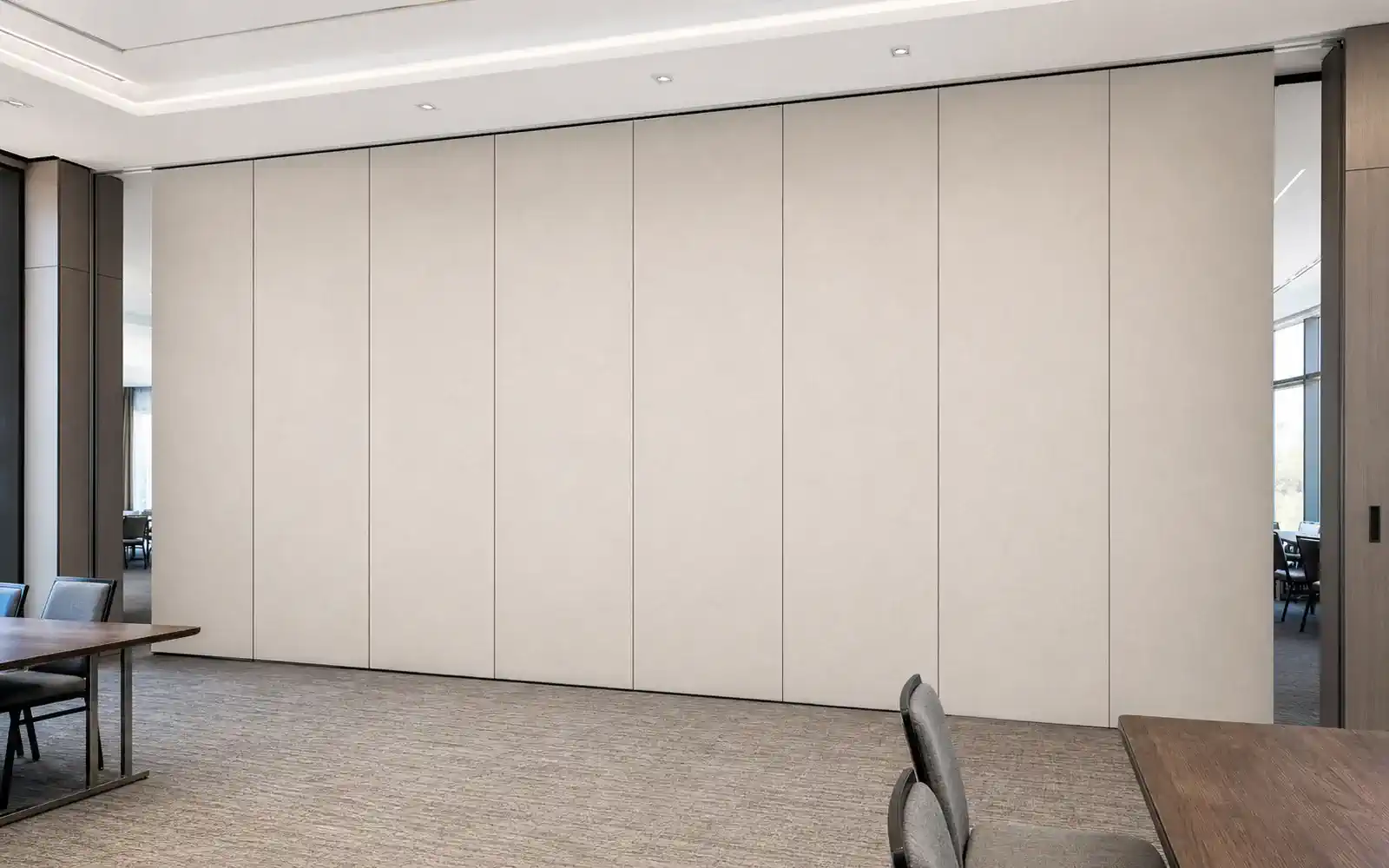
The exact route, junction arrangement, continuous overhead path and parking position must be confirmed from the coordinated project drawings. Cost and maintenance requirements depend on the selected configuration, finish and project conditions and require project-specific confirmation.
Questions That Reveal Pricing Assumptions
- Which drawings were used to price the route and stacking position?
- Which finish category was priced, and what happens if the selection changes?
- Are pass doors included, excluded or priced separately?
- Which project documentation is included in the return?
- Which items are allowances, and what would trigger a change?
Record the answers in a comparison matrix. A bid that cannot answer these questions clearly is a coordination risk, even if the total looks attractive.
Red Flags and Evidence Notes for Procurement Teams
Unbalanced pricing often appears as a cluster of red flags rather than a single error. Watch for a very low panel rate paired with a high track or stacking rate, or a low base bid with many exclusions. Also watch for a bid that describes the finish in general terms but does not confirm the selected surface.
Evidence note: this article does not confirm any acoustic rating, structural capacity, fire performance, warranty, service life or financial outcome. Those items require project-specific documentation and review. The product facts used here are limited to top-hung movement, no continuous floor track, customized parking, broad finish options and the need for layout review.
When a bid depends on a performance claim, ask for the supporting document. If the document is not available, treat the claim as unconfirmed and keep it outside the commercial comparison.
Documentation to Request Before Award
Request a written scope statement that matches the tender schedule. Ask for layout review notes covering the straight, turning and stacking routes. Ask for finish confirmation and a pass-door scope statement. Ask for a document register so that submittals can be tracked. These requests are normal procurement practice and help prevent post-award disputes.

For product context, see the movable partition wall page. For application examples, see projects. When the scope is clear and the drawings are coordinated, the pricing comparison becomes a technical review rather than a guess.
FAQ: Movable Partition Tender Unbalanced Bid Pricing
What is unbalanced bid pricing in a movable partition tender?
It is a pricing pattern where individual line items are distributed unevenly, often with low headline items and higher related items. The total may look competitive while the scope and risk allocation remain unclear.
Does a low total always mean the bid is unbalanced?
No. A low total may reflect a narrower scope, a different finish selection or a genuine commercial decision. The review should compare line items and assumptions, not totals alone.
Which documents help detect unbalanced pricing?
A line-item breakdown, layout review notes, finish confirmation, pass-door scope statement and a document register are useful. These allow the reviewer to compare like with like.
Can I rely on an acoustic rating in the bid return?
Only if the project-specific requirement and supporting documentation are confirmed.
What should I do if a bid omits the top track or stacking scope?
Ask for written clarification. The panels are top-hung and move without a continuous floor track, but the overhead route and stacking position still require coordinated layout review and project-specific support confirmation.
When should I request a revised return?
Request a revision when the scope, finish, pass-door requirement or documentation list is unclear.
Conclusion: Turn Pricing Review Into a Scope Review
Detecting unbalanced bid pricing in movable partition tenders is less about finding a single number and more about testing whether every return is priced against the same scope. Use the checklist, compare line items, request documentation and keep performance claims outside the comparison until they are confirmed for the project. This approach protects the budget and reduces post-award surprises.
To discuss pass-door requirements, project documentation or layout coordination, contact EBUNGE with your drawings and tender schedule. Project-specific support, acoustic and dimensional requirements should be confirmed before award.
Continue Exploring
More Cost and Planning Guides
- Newer guideDetect Front-Loaded Pricing in Movable Partition Tender Returns
- Earlier guideWeight Whole-Life Cost in Movable Partition Tender Scoring
- Related guideReview a Movable Partition Tender for Unclear Interface Ownership
- Related guideCompare Movable Partition Tender Returns When Bidders Bundle