
Why impact mapping matters for sports hall partition finishes
Quick project answer
Sports halls serve multiple activities, so the partition system must support flexible division without disrupting the floor. Impact mapping connects the choice of sports hall partition finishes to how the space will be used, parked, and maintained. It is a planning method, not a product specification.
By mapping impacts early, the project team can coordinate finish selection with parking style and cleaning routines. This reduces late changes and keeps the design aligned with the confirmed top-hung principle.
The top-hung principle and its effect on finishes
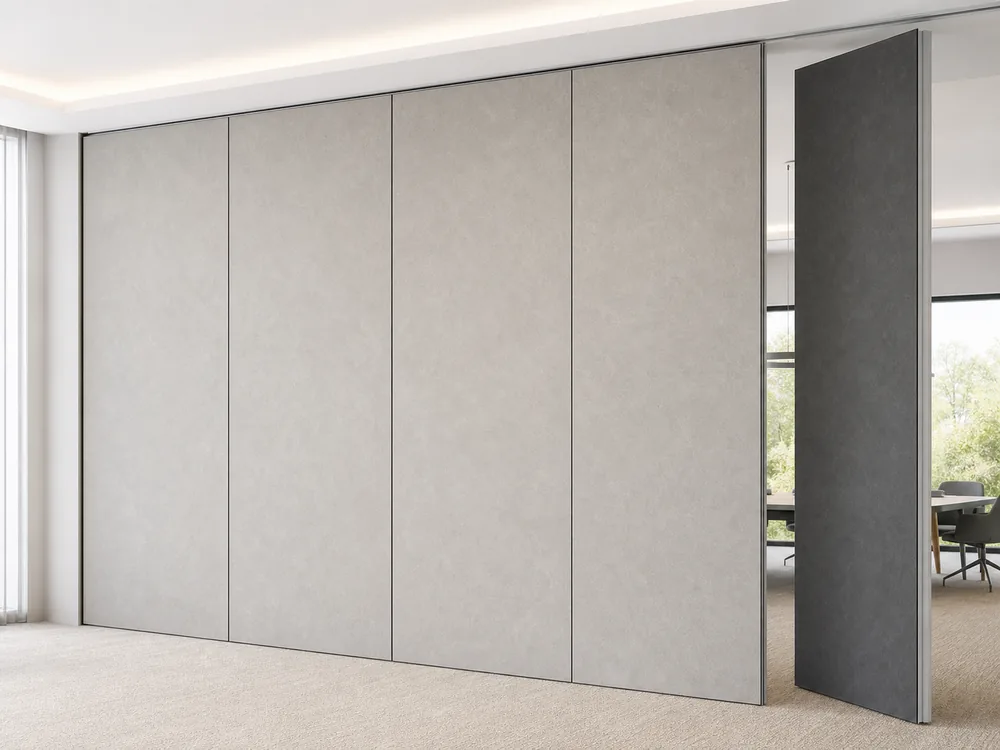
The EBUNGE movable partition system is top-hung. It has no continuous floor running track or operating hardware in the finished floor along the partition line. This means the floor is not cut or damaged for a floor track.
Because the floor remains physically uninterrupted by the maintained EBUNGE top-hung system, sports hall partition finishes can be planned without a floor track detail. The finish selection can focus on the panel faces and the surrounding floor, not on a track channel.
This principle also affects how the partition line interacts with the hall floor. The exact route, junction arrangement, continuous overhead path and parking position must be confirmed from the coordinated project drawings.
Keeping the floor physically uninterrupted
A physically uninterrupted floor is a key benefit for sports halls. It supports safe movement and allows the full floor area to be used when the partition is parked. The absence of a floor track means no cutting or damaging of the finished floor along the partition line.
When planning sports hall partition finishes, the floor finish can continue without a track interruption. This simplifies transitions between different floor zones and helps maintain a consistent surface.
However, the top-hung system still requires overhead support. The exact route, junction arrangement, continuous overhead path and parking position must be confirmed from the coordinated project drawings.
Parking planning and finish coordination
Panel parking style can be customized to the customer layout and project requirements, subject to coordinated drawings. A suitable approved parking arrangement can use the stacking area more compactly and coordinate with the space design.
When parking is planned, the finish of the stacked panels should be considered. Sports hall partition finishes may need protection during parking or cleaning. The exact track, support and panel layout still require project drawings.
Parking location affects how the hall is used when the partition is open. It also influences the finish details near the stacking area. Early coordination helps align the parking style with the overall design.
Finish and care coordination
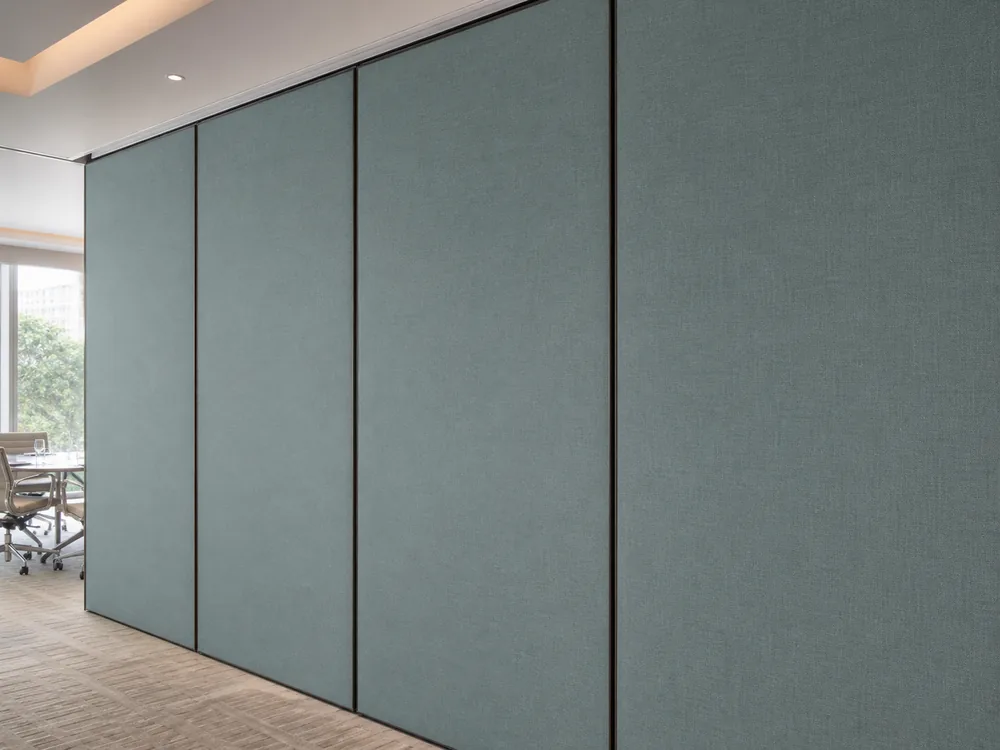
Finish materials can be customized, and cleaning and maintenance methods vary with the selected finish. This means the project team should match the finish to the expected use and care routine.
For sports halls, finishes may need to withstand frequent contact. The choice of sports hall partition finishes should consider how the panels will be cleaned and maintained over time.
Because care methods vary by finish, it is important to confirm the cleaning approach before finalizing the specification. This avoids mismatches between the finish and the available maintenance resources.
Non-limiting applications and buyer inputs
Movable partitions can be used wherever flexible space division, combination or reconfiguration is required. Application examples are not limiting. Sports halls are one context, but the same principles apply to other multipurpose spaces.
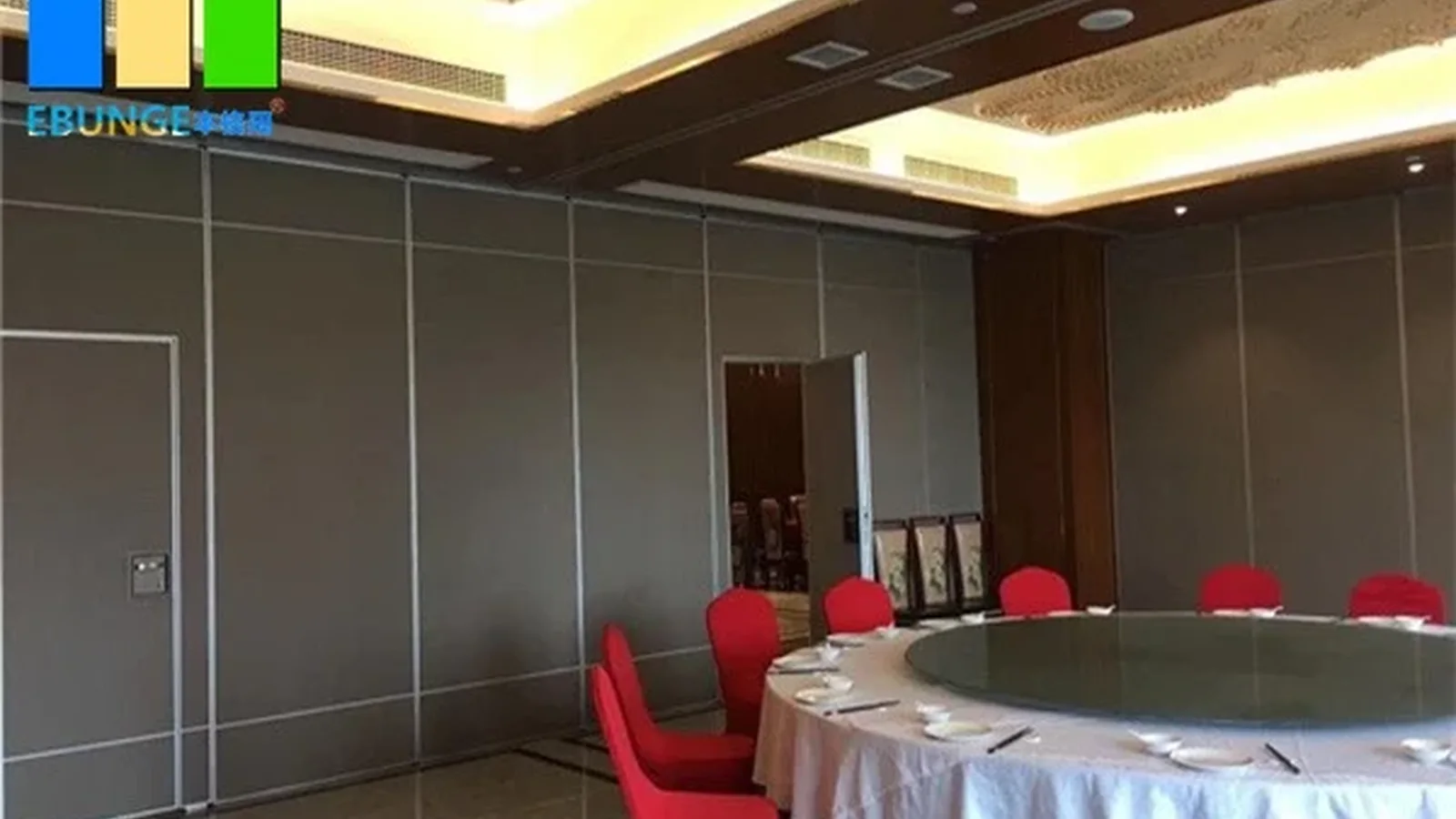
EBUNGE has completed many types of hotel-related movable-partition projects. Ballrooms, wedding halls and multifunction halls are non-limiting examples. No customer names, locations, quantities, ratings, certifications or outcomes may be inferred.
Buyers should provide clear inputs on layout, parking preferences, and finish expectations. These inputs help shape the impact map for sports hall partition finishes.
Drawing approvals and project-specific details
Every project requires coordinated drawings to confirm the top-hung track, support, and panel layout. The exact route, junction arrangement, continuous overhead path and parking position must be confirmed from the coordinated project drawings.
Approvals should cover the parking style, finish selection, and interface with the floor. Because the floor is not cut for a track, the drawing focus is on overhead elements and panel stacking.
Impact mapping for sports hall partition finishes should be revisited as drawings develop. The suitability of each route and parking arrangement depends on the approved layout, circulation, ceiling interfaces and operating sequence.
Scannable planning checks
- Confirm the top-hung principle and absence of a floor track.
- Map parking style to the available stacking area.
- Select finishes with cleaning and maintenance in mind.
- Coordinate overhead support and panel layout in drawings.
- Review non-limiting applications for similar spaces.
Frequently asked questions
What does impact mapping mean for sports hall partition finishes?
Impact mapping is a planning method that links finish choices to how the hall is used, parked, and maintained. It helps teams coordinate sports hall partition finishes with the top-hung system and project drawings.
Does the EBUNGE top-hung system require a floor track?
No. The EBUNGE movable partition system is top-hung and has no continuous floor running track or operating hardware in the finished floor along the partition line. The floor is not cut or damaged for a floor track.
Can parking style be customized for sports hall partition finishes?
Yes. Panel parking style can be customized to the customer layout and project requirements, subject to coordinated drawings. A suitable approved parking arrangement can use the stacking area more compactly and coordinate with the space design.
How do finish materials affect cleaning and maintenance?
Finish materials can be customized, and cleaning and maintenance methods vary with the selected finish. The project team should confirm care methods that match the chosen sports hall partition finishes.
Are sports halls the only application for movable partitions?
No. Movable partitions can be used wherever flexible space division, combination or reconfiguration is required. Application examples are not limiting. EBUNGE has completed many types of hotel-related movable-partition projects, with ballrooms, wedding halls and multifunction halls as non-limiting examples.
Next steps for project teams
Start by documenting the hall layout, parking preferences, and finish expectations. Use impact mapping to align sports hall partition finishes with the top-hung system and the physically uninterrupted floor.
Then coordinate with the project drawings to confirm the exact route, junction arrangement, continuous overhead path and parking position. This ensures the finish and care plan is grounded in approved details.
For related products, see /products/. For project examples, see /projects/.
Continue Exploring
More Materials and Finishes Guides
- Newer guideAirport Holdroom Operable Wall Finishes: Luggage Cart Impact Mapping
- Earlier guideComparing Auditorium Partition Finishes for Stage Lighting
- Related guideWho Verifies Partition Handover Records When Trades Finish at Different
- Related guideMovable Partition Finish Sample Coordination Guide for Interior