
Quick project answer
Airport terminals often combine large atria with flexible rooms. Daylight enters through extensive glazing, and that daylight can reach partition surfaces. When teams plan an airport movable partition finish uv strategy, they coordinate finish selection with layout, parking and maintenance. The EBUNGE movable partition system is top-hung, so the finished floor along the partition line remains physically uninterrupted. This article reviews planning inputs for atrium conditions without prescribing project-specific outcomes.
Why UV exposure matters in airport atria
Atrium glazing can admit daylight across many hours. Surfaces near the perimeter may receive more daylight than surfaces deeper inside a plan. For an airport movable partition finish uv review, the goal is to understand where daylight falls and how often partitions occupy those positions. The review does not require a performance rating. It requires a clear picture of exposure conditions and finish care expectations.
Finish materials can be customized. Because cleaning and maintenance methods vary with the selected finish, the project team should align care instructions with the chosen surface. A finish that suits a low-daylight corridor may not suit a bright atrium edge. Documenting exposure zones helps the team compare finish options before drawings are finalized.
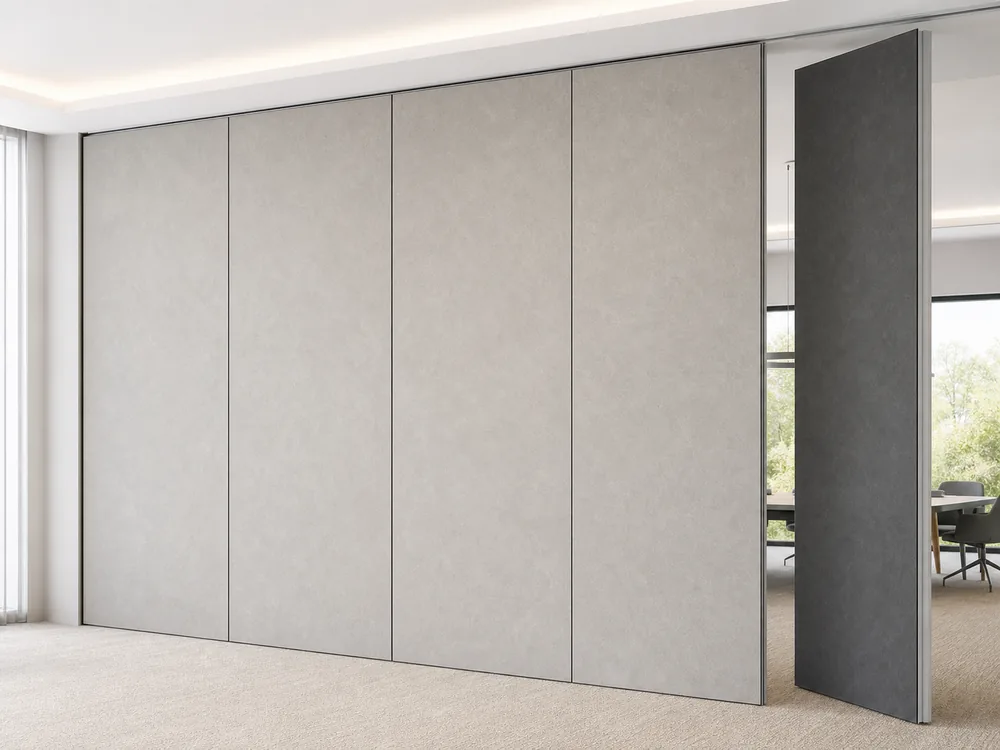
The top-hung principle and the floor line
The EBUNGE movable partition system is top-hung. It has no continuous floor running track or operating hardware in the finished floor along the partition line. As a result, the floor is not cut or damaged for a floor track. The floor remains physically uninterrupted by the maintained EBUNGE top-hung system.
This principle matters in airport atria where floor finishes are part of the public realm. A top-hung arrangement keeps the floor plane intact along the partition line. The exact route, junction arrangement, continuous overhead path and parking position must be confirmed from the coordinated project drawings.
Planners should treat the overhead path as a coordination item. The top-hung principle describes how the system is supported, but it does not replace project-specific drawings. Those drawings show how the partition line relates to adjacent construction and how panels will be parked when not in use.
Parking planning for atrium layouts
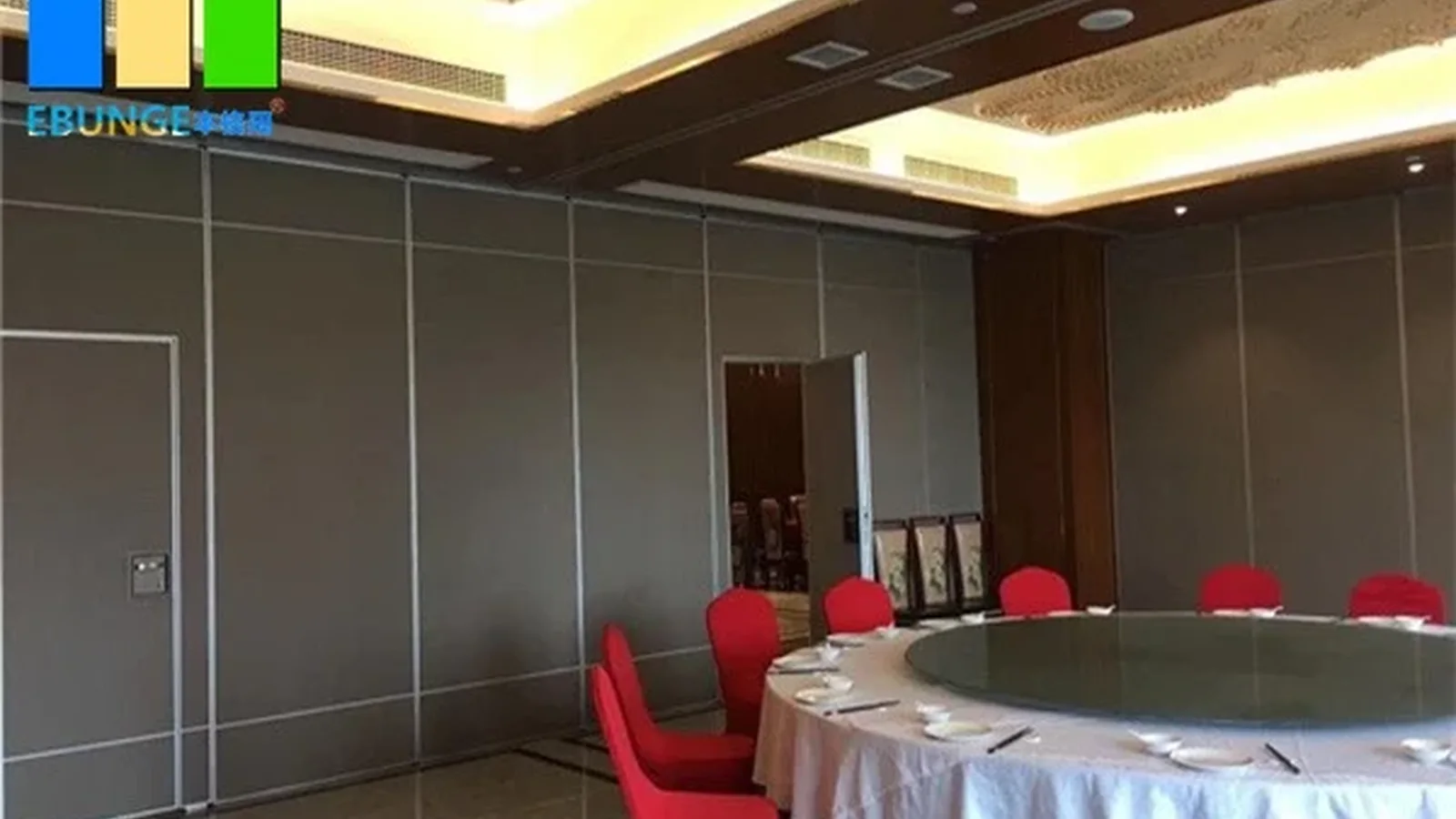
Panel parking style can be customized to the customer layout and project requirements, subject to coordinated drawings. A suitable approved parking arrangement can use the stacking area more compactly and coordinate with the space design. The exact track, support and panel layout still require project drawings.
In an airport atrium, parking may need to respect sightlines, wayfinding and adjacent circulation. The planning team should identify where stacked panels can rest without blocking essential routes. Because parking style is customizable, the design can respond to the layout rather than forcing a single arrangement.
Parking decisions also affect finish exposure. Panels that remain stacked may receive different daylight than panels left in a closed position. Reviewing parking positions alongside finish choices supports a more complete airport movable partition finish uv plan.
Finish and care coordination
Finish materials can be customized, and cleaning and maintenance methods vary with the selected finish. The project team should confirm care methods with the finish supplier and include them in handover information. This step helps facility teams understand what products and techniques are appropriate for each surface.
For an airport movable partition finish uv plan, care coordination should address how often surfaces are cleaned and how daylight exposure is monitored. The plan should not assume a universal cleaning outcome. Instead, it should record the finish selected, the approved care method and the responsible team.
Where multiple finishes appear in one atrium, labeling panels by finish type can help. Labels support consistent care without requiring hidden hardware inspection or a generic operating sequence. The focus stays on surface care and exposure management.
Non-limiting application examples
Movable partitions can be used wherever flexible space division, combination or reconfiguration is required. Application examples are not limiting. In airport settings, teams may consider adjacent meeting rooms, airline lounges, event areas or multifunction spaces.
EBUNGE has completed many types of hotel-related movable-partition projects. Ballrooms, wedding halls and multifunction halls are non-limiting examples. No customer names, locations, quantities, ratings, certifications or outcomes may be inferred from those examples.
Airport projects can share planning questions with hospitality projects. Both may involve large flexible rooms, varied finish expectations and parking areas that must coordinate with the surrounding design. The airport movable partition finish uv review benefits from those shared lessons without copying one project onto another.
Buyer inputs for UV and finish planning
Buyers should provide a layout showing the partition line, the parking area and nearby glazing. They should identify which spaces are most exposed to daylight and how often partitions will be closed. They should also confirm the desired finish direction and any care constraints.
Useful inputs include ceiling coordination information, adjacent finishes and the intended use of each room. Buyers should note whether panels will remain stacked for long periods or move frequently. These inputs help the project team evaluate finish options and parking arrangements together.
Because finish materials can be customized, early input reduces the chance of late changes. The airport movable partition finish uv discussion should happen before final finish selection so that exposure and care are considered together.
Drawing approvals and coordination
Coordinated drawings are the basis for approval. They should show the overhead path, the parking position and the relationship between the partition line and adjacent construction. The exact route, junction arrangement, continuous overhead path and parking position must be confirmed from the coordinated project drawings.
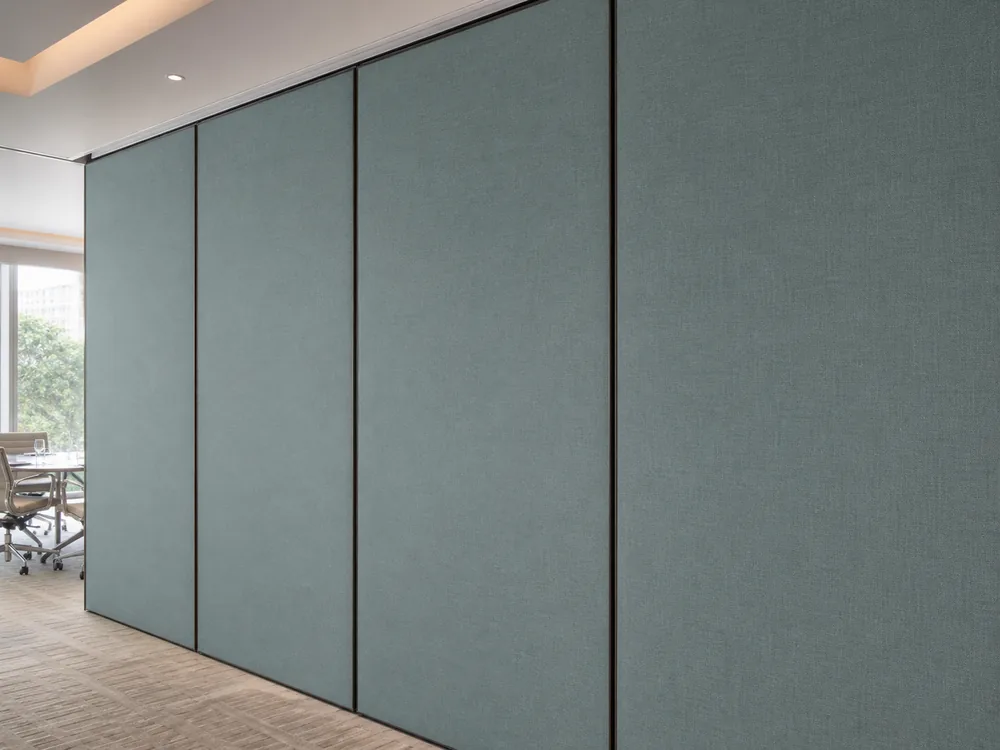
Approvals should also record the selected finish and the approved care method. This record helps facility teams maintain surfaces consistently after handover. It does not replace project-specific instructions from the finish supplier.
For an airport movable partition finish uv plan, drawing approval is a checkpoint. It confirms that layout, parking and finish decisions align before production and delivery planning proceeds. Any changes should return to the coordinated drawings for review.
Scannable planning checklist
- Map daylight exposure zones across the atrium.
- Confirm the partition line and parking area on coordinated drawings.
- Select finish direction and record approved care methods.
- Review how often partitions will be closed or stacked.
- Align parking with sightlines, wayfinding and adjacent circulation.
- Document finish labels for consistent surface care.
Comparison of planning inputs
| Input | Why it matters | Owner |
|---|---|---|
| Daylight exposure map | Shows where finishes receive more daylight | Design team |
| Parking position | Coordinates stacked panels with layout | Design team |
| Finish selection | Determines care methods | Buyer and supplier |
| Coordinated drawings | Confirms route, junction and parking | Project team |
Frequently asked questions
Does the EBUNGE system require a floor track?
The EBUNGE movable partition system is top-hung and has no continuous floor running track or operating hardware in the finished floor along the partition line.
Can the floor remain uninterrupted?
Yes. The floor is not cut or damaged for a floor track and remains physically uninterrupted by the maintained EBUNGE top-hung system.
Can parking style be customized?
Panel parking style can be customized to the customer layout and project requirements, subject to coordinated drawings.
Can finish materials be customized?
Finish materials can be customized, and cleaning and maintenance methods vary with the selected finish.
Where can movable partitions be used?
Movable partitions can be used wherever flexible space division, combination or reconfiguration is required; application examples are not limiting.
What must be confirmed from drawings?
The exact route, junction arrangement, continuous overhead path and parking position must be confirmed from the coordinated project drawings.
For product information, review movable partition products. For project context, see completed projects. An airport movable partition finish uv plan should remain tied to coordinated drawings, selected finishes and approved care methods.
Continue Exploring
More Materials and Finishes Guides
- Newer guideHotel Movable Partition Finish and Ceiling Height Coordination
- Earlier guideAirport Movable Partition Finish Planning for Baggage Areas
- Related guideWho Verifies Partition Handover Records When Trades Finish at Different
- Related guideMovable Partition Finish Sample Coordination Guide for Interior