
Why airport movable partition finishes baggage planning starts with the top-hung principle
Quick project answer
Baggage claim areas often need flexible division without disrupting the finished floor. The EBUNGE movable partition system is top-hung, so the operating hardware is carried above the opening rather than in the floor. This principle shapes how airport movable partition finishes baggage projects are planned from the earliest layout stage.
Because the system is top-hung, there is no continuous floor running track or operating hardware in the finished floor along the partition line. That single fact changes the finish conversation. Instead of cutting the floor to accept a track, the design team can treat the floor as a continuous surface and focus on the overhead path.
Airport movable partition finishes baggage decisions therefore involve two parallel tracks: the finish schedule for the panels and the coordination of the overhead route. Neither can be finalized in isolation, and both depend on the coordinated project drawings.
How the top-hung system keeps the floor physically uninterrupted
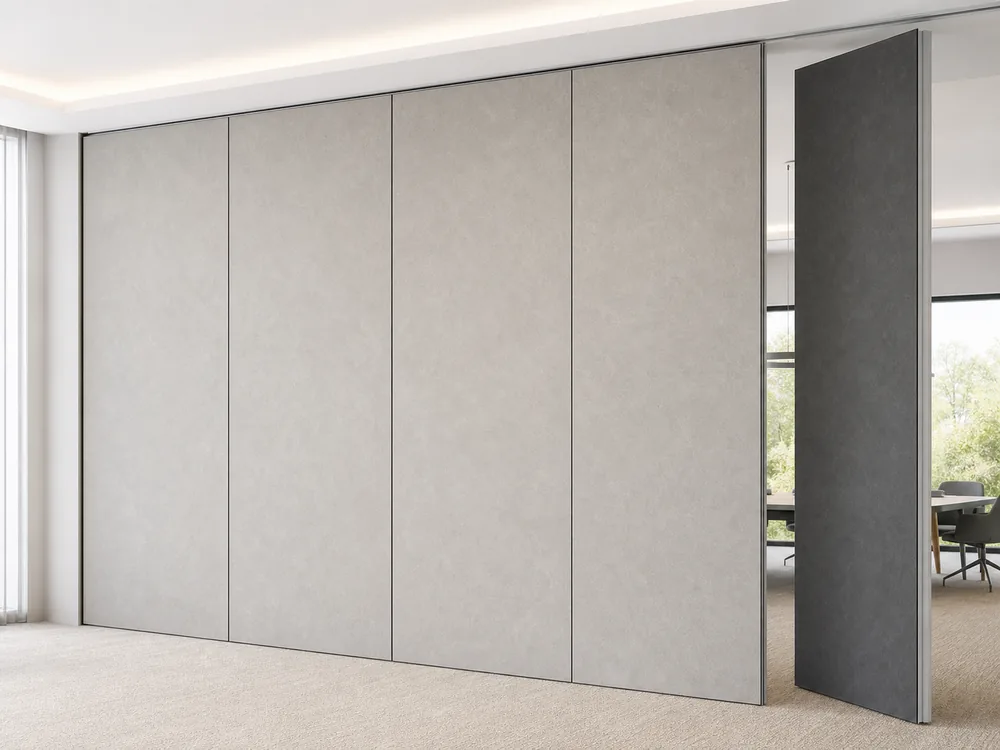
With a maintained EBUNGE top-hung system, the floor is not cut or damaged for a floor track. The floor remains physically uninterrupted along the partition line. This is a meaningful planning point in baggage areas where floor finishes, drainage falls and cleaning routines are already established.
An uninterrupted floor also simplifies the interface between the partition line and adjacent finishes. The design team does not need to detail a floor track junction, because no such track is part of the maintained system. The finish plan can instead concentrate on the panel faces and the overhead support route.
The exact route, junction arrangement, continuous overhead path and parking position must be confirmed from the coordinated project drawings. That boundary applies to every airport movable partition finishes baggage study, regardless of how simple the opening appears at concept stage.
Parking planning for airport movable partition finishes baggage layouts
Panel parking style can be customized to the customer layout and project requirements, subject to coordinated drawings. In a baggage claim environment, the parking area often competes with circulation, signage and service routes. Early parking planning helps the design team reserve a workable zone.
A suitable approved parking arrangement can use the stacking area more compactly and coordinate with the space design. The exact track, support and panel layout still require project drawings. This means parking is not a generic detail that can be copied from another project.
When reviewing airport movable partition finishes baggage options, treat parking as a design variable rather than a fixed product feature. The chosen arrangement should follow the confirmed layout, the approved drawings and the operational needs of the area.
Finish selection and care coordination
Finish materials can be customized, and cleaning and maintenance methods vary with the selected finish. That relationship is central to airport movable partition finishes baggage planning. A finish chosen for one visual effect may call for different care than another finish chosen for a different reason.
Because care methods vary by finish, the finish schedule and the cleaning routine should be developed together. The project team can then align the selected finish with the cleaning approach that the facility intends to follow. This is a coordination task, not a universal specification.
The exact route, junction arrangement, continuous overhead path and parking position must be confirmed from the coordinated project drawings. Finish decisions sit alongside that drawing review, because the panel layout and the overhead path influence how the finished installation is organized.
Non-limiting application examples for flexible space division
Movable partitions can be used wherever flexible space division, combination or reconfiguration is required. Application examples are not limiting. A baggage claim area is one possible context, but the same planning logic applies to other zones that need adaptable boundaries.
EBUNGE has completed many types of hotel-related movable-partition projects. Ballrooms, wedding halls and multifunction halls are non-limiting examples. No customer names, locations, quantities, ratings, certifications or outcomes may be inferred from that experience.
For airport movable partition finishes baggage work, the useful lesson from those projects is procedural: confirm the overhead route, confirm the parking approach and confirm the finish care method before finalizing the package.
Buyer inputs that support airport movable partition finishes baggage decisions
A productive review starts with the confirmed layout. The buyer can provide the intended division lines, the zones that may be combined and the areas that must remain clear. These inputs help the design team test whether the top-hung approach suits the space.
The buyer can also identify the preferred finish direction and the cleaning method the facility expects to use. Because finish materials can be customized and care methods vary, this input prevents a mismatch between the selected finish and the routine care plan.
Parking expectations should be discussed early. Panel parking style can be customized to the customer layout and project requirements, subject to coordinated drawings. A suitable approved parking arrangement can use the stacking area more compactly and coordinate with the space design.
Drawing approvals and the limits of generic guidance
Every airport movable partition finishes baggage project depends on coordinated drawings. The exact route, junction arrangement, continuous overhead path and parking position must be confirmed from the coordinated project drawings. Generic guidance cannot replace that review.
The exact track, support and panel layout still require project drawings. This is why the finish schedule, the parking plan and the overhead route should be approved together rather than in separate packages.
Useful scannable checks for the drawing review include:
- Confirm the partition line and the zones it will divide.
- Confirm the overhead path shown on the coordinated drawings.
- Confirm the parking position and the stacking area reserved for panels.
- Confirm the selected finish and the care method that matches it.
- Confirm that the floor remains uninterrupted along the partition line.
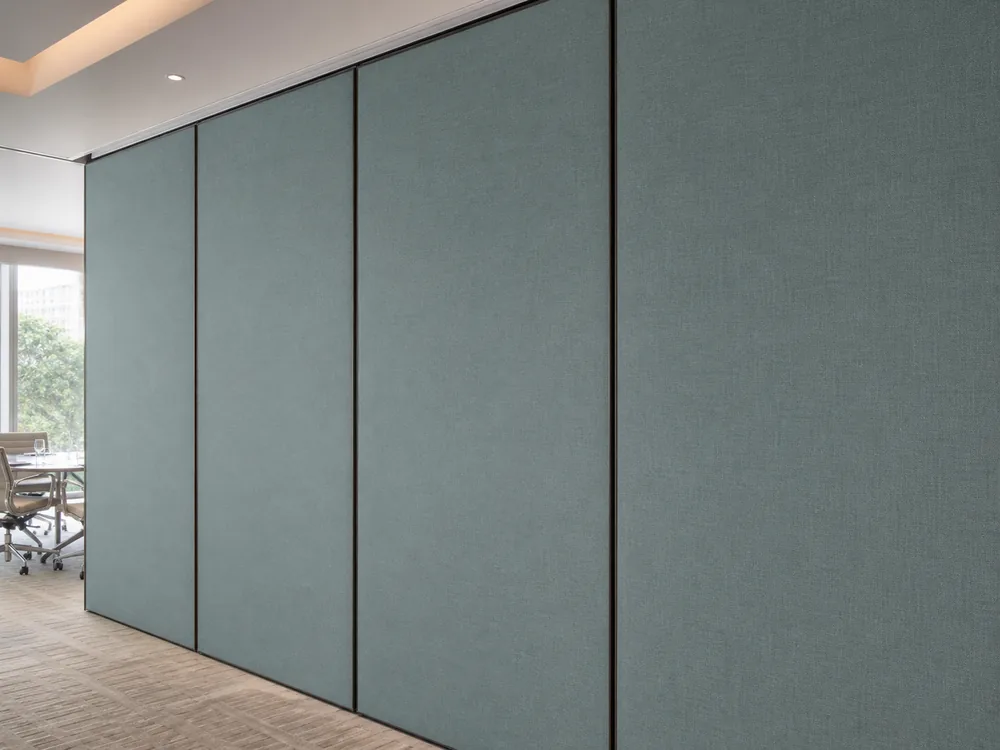
The exact route, junction arrangement, continuous overhead path and parking position must be confirmed from the coordinated project drawings. That sentence should appear in every airport movable partition finishes baggage review until the drawings are approved.
A short comparison of planning inputs
The table below summarizes how the main inputs relate to the confirmed facts. It is a planning aid, not a specification.
| Planning input | Confirmed basis | Drawing dependency |
|---|---|---|
| Floor condition | No continuous floor running track; floor not cut or damaged | Partition line confirmed on drawings |
| Parking style | Customizable to layout and project requirements | Stacking area and layout confirmed on drawings |
| Finish | Finish materials can be customized | Finish schedule coordinated with drawings |
| Care method | Cleaning and maintenance vary with the selected finish | Care approach aligned with selected finish |
For related product information, see /products/. For project context, see /projects/.
The maintained EBUNGE top-hung system leaves the floor physically uninterrupted along the partition line, so airport movable partition finishes baggage planning can focus on the overhead route, the parking position and the finish care method.
Frequently asked questions
Does an airport movable partition finishes baggage project require a floor track?
No. The EBUNGE movable partition system is top-hung and has no continuous floor running track or operating hardware in the finished floor along the partition line. The floor is not cut or damaged for a floor track.
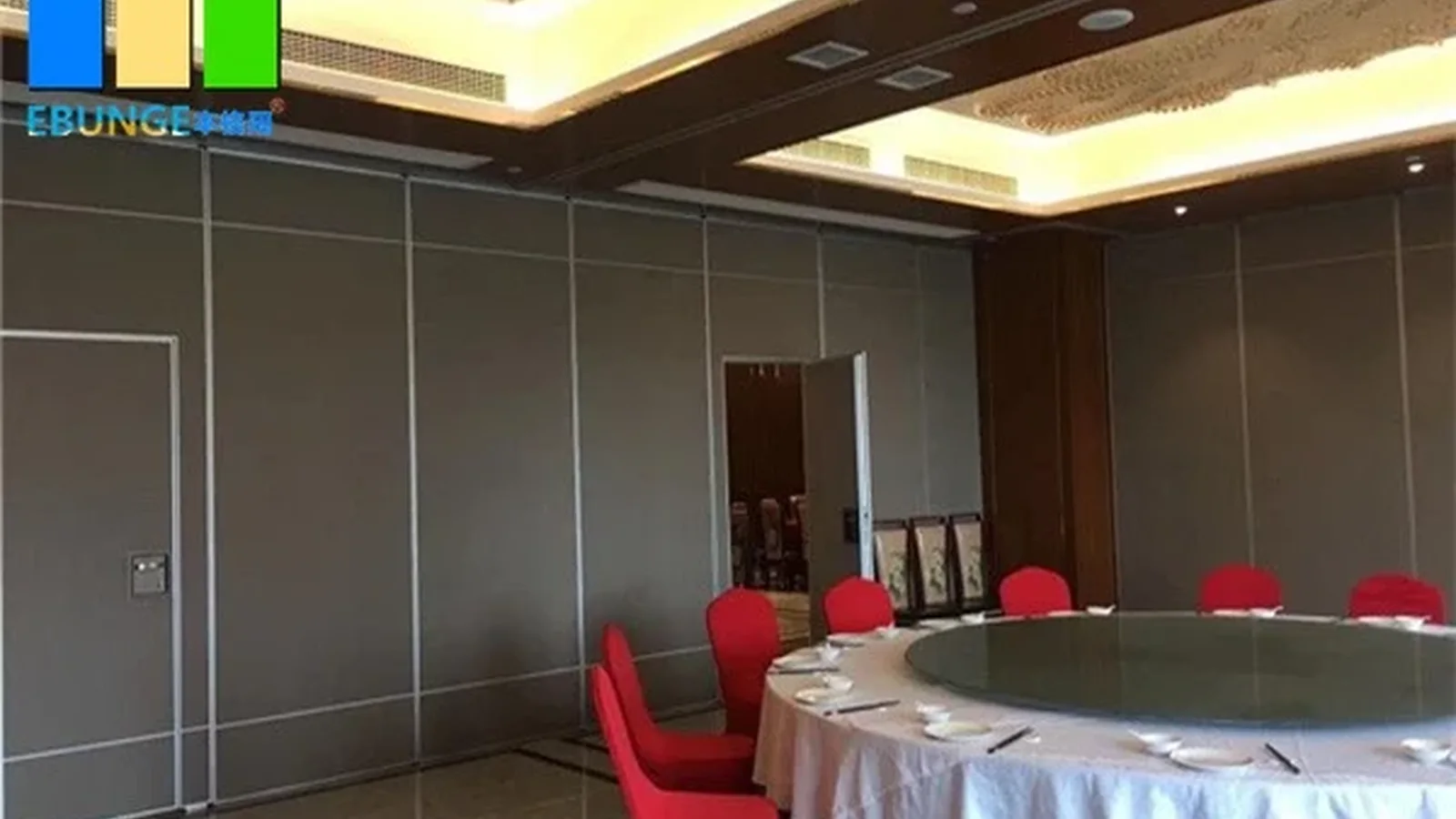
Can the floor remain uninterrupted along the partition line?
Yes. With the maintained EBUNGE top-hung system, the floor remains physically uninterrupted along the partition line. The exact route, junction arrangement, continuous overhead path and parking position must be confirmed from the coordinated project drawings.
How is panel parking planned for airport movable partition finishes baggage areas?
Panel parking style can be customized to the customer layout and project requirements, subject to coordinated drawings. A suitable approved parking arrangement can use the stacking area more compactly and coordinate with the space design.
Can finish materials be customized, and does care vary?
Finish materials can be customized, and cleaning and maintenance methods vary with the selected finish. The finish schedule and the care method should therefore be developed together during the drawing review.
Are movable partitions limited to baggage claim areas?
No. Movable partitions can be used wherever flexible space division, combination or reconfiguration is required. Application examples are not limiting, and baggage claim is one possible context among many.
What must be confirmed from the coordinated project drawings?
The exact route, junction arrangement, continuous overhead path and parking position must be confirmed from the coordinated project drawings. The exact track, support and panel layout still require project drawings.
Continue Exploring
More Materials and Finishes Guides
- Newer guideAirport Movable Partition Finishes: UV Planning for Atriums
- Earlier guideRestaurant Movable Partition Finish and Cleaning Planning
- Related guideWho Verifies Partition Handover Records When Trades Finish at Different
- Related guideMovable Partition Finish Sample Coordination Guide for Interior