
Why airport movable partition stacking security starts with the top-hung principle
Quick project answer
Airport interiors often need flexible space division without interrupting the finished floor. A top-hung movable partition system carries panels from an overhead structure rather than a floor track. This principle shapes how airport movable partition stacking security is planned around cameras and circulation.
The EBUNGE movable partition system is top-hung and has no continuous floor running track or operating hardware in the finished floor along the partition line. The floor is not cut or damaged for a floor track and remains physically uninterrupted by the maintained EBUNGE top-hung system.
For security teams, that uninterrupted floor matters because camera views and passenger routes can remain visually clear along the partition line. The parking area, however, still needs careful coordination so stacked panels do not block required sightlines.
How an uninterrupted floor supports camera planning
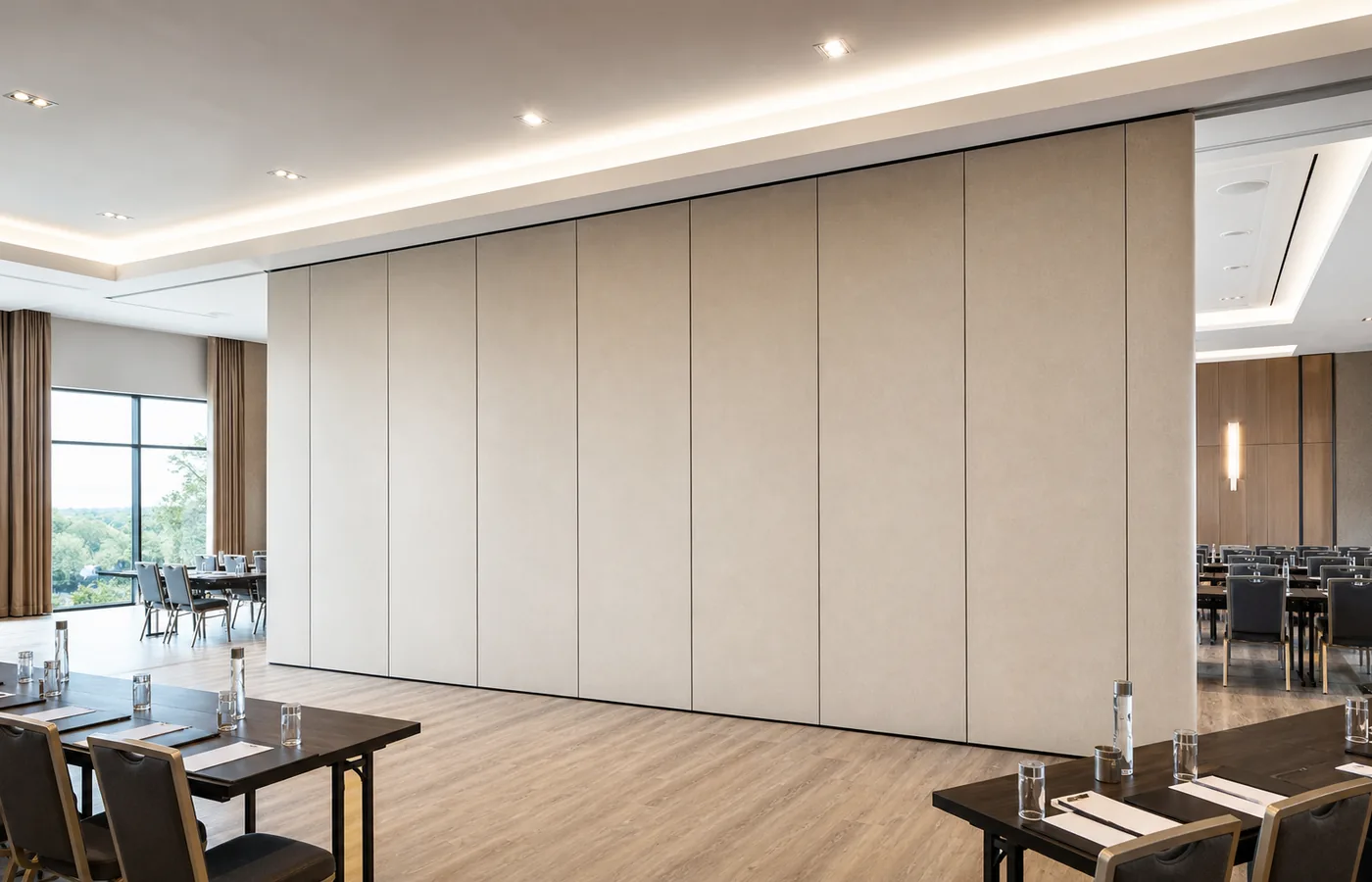
When no floor track crosses the partition line, the finished floor stays continuous. That condition can simplify camera placement because the floor plane does not introduce a raised strip or cut line that might appear in a field of view.
Airport movable partition stacking security still depends on where panels rest when open. A compact parking arrangement can reduce the footprint of stacked panels, but the exact track, support and panel layout require project drawings.
Camera clearance planning should treat the parking position as a fixed element in the room layout. If the stacked panels sit within a camera’s coverage area, the security view may be partially obstructed even though the floor remains uninterrupted.
Parking position and camera clearance coordination
Panel parking style can be customized to the customer layout and project requirements, subject to coordinated drawings. A suitable approved parking arrangement can use the stacking area more compactly and coordinate with the space design.
For airport movable partition stacking security, the parking position should be reviewed against camera locations, fields of view and any required sightlines. The goal is to keep stacked panels outside critical camera paths where possible.
The exact route, junction arrangement, continuous overhead path and parking position must be confirmed from the coordinated project drawings. This boundary applies to every airport movable partition stacking security review.
Buyer inputs that inform stacking and security planning
Early buyer inputs help the project team align partition planning with security requirements. Useful inputs include room layouts, camera positions, desired parking zones and the way spaces will be combined or separated.
The exact overhead route and support arrangement must be confirmed by the responsible project team from coordinated drawings. The exact route, junction arrangement, continuous overhead path and parking position must be confirmed from the coordinated project drawings.
Buyers should also confirm finish preferences early. Finish materials can be customized, and cleaning and maintenance methods vary with the selected finish. Those choices can affect how the parking area is maintained around cameras and adjacent surfaces.
- Room layout drawings showing partition lines and parking zones.
- Camera locations, lens directions and required sightlines.
- Preferred finish direction for panels and adjacent surfaces.
- Coordination notes for overhead path and support conditions.
- Cleaning and maintenance expectations for the selected finish.
Finish selection and care around parking areas
Finish materials can be customized, and cleaning and maintenance methods vary with the selected finish. In airport environments, the parking area may receive attention from cleaning teams, so finish care should be discussed during planning.
Airport movable partition stacking security is not only about cameras. It also involves keeping the parking zone orderly so stacked panels do not interfere with adjacent operations or security equipment.
Because cleaning methods vary by finish, the project team should confirm which care approach suits the chosen surface. This step helps avoid unintended damage when panels are stacked and the surrounding floor is cleaned.
Non-limiting applications for movable partitions
Movable partitions can be used wherever flexible space division, combination or reconfiguration is required; application examples are not limiting. Airports may use them for lounges, meeting rooms, training areas or temporary separation zones.
EBUNGE has completed many types of hotel-related movable-partition projects; ballrooms, wedding halls and multifunction halls are non-limiting examples. No customer names, locations, quantities, ratings, certifications or outcomes may be inferred.
For airport movable partition stacking security, the same top-hung principle applies: the floor remains uninterrupted, while the parking position and overhead path are coordinated through drawings.
Drawing approvals and project-specific confirmation
Coordinated drawings are the controlling document for airport movable partition stacking security. They show the partition line, parking position, overhead path and any junctions that require review.
The exact route, junction arrangement, continuous overhead path and parking position must be confirmed from the coordinated project drawings. Without that confirmation, camera clearance planning remains provisional.
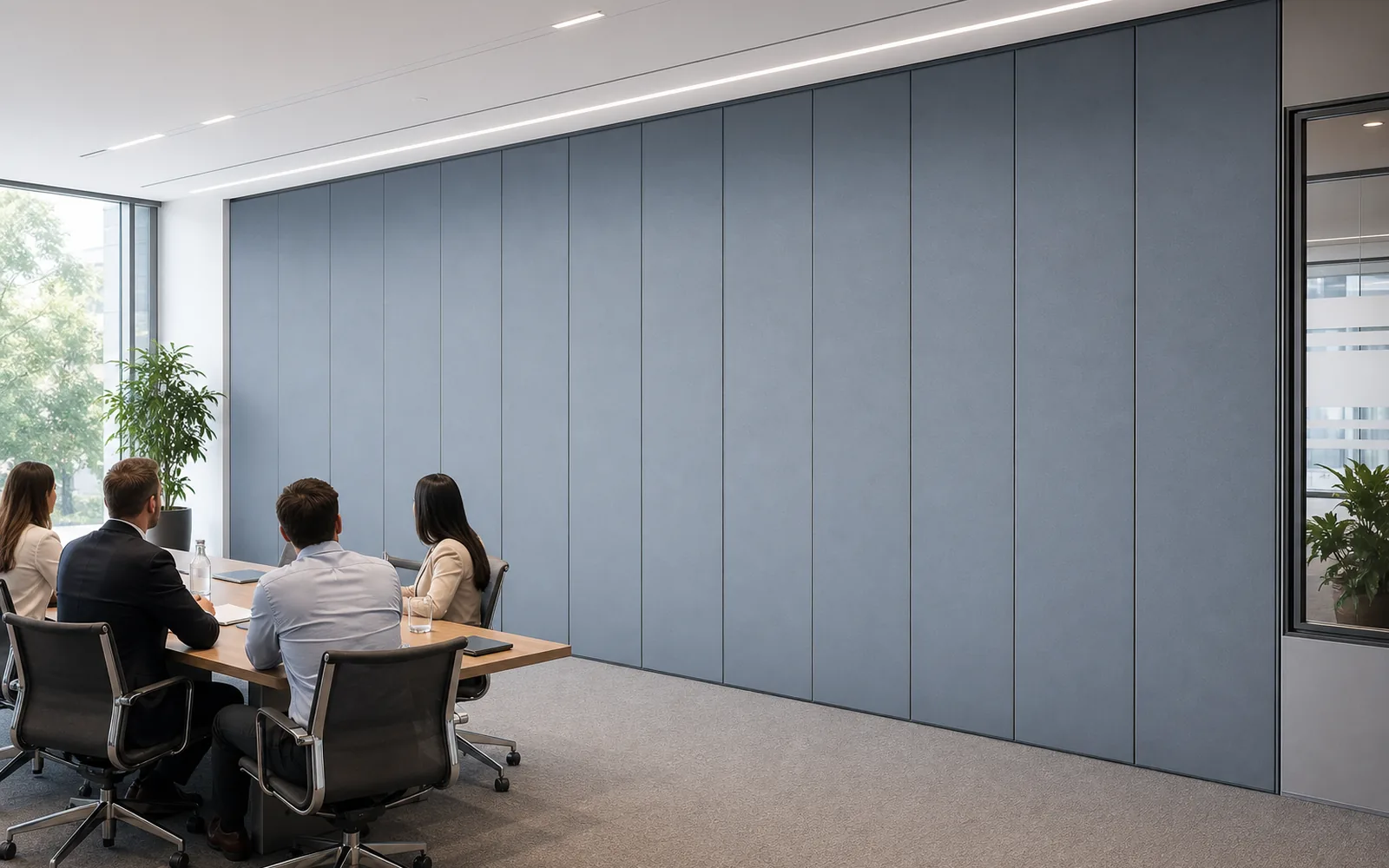
Approvals should involve the parties responsible for security, operations and interior coordination. Their review helps align the stacking area with camera coverage and day-to-day airport use.
| Planning item | Why it matters for airport movable partition stacking security |
|---|---|
| Parking position | Determines whether stacked panels sit inside camera views or required sightlines. |
| Overhead path | Must be coordinated with the building design and confirmed in drawings. |
| Finish selection | Affects cleaning and maintenance methods for panels and adjacent surfaces. |
| Drawing approval | Confirms the exact route, junction arrangement and parking position. |
Frequently asked questions
Does a top-hung movable partition require a floor track?
No. The EBUNGE movable partition system is top-hung and has no continuous floor running track or operating hardware in the finished floor along the partition line.
How does airport movable partition stacking security affect camera placement?
Stacked panels occupy space when the partition is open. Camera placement should account for the approved parking position so that required sightlines are not blocked.
Can the parking style be customized for an airport layout?
Panel parking style can be customized to the customer layout and project requirements, subject to coordinated drawings. A suitable approved parking arrangement can use the stacking area more compactly.
What finish information is available for planning?
Finish materials can be customized, and cleaning and maintenance methods vary with the selected finish. The project team should confirm care methods for the chosen finish.
What must be confirmed from project drawings?
The exact route, junction arrangement, continuous overhead path and parking position must be confirmed from the coordinated project drawings.
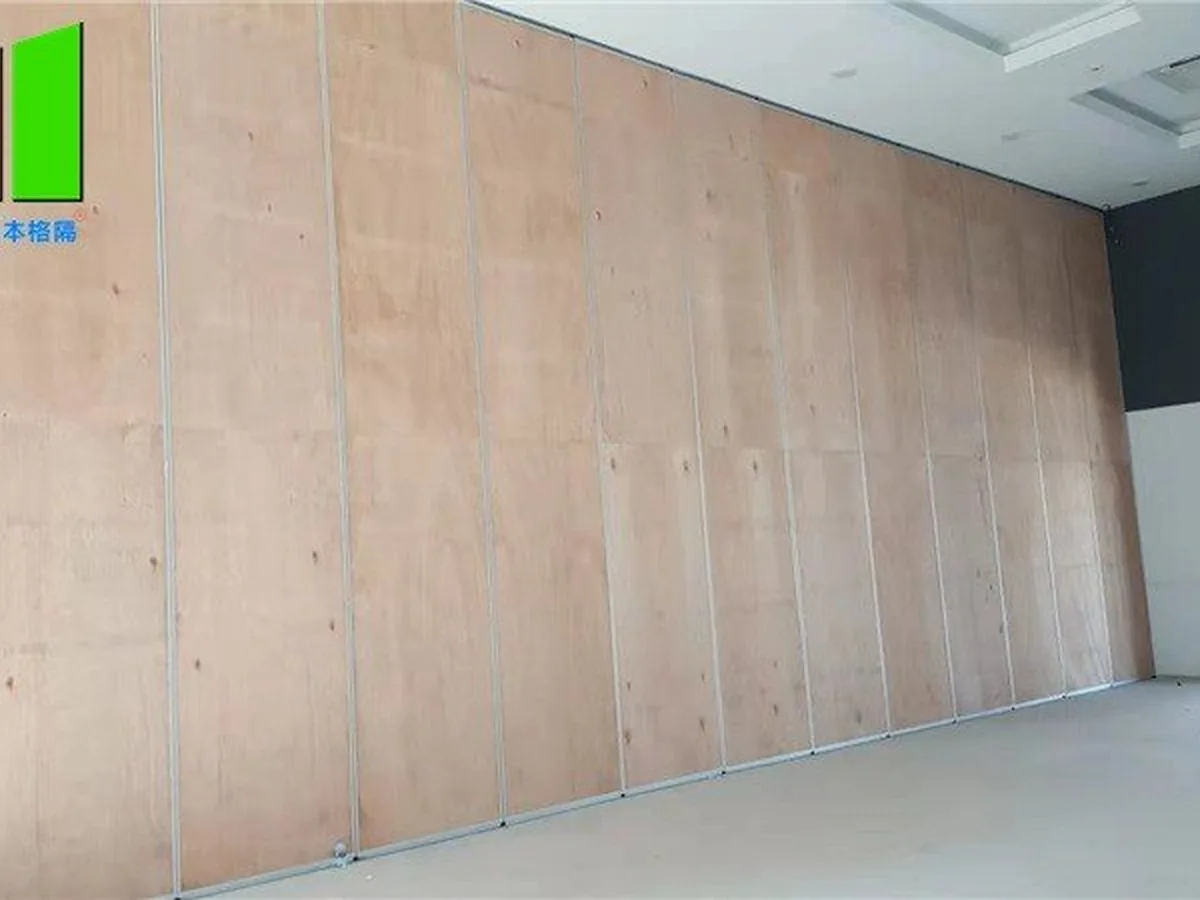
Are airport applications the only use for movable partitions?
No. Movable partitions can be used wherever flexible space division, combination or reconfiguration is required; application examples are not limiting.
Airport movable partition stacking security planning should begin with the parking position and camera coverage, then move to finish care and drawing approvals.
For related product information, see movable partition products. For project context, review completed projects.
Bringing stacking and security planning together
Airport movable partition stacking security depends on early coordination. The top-hung principle keeps the floor uninterrupted, while the parking position and overhead path are resolved through drawings.
Buyers should provide layout, camera and finish inputs before approvals. Finish materials can be customized, and cleaning and maintenance methods vary with the selected finish.
The exact route, junction arrangement, continuous overhead path and parking position must be confirmed from the coordinated project drawings. With that confirmation, the stacking area can be planned alongside camera clearance requirements.
Continue Exploring
More Operable Wall System Guides
- Newer guideConvention Center Operable Wall Stacking for Banquet Kitchens Planning
- Earlier guideConvention Center Operable Wall Track Planning for High Ceilings
- Related guidePhase Operable Wall Work When a Renovation Adds a New Wing
- Related guideRoom Scheduling Rules That Decide When an Operable Wall Stays Open