
Why Baggage Cart Impact Mapping Matters for Airport Operable Wall Finish Selection
Quick project answer
Airport terminals combine flexible space division with constant baggage cart movement. The exact overhead route and support arrangement must be confirmed by the responsible project team from coordinated drawings. The map identifies where carts travel, turn, and park relative to partition lines.
This article explains how the top-hung principle, uninterrupted floors, parking planning, and finish care coordination support airport operable wall finish baggage cart impact mapping. It does not prescribe a universal operating procedure or claim performance outcomes.
The Top-Hung Principle and Its Effect on Floor Surfaces

The EBUNGE movable partition system is top-hung and has no continuous floor running track or operating hardware in the finished floor along the partition line. Because the floor is not cut or damaged for a floor track, it remains physically uninterrupted by the maintained EBUNGE top-hung system.
For airport operable wall finish baggage cart impact mapping, this matters because baggage cart wheels interact with a continuous floor surface rather than a recessed track. The finish selection can therefore focus on the floor and wall surfaces that carts actually contact.
The exact route, junction arrangement, continuous overhead path and parking position must be confirmed from the coordinated project drawings.
Mapping Baggage Cart Impact Zones Along the Partition Line
A baggage cart impact map divides the partition line into zones. Typical zones include approach lanes, turning areas, staging areas, and parking positions. Each zone may present different contact risks for the selected finish.
For airport operable wall finish baggage cart impact mapping, the map should record cart width, load profile, and travel direction. It should also note where carts stop or wait near the partition. These observations help coordinate finish choices with real traffic patterns.
The map is a planning tool, not a performance guarantee. It supports finish selection by aligning material choices with observed cart activity.
Parking Planning and Its Influence on Finish Exposure
Panel parking style can be customized to the customer layout and project requirements, subject to coordinated drawings. A suitable approved parking arrangement can use the stacking area more compactly and coordinate with the space design.
For airport operable wall finish baggage cart impact mapping, parking location affects which surfaces remain exposed to cart traffic. If panels park near a cart route, the finish on those panels may see more contact. The exact track, support and panel layout still require project drawings.
Parking planning should be reviewed alongside the impact map so that finish selection reflects both storage and traffic conditions.
Finish and Care Coordination for Airport Operable Wall Finish Baggage
Finish materials can be customized, and cleaning and maintenance methods vary with the selected finish. This means the airport operable wall finish baggage cart impact map should be paired with a care plan for each finish type.
Different finishes respond differently to cleaning agents and methods. The project team should confirm care instructions with the finish supplier before finalizing the selection. Cost and maintenance requirements depend on the selected configuration, finish and project conditions and require project-specific confirmation.
Care coordination is not a performance claim. It is a practical step to align finish choice with the maintenance approach available at the airport.
Non-Limiting Applications for Movable Partitions
Movable partitions can be used wherever flexible space division, combination or reconfiguration is required. Application examples are not limiting. Airports may use them for lounges, meeting rooms, training areas, or temporary event spaces.
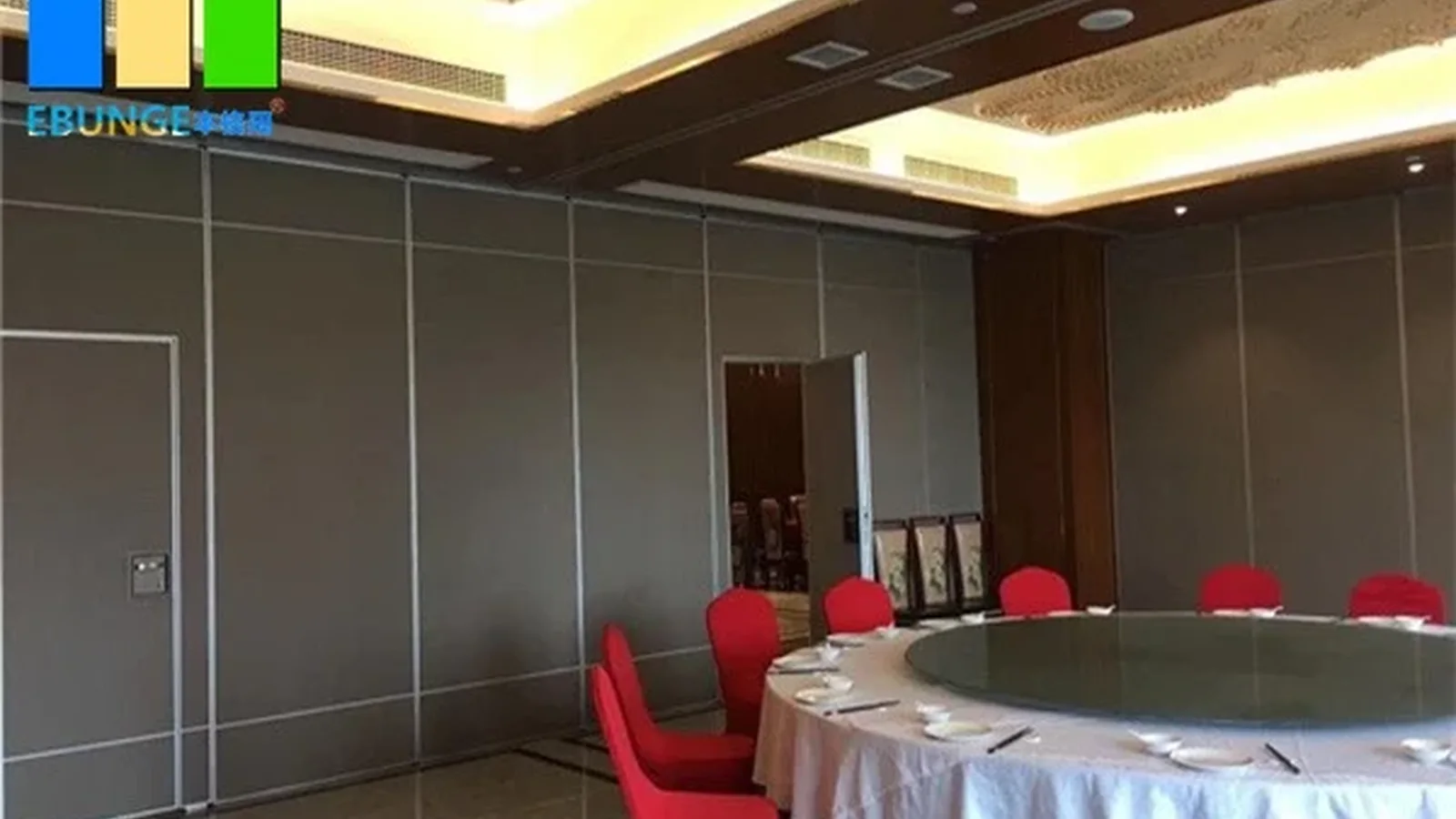
EBUNGE has completed many types of hotel-related movable-partition projects. Ballrooms, wedding halls and multifunction halls are non-limiting examples. No customer names, locations, quantities, ratings, certifications or outcomes may be inferred.
For airport operable wall finish baggage cart impact mapping, the application context shapes traffic assumptions. A lounge may see lighter cart traffic than a baggage staging area. The map should reflect the actual use case.
Buyer Inputs Needed for Finish Selection
Buyers should provide cart dimensions, typical load weights, and travel paths. They should also share parking preferences and any known cleaning constraints. These inputs help the project team prepare a relevant airport operable wall finish baggage cart impact map.

Buyers should indicate whether the partition line is near a cart route or a staging area. They should also confirm the desired finish appearance and care expectations. The exact route, junction arrangement, continuous overhead path and parking position must be confirmed from the coordinated project drawings.
Without these inputs, finish selection may not reflect actual baggage cart activity.
Drawing Approvals and Project Coordination
Coordinated drawings are required to confirm track, support and panel layout. The airport operable wall finish baggage cart impact map should be reviewed alongside these drawings. Any change to parking or traffic flow may affect finish exposure.
Approvals should confirm the finish selection and the care method. They should also confirm that the top-hung system remains compatible with the uninterrupted floor condition. The exact route, junction arrangement, continuous overhead path and parking position must be confirmed from the coordinated project drawings.
Drawing approvals help align the finish map with the final layout.
Scannable Summary: Impact Zone Considerations
- Approach lanes: cart wheels and frames may contact lower wall surfaces.
- Turning areas: side panels may see repeated close passes.
- Staging areas: parked carts may rest near partition faces.
- Parking positions: stored panels may remain exposed to traffic.
- Cleaning zones: finish care methods vary by selected material.
Finish Selection Checklist for Project Teams
- Record cart dimensions and typical load profiles.
- Map travel paths and turning points along the partition line.
- Identify parking positions and stacking areas.
- Confirm finish care methods with the finish supplier.
- Review the map against coordinated project drawings.
- Confirm approvals for finish and parking layout.
Frequently Asked Questions
What is an airport operable wall finish baggage cart impact map?
It is a planning document that records where baggage carts travel, turn, and park relative to an operable partition line. It helps align finish selection with observed cart activity.
Does the EBUNGE top-hung system require a floor track?
No. The EBUNGE movable partition system is top-hung and has no continuous floor running track or operating hardware in the finished floor along the partition line.
Can finish materials be customized for airport projects?
Yes. Finish materials can be customized, and cleaning and maintenance methods vary with the selected finish.
How does parking planning affect finish selection?
Panel parking style can be customized to the customer layout and project requirements, subject to coordinated drawings. Parking location affects which surfaces remain exposed to cart traffic.
Are movable partitions limited to airport applications?
No. Movable partitions can be used wherever flexible space division, combination or reconfiguration is required. Application examples are not limiting.
What inputs should buyers provide for finish mapping?
Visible references can support layout discussion but do not verify hidden construction or performance. These inputs support a relevant airport operable wall finish baggage cart impact map.
Related Resources
For more information on movable partition systems, visit movable partition wall. To see project examples, visit projects.
Continue Exploring
More Materials and Finishes Guides
- Newer guideRestaurant Operable Wall Finishes: Impact Zone Mapping for Carts
- Earlier guideComparing Movable Partition Finishes for Convention Center Floors
- Related guideWho Verifies Partition Handover Records When Trades Finish at Different
- Related guideMovable Partition Finish Sample Coordination Guide for Interior