
Why Restaurant Operable Wall Finishes Impact Planning Matters for Cart Traffic
Quick project answer
Restaurant spaces often need to shift between dining layouts, private events, and daily service. Movable partitions can be used wherever flexible space division, combination or reconfiguration is required. For cart traffic, the restaurant operable wall finishes impact planning becomes a practical exercise in mapping where service equipment, furniture, and staff movements meet the partition line.
The exact overhead route and support arrangement must be confirmed by the responsible project team from coordinated drawings. It focuses on the top-hung principle, the physically uninterrupted floor, parking coordination, finish care, and the buyer inputs that support coordinated drawings.
The Top-Hung Principle and the Physically Uninterrupted Floor
The EBUNGE movable partition system is top-hung and has no continuous floor running track or operating hardware in the finished floor along the partition line. The floor is not cut or damaged for a floor track and remains physically uninterrupted by the maintained EBUNGE top-hung system.
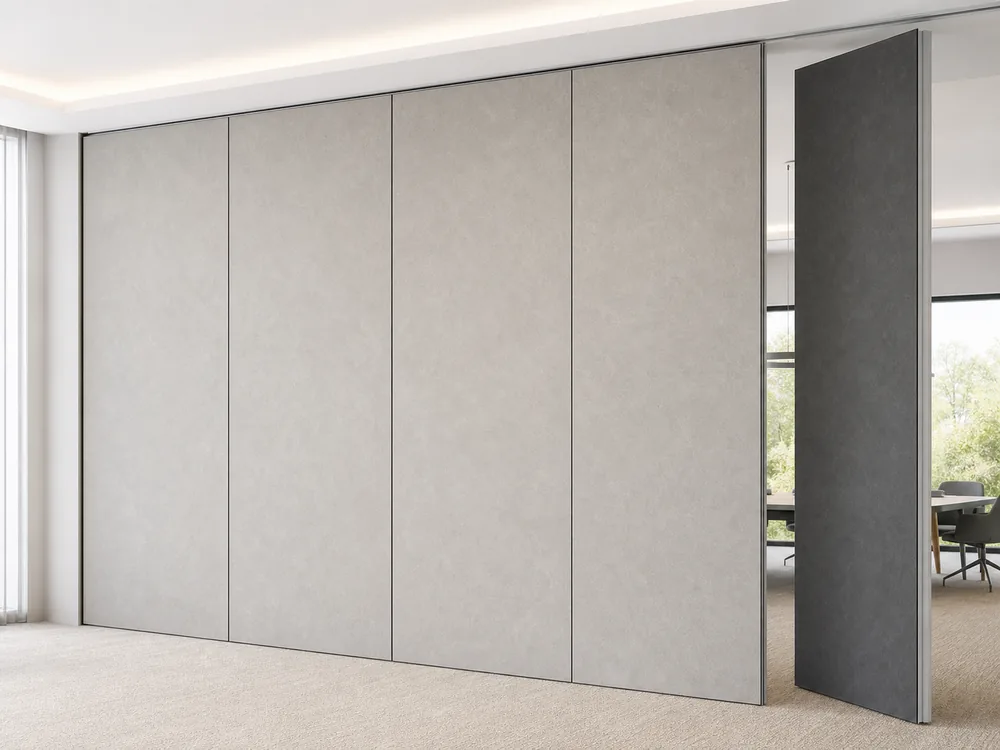
For restaurant cart routes, this means the finished floor can remain a continuous surface along the partition line. Impact zone mapping can therefore focus on the partition panels, the parking area, and the adjacent circulation paths rather than on a floor track that would otherwise interrupt the floor.
The exact route, junction arrangement, continuous overhead path and parking position must be confirmed from the coordinated project drawings.
Mapping Impact Zones for Carts Along the Partition Line
Impact zone mapping starts with observing how carts, trolleys, and mobile furniture move through the restaurant. Mark the paths that cross or run parallel to the partition line. Note where carts turn, stop, or queue during service.
Then identify the panel faces that are most exposed during those movements. These faces may receive repeated contact from cart corners, trays, or stacked items. The restaurant operable wall finishes impact assessment should record these locations so finish selection and protection can be discussed with the project team.
Mapping is not a substitute for coordinated drawings. The suitability of each route and parking arrangement depends on the approved layout, circulation, ceiling interfaces and operating sequence.
Parking Planning and Cart Movement
Panel parking style can be customized to the customer layout and project requirements, subject to coordinated drawings. A suitable approved parking arrangement can use the stacking area more compactly and coordinate with the space design. The exact track, support and panel layout still require project drawings.
When carts operate near the partition line, the parking area can become part of the impact zone. Carts may pass the stacked panels, or staff may use the parking area for temporary storage. Mapping these interactions helps the team plan clearances and finish protection.
Parking planning should consider how the stacked panels relate to service routes, dining zones, and back-of-house access. The goal is to coordinate the parking position with the restaurant’s daily flow, not to assume a universal arrangement.
Finish Selection and Care Coordination
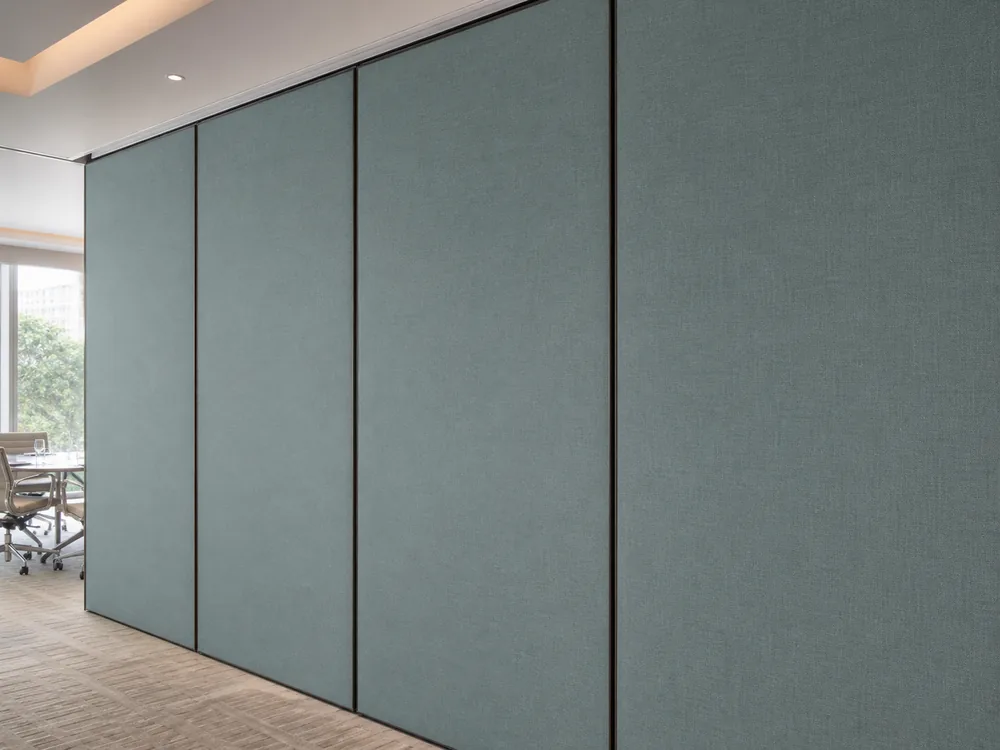
Finish materials can be customized, and cleaning and maintenance methods vary with the selected finish. This means the restaurant operable wall finishes impact discussion should include the cleaning products and methods that will be used on each finish type.
Different finishes respond differently to repeated contact and cleaning. The project team should confirm which finishes are suitable for the mapped impact zones and how those finishes should be cared for. This coordination helps avoid mismatches between finish choice and daily restaurant operations.
Finish care should be documented for the selected materials. The documentation can guide staff on appropriate cleaning methods without assuming a universal procedure.
Non-Limiting Applications and Restaurant Contexts
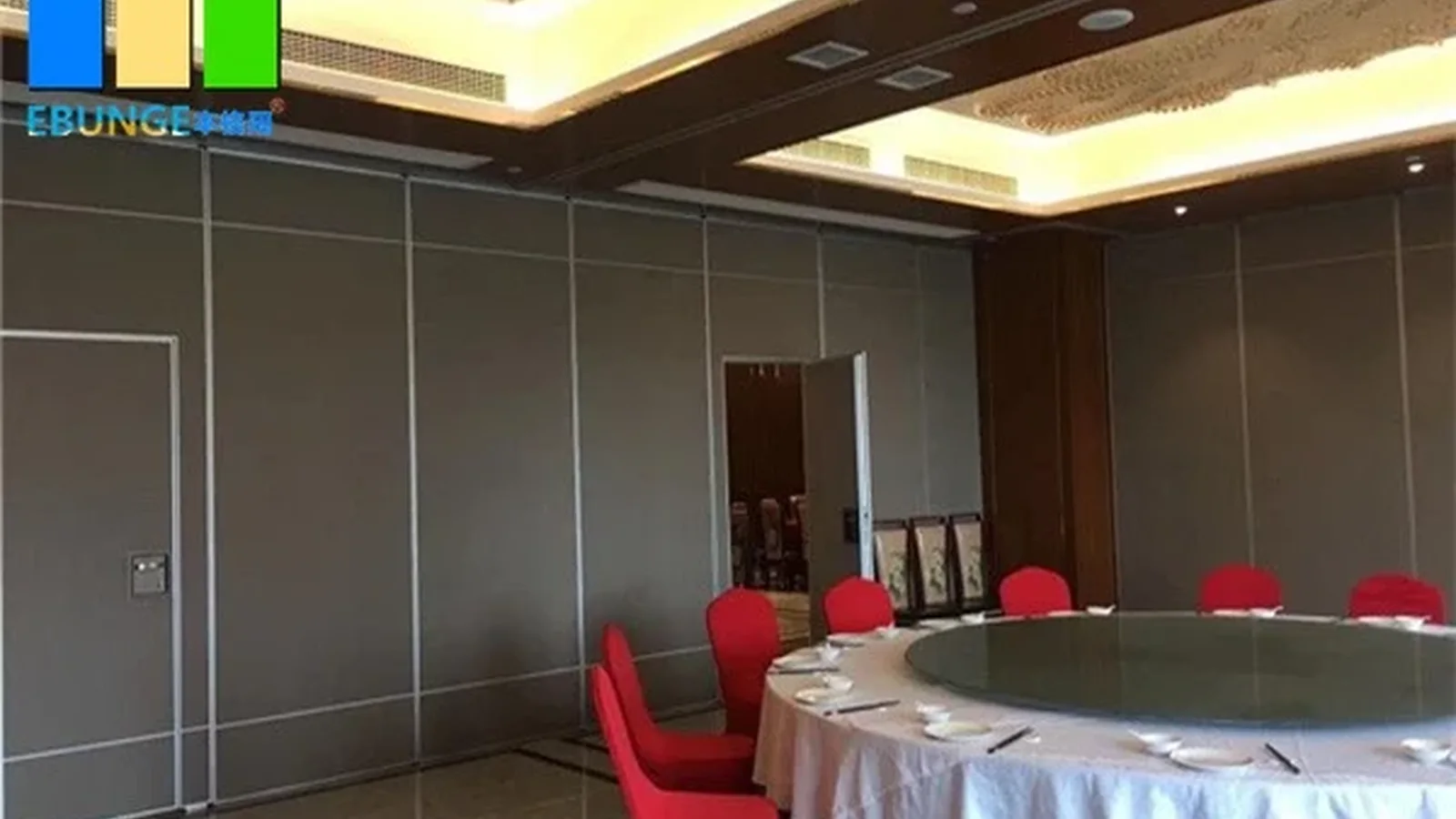
Movable partitions can be used wherever flexible space division, combination or reconfiguration is required; application examples are not limiting. EBUNGE has completed many types of hotel-related movable-partition projects; ballrooms, wedding halls and multifunction halls are non-limiting examples.
Restaurant settings may include private dining rooms, event spaces, and flexible service areas. Each setting has its own cart traffic patterns and impact zones. The restaurant operable wall finishes impact mapping approach can be adapted to these contexts without claiming a specific outcome.
Because applications are not limiting, the same planning logic can be applied to other hospitality spaces where carts and movable partitions share a floor.
Buyer Inputs for Coordinated Drawings
To support coordinated drawings, buyers can provide layout plans, cart sizes and routes, parking preferences, and finish preferences. These inputs help the project team develop a suitable parking arrangement and confirm the top-hung configuration.
The exact route, junction arrangement, continuous overhead path and parking position must be confirmed from the coordinated project drawings. Buyers should also confirm cleaning methods for the selected finishes and any local requirements that affect the project.
Early coordination helps align the restaurant operable wall finishes impact plan with the overall space design. It also clarifies which details remain subject to project drawings.
Scannable Planning Checklist
- Map cart paths that cross or run parallel to the partition line.
- Identify panel faces exposed to repeated cart contact.
- Review parking area interactions with service routes.
- Confirm finish cleaning methods for each selected material.
- Provide layout, cart, and finish inputs for coordinated drawings.
Impact Zone Mapping Table
| Zone | Typical Activity | Planning Focus |
|---|---|---|
| Partition line | Carts crossing or passing | Finish exposure and cleaning |
| Parking area | Stacked panels and cart movement | Parking arrangement and clearance |
| Service route | Cart turns and queues | Route coordination with layout |
| Dining edge | Furniture and cart contact | Finish selection and protection |
Drawing Approval Boundary
The exact route, junction arrangement, continuous overhead path and parking position must be confirmed from the coordinated project drawings.
This boundary applies to all engineering details that are not confirmed facts. Buyers should treat the mapping exercise as a planning input and rely on coordinated drawings for final configuration.
Frequently Asked Questions
What is restaurant operable wall finishes impact mapping?
It is a planning exercise that identifies where carts and mobile equipment may contact or pass near an operable partition, so finish selection and parking can be coordinated.
Does the EBUNGE top-hung system require a floor track?
No. The EBUNGE movable partition system is top-hung and has no continuous floor running track or operating hardware in the finished floor along the partition line.
Can parking style be customized for a restaurant layout?
Yes. Panel parking style can be customized to the customer layout and project requirements, subject to coordinated drawings.
Are finish materials customizable?
Yes. Finish materials can be customized, and cleaning and maintenance methods vary with the selected finish.
What inputs help with coordinated drawings?
Layout plans, cart sizes and routes, parking preferences, and finish preferences are useful inputs. The exact route, junction arrangement, continuous overhead path and parking position must be confirmed from the coordinated project drawings.
Can movable partitions be used outside restaurants?
Yes. Movable partitions can be used wherever flexible space division, combination or reconfiguration is required; application examples are not limiting.
Coordinating with Project Teams
Restaurant operable wall finishes impact planning benefits from early coordination among the operator, designer, and partition supplier. The mapping exercise can be shared with the project team to support finish and parking discussions.
For related project examples, see projects. For general product information, see movable partition wall.
All engineering details remain subject to coordinated drawings. The confirmed facts in this article provide a starting point for planning, not a substitute for project-specific documentation.
Continue Exploring
More Materials and Finishes Guides
- Newer guideHow to Compare Movable Partition Finishes for Sports Hall Impact Zones
- Earlier guideAirport Operable Wall Finish Selection: Baggage Cart Impact Mapping
- Related guideWho Verifies Partition Handover Records When Trades Finish at Different
- Related guideMovable Partition Finish Sample Coordination Guide for Interior