
Quick project answer
Concourse planning often requires flexible space division without interrupting passenger flow. Airport operable wall finishes public areas must balance durability, maintenance, and design. This article compares finish considerations for top-hung movable partitions in airport settings.
Understanding the Top-Hung Principle
The EBUNGE movable partition system is top-hung. It carries panels from an overhead track rather than a floor track. This means there is no continuous floor running track or operating hardware in the finished floor along the partition line.
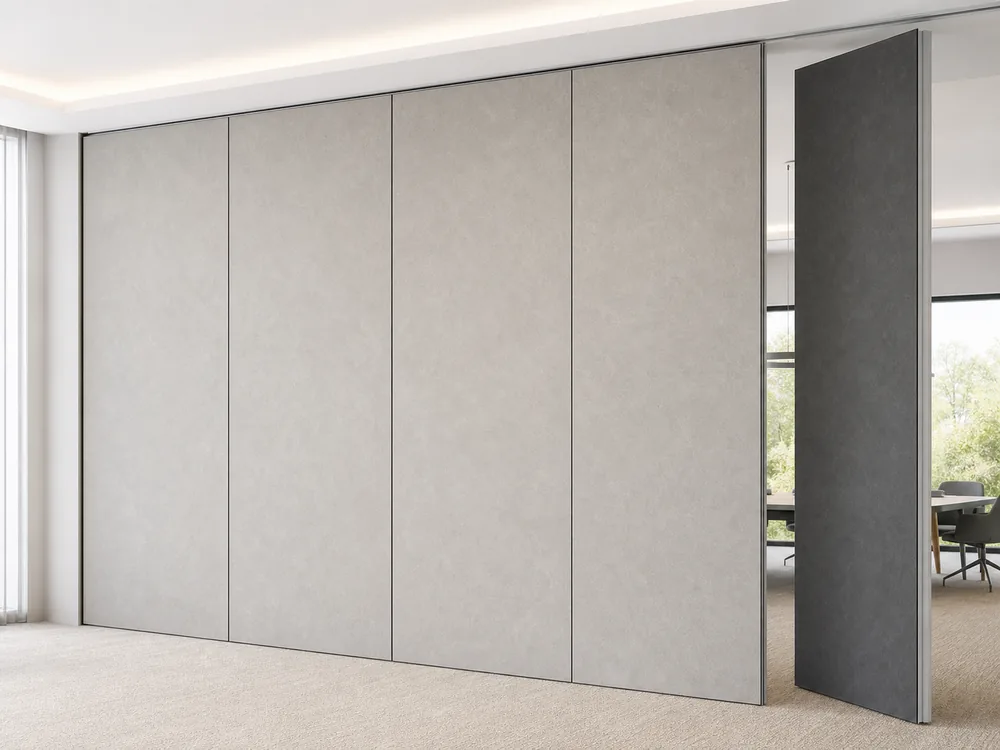
Because the system is top-hung, the floor is not cut or damaged for a floor track. The floor remains physically uninterrupted by the maintained EBUNGE top-hung system. This characteristic can be relevant when comparing airport operable wall finishes public areas, as finish transitions and floor durability are not complicated by a track.
For engineering details outside confirmed facts, use only this exact boundary sentence: The exact route, junction arrangement, continuous overhead path and parking position must be confirmed from the coordinated project drawings.
Why a Physically Uninterrupted Floor Matters
In concourses, floors experience continuous traffic and cleaning. A top-hung system leaves the floor surface intact. The suitability of each route and parking arrangement depends on the approved layout, circulation, ceiling interfaces and operating sequence.
When comparing airport operable wall finishes public specifications, an uninterrupted floor allows consistent flooring materials across the partition line. It also means the floor finish can be maintained without track-related interruptions.
However, the absence of a floor track does not remove the need for coordinated drawings. The overhead support and panel parking still require project-specific planning.
Finish Options and Durability Considerations
Finish materials can be customized. The choice of finish affects durability, cleaning, and appearance. For airport operable wall finishes public areas, common concerns include resistance to frequent contact and ease of cleaning.
Cleaning and maintenance methods vary with the selected finish. Some finishes may require specific products or procedures. It is important to confirm care requirements with the finish supplier.
When comparing finishes, consider the expected traffic, cleaning regimens, and design intent. The goal is to select a finish that aligns with the concourse environment and maintenance capabilities.
Parking Planning and Space Coordination
Panel parking style can be customized to the customer layout and project requirements, subject to coordinated drawings. A suitable approved parking arrangement can use the stacking area more compactly and coordinate with the space design.
The exact track, support and panel layout still require project drawings. Parking planning should consider the available space, sightlines, and adjacent functions.
For airport operable wall finishes public projects, parking areas may need to accommodate panels without obstructing passenger routes. Early coordination with the design team is recommended.
Non-Limiting Applications in Airport Environments
Movable partitions can be used wherever flexible space division, combination or reconfiguration is required. Application examples are not limiting. In airports, potential uses include lounges, meeting rooms, and temporary event spaces.
EBUNGE has completed many types of hotel-related movable-partition projects. Ballrooms, wedding halls and multifunction halls are non-limiting examples. No customer names, locations, quantities, ratings, certifications or outcomes may be inferred.
These examples illustrate the range of applications, but each project requires its own assessment.
Coordinating Finishes with Maintenance
Finish selection should align with maintenance practices. Cleaning and maintenance methods vary with the selected finish. Some finishes may be more forgiving of frequent cleaning than others.
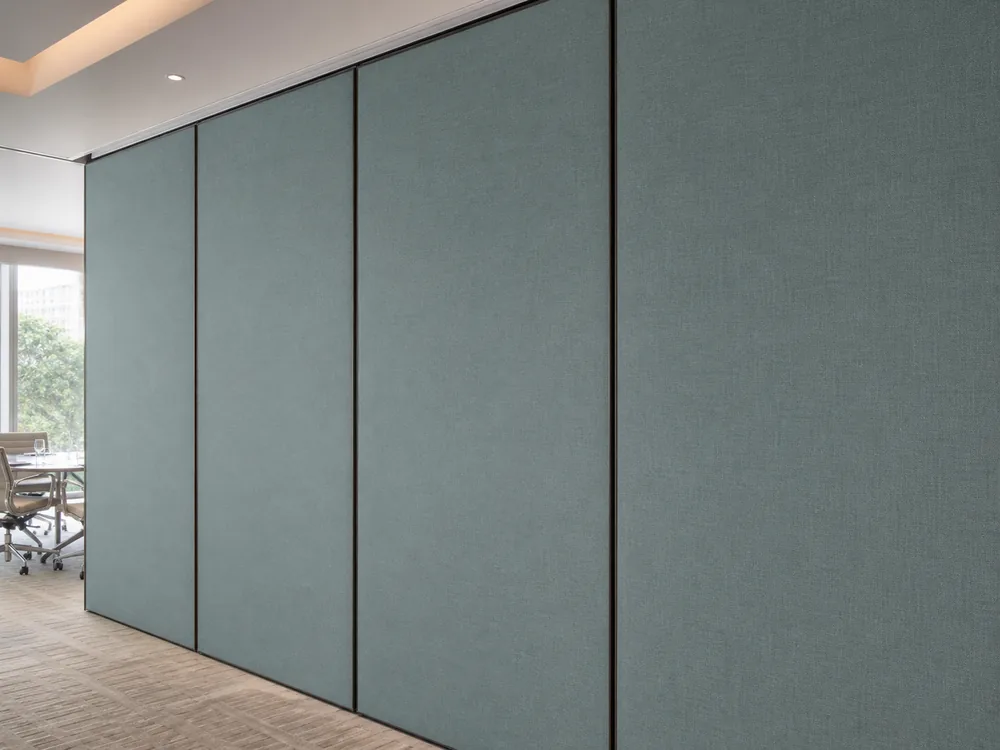
When comparing airport operable wall finishes public areas, consider the cleaning products and methods already in use. This can help avoid incompatible finish choices.
It is also important to consider how finishes will age with use. A coordinated approach between design, operations, and maintenance teams can support long-term performance.
Buyer Inputs and Drawing Approvals
Successful projects rely on clear buyer inputs. These include layout requirements, finish preferences, and parking expectations. The exact route, junction arrangement, continuous overhead path and parking position must be confirmed from the coordinated project drawings.
Approvals should be obtained before production. The drawings should reflect the final finish selections and parking arrangement. Any changes should be documented and approved.
For airport operable wall finishes public specifications, early involvement of all stakeholders can help streamline the approval process.
Comparing Finish Durability: A Checklist
- Confirm cleaning and maintenance methods for each finish.
- Review expected traffic and contact levels.
- Coordinate finish transitions with the uninterrupted floor.
- Verify parking area dimensions and access.
- Ensure drawings reflect final finish and parking decisions.
Frequently Asked Questions
What does top-hung mean for airport operable wall finishes public areas?
Top-hung means the panels are supported from an overhead track. There is no continuous floor track, so the floor remains physically uninterrupted by the maintained EBUNGE top-hung system.
Can finishes be customized for airport concourses?
Yes, finish materials can be customized. Cleaning and maintenance methods vary with the selected finish, so coordination with the finish supplier is recommended.
How is parking planned for operable walls in airports?
Panel parking style can be customized to the customer layout and project requirements, subject to coordinated drawings. A suitable approved parking arrangement can use the stacking area more compactly and coordinate with the space design.
Are there standard applications for movable partitions?
Movable partitions can be used wherever flexible space division, combination or reconfiguration is required. Application examples are not limiting.
What drawings are needed for approval?
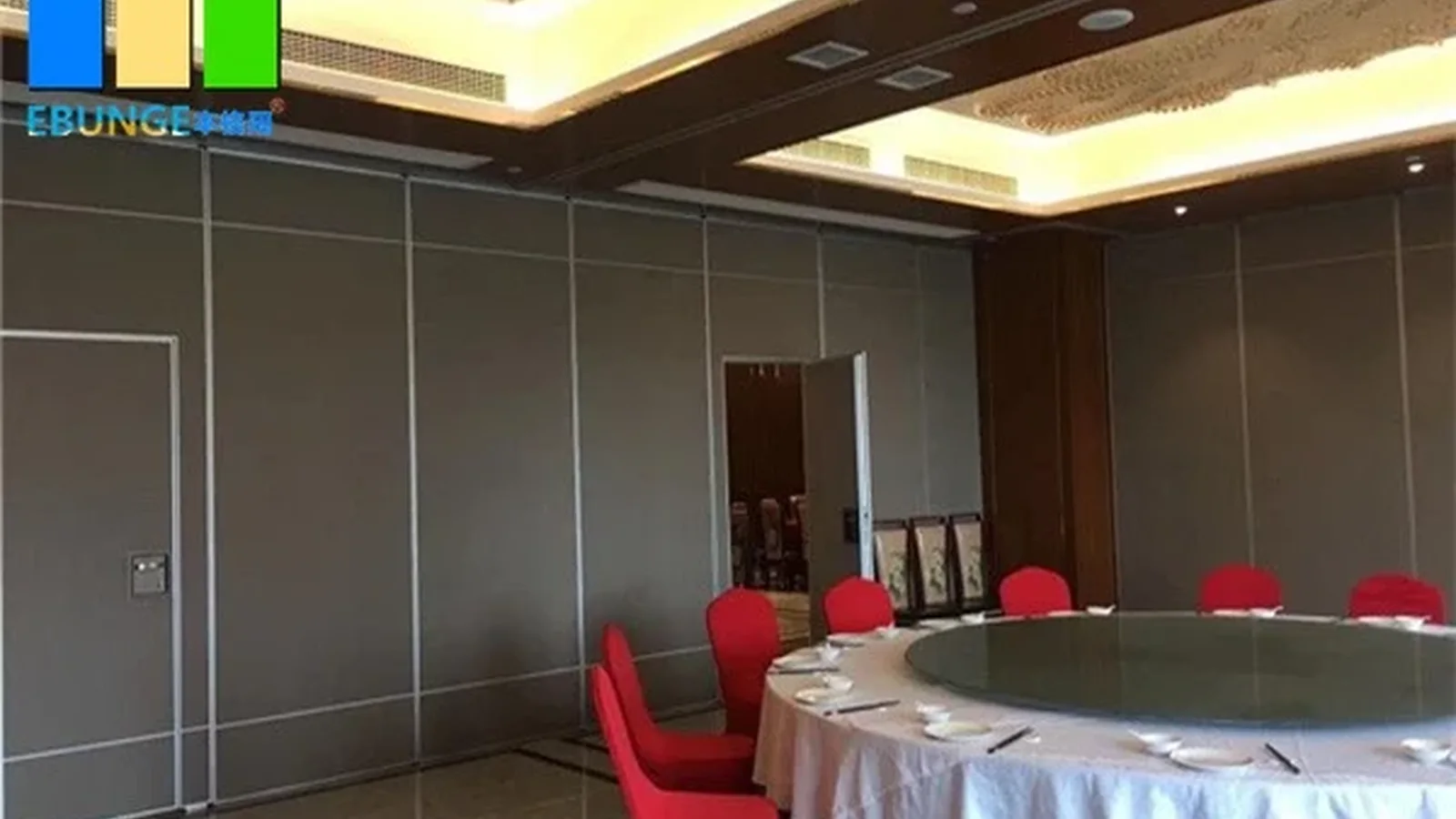
The exact route, junction arrangement, continuous overhead path and parking position must be confirmed from the coordinated project drawings. These drawings should reflect final finish and parking decisions.
Does EBUNGE have experience with airport projects?
EBUNGE has completed many types of hotel-related movable-partition projects. Ballrooms, wedding halls and multifunction halls are non-limiting examples. No customer names, locations, quantities, ratings, certifications or outcomes may be inferred.
For more information, see our operable wall system and projects.
Continue Exploring
More Materials and Finishes Guides
- Newer guideCompare Hotel Banquet Partition Finishes for Ceiling Light Reflection
- Earlier guideCommunity Hall Multi-Sport Surfaces Movable Partition Finish Planning
- Related guideWho Verifies Partition Handover Records When Trades Finish at Different
- Related guideMovable Partition Finish Sample Coordination Guide for Interior