
Quick project answer
Hotel banquet partition finishes ceiling light reflection is a practical comparison topic for planners, designers and operators. The finish on a movable partition changes how ceiling light appears across a room. It also affects how the partition looks when the room is divided or combined. This article explains the confirmed top-hung principle, the uninterrupted floor, parking planning, finish care and the inputs needed before drawings are approved.
Why hotel banquet partition finishes ceiling light reflection matters
Ceiling light reflection is not only a decorative question. A finish can spread light across a panel face or create a narrow bright band. The same finish can look different under warm, neutral or cool ceiling light. For hotel banquet partition finishes ceiling light reflection, the comparison should start with the room’s lighting conditions and the viewing angles from guest tables.
Reflection also changes when panels are parked or when a room is partly divided. A finish that reads softly in one arrangement may read more strongly in another. Because finishes can be customized, the review should include samples under the actual ceiling light where possible.
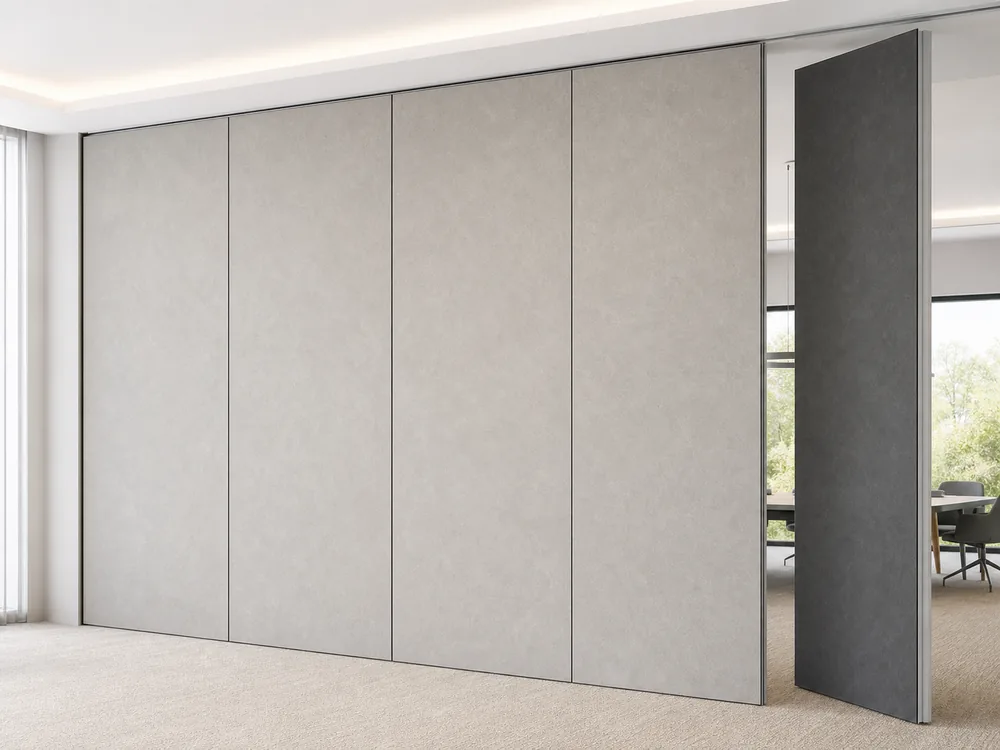
The top-hung principle and the finished floor
The EBUNGE movable partition system is top-hung. It has no continuous floor running track or operating hardware in the finished floor along the partition line. The floor is not cut or damaged for a floor track and remains physically uninterrupted by the maintained EBUNGE top-hung system.
That top-hung principle matters when comparing hotel banquet partition finishes ceiling light reflection. The finish is seen against a continuous floor rather than a floor track. The visual line at the base of the partition is therefore part of the finish and lighting review.
For engineering details outside confirmed facts, use this boundary: The exact route, junction arrangement, continuous overhead path and parking position must be confirmed from the coordinated project drawings.
How finish choice interacts with ceiling light
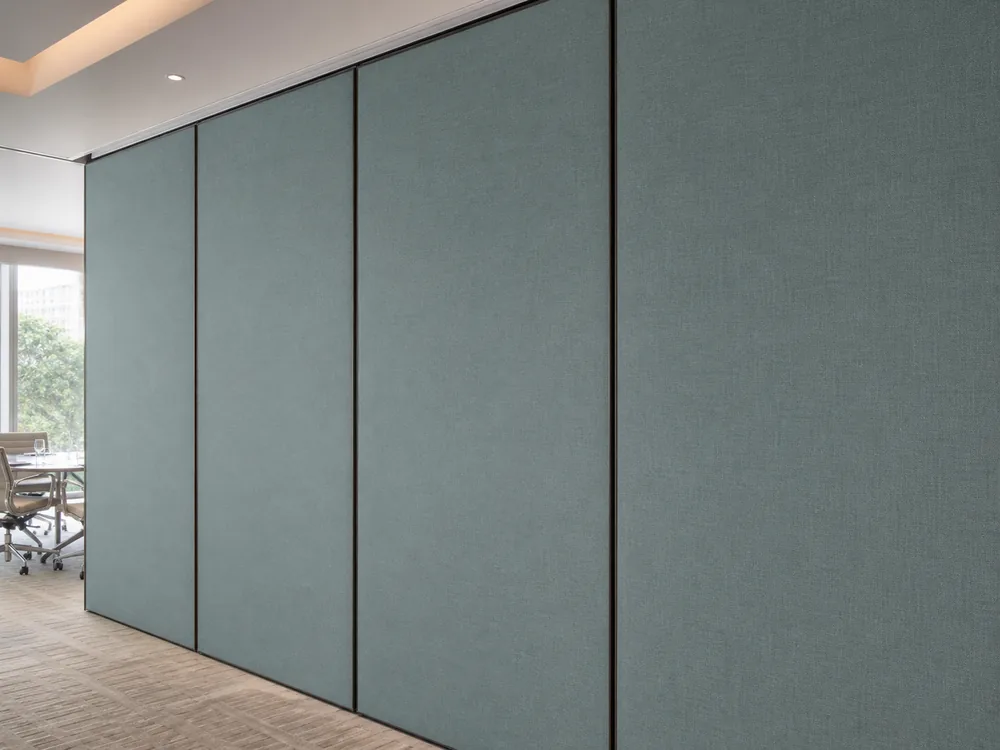
Finish materials can be customized, and cleaning and maintenance methods vary with the selected finish. A finish with a broad light response may reduce the contrast between bright ceiling areas and darker wall zones. A finish with a tighter light response may make the panel edges more visible.
Hotel banquet partition finishes ceiling light reflection should be reviewed with samples at different times of day. Ceiling fixtures, dimming levels and nearby wall finishes all influence the result. The goal is a finish that supports the room’s use without creating distracting glare at guest eye level.
Parking planning and visual continuity
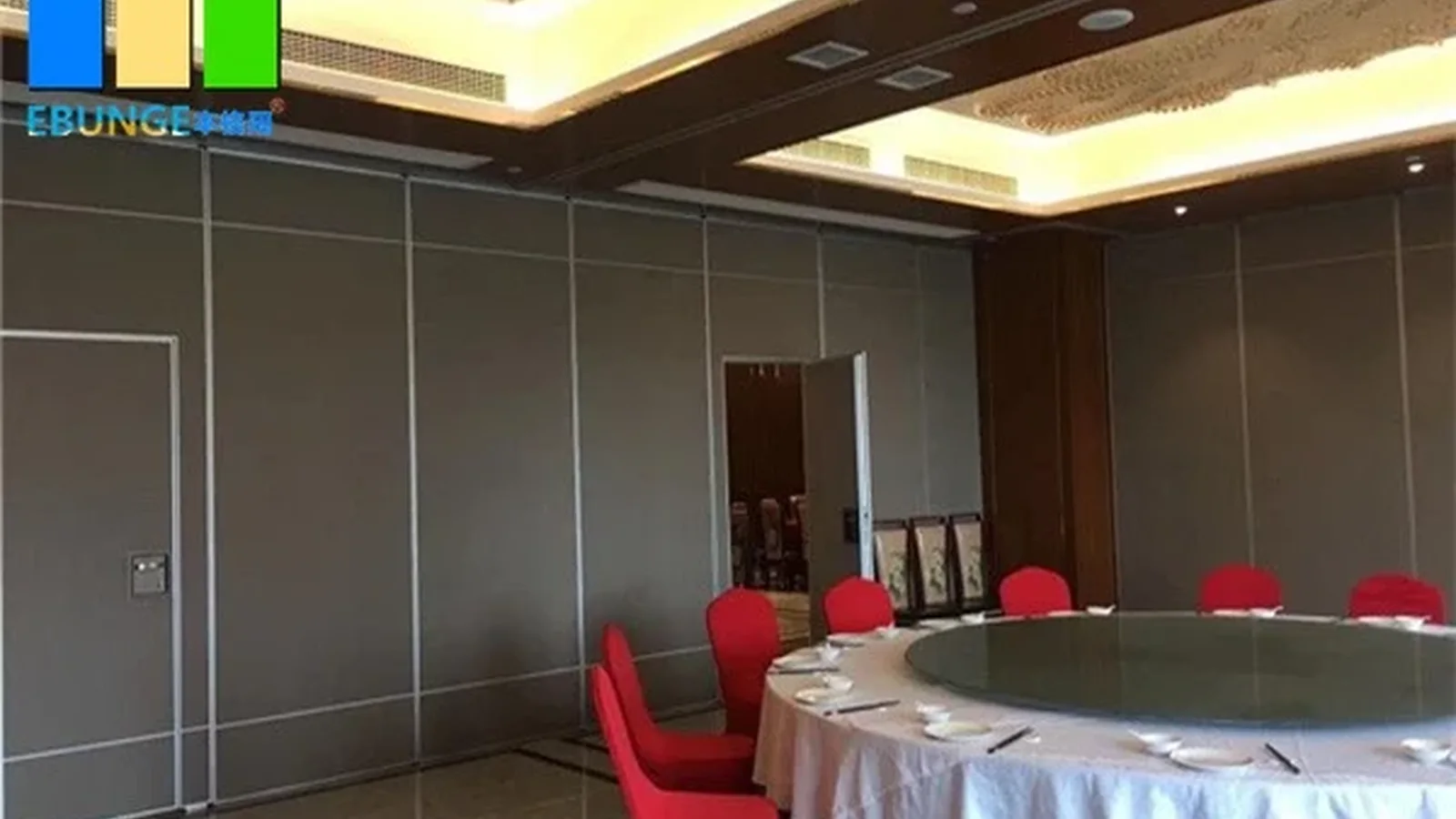
Panel parking style can be customized to the customer layout and project requirements, subject to coordinated drawings. A suitable approved parking arrangement can use the stacking area more compactly and coordinate with the space design. The exact track, support and panel layout still require project drawings.
Parking affects hotel banquet partition finishes ceiling light reflection because parked panels may sit in a lit area. The finish on those panels can reflect ceiling light even when the room is open. Planning the parking position early helps the design team review that effect.
Finish care coordination for hotel venues
Cleaning and maintenance methods vary with the selected finish. The venue team should confirm the care method for each finish before the final selection. This step keeps the finish review connected to daily operation.
For hotel banquet partition finishes ceiling light reflection, care coordination also protects the appearance over time. A finish that is cleaned with the wrong method may change how it reflects light. The confirmed point is that care methods vary by finish, so the method must match the selected material.
Non-limiting application examples
Movable partitions can be used wherever flexible space division, combination or reconfiguration is required. Application examples are not limiting. EBUNGE has completed many types of hotel-related movable-partition projects. Ballrooms, wedding halls and multifunction halls are non-limiting examples.
No customer names, locations, quantities, ratings, certifications or outcomes may be inferred. The comparison of hotel banquet partition finishes ceiling light reflection should remain based on confirmed finish and care facts, not on unverified project claims.
Buyer inputs before drawing approval
Buyers should provide the room layout, ceiling light plan, preferred finish direction and parking expectations. They should also confirm how the space will be divided and combined. These inputs support the coordinated drawings.
Because panel parking style can be customized, the buyer’s layout and project requirements guide the parking proposal. The exact track, support and panel layout still require project drawings. Finish samples should be reviewed alongside those drawings.
Drawing approvals and finish sign-off
Finish selection and parking planning should move together through drawing approval. The approved drawings define the overhead path, parking position and related coordination. Finish sign-off should follow the same review cycle.
For hotel banquet partition finishes ceiling light reflection, the final check is whether the selected finish works with the approved lighting and parking plan. The exact route, junction arrangement, continuous overhead path and parking position must be confirmed from the coordinated project drawings.
Quick comparison checklist
- Review finish samples under the actual ceiling light.
- Confirm that the floor remains physically uninterrupted by the maintained top-hung system.
- Check how parked panels may reflect ceiling light in the open room.
- Match cleaning and maintenance methods to the selected finish.
- Coordinate finish sign-off with the approved project drawings.
Review sequence for finish and parking
- Define the room uses and the division or combination needs.
- Collect ceiling light information and viewing angles.
- Review customizable finish samples for reflection behavior.
- Discuss parking style with the layout and project requirements.
- Confirm the exact track, support and panel layout from coordinated drawings.
- Approve finish care methods for the selected material.
Finish reflection comparison table
| Review point | What to check | Confirmed basis |
|---|---|---|
| Ceiling light response | Sample appearance under venue lighting | Finish materials can be customized |
| Floor line | No continuous floor track along the partition line | Top-hung system with physically uninterrupted floor |
| Parking area | How parked panels sit in lit zones | Parking style can be customized, subject to drawings |
| Care method | Cleaning method for the selected finish | Cleaning and maintenance methods vary with the finish |
For hotel banquet partition finishes ceiling light reflection, the finish review should follow the approved lighting plan and the coordinated project drawings.
Frequently asked questions
Does the top-hung system leave a floor track that affects reflection?
No. The EBUNGE movable partition system is top-hung and has no continuous floor running track or operating hardware in the finished floor along the partition line. The floor remains physically uninterrupted by the maintained system.
Can finish materials be customized for hotel banquet partition finishes ceiling light reflection?
Yes. Finish materials can be customized, and cleaning and maintenance methods vary with the selected finish. Samples should be reviewed under the venue’s ceiling light.
How does parking style affect hotel banquet partition finishes ceiling light reflection?
Panel parking style can be customized to the customer layout and project requirements, subject to coordinated drawings. A suitable approved parking arrangement can use the stacking area more compactly and coordinate with the space design.
Are ballrooms the only application for these partitions?
No. Movable partitions can be used wherever flexible space division, combination or reconfiguration is required. Ballrooms, wedding halls and multifunction halls are non-limiting examples.
What must be confirmed from the coordinated project drawings?
The exact route, junction arrangement, continuous overhead path and parking position must be confirmed from the coordinated project drawings. The exact track, support and panel layout also require project drawings.
For product information, see /products/. For project context, see /projects/. The comparison of hotel banquet partition finishes ceiling light reflection should stay within confirmed finish, care and top-hung facts.
Continue Exploring
More Materials and Finishes Guides
- Newer guideComparing Operable Wall Finishes: Meeting Suites vs Open-Plan Zones
- Earlier guideComparing Airport Operable Wall Finishes for Concourse Planning
- Related guideWho Verifies Partition Handover Records When Trades Finish at Different
- Related guideMovable Partition Finish Sample Coordination Guide for Interior