
Why airport operable wall stacking camera clearance needs early planning
Quick project answer
Airport interiors combine flexible room division with fixed security equipment. When a movable partition stacks near a camera mount, the stacking zone and the camera position compete for the same ceiling and wall area. The airport operable wall stacking camera question is therefore a coordination task, not a product selection alone.
This article explains how a top-hung EBUNGE movable partition system supports that coordination. It covers the uninterrupted floor, parking planning, finish care, non-limiting applications and the buyer inputs that feed coordinated drawings.
The top-hung principle and what it means for camera zones
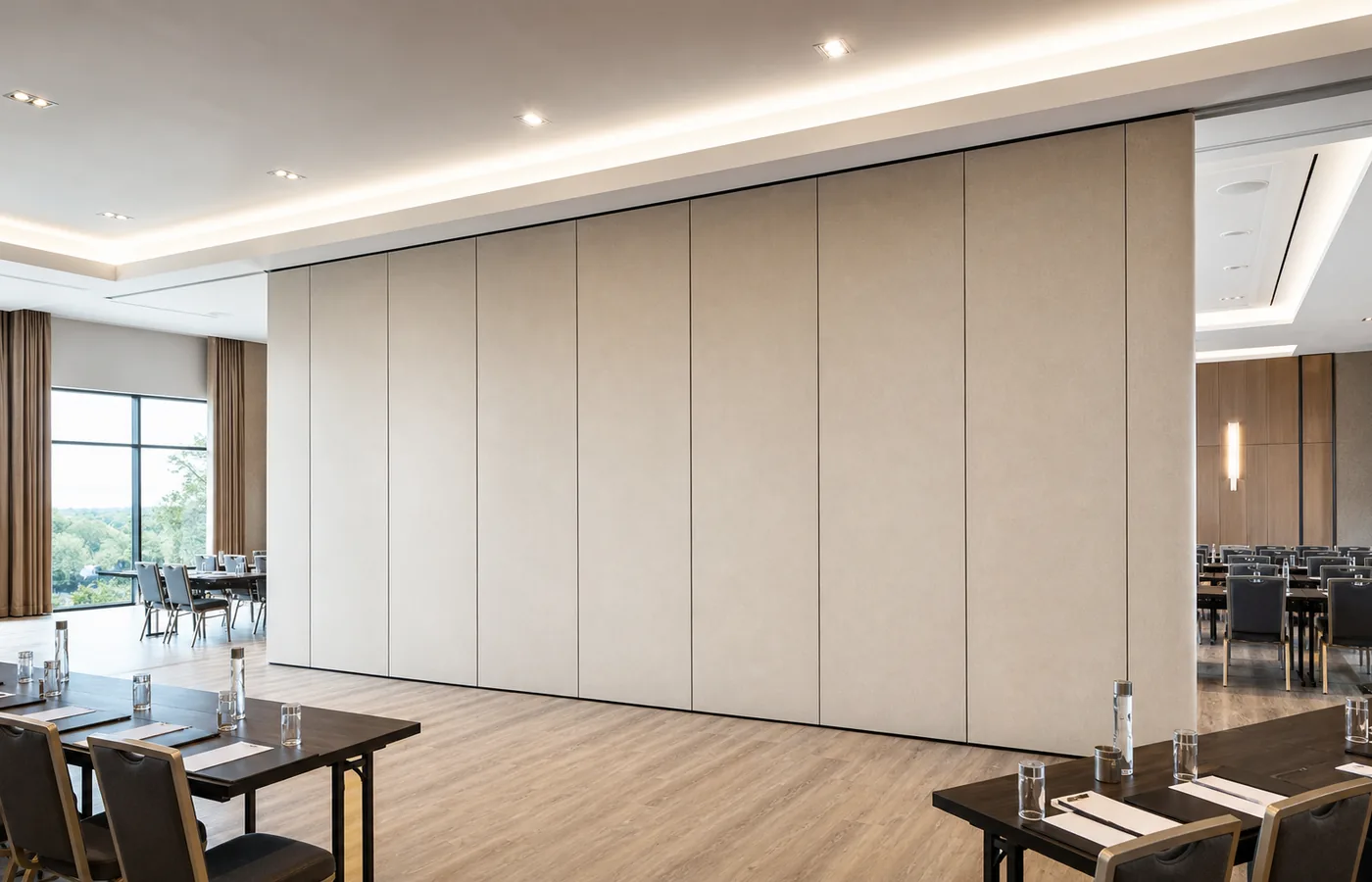
The EBUNGE movable partition system is top-hung. It has no continuous floor running track or operating hardware in the finished floor along the partition line. That single principle changes how the stacking area relates to nearby security camera mounts.
Because the partition line does not carry a floor track, the floor remains physically uninterrupted by the maintained EBUNGE top-hung system. The floor is not cut or damaged for a floor track. The suitability of each route and parking arrangement depends on the approved layout, circulation, ceiling interfaces and operating sequence.
The exact route, junction arrangement, continuous overhead path and parking position must be confirmed from the coordinated project drawings. Camera mounts, ceiling services and partition parking all appear on those drawings.
Physically uninterrupted floor and camera sightlines
A physically uninterrupted floor is useful in airport environments where passengers move with luggage and trolleys. The maintained EBUNGE top-hung system does not introduce a floor track along the partition line, so the finished floor is not cut or damaged for that purpose.
The exact overhead route and support arrangement must be confirmed by the responsible project team from coordinated drawings. The partition line itself does not add floor hardware that would need to be protected or routed around.
This does not mean every camera position is automatically suitable. The exact route, junction arrangement, continuous overhead path and parking position must be confirmed from the coordinated project drawings.
Parking planning for stacked panels near camera mounts
Panel parking style can be customized to the customer layout and project requirements, subject to coordinated drawings. A suitable approved parking arrangement can use the stacking area more compactly and coordinate with the space design.
The exact track, support and panel layout still require project drawings. That boundary keeps the airport operable wall stacking camera plan grounded in the actual ceiling and wall conditions rather than a generic assumption.
Buyers should treat the parking zone as a shared volume. Camera mounts, lighting, signage and partition parking may all occupy the same overhead region. Coordinated drawings show how those elements sit together.
Inputs that shape the parking zone
- Stacking position relative to the camera mount and its field of view.
- Available overhead depth for the top-hung track and parked panels.
- Wall or ceiling surfaces that can receive the camera mount.
- Finish and cleaning method for the selected partition surface.
- Approved parking arrangement shown on coordinated drawings.
Finish and care coordination around camera equipment
Finish materials can be customized, and cleaning and maintenance methods vary with the selected finish. In an airport, the partition finish and the camera mount may sit close together, so care planning should reflect both.
Because cleaning methods vary with the selected finish, the project team should confirm the appropriate method for the chosen surface. This is a finish-specific decision, not a universal procedure.
The airport operable wall stacking camera layout should also account for how the stacking zone is accessed for routine care. The exact route, junction arrangement, continuous overhead path and parking position must be confirmed from the coordinated project drawings.
Non-limiting applications for movable partitions
Movable partitions can be used wherever flexible space division, combination or reconfiguration is required. Application examples are not limiting. Airport spaces are one context among many.
EBUNGE has completed many types of hotel-related movable-partition projects. Ballrooms, wedding halls and multifunction halls are non-limiting examples. No customer names, locations, quantities, ratings, certifications or outcomes may be inferred from that experience.
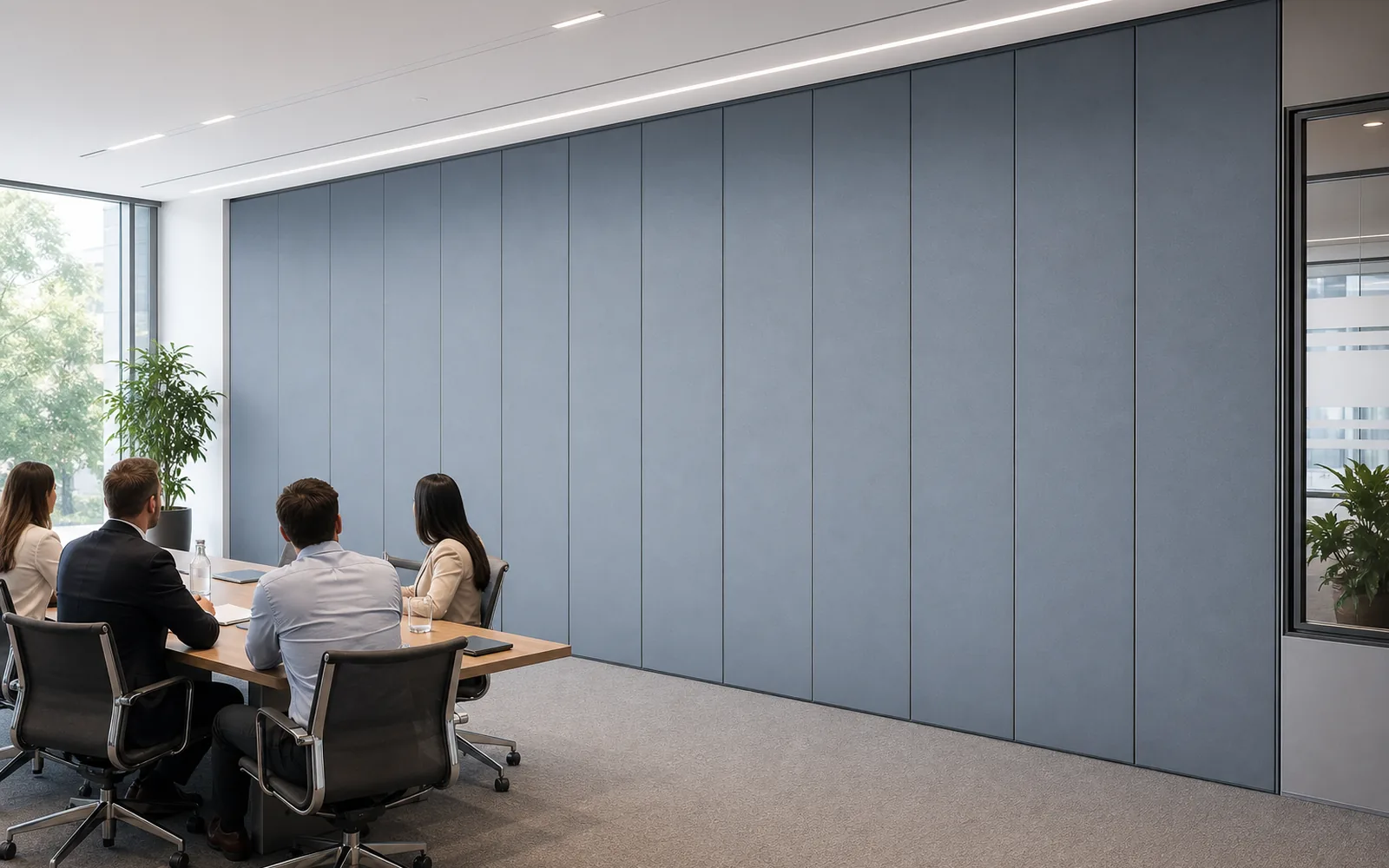
For an airport operable wall stacking camera plan, the same top-hung principle applies: the partition is carried overhead, and the floor remains physically uninterrupted by the maintained EBUNGE top-hung system.
Buyer inputs for coordinated drawings
Coordinated drawings are the controlling document for the airport operable wall stacking camera layout. Buyers should provide the intended stacking position, the camera mount location and the surrounding ceiling conditions.
Panel parking style can be customized to the customer layout and project requirements, subject to coordinated drawings. A suitable approved parking arrangement can use the stacking area more compactly and coordinate with the space design.
The exact track, support and panel layout still require project drawings. Finish selections should also be confirmed so that cleaning and maintenance methods match the chosen surface.
Drawing approval checklist
- Confirm the stacking position and the camera mount location on the same drawing.
- Show the continuous overhead path for the top-hung system.
- Confirm the parking arrangement and its relationship to the camera zone.
- Record the selected finish and its cleaning and maintenance method.
- Verify that the floor remains physically uninterrupted by the maintained EBUNGE top-hung system.
How the airport operable wall stacking camera plan comes together
The airport operable wall stacking camera plan depends on the top-hung principle, an uninterrupted floor and a coordinated parking zone. Each element is confirmed through drawings rather than assumption.
Finish and care coordination add the final layer. Because cleaning methods vary with the selected finish, the project team should confirm the method that matches the chosen surface.
For related system information, see the operable wall system page. For project context, see the projects page.
Frequently asked questions
Does the EBUNGE movable partition system use a floor track?
No. The EBUNGE movable partition system is top-hung and has no continuous floor running track or operating hardware in the finished floor along the partition line.
Is the floor cut or damaged for a floor track?
The floor is not cut or damaged for a floor track. The floor remains physically uninterrupted by the maintained EBUNGE top-hung system.
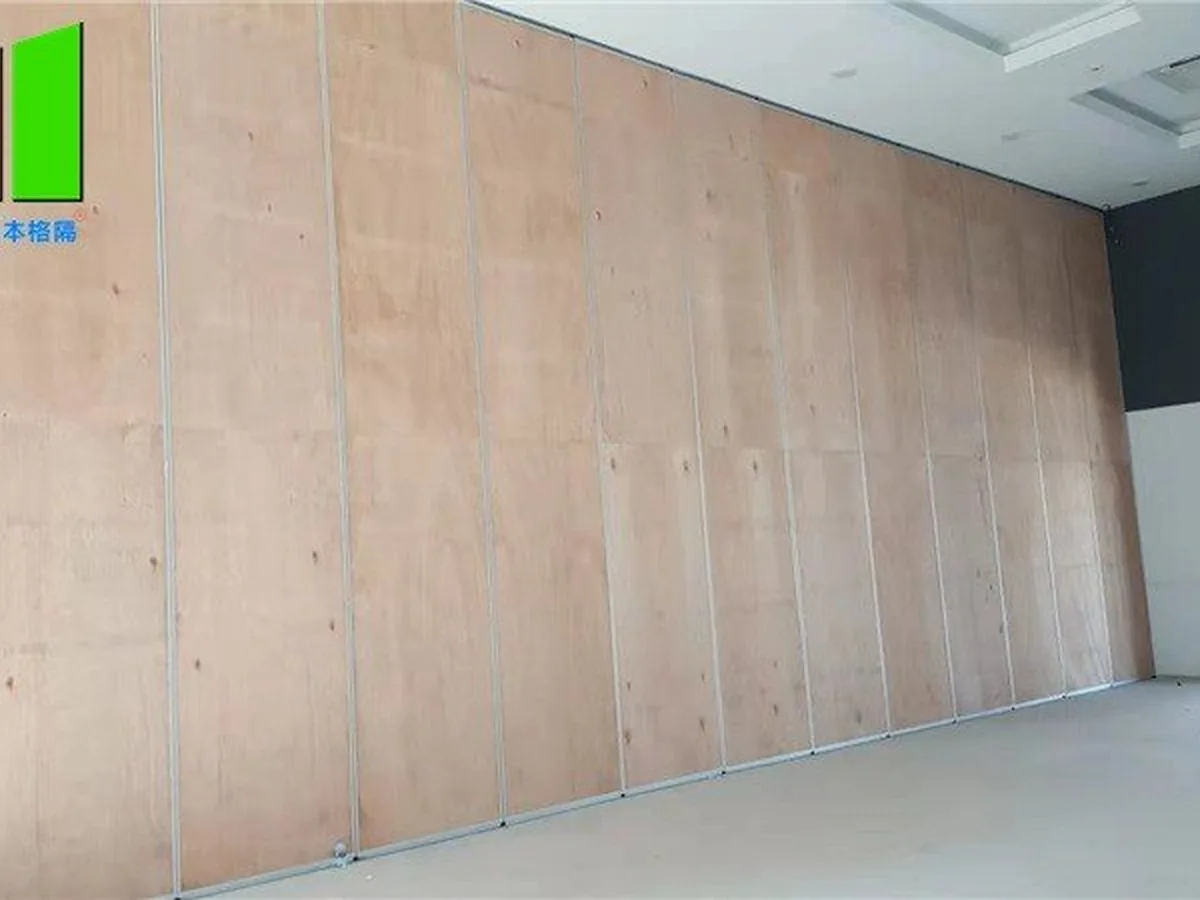
Can panel parking style be customized for an airport layout?
Panel parking style can be customized to the customer layout and project requirements, subject to coordinated drawings. The exact track, support and panel layout still require project drawings.
Can a compact parking arrangement help with camera clearance?
A suitable approved parking arrangement can use the stacking area more compactly and coordinate with the space design. The exact route, junction arrangement, continuous overhead path and parking position must be confirmed from the coordinated project drawings.
Can finish materials be customized, and how are they cleaned?
Finish materials can be customized, and cleaning and maintenance methods vary with the selected finish. The project team should confirm the method that matches the chosen surface.
Where can movable partitions be used?
Movable partitions can be used wherever flexible space division, combination or reconfiguration is required. Application examples are not limiting.
Continue Exploring
More Operable Wall System Guides
- Newer guideAirport Partition Partition Manual Operation: Split-Security-Screening
- Earlier guideCoordinating Community Hall Partition Stacking with Wall-Mounted Racks
- Related guidePhase Operable Wall Work When a Renovation Adds a New Wing
- Related guideRoom Scheduling Rules That Decide When an Operable Wall Stays Open