
Why Community Hall Partition Finishes Art Displays and Youth Programs Need Different Thinking
Document the review scope for community hall partition finishes art.
Quick project answer
Record the coordination scope for community hall partition finishes art.
Community halls often host art exhibitions and youth group activities in the same week. The partition finishes you choose affect how each use works. This article compares two common scenarios: art display and youth use. It focuses on practical finish and care coordination, not on performance claims. The suitability of each route and parking arrangement depends on the approved layout, circulation, ceiling interfaces and operating sequence.
Movable partitions can be used wherever flexible space division, combination or reconfiguration is required. Application examples are not limiting. The confirmed facts below apply to the EBUNGE movable partition system and its top-hung principle.
The Top-Hung Principle and What It Means for Your Floor
Keep the project note for community hall partition finishes art.
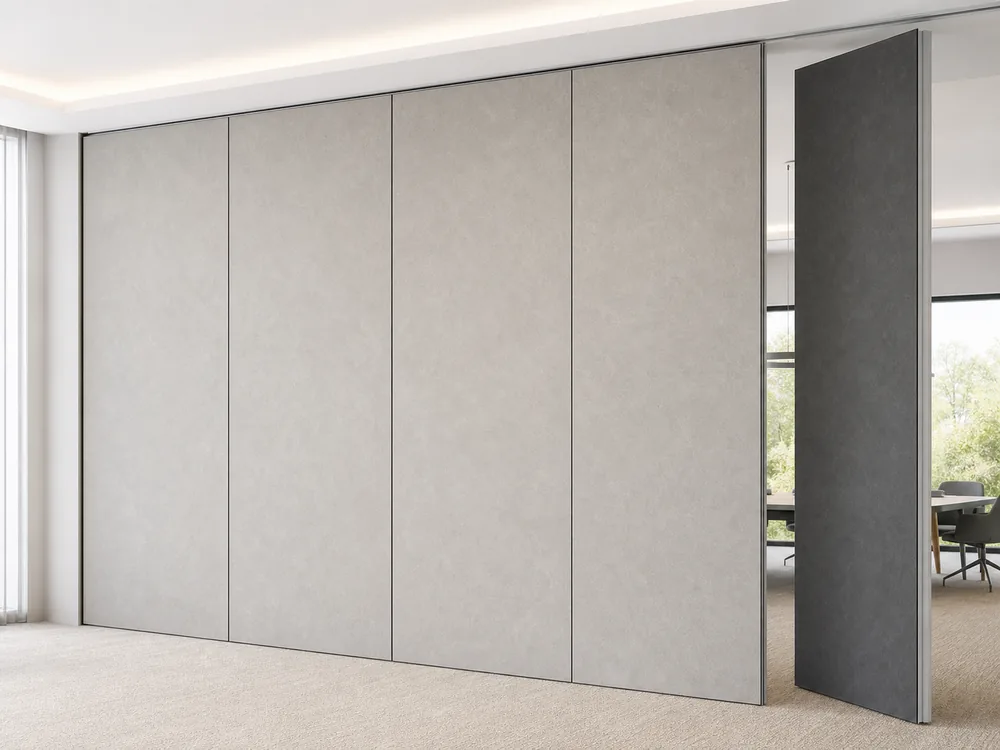
The EBUNGE movable partition system is top-hung. It has no continuous floor running track or operating hardware in the finished floor along the partition line. The floor is not cut or damaged for a floor track. It remains physically uninterrupted by the maintained EBUNGE top-hung system.
This matters for art display because floor surfaces often need to stay clean and continuous for viewing. It also matters for youth use because active groups may move across the same floor area. A physically uninterrupted floor can support both scenarios without a floor track crossing the room.
The exact route, junction arrangement, continuous overhead path and parking position must be confirmed from the coordinated project drawings.
How Finish Choices Affect Art Display and Youth Use
Use community hall partition finishes art as the review topic for this section.
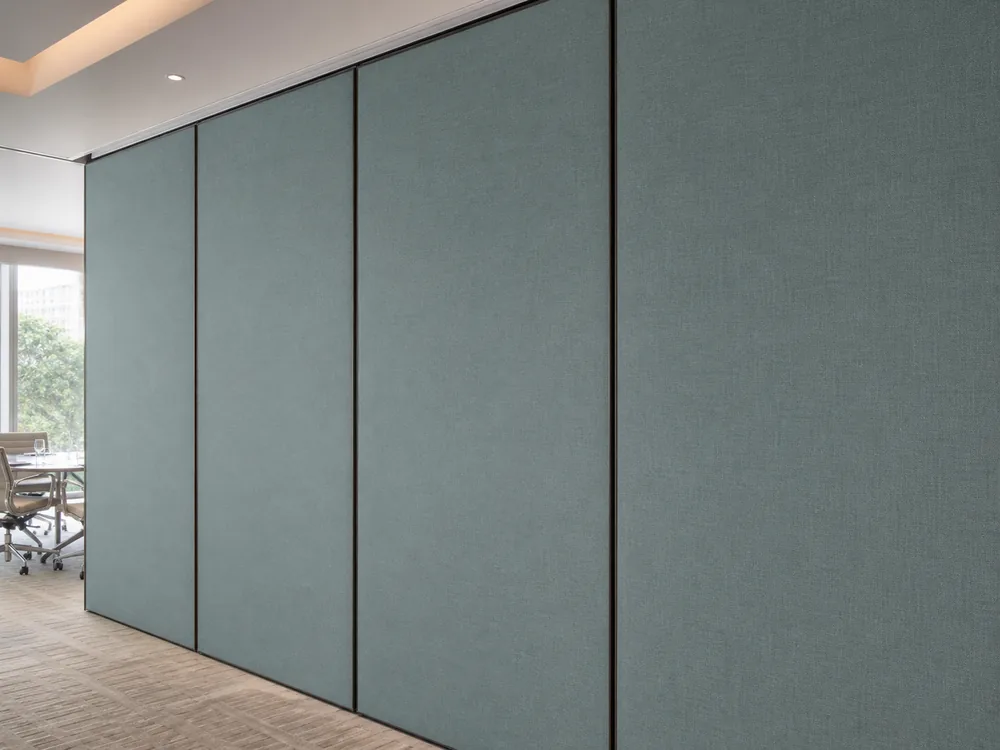
Finish materials can be customized. Cleaning and maintenance methods vary with the selected finish. For art display, you may prefer a finish that suits a quiet viewing environment. For youth use, you may prefer a finish that fits a more active setting. Both choices are possible because finishes are customizable.
However, no finish is universally suitable for every activity. The right choice depends on your hall’s schedule, the types of events, and the care routines your team can follow. Always confirm cleaning methods with the finish supplier or manufacturer.
Parking Planning for Different Room Configurations
Panel parking style can be customized to the customer layout and project requirements, subject to coordinated drawings. A suitable approved parking arrangement can use the stacking area more compactly and coordinate with the space design. The exact track, support and panel layout still require project drawings.
For art display, you may want partitions parked away from display walls. For youth use, you may want partitions parked near storage or activity zones. The parking plan should reflect how each room is used. Early coordination with the project team helps align parking with your layout.
Finish and Care Coordination: Questions to Ask
Because cleaning and maintenance methods vary with the selected finish, ask specific questions before you decide. Use the following list as a starting point for discussions with your project team and finish suppliers.
- What cleaning methods are recommended for the finish you are considering?
- How does the finish respond to frequent handling in youth group settings?
- Does the finish need special products or tools for routine care?
- How will the parking area be cleaned and maintained?
- Are there any finish-specific care instructions that affect daily operations?
These questions help you compare community hall partition finishes art display and youth group scenarios on a practical level. They do not replace project-specific guidance.
Non-Limiting Applications and Example Layouts
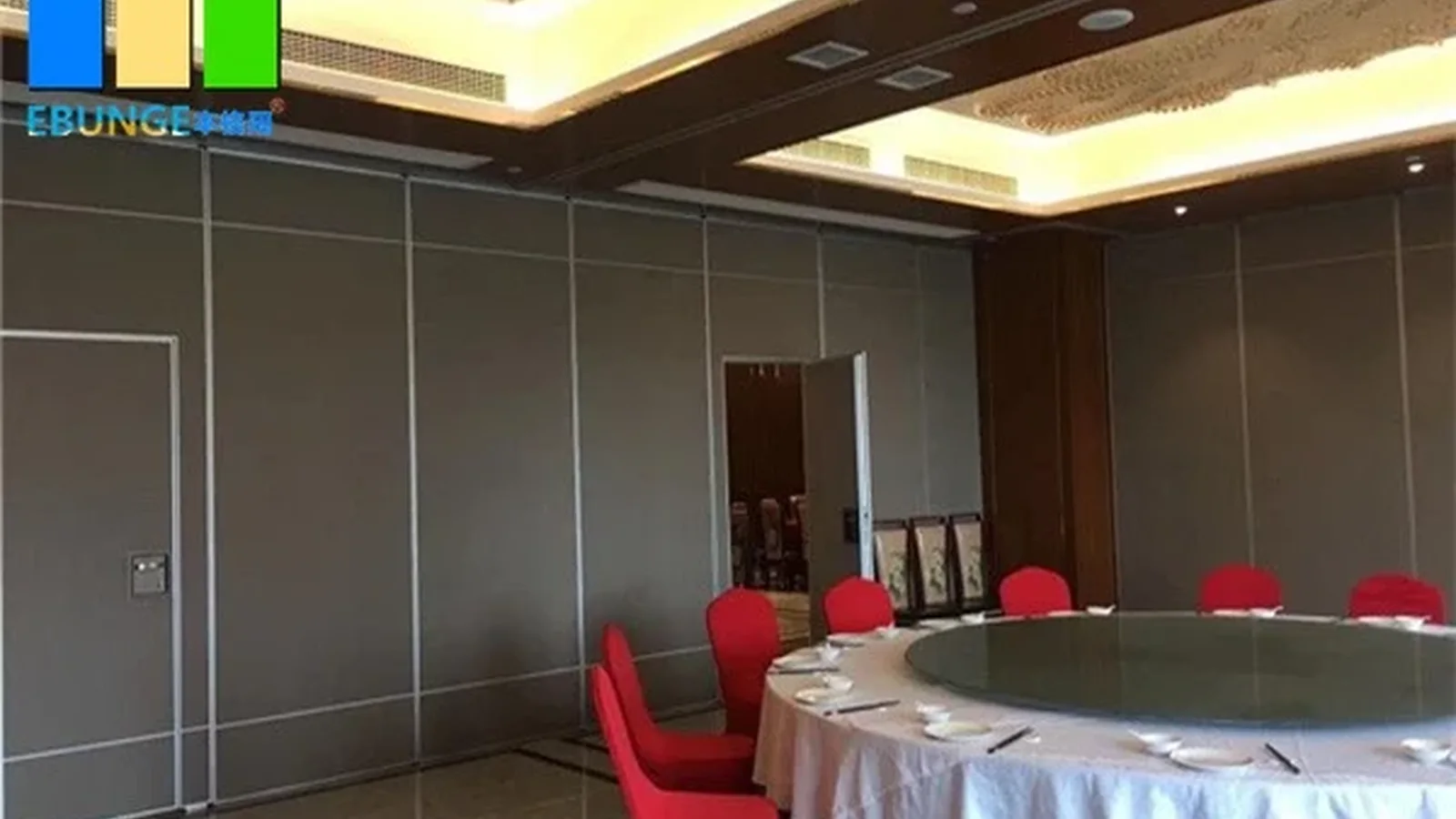
Movable partitions can be used wherever flexible space division, combination or reconfiguration is required. Application examples are not limiting. EBUNGE has completed many types of hotel-related movable-partition projects. Ballrooms, wedding halls and multifunction halls are non-limiting examples.
No customer names, locations, quantities, ratings, certifications or outcomes may be inferred from those examples. The same top-hung principle applies across different settings. For community halls, the focus stays on how finishes and parking support your specific uses.
Buyer Inputs and Drawing Approvals
To move from comparison to decision, gather your buyer inputs early. Consider the room sizes, the types of events, the storage space, and the care routines your team can manage. Share these inputs with the project team so they can prepare coordinated drawings.
The exact route, junction arrangement, continuous overhead path and parking position must be confirmed from the coordinated project drawings. Finish selections and parking styles are subject to those drawings. Approval of the drawings is a key step before any project-specific details are finalized.
Comparing Art Display and Youth Use: A Side-by-Side View
The table below summarizes practical differences between art display and youth use. It focuses on finish and care considerations, not on performance claims.
| Consideration | Art Display | Youth Use |
|---|---|---|
| Floor continuity | Physically uninterrupted floor supports clean viewing areas | Physically uninterrupted floor supports active movement |
| Finish care | Cleaning methods vary with selected finish | Cleaning methods vary with selected finish |
| Parking | Parking style customized to layout and project requirements | Parking style customized to layout and project requirements |
| Coordination | Exact details confirmed from coordinated project drawings | Exact details confirmed from coordinated project drawings |
Use this table as a conversation starter. Your project team can help you apply these points to your specific hall.
Frequently Asked Questions
Does the top-hung system require a floor track?
No. The EBUNGE movable partition system is top-hung and has no continuous floor running track or operating hardware in the finished floor along the partition line. The floor is not cut or damaged for a floor track.
Can I choose different finishes for art display and youth use?
Finish materials can be customized. Cleaning and maintenance methods vary with the selected finish. You can discuss finish options with your project team based on how each space is used.
How is parking planned for different room layouts?
Panel parking style can be customized to the customer layout and project requirements, subject to coordinated drawings. A suitable approved parking arrangement can use the stacking area more compactly and coordinate with the space design.
What should I confirm before approving drawings?
The exact route, junction arrangement, continuous overhead path and parking position must be confirmed from the coordinated project drawings. Finish selections and parking styles are subject to those drawings.
Are there standard applications for movable partitions?
Movable partitions can be used wherever flexible space division, combination or reconfiguration is required. Application examples are not limiting. EBUNGE has completed many types of hotel-related movable-partition projects, but no customer names, locations, quantities, ratings, certifications or outcomes may be inferred.
Next Steps for Your Community Hall Project
Start by listing your hall’s activities, storage space, and care routines. Then discuss finish options and parking preferences with your project team. Remember that community hall partition finishes art display and youth group scenarios both benefit from early coordination.
Review the projects page for general examples of movable partition applications. For product information, visit the movable partition wall page. The exact route, junction arrangement, continuous overhead path and parking position must be confirmed from the coordinated project drawings.
Continue Exploring
More Materials and Finishes Guides
- Newer guideConvention Center Partition Finish: Exhibit Hall vs Plenary Use
- Earlier guideSports Hall Partition Finish Abrasion: Equipment Trolley Traffic
- Related guideWho Verifies Partition Handover Records When Trades Finish at Different
- Related guideMovable Partition Finish Sample Coordination Guide for Interior