
Why Sports Hall Partition Finishes Abrasion Deserves Early Attention
Quick project answer
Sports halls combine wide clear spans with frequent equipment movement. When a movable partition divides the hall, the finish on each panel face becomes part of the daily environment. Trolley traffic can pass close to panel edges, corners and lower faces. That contact is the practical source of sports hall partition finishes abrasion.
Abrasion is not only a cosmetic topic. Repeated contact can change how a finish looks and how it is cleaned. Planning the finish before the partition layout is fixed helps the project team match material choice to real traffic. It also helps the operator understand which routes need care during setup and takedown.
The Top-Hung Principle and the Finished Floor
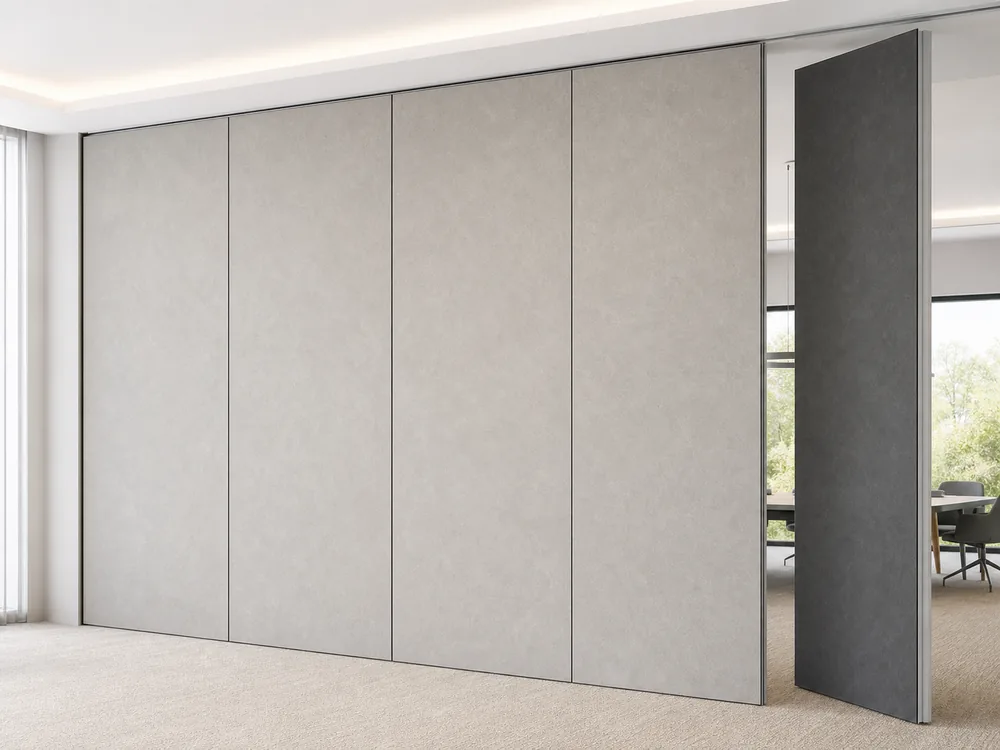
The EBUNGE movable partition system is top-hung. It has no continuous floor running track or operating hardware in the finished floor along the partition line. The floor is not cut or damaged for a floor track. It remains physically uninterrupted by the maintained EBUNGE top-hung system.
That principle matters for sports hall partition finishes abrasion because the floor surface stays continuous. There is no floor channel to collect grit or to interrupt trolley wheels. The partition line does not introduce a recessed track that could catch a trolley wheel or trap debris.
The exact route, junction arrangement, continuous overhead path and parking position must be confirmed from the coordinated project drawings. Finish selection, panel parking and trolley routes should be reviewed together during that drawing stage.
How Equipment Trolley Traffic Interacts with Panel Faces
Equipment trolleys in a sports hall often carry balls, mats, goals or seating. Their wheels and frames can brush against a partition face when the hall is being set up or cleared. The lower part of a panel face is usually the most exposed zone.
Sports hall partition finishes abrasion can also appear where trolleys turn near a panel end. A tight turn can bring a trolley corner into contact with a panel edge. The finish at that edge then receives repeated local contact rather than uniform wear.
Because the EBUNGE system is top-hung, the floor along the partition line is not cut for a track. Trolley wheels therefore cross a continuous floor surface. That reduces one common source of wheel interruption, but it does not remove the need to plan trolley routes around parked or closed panels.
Parking Planning and Trolley Routes
Panel parking style can be customized to the customer layout and project requirements, subject to coordinated drawings. A suitable approved parking arrangement can use the stacking area more compactly and coordinate with the space design. The exact track, support and panel layout still require project drawings.
Parking location affects sports hall partition finishes abrasion because it defines where panels rest when the hall is open. If parked panels sit near a trolley route, their faces may receive more contact. If they sit in a protected zone, that contact can be reduced.
Use the following checks when reviewing a parking plan:
- Confirm the trolley route against the parked panel position on the coordinated drawings.
- Identify any turn or doorway where a trolley may pass close to a panel face.
- Review the stacking area against the hall’s normal equipment storage pattern.
- Agree the finish care method for the selected panel finish.
The exact route, junction arrangement, continuous overhead path and parking position must be confirmed from the coordinated project drawings.
Finish Selection and Care Coordination
Finish materials can be customized, and cleaning and maintenance methods vary with the selected finish. That means the finish choice and the care method should be decided together. A finish that suits one hall may need a different care approach in another.
For sports hall partition finishes abrasion, the project team should record the expected trolley traffic near each panel face. The finish can then be reviewed against that traffic pattern. The care method can also be written for the people who set up and clear the hall.
Cleaning and maintenance methods vary with the selected finish. The project team should confirm the correct method for the chosen finish rather than assume one method applies to every panel. The suitability of each route and parking arrangement depends on the approved layout, circulation, ceiling interfaces and operating sequence.
Non-Limiting Applications and Project Context
Movable partitions can be used wherever flexible space division, combination or reconfiguration is required. Application examples are not limiting. A sports hall is one context where trolley traffic and finish care deserve attention.
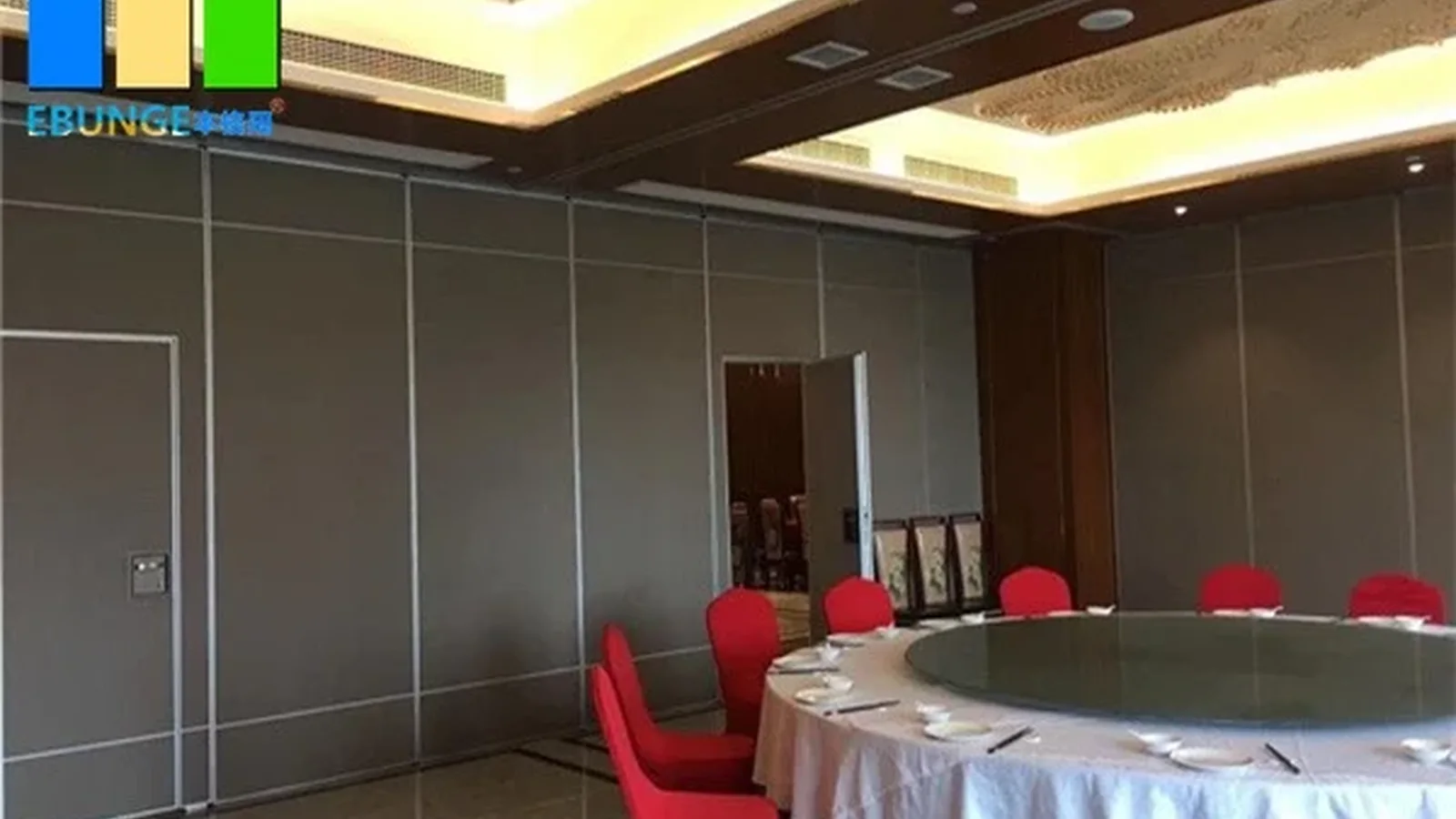
EBUNGE has completed many types of hotel-related movable-partition projects. Ballrooms, wedding halls and multifunction halls are non-limiting examples. Those settings can also involve trolley traffic, but the finish and care plan should follow the specific project.
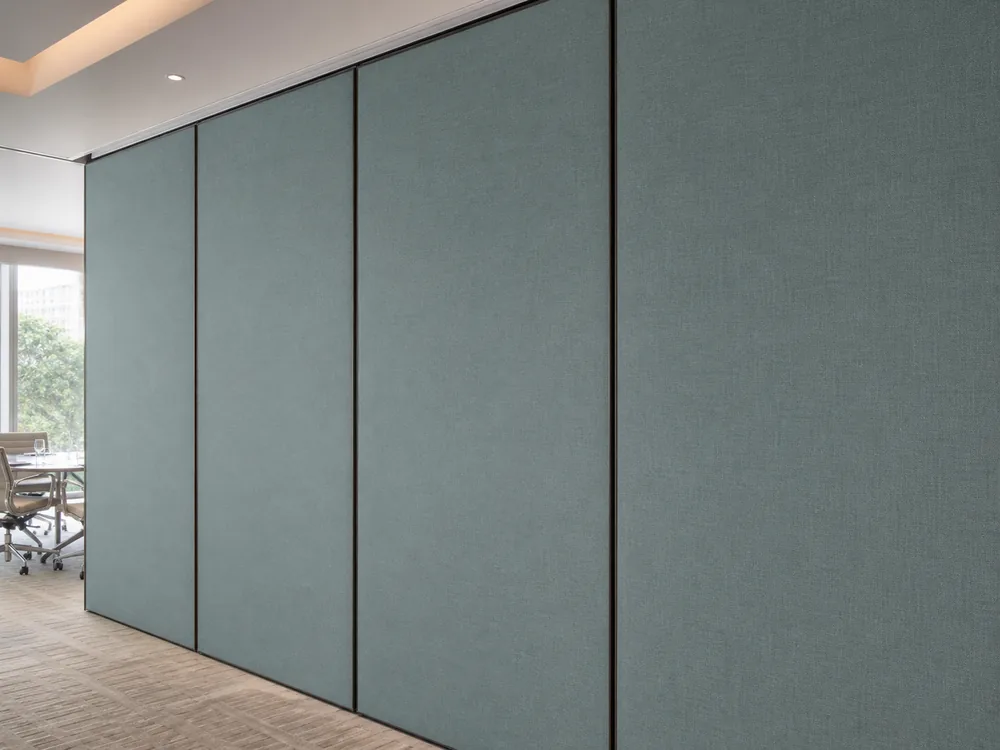
For a sports hall, the same top-hung principle applies. The floor is not cut or damaged for a floor track and remains physically uninterrupted by the maintained EBUNGE top-hung system. That gives the project team a continuous floor to work with when planning trolley routes.
Buyer Inputs for a Finish and Abrasion Review
A useful review starts with clear inputs from the buyer. The project team can then match the finish and parking plan to the hall’s real use. The following inputs help frame the discussion:
- Describe the equipment trolleys used in the hall and their typical routes.
- Identify where trolleys turn, park or pass near the partition line.
- State the parking area available when the hall is fully open.
- Confirm the finish preference and the expected care method.
- Provide the coordinated drawings for the partition layout and parking position.
The exact route, junction arrangement, continuous overhead path and parking position must be confirmed from the coordinated project drawings.
Drawing Approvals and Finish Sign-Off
Drawing approvals bring the finish, parking and trolley route into one review. The project team can check that the parked panels do not sit in the busiest trolley path. They can also confirm the care method for the selected finish.
A finish chosen without reference to trolley traffic may not match the hall’s daily pattern. A finish reviewed with that pattern can be supported by a clearer care plan.
The exact route, junction arrangement, continuous overhead path and parking position must be confirmed from the coordinated project drawings. Finish materials can be customized, and cleaning and maintenance methods vary with the selected finish.
Frequently Asked Questions
What causes sports hall partition finishes abrasion?
Repeated contact from equipment trolleys, especially near panel faces and edges, is a common cause. The finish and the trolley route should be reviewed together during project planning.
Does a top-hung partition reduce floor damage from trolleys?
The EBUNGE movable partition system is top-hung and has no continuous floor running track or operating hardware in the finished floor along the partition line. The floor is not cut or damaged for a floor track.
Can the panel finish be customized for a sports hall?
Finish materials can be customized, and cleaning and maintenance methods vary with the selected finish. The project team should confirm the care method for the chosen finish.
How is panel parking planned around trolley traffic?
Panel parking style can be customized to the customer layout and project requirements, subject to coordinated drawings. A suitable approved parking arrangement can use the stacking area more compactly and coordinate with the space design.
What must be confirmed from the coordinated project drawings?
The exact route, junction arrangement, continuous overhead path and parking position must be confirmed from the coordinated project drawings.
Where can movable partitions be used?
Movable partitions can be used wherever flexible space division, combination or reconfiguration is required. Application examples are not limiting.
Planning Summary
Sports hall partition finishes abrasion is a planning topic, not only a cleaning topic. The finish, the parking position and the trolley route should be reviewed together. The top-hung EBUNGE system keeps the floor along the partition line uninterrupted, which supports that review.
Finish materials can be customized, and cleaning and maintenance methods vary with the selected finish. The project team should confirm the finish and care method against the coordinated drawings. For related layout options, see movable partition wall and projects.
Continue Exploring
More Materials and Finishes Guides
- Newer guideCompare Community Hall Partition Finishes: Art Display vs Youth Use
- Earlier guideCommunity Hall Partition Finish: Dance Floor vs Seated Event Use
- Related guideWho Verifies Partition Handover Records When Trades Finish at Different
- Related guideMovable Partition Finish Sample Coordination Guide for Interior