Why Finish Choice Matters for Community Hall Partitions
Quick project answer
Community hall partition finishes bulletin board and chalkboard options each bring distinct care and planning considerations. The finish you select affects daily cleaning, long-term appearance, and how the partition system integrates with the room. EBUNGE movable partitions are top-hung, meaning no continuous floor running track or operating hardware sits in the finished floor along the partition line. This design keeps the floor physically uninterrupted, which matters when you compare surface finishes for community spaces.
Finish materials can be customized, and cleaning and maintenance methods vary with the selected finish. That single fact drives many decisions when you evaluate community hall partition finishes bulletin board versus chalkboard. The suitability of each route and parking arrangement depends on the approved layout, circulation, ceiling interfaces and operating sequence.
The Top-Hung Principle and Finish Independence
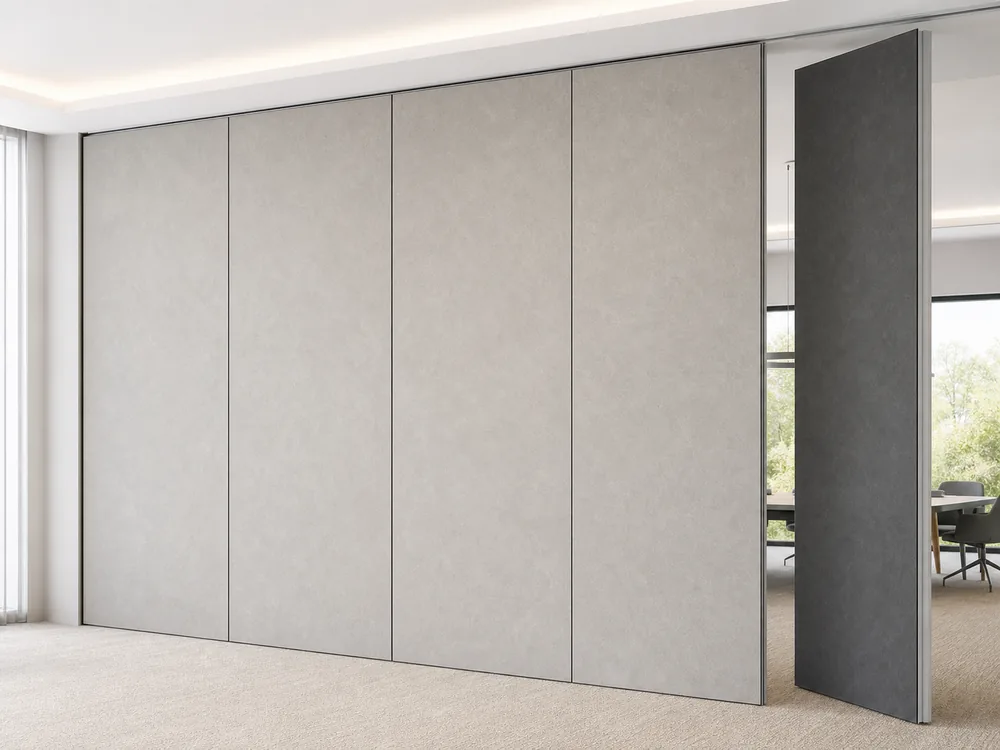
EBUNGE movable partitions are top-hung. The system carries panels from an overhead structure, so the floor is not cut or damaged for a floor track. The maintained EBUNGE top-hung system leaves the floor physically uninterrupted along the partition line. This principle applies regardless of whether you choose a bulletin board finish, a chalkboard finish, or another customizable surface.
Because there is no continuous floor track, the finish selection does not depend on floor hardware. You can evaluate community hall partition finishes bulletin board and chalkboard options on their own merits. The exact route, junction arrangement, continuous overhead path and parking position must be confirmed from the coordinated project drawings.
Bulletin Board Finish: Care and Coordination
A bulletin board finish provides a surface for posting notices, schedules, or community information. Cleaning methods vary with the selected finish, so confirm the recommended care approach before specifying. In a community hall, a bulletin board finish may reduce the need for separate notice boards, but that depends on room layout and user needs.
When planning community hall partition finishes bulletin board selections, consider how often the surface will be used for display. Frequent pinning and removal can affect appearance over time. The finish material can be customized, but the cleaning and maintenance method must match the chosen surface. Coordinate with the project drawings to confirm how the finish integrates with panel parking and overhead support.
Chalkboard Finish: Care and Coordination
A chalkboard finish offers a writable surface for temporary notes, diagrams, or agendas. Like bulletin board, chalkboard is a customizable finish option. Cleaning and maintenance methods vary with the selected finish, so the care routine for chalkboard differs from that of bulletin board. Chalk residue and dust may require specific cleaning practices.
Community hall partition finishes bulletin board and chalkboard both require finish-specific care. For chalkboard, confirm the cleaning method with the finish supplier. The top-hung EBUNGE system keeps the floor uninterrupted, so chalk dust does not collect around a floor track. However, the exact route, junction arrangement, continuous overhead path and parking position must be confirmed from the coordinated project drawings.
Comparing Finishes in a Scannable Format
The following table summarizes key differences between bulletin board and chalkboard finishes for community hall partitions. Use it as a starting point for discussions with your project team.
| Consideration | Bulletin Board Finish | Chalkboard Finish |
|---|---|---|
| Primary use | Posting notices and schedules | Writing temporary notes and diagrams |
| Cleaning method | Varies with selected finish | Varies with selected finish |
| Maintenance routine | Finish-specific care required | Finish-specific care required |
| Floor impact | No floor track with top-hung system | No floor track with top-hung system |
| Customization | Finish materials can be customized | Finish materials can be customized |
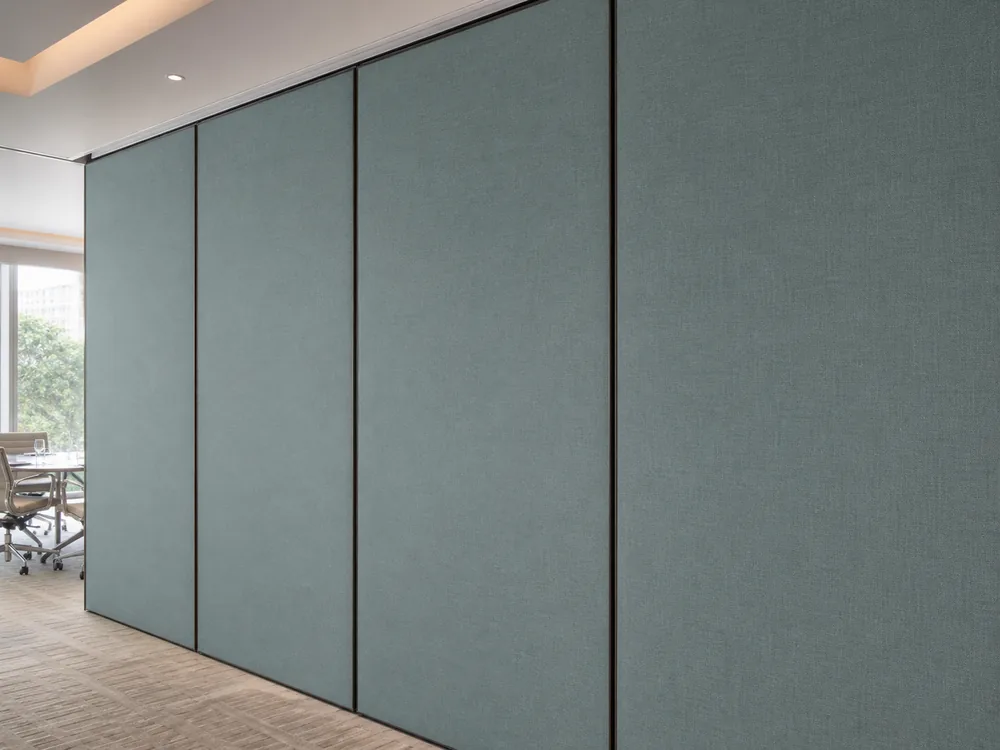
Both finishes share the top-hung advantage: no continuous floor running track or operating hardware in the finished floor. The floor remains physically uninterrupted. The exact route, junction arrangement, continuous overhead path and parking position must be confirmed from the coordinated project drawings.
Parking Planning and Finish Selection
Panel parking style can be customized to the customer layout and project requirements, subject to coordinated drawings. A suitable approved parking arrangement can use the stacking area more compactly and coordinate with the space design. When you compare community hall partition finishes bulletin board and chalkboard, parking planning remains separate from finish choice.
Finish selection does not change the top-hung principle or the need for coordinated drawings. The exact track, support and panel layout still require project drawings. Whether you choose bulletin board, chalkboard, or another customizable finish, the parking arrangement must be approved and coordinated with the overall space design.
Non-Limiting Applications for Community Halls
Movable partitions can be used wherever flexible space division, combination or reconfiguration is required. Application examples are not limiting. EBUNGE has completed many types of hotel-related movable-partition projects; ballrooms, wedding halls and multifunction halls are non-limiting examples. Community halls follow the same principle: the need for flexible space drives the partition choice.
Community hall partition finishes bulletin board and chalkboard are two options among many customizable finishes. The finish you select should support the room’s function. For a community hall used for meetings, a bulletin board finish may suit information display. For a hall used for workshops, a chalkboard finish may suit temporary writing. Neither choice is universal.
Buyer Inputs and Drawing Approvals
Before finalizing community hall partition finishes bulletin board or chalkboard, gather inputs on room function, cleaning routines, and user expectations. Finish materials can be customized, and cleaning and maintenance methods vary with the selected finish. Confirm who will maintain the surface and how often.
Panel parking style can be customized to the customer layout and project requirements, subject to coordinated drawings. A suitable approved parking arrangement can use the stacking area more compactly and coordinate with the space design. The exact track, support and panel layout still require project drawings. For engineering details outside confirmed facts, use this boundary: The exact route, junction arrangement, continuous overhead path and parking position must be confirmed from the coordinated project drawings.
Review the coordinated drawings to confirm how the top-hung system integrates with the building. The floor is not cut or damaged for a floor track and remains physically uninterrupted by the maintained EBUNGE top-hung system. This applies to both bulletin board and chalkboard finishes.
Frequently Asked Questions
Does the finish choice affect whether the partition is top-hung?
No. EBUNGE movable partitions are top-hung regardless of finish. The finish selection does not change the top-hung principle or the absence of a continuous floor running track.
Can I use a bulletin board finish on one side and chalkboard on the other?
Finish materials can be customized. Whether different finishes can be applied to opposite sides depends on the selected materials and project requirements. Confirm with coordinated project drawings.
How do cleaning methods differ between bulletin board and chalkboard finishes?
Cleaning and maintenance methods vary with the selected finish. Bulletin board and chalkboard surfaces may require different care routines. Confirm the recommended method for each finish before specifying.
Does a top-hung system leave the floor uninterrupted?
Yes. The EBUNGE top-hung system has no continuous floor running track or operating hardware in the finished floor along the partition line. The floor is not cut or damaged for a floor track.
Can panel parking be customized for a community hall?
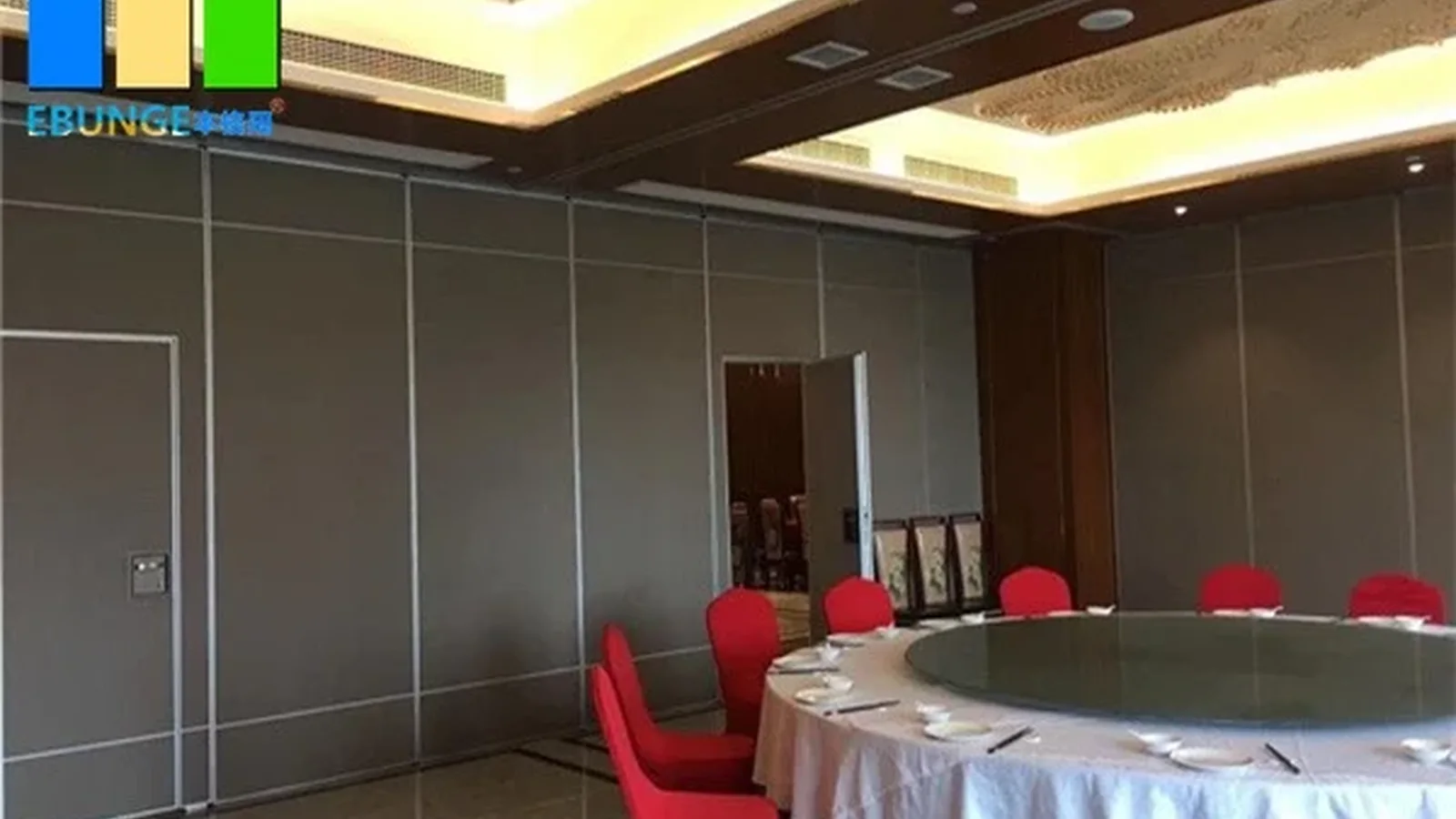
Panel parking style can be customized to the customer layout and project requirements, subject to coordinated drawings. A suitable approved parking arrangement can use the stacking area more compactly.
What should I confirm before choosing a finish?
Confirm the room function, cleaning routine, and user expectations. Also confirm the exact route, junction arrangement, continuous overhead path and parking position from the coordinated project drawings.
Making a Coordinated Finish Decision
Community hall partition finishes bulletin board and chalkboard each offer distinct surface benefits. The top-hung EBUNGE system keeps the floor physically uninterrupted, so finish choice does not depend on floor hardware. Finish materials can be customized, and cleaning and maintenance methods vary with the selected finish.
For your project, review the coordinated drawings to confirm parking, track, and support details. You can explore movable partition wall options and review projects for context. The exact route, junction arrangement, continuous overhead path and parking position must be confirmed from the coordinated project drawings.
Continue Exploring
More Materials and Finishes Guides
- Newer guideUniversity Training Partition Finish: Wall-Mounted Whiteboard Surfaces
- Earlier guideCompare Community Hall Partition Finishes for Trophy Case Glare
- Related guideWho Verifies Partition Handover Records When Trades Finish at Different
- Related guideMovable Partition Finish Sample Coordination Guide for Interior