
Quick project answer
University training center partition finishes shape how rooms read, how surfaces perform, and how daily sessions are supported. When the brief calls for wall-mounted whiteboard surfaces, the partition system and its finish package must be planned together. This article explains how a top-hung movable partition supports an uninterrupted floor, how parking can be coordinated, and how finish and care decisions belong in the same drawing set.
Why university training center partition finishes start with the track principle
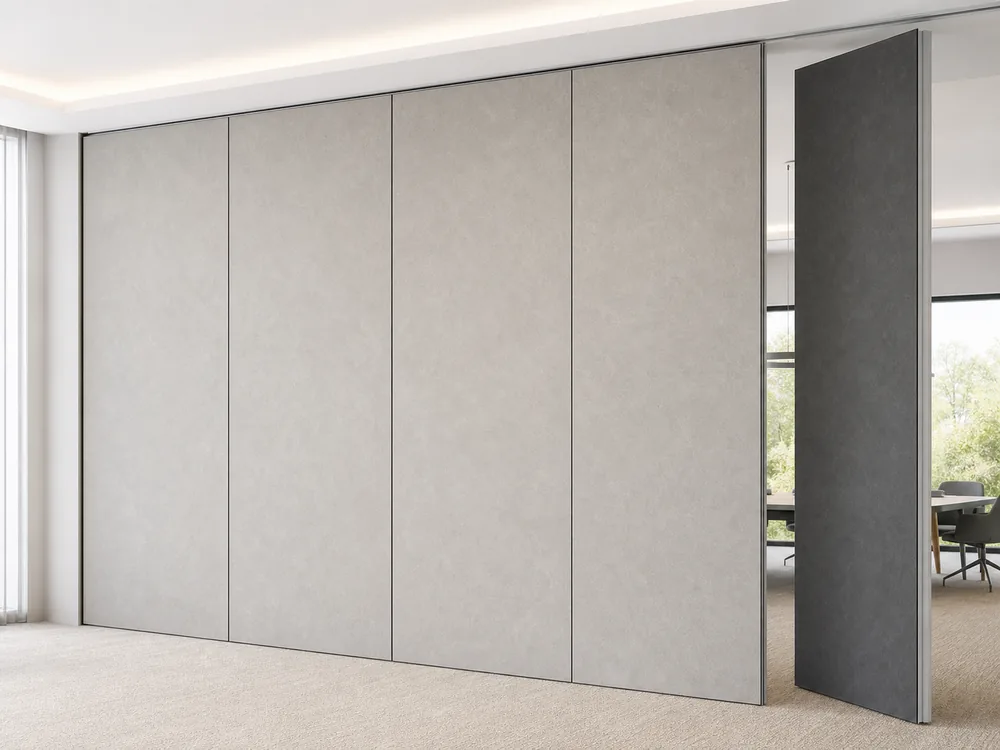
The EBUNGE movable partition system is top-hung. That single fact changes how university training center partition finishes are planned. There is no continuous floor running track or operating hardware in the finished floor along the partition line. The floor is not cut or damaged for a floor track.
Because the maintained EBUNGE top-hung system leaves the floor physically uninterrupted, the finish strategy can treat the floor as a continuous surface. Whiteboard surfaces can be mounted on partition faces without a floor track interrupting the room. The exact route, junction arrangement, continuous overhead path and parking position must be confirmed from the coordinated project drawings.
What an uninterrupted floor means for training rooms
An uninterrupted floor is a planning condition, not a performance claim. It means the maintained EBUNGE top-hung system does not introduce a continuous floor running track or operating hardware in the finished floor along the partition line. The floor remains physically uninterrupted by the maintained system.
For university training center partition finishes, that condition helps coordinate floor finishes, cleaning routines, and furniture layouts. It also keeps the partition line free of a floor track that would otherwise need to be cut into the finished floor. The exact route, junction arrangement, continuous overhead path and parking position must be confirmed from the coordinated project drawings.
Parking planning for university training center partition finishes
Panel parking style can be customized to the customer layout and project requirements, subject to coordinated drawings. A suitable approved parking arrangement can use the stacking area more compactly and coordinate with the space design. The exact track, support and panel layout still require project drawings.
Parking planning belongs in the same conversation as university training center partition finishes because stacked panels occupy space that may otherwise be used for storage, circulation, or teaching equipment. The parking position must be shown on the coordinated drawings so that the finish package and the room layout agree.
Finish and care coordination for whiteboard surfaces
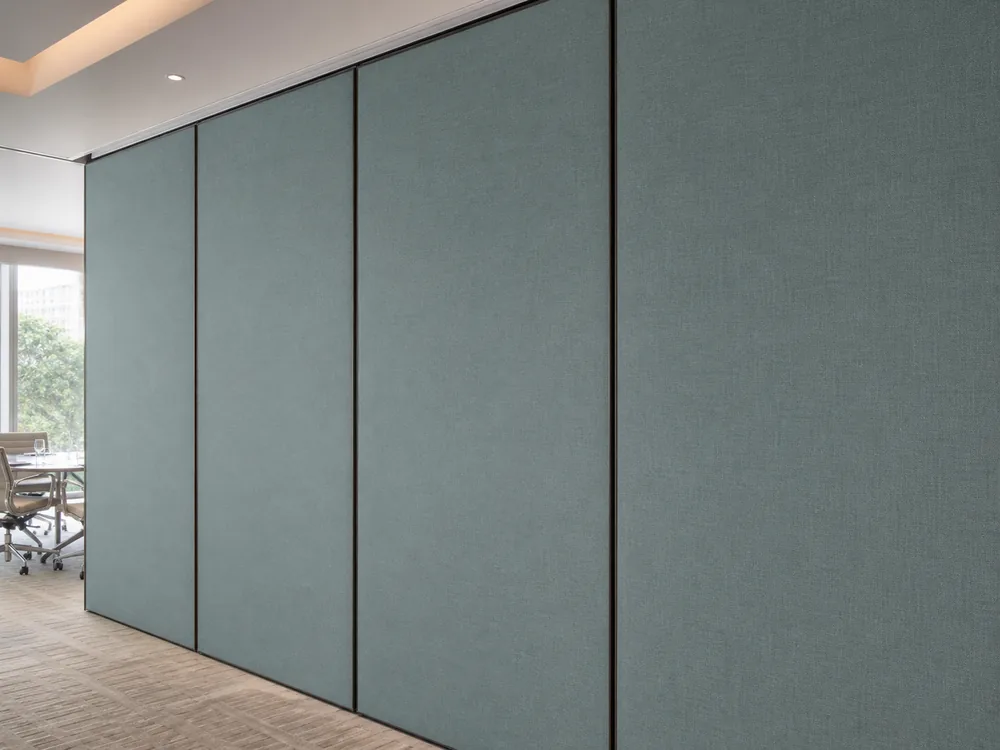
Finish materials can be customized, and cleaning and maintenance methods vary with the selected finish. That means a wall-mounted whiteboard surface is a finish decision, not a default. The project team should confirm which surfaces receive whiteboard treatment and how those surfaces are cleaned.
University training center partition finishes often combine several surface types across a single partition line. Each finish may have its own care method. The coordinated drawings should identify the finish locations and the approved care approach for each selected finish.
Applications for movable partitions in training environments
Movable partitions can be used wherever flexible space division, combination or reconfiguration is required. Application examples are not limiting. In a university setting, that may include seminar rooms, workshop spaces, briefing rooms, and combined teaching areas.
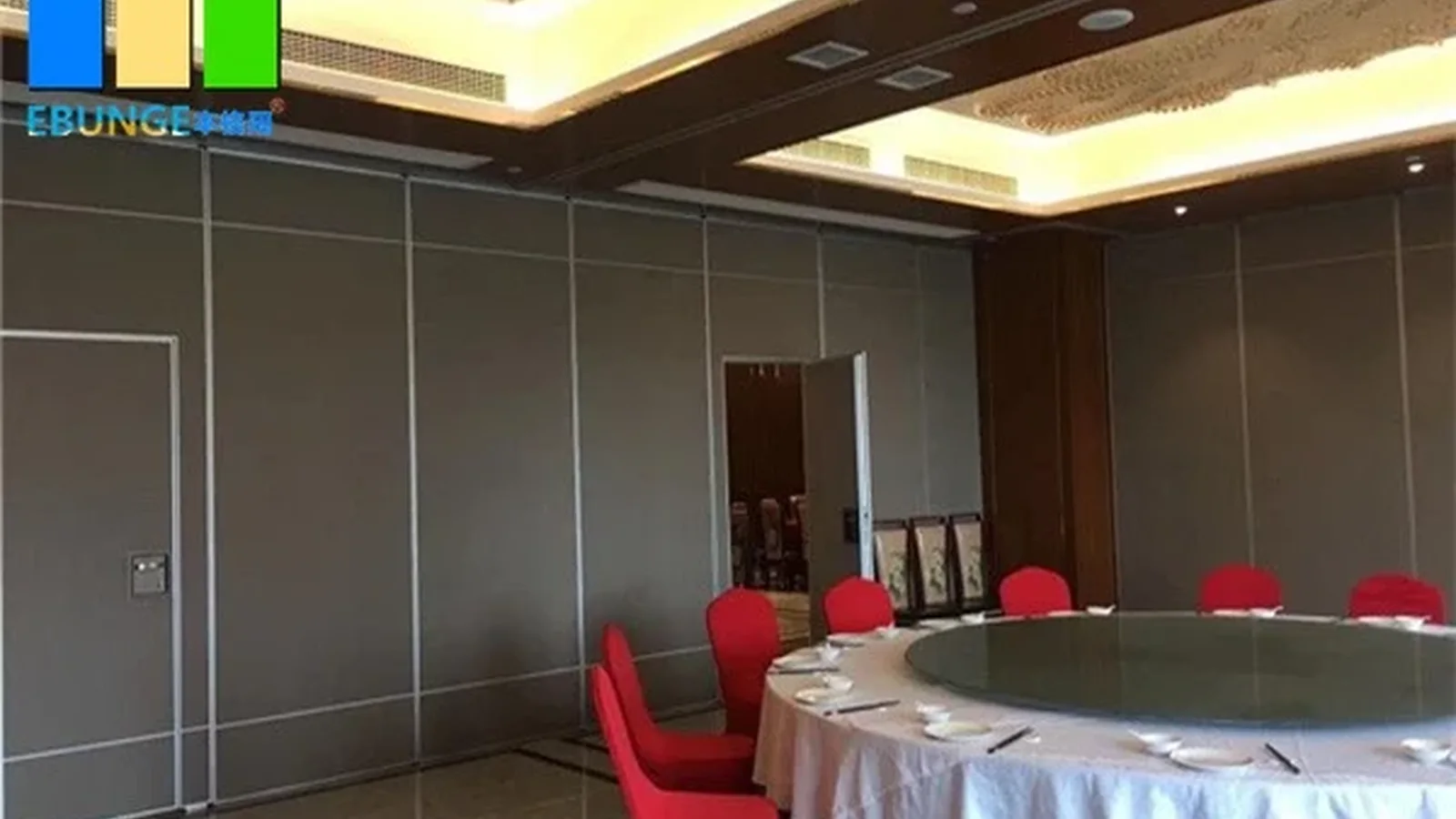
EBUNGE has completed many types of hotel-related movable-partition projects. Ballrooms, wedding halls and multifunction halls are non-limiting examples. Those project types show how movable partitions support flexible room use, but they do not define the limits of where a top-hung system can be considered.
Buyer inputs that shape university training center partition finishes
Useful buyer inputs include the room layout, the intended room combinations, the desired parking area, and the surfaces that require whiteboard treatment. These inputs help the project team prepare coordinated drawings for the top-hung system.
Finish selections should be listed with their locations so that care methods can be matched to each surface. Because cleaning and maintenance methods vary with the selected finish, the finish schedule and the care schedule should be reviewed together.
Drawing approvals and the limits of this guidance
Panel parking style can be customized to the customer layout and project requirements, subject to coordinated drawings. The exact track, support and panel layout still require project drawings. The exact route, junction arrangement, continuous overhead path and parking position must be confirmed from the coordinated project drawings.
The exact overhead route and support arrangement must be confirmed by the responsible project team from coordinated drawings. Those items require traceable project evidence.
Quick reference for planning teams
- Confirm the top-hung principle and the uninterrupted floor condition.
- Identify where wall-mounted whiteboard surfaces are required.
- List finish materials and match care methods to each selected finish.
- Show the parking area and stacking arrangement on coordinated drawings.
- Record buyer inputs for room combinations and surface locations.
Review sequence before drawings are issued
- Gather room layouts and intended reconfiguration scenarios.
- Mark proposed whiteboard surface locations on the partition faces.
- Select finish materials and note the care method for each finish.
- Coordinate the parking area with the space design.
- Submit the coordinated drawings for approval before production planning.
Finish and care comparison
| Planning item | What to confirm | Where it appears |
|---|---|---|
| Whiteboard surface | Location on partition face | Finish schedule |
| Finish material | Selected finish and care method | Finish schedule |
| Parking area | Stacking position and layout | Coordinated drawings |
| Top-hung route | Overhead path and junction arrangement | Coordinated drawings |
The exact route, junction arrangement, continuous overhead path and parking position must be confirmed from the coordinated project drawings.
Frequently asked questions
What does top-hung mean for university training center partition finishes?
Top-hung means the EBUNGE movable partition system carries panels from above. There is no continuous floor running track or operating hardware in the finished floor along the partition line. The floor is not cut or damaged for a floor track.
Can whiteboard surfaces be included in the finish package?
Finish materials can be customized, and cleaning and maintenance methods vary with the selected finish. Wall-mounted whiteboard surfaces can be planned as part of the finish package, with locations and care methods confirmed in the coordinated drawings.
How is parking planned for a movable partition?
Panel parking style can be customized to the customer layout and project requirements, subject to coordinated drawings. A suitable approved parking arrangement can use the stacking area more compactly and coordinate with the space design. The exact track, support and panel layout still require project drawings.
Where can movable partitions be used?
Movable partitions can be used wherever flexible space division, combination or reconfiguration is required. Application examples are not limiting. EBUNGE has completed many types of hotel-related movable-partition projects, including ballrooms, wedding halls and multifunction halls as non-limiting examples.
What should buyers provide for university training center partition finishes?
Buyers should provide room layouts, intended room combinations, the desired parking area, and the surfaces that require whiteboard treatment. Finish selections and their care methods should be listed so the coordinated drawings can be reviewed as one package.
What must be confirmed from coordinated project drawings?
The exact route, junction arrangement, continuous overhead path and parking position must be confirmed from the coordinated project drawings. The exact track, support and panel layout still require project drawings.
For related project context, see our projects. To review the movable partition system, visit movable partition wall.
Continue Exploring
More Materials and Finishes Guides
- Newer guideCompare Hotel Banquet Partition Finishes: Downlight vs Sconce
- Earlier guideCompare Community Hall Partition Finishes: Bulletin Board vs Chalkboard
- Related guideWho Verifies Partition Handover Records When Trades Finish at Different
- Related guideMovable Partition Finish Sample Coordination Guide for Interior