
Quick project answer
A community hall often needs to shift between full-room events, smaller meetings and combined layouts. When teams plan a movable partition, the phrase floor track appears in early discussions because many people expect a recessed guide in the finished floor. This checklist explains what to confirm when the selected system is top-hung and the floor remains physically uninterrupted.
Start with the top-hung principle
The EBUNGE movable partition system is top-hung. That means the operating hardware and running mechanism are overhead, not in the finished floor along the partition line. The floor is not cut or damaged for a floor track, and it remains physically uninterrupted by the maintained EBUNGE top-hung system.
This principle changes the early checklist. Instead of measuring a floor recess, the project team confirms the overhead path, support conditions and parking position from coordinated drawings. The exact route, junction arrangement, continuous overhead path and parking position must be confirmed from the coordinated project drawings.

Why the floor stays uninterrupted
With a top-hung system, there is no continuous floor track or operating hardware in the finished floor along the partition line. The finished floor can remain a single, continuous surface across the opening. That helps when the hall has a finished floor material that would be difficult to cut or match after installation.
The absence of a floor track also means the floor does not need a recess detail for the partition line. However, this does not remove the need for coordination. The overhead structure, the parking area and the panel route still require review before production. The exact route, junction arrangement, continuous overhead path and parking position must be confirmed from the coordinated project drawings.
Parking planning for community halls
Panel parking style can be customized to the customer layout and project requirements, subject to coordinated drawings. A suitable approved parking arrangement can use the stacking area more compactly and coordinate with the space design. The exact track, support and panel layout still require project drawings.
For a community hall, parking may affect stage access, storage rooms, corridor widths or adjacent multipurpose areas. The project team should confirm where panels rest when the hall is fully open. Because the system is top-hung, the parking position relates to the overhead path rather than a floor track recess.
Finish and care coordination
Finish materials can be customized, and cleaning and maintenance methods vary with the selected finish. A community hall may host weddings, meetings, exhibitions and local events, so the chosen finish should match the expected use and the available cleaning routine. The project team should confirm care instructions for each selected finish.
Because there is no floor track in the finished floor, floor cleaning across the partition line is not complicated by a recess. Still, the finish selection and care method remain project-specific. The exact route, junction arrangement, continuous overhead path and parking position must be confirmed from the coordinated project drawings.
Non-limiting application examples
Movable partitions can be used wherever flexible space division, combination or reconfiguration is required. Application examples are not limiting. EBUNGE has completed many types of hotel-related movable-partition projects; ballrooms, wedding halls and multifunction halls are non-limiting examples.
Community halls may share similar flexible-space goals with those examples, but each project has its own layout, finish and parking requirements. A floor track is not part of the maintained EBUNGE top-hung system, so the floor remains uninterrupted. The exact route, junction arrangement, continuous overhead path and parking position must be confirmed from the coordinated project drawings.
Buyer inputs to prepare
Before drawings are finalized, the buyer can gather room dimensions, ceiling information, intended layouts and preferred parking locations. These inputs help the project team coordinate the overhead path and the stacking area. They also help confirm whether the selected finish suits the hall’s daily use.
Buyers should note that the system is top-hung and that no floor track is cut into the finished floor. This point is useful when the hall has a finished floor that should remain intact. The exact route, junction arrangement, continuous overhead path and parking position must be confirmed from the coordinated project drawings.
Drawing approvals and project coordination
Coordinated drawings are the control point for the partition layout. They show the overhead path, the parking position and the relationship between the partition and the hall’s other elements. The exact track, support and panel layout still require project drawings.
Approvals should confirm the parking style, finish selection and any interface with adjacent spaces. Because there is no continuous floor track, the floor line remains uninterrupted. The exact route, junction arrangement, continuous overhead path and parking position must be confirmed from the coordinated project drawings.
Quick checklist for floor recess questions
- Confirm whether the selected system is top-hung.
- Confirm that no continuous floor track or operating hardware sits in the finished floor along the partition line.
- Confirm that the floor is not cut or damaged for a floor track.
- Confirm the parking style against the customer layout and project requirements.
- Confirm finish materials and the care method for each selected finish.
- Confirm the overhead path and parking position from coordinated drawings.
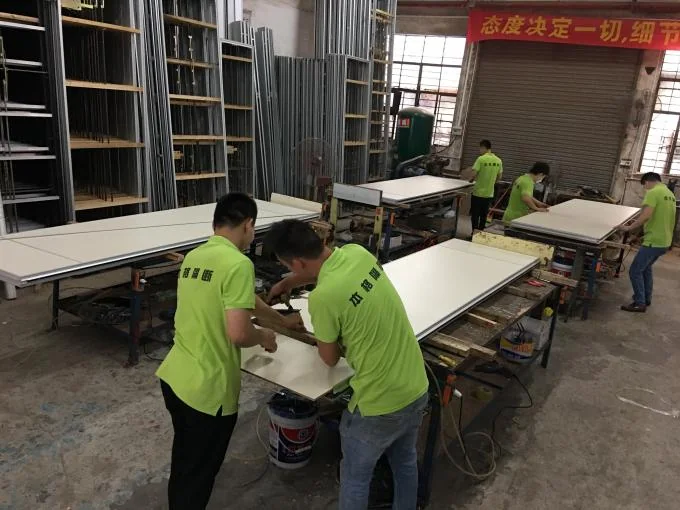
Comparison: common expectation and confirmed top-hung condition
| Planning point | Common expectation | Confirmed top-hung condition |
|---|---|---|
| Floor surface | Recess cut for a floor track | Floor remains physically uninterrupted |
| Operating hardware | Hardware in the finished floor | No operating hardware in the finished floor along the partition line |
| Parking | Fixed by floor guide | Parking style customized to layout and project requirements, subject to coordinated drawings |
| Finish care | One universal method | Cleaning and maintenance methods vary with the selected finish |
Frequently asked questions
Does a community hall partition need a floor track recess?
Not for the maintained EBUNGE top-hung system. The system has no continuous floor track or operating hardware in the finished floor along the partition line, so the floor is not cut or damaged for a floor track.
Is the floor left uninterrupted along the partition line?
Yes. The floor remains physically uninterrupted by the maintained EBUNGE top-hung system. The exact route, junction arrangement, continuous overhead path and parking position must be confirmed from the coordinated project drawings.
Can parking style be customized for a community hall layout?
Panel parking style can be customized to the customer layout and project requirements, subject to coordinated drawings. A suitable approved parking arrangement can use the stacking area more compactly and coordinate with the space design.
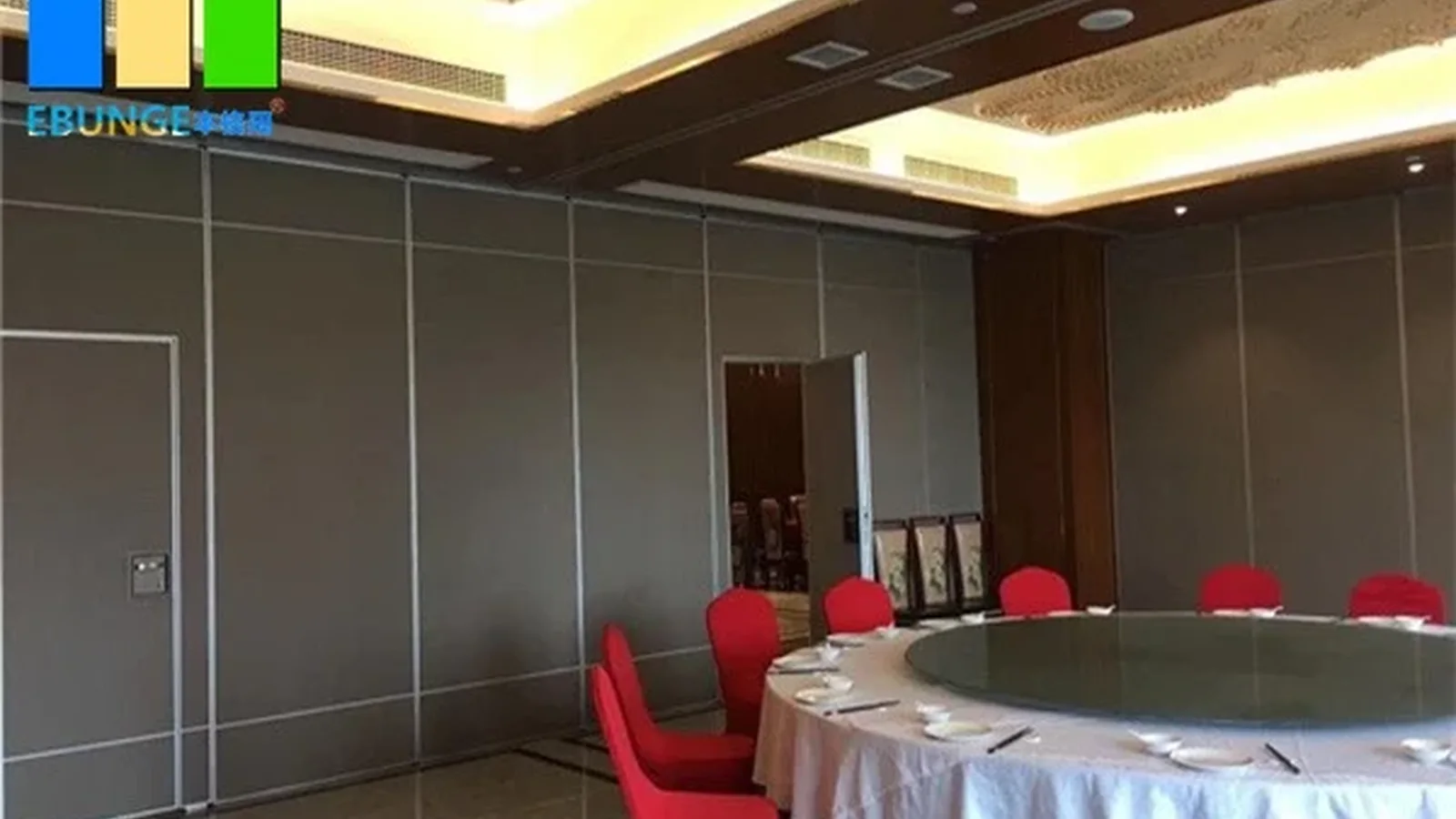
Do finish materials affect cleaning and maintenance?
Finish materials can be customized, and cleaning and maintenance methods vary with the selected finish. The project team should confirm the care method for each selected finish before handover.
Where can movable partitions be used?
Movable partitions can be used wherever flexible space division, combination or reconfiguration is required. Application examples are not limiting. EBUNGE has completed many types of hotel-related movable-partition projects; ballrooms, wedding halls and multifunction halls are non-limiting examples.
What should be confirmed from project drawings?
The exact track, support and panel layout still require project drawings. The exact route, junction arrangement, continuous overhead path and parking position must be confirmed from the coordinated project drawings.
Related pages
For more information on movable partition systems, see /operable-wall-system/. For project references, see /projects/.
Continue Exploring
More Maintenance Guides
- Newer guideHealthcare Training Partition Track: Floor Recesses Checklist
- Earlier guideHealthcare Training Room Partition Seal Maintenance Checklist
- Related guidePlanning Service Walkways Behind Operable Wall Stacking Bays
- Related guidePlan Service Access to Operable Wall Tracks When Ceiling Hatches