
Why Finish Abrasion Matters in Convention Halls
In a convention hall, a movable partition wall often shares space with mobile stage risers, rolling podiums, and other wheeled equipment. When you are comparing convention hall partition finish abrasion, you are not just picking a color or texture. You are evaluating how a surface will behave when it is repeatedly exposed to contact from mobile elements, whether during setup, breakdown, or live events. The challenge is that abrasion resistance is not a single, universal number. It depends on the finish type, the substrate, the edge details, and the specific conditions of your project.
EBUNGE movable partition panels are individually movable and top-hung from an overhead track. They cross the opening without a floor track, which means the area in front of the partition is clear for risers and other equipment. The exact overhead route and support arrangement must be confirmed by the responsible project team from coordinated drawings. This article provides a comparison framework for project teams evaluating finishes, with clear boundaries on what can be confirmed only through project-specific review.
Understanding the Abrasion Context: Mobile Stage Risers and Partition Finishes
Mobile stage risers are heavy, wheeled structures that are often stored or moved near partition walls. Even with careful handling, they can bump, scrape, or rub against a partition surface. The abrasion risk is not uniform across the entire panel. It is often concentrated at specific heights, such as the base, the corners, or along the path where risers are rolled.
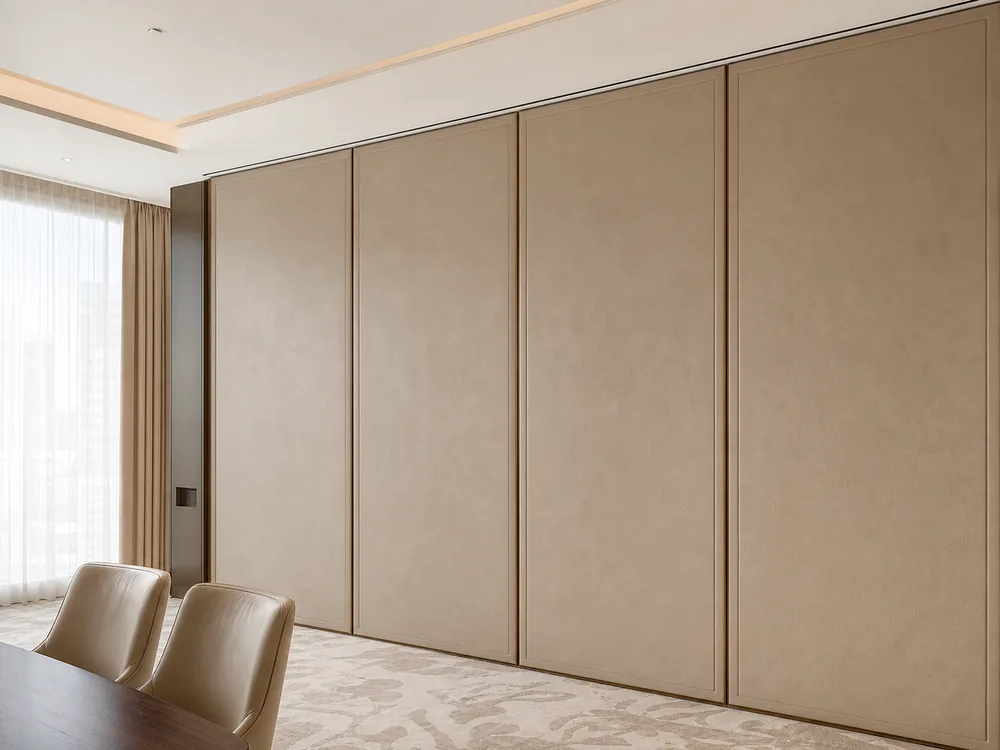
When comparing finishes, you need to consider the type of contact: is it a sharp impact, a continuous rub, or a rolling pressure? Each finish responds differently. For example, a hard laminate might resist a sharp scrape but could chip on impact, while a fabric finish might show scuffs more easily but could be more forgiving on impact. The key is to match the finish to the actual abrasion scenario in your hall.
Top-Hung System and Clear Floor: What It Means for Finish Exposure
EBUNGE movable partitions are suspended from a top track and move without a floor track. This design leaves the floor clear, which is a major advantage for convention halls that need flexible floor space. However, it also means that the partition panels are not anchored at the bottom. They rely on the overhead track for support and guidance. In terms of abrasion, this means that the lower portion of the panel is fully exposed to any contact from risers or other equipment. There is no floor guide to protect the panel or to keep risers at a distance.
This exposure is a critical factor in finish selection. You need to consider not only the surface material but also the edge profiles and any protective elements that can be integrated into the panel design. For example, some finishes can be wrapped around edges, while others require separate edge trims. The choice affects how well the finish withstands abrasion at the most vulnerable points.
Finish Options: Laminate, Melamine, Fabric, Leather, Glass, and Other Approved Surfaces
Share the opening dimensions, room layout and intended operating sequence for review.
EBUNGE offers a range of finish options for movable partition panels, including laminate, melamine, fabric, leather, glass, and other approved surfaces. Each finish has distinct characteristics that influence its suitability for high-abrasion environments. Visible references can support layout discussion but do not verify hidden construction or performance. The suitability of each route and parking arrangement depends on the approved layout, circulation, ceiling interfaces and operating sequence.
| Finish Type | Typical Characteristics | Abrasion Considerations |
|---|---|---|
| Laminate | Hard, smooth surface, available in many patterns and colors | Resists scratches and scuffs, but may chip on sharp impact; edge treatment is important |
| Melamine | Similar to laminate but with a different manufacturing process; often used for cost-effective solutions | Similar to laminate; surface durability depends on the specific product and thickness |
| Fabric | Soft, textured, offers acoustic absorption and visual warmth | Can show scuffs and marks; may require protective treatments or frequent cleaning; abrasion resistance varies with weave and weight |
| Leather | Premium look and feel, durable and easy to clean | Generally resistant to abrasion, but can be scratched by sharp objects; requires proper maintenance |
| Glass | Transparent or translucent, modern aesthetic, easy to clean | Can scratch, but is highly resistant to most chemicals; impact can cause breakage, so consider safety glass |
| Other approved surfaces | Custom options, such as wood veneer, metal, or specialty materials | Each custom finish must be evaluated on its own merits; confirm with supplier |
Comparing Laminate and Melamine for Abrasion Resistance
However, they are not identical. Laminate is typically made by pressing layers of paper and resin under high pressure, while melamine is a lower-pressure product. Cost and maintenance requirements depend on the selected configuration, finish and project conditions and require project-specific confirmation. For convention hall partitions that face mobile riser abrasion, the choice between these two will depend on the level of impact and the desired lifespan. It is essential to request samples and test them under your specific conditions, such as dragging a caster wheel across the surface.
Fabric and Leather: Balancing Aesthetics and Durability
However, they are more susceptible to abrasion and staining. If you choose fabric, consider a high-traffic grade with a tight weave and a protective finish. Leather, on the other hand, offers a more durable and easy-to-clean surface, but it comes at a higher cost. Leather can develop a patina over time, which some owners find attractive, but it can also show scratches. For areas where risers are frequently moved, a leather finish might be more practical than fabric, but you should still plan for protective measures such as bumper guards.
Glass Finishes: Aesthetic Appeal with Special Considerations
Glass partitions create an open, modern look and are easy to clean. However, glass is not immune to abrasion. It can be scratched by grit or debris on the wheels of risers. Tempered or laminated glass is stronger and safer, but it is still vulnerable to surface scratches. If you choose glass, consider using a protective film or specifying a textured glass that hides minor abrasions. Also, ensure that the glass is properly framed to avoid edge chipping.
Project Information Required for Finish Comparison
To make an informed comparison, you need to gather specific project information. This includes the layout of the convention hall, the movement paths of the risers, the frequency of use, and the maintenance capabilities of your staff. Without this information, any finish recommendation is speculative.
Layout and Movement Paths
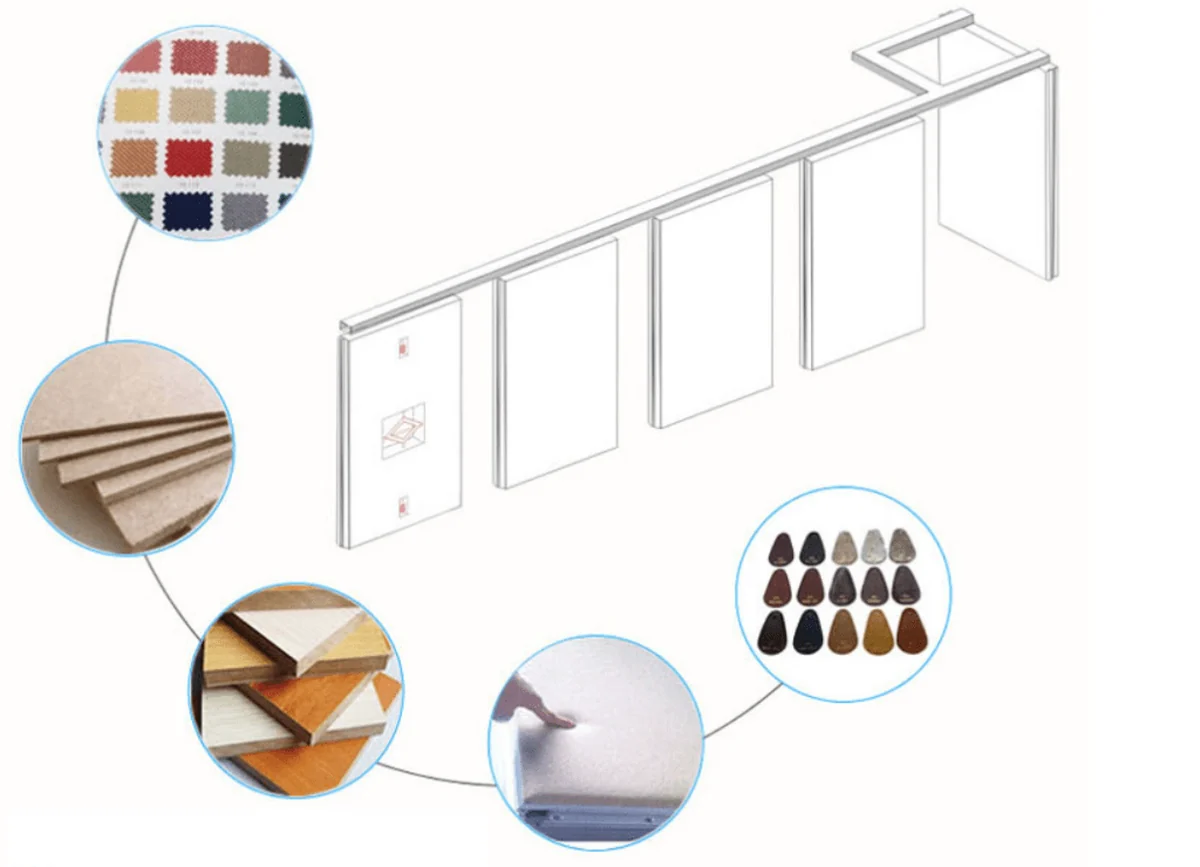
EBUNGE movable partitions are designed to follow straight, turning, and stacking routes. The layout of your hall determines where the partition panels park and how they move. For abrasion, you need to identify the areas where risers are most likely to come into contact with the partition. For example, if the stacking area is near a loading dock, the panels may be exposed to more traffic. Review the layout with your project team to mark high-risk zones.
Frequency and Type of Use
How often will the partition be moved? How often will risers be moved in the same area? A hall that hosts daily events will have more abrasion than one used weekly. The exact route, junction arrangement, continuous overhead path and parking position must be confirmed from the coordinated project drawings. Document these details to share with your finish supplier.
Maintenance and Cleaning Protocols
Different finishes require different cleaning methods. For example, fabric may need vacuuming and spot cleaning, while laminate can be wiped with a damp cloth. This is not a performance claim but a practical consideration for long-term appearance.
Review the ceiling interface, panel route and stacking position together.
Coordination with Your Project Team
Finish selection is not a solo decision. It requires coordination among the architect, interior designer, general contractor, and the partition supplier. Each party brings a different perspective: the architect focuses on aesthetics, the designer on functionality, the contractor on installation, and the supplier on product capabilities.
Involving the Partition Supplier Early
Engage EBUNGE early in the design process. We can review your layout and discuss the movement paths, stacking positions, and finish options. This is the time to ask about edge treatments, protective films, or custom solutions that might mitigate abrasion.
Documenting Requirements
All project-specific requirements should be documented. This includes the finish type, the expected abrasion exposure, and any special conditions. EBUNGE can provide project documentation that outlines the specifications and confirms what is feasible. This documentation is essential for ensuring that all parties are aligned.
Acoustic and Sealing Considerations in Finish Selection
It involves the entire partition system, including the panels, seals, and installation. Do not assume that a fabric finish automatically provides a certain STC or Rw rating. These ratings are determined through testing and are project-specific.
FAQ: Convention Hall Partition Finish Abrasion
What is the best finish for a convention hall partition that will face mobile stage riser abrasion?
The optimal choice depends on the specific abrasion scenario, the frequency of contact, and your aesthetic and maintenance preferences. Laminate and leather are often more durable, but fabric can be protected with treatments. We recommend discussing your specific conditions with EBUNGE to narrow down the options.
Can I use a fabric finish if risers will be moved near the partition?
Yes, you can use fabric, but you should consider a high-traffic grade and possibly a protective coating. You may also need to plan for more frequent cleaning or replacement. It is important to test the fabric under your actual conditions to see how it holds up.
How does the top-hung system affect finish abrasion compared to floor-guided systems?
With a top-hung system, there is no floor track to protect the lower edge of the panel. This means the finish is more exposed to contact from risers. However, the clear floor is a benefit for flexible space. You can mitigate abrasion by adding protective base plates or choosing a more durable finish for the lower section.
Do I need to provide a layout drawing to get finish recommendations?
Yes, a layout drawing is essential. It allows EBUNGE to review the movement paths, stacking positions, and potential contact zones. This information helps in recommending appropriate finishes and edge treatments. You can share preliminary drawings for a conceptual review.
Can I mix different finishes on the same partition system?
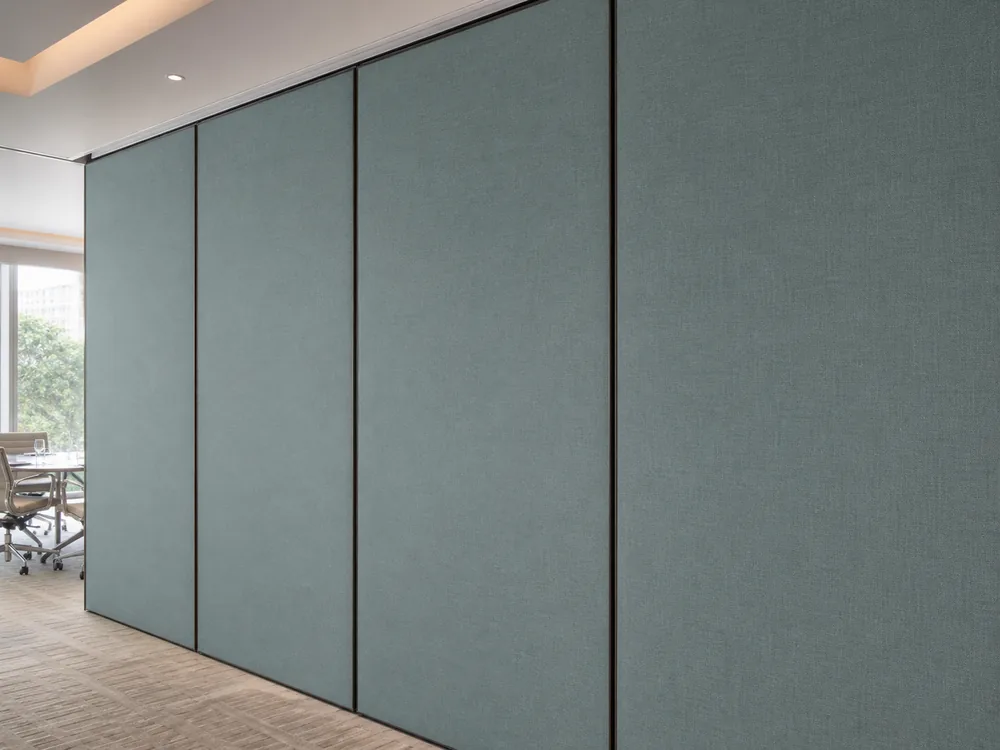
Yes, it is possible to use different finishes on different panels or even on different sections of the same panel. This is a common strategy to balance durability and aesthetics.
What project documentation should I expect from EBUNGE?
EBUNGE can provide project documentation that includes product specifications, layout reviews, and confirmation of finish options. This documentation is tailored to your project and does not include generic performance claims. It ensures that all parties have a clear understanding of the system’s capabilities and limitations.
Conclusion: Making an Informed Finish Choice
Comparing convention hall partition finishes for mobile stage riser abrasion requires a structured approach. Start by understanding the abrasion context, then evaluate each finish type against your specific project conditions. Gather the necessary project information, coordinate with your team, and document your requirements.
EBUNGE movable partitions offer a range of finish options and a top-hung system that provides clear floor space. To make the right decision for your convention hall, contact us to discuss your project. We can review your layout, answer your questions, and provide the documentation you need. Reach out to our team today to start the conversation.
For more information on our movable partition walls, visit our movable partition wall page. To see how we have helped other projects, explore our project portfolio. And when you are ready to discuss your specific needs, contact us.
Continue Exploring
More Materials and Finishes Guides
- Newer guideWhy Convention Venue Partition Finishes Need Coordination with Wall-Mounted Wayfinding Glare
- Earlier guideWhat Pre-Installation Checks Matter for Movable Solid Partition Finishes at Wall Junctures
- Related guideComparing Healthcare Training Room Partition Finishes for Wall-Mounted Whiteboard vs Tackable Zones
- Related guideWhy Sports Hall Partition Finishes Need Abrasion Mapping for Wall-Mounted Hurdle Storage Racks