
Understanding Manual Operation School Auditorium Multi-Use Partitions
Quick project answer
Manual operation school auditorium multi-use partitions divide large assembly spaces into smaller rooms without powered systems. The EBUNGE movable partition system is top-hung, meaning panels hang from an overhead track. This approach supports flexible space division, combination, or reconfiguration wherever needed. For schools, this can help adapt an auditorium for events, classes, or community functions. The manual operation school auditorium multi-use approach focuses on planning the overhead path and parking area rather than floor-mounted hardware.
Because the system is top-hung, there is no continuous floor running track or operating hardware in the finished floor along the partition line. The floor is not cut or damaged for a floor track and remains physically uninterrupted by the maintained EBUNGE top-hung system. This characteristic can be useful in auditoriums where a smooth floor is desired for seating, staging, or movement. However, the exact route, junction arrangement, continuous overhead path and parking position must be confirmed from the coordinated project drawings.

Why a Physically Uninterrupted Floor Matters in Auditoriums
In a school auditorium, the floor often serves multiple purposes: audience seating, performance space, and circulation. A top-hung partition avoids cutting the floor for a track, so the floor remains physically uninterrupted. The suitability of each route and parking arrangement depends on the approved layout, circulation, ceiling interfaces and operating sequence. However, this does not mean the floor is free of all considerations. The exact overhead route and support arrangement must be confirmed by the responsible project team from coordinated drawings.
Manual operation school auditorium multi-use partitions still require careful planning of the overhead track layout. The track must align with the desired partition line and connect to a parking area. The exact route, junction arrangement, continuous overhead path and parking position must be confirmed from the coordinated project drawings.
Planning Parking and Stacking for Manual Operation School Auditorium Multi-Use
Panel parking style can be customized to the customer layout and project requirements, subject to coordinated drawings. A suitable approved parking arrangement can use the stacking area more compactly and coordinate with the space design. In a school auditorium, parking might be located along a side wall, in a alcove, or in a dedicated storage area. The goal is to keep panels out of the way when the space is open.
Manual operation school auditorium multi-use partitions require that the parking area be planned early. The stacking method affects how panels are stored and how they are moved into place. Because the system is top-hung, the parking track must connect to the main track. The exact track, support and panel layout still require project drawings. Without coordinated drawings, parking cannot be finalized.
Finish and Care Coordination for Manual Operation School Auditorium Multi-Use
Finish materials can be customized, and cleaning and maintenance methods vary with the selected finish. For a school auditorium, finishes may need to address durability, appearance, and cleaning routines. However, no specific finish is confirmed here. The choice of finish affects how the panels are cleaned and maintained. Manual operation school auditorium multi-use partitions should be planned with the finish in mind.
Because cleaning methods vary by finish, the facilities team should understand the selected finish before the system is used. This is not a performance claim but a practical coordination point. The exact route, junction arrangement, continuous overhead path and parking position must be confirmed from the coordinated project drawings.
Non-Limiting Applications for Movable Partitions
Movable partitions can be used wherever flexible space division, combination or reconfiguration is required; application examples are not limiting. EBUNGE has completed many types of hotel-related movable-partition projects; ballrooms, wedding halls and multifunction halls are non-limiting examples. Schools, auditoriums, and community centers are also possible applications. Manual operation school auditorium multi-use partitions are one example among many.
For schools, the ability to reconfigure a large space can support different activities. However, no specific outcome or benefit is guaranteed. The suitability of a manual operation school auditorium multi-use partition depends on the project requirements and coordinated drawings. The exact route, junction arrangement, continuous overhead path and parking position must be confirmed from the coordinated project drawings.
Buyer Inputs and Drawing Approvals
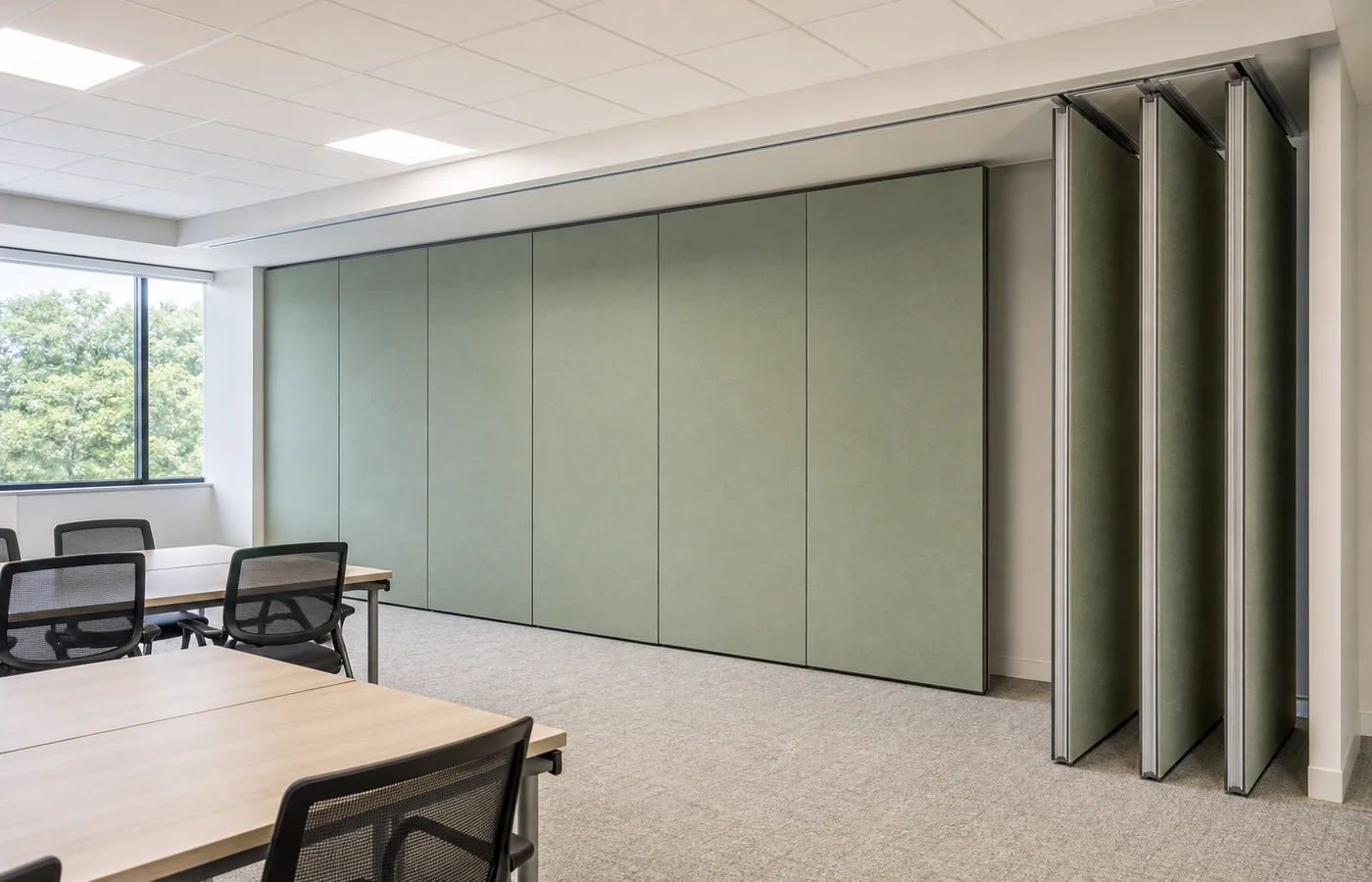
Planning a manual operation school auditorium multi-use partition requires input from the school, the design team, and the partition supplier. Key inputs include the desired partition line, the parking location, and the finish selection. The school should also provide information about how the space will be used. This helps the supplier propose a suitable configuration.
Drawings must be coordinated to show the track route, support locations, and parking arrangement. The exact track, support and panel layout still require project drawings. Approval of these drawings is a necessary step before production. Without approved drawings, the project cannot proceed to manufacturing.
Frequently Asked Questions
What does manual operation mean for a school auditorium partition?
Manual operation means the panels are moved by hand rather than by a powered system. The EBUNGE movable partition system is top-hung, so panels hang from an overhead track. This allows flexible space division without floor tracks. However, the exact operating method depends on the project drawings and panel layout.
Does a top-hung partition require cutting the floor?
No. The EBUNGE top-hung system has no continuous floor running track or operating hardware in the finished floor. The floor is not cut or damaged for a floor track and remains physically uninterrupted. This is a key advantage for auditoriums where floor integrity is important.
How is parking planned for manual operation school auditorium multi-use partitions?
Panel parking style can be customized to the customer layout and project requirements, subject to coordinated drawings. A suitable approved parking arrangement can use the stacking area more compactly and coordinate with the space design. The exact track, support and panel layout still require project drawings.
Can finishes be customized for school auditorium partitions?
Yes, finish materials can be customized. Cleaning and maintenance methods vary with the selected finish. The school should confirm the finish choice with the supplier and understand the care requirements. No specific finish is confirmed here.
What applications are suitable for movable partitions?
Movable partitions can be used wherever flexible space division, combination or reconfiguration is required; application examples are not limiting. EBUNGE has completed many types of hotel-related movable-partition projects; ballrooms, wedding halls and multifunction halls are non-limiting examples. Schools and auditoriums are also possible.
What must be confirmed from project drawings?
The exact route, junction arrangement, continuous overhead path and parking position must be confirmed from the coordinated project drawings. This includes track layout, support locations, and panel parking. Without coordinated drawings, the project cannot be finalized.
Coordinating with Project Teams
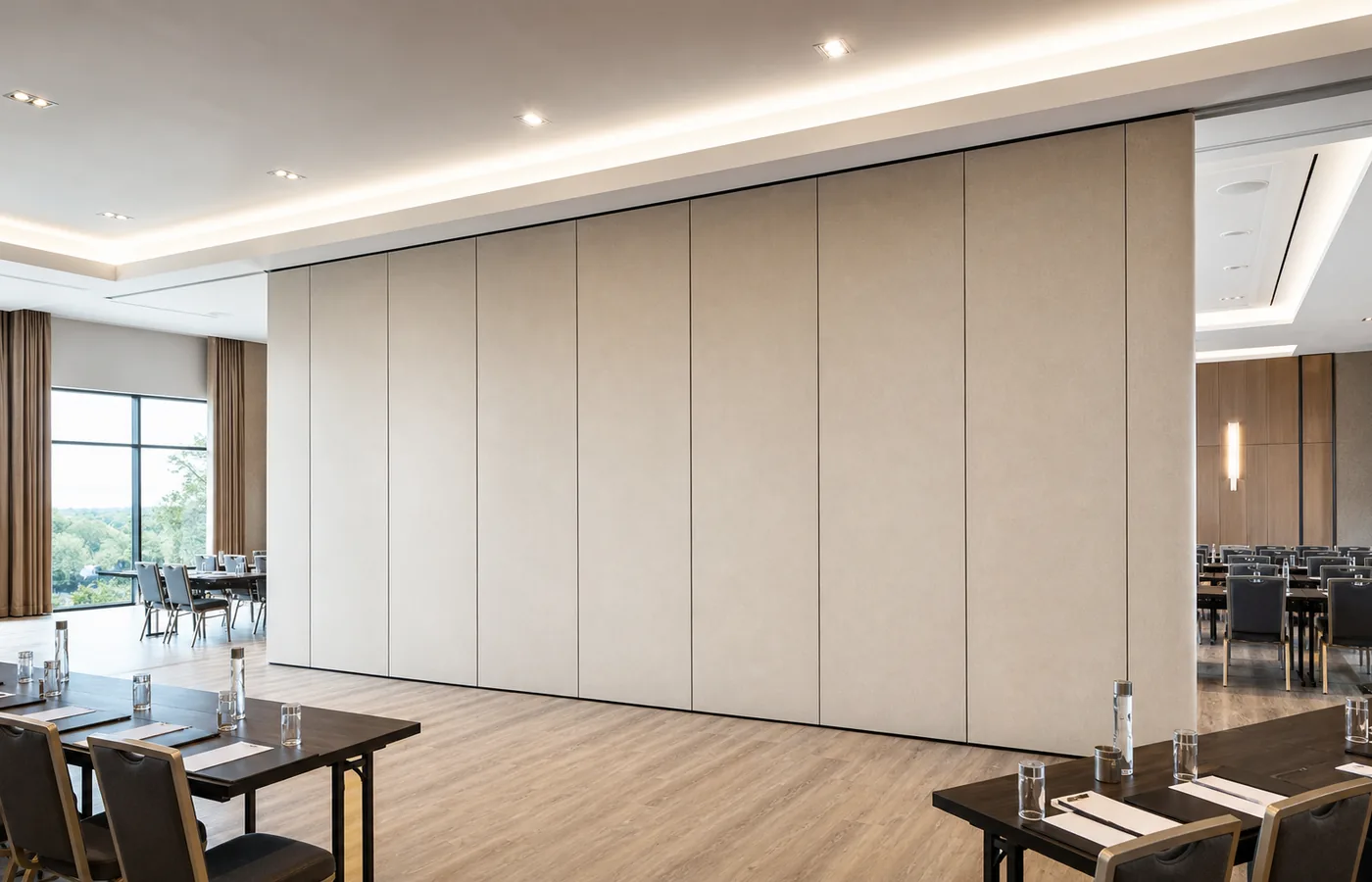
For a manual operation school auditorium multi-use partition, early coordination with the design team is important. The parking area must be planned to avoid conflicts with other building elements. The finish selection should be made with maintenance in mind.
EBUNGE can provide guidance based on project requirements. However, all details must be confirmed through coordinated drawings. The exact route, junction arrangement, continuous overhead path and parking position must be confirmed from the coordinated project drawings. This ensures the manual operation school auditorium multi-use partition meets the school’s needs.
- Top-hung system with no floor track
- Customizable parking style
- Customizable finishes
- Non-limiting applications
The exact route, junction arrangement, continuous overhead path and parking position must be confirmed from the coordinated project drawings.
For more information on operable walls, visit /operable-wall-system/. To see project examples, visit /projects/.
Continue Exploring
More Operable Wall System Guides
- Newer guideSports Hall Operable Wall Stacking: Ceiling Hoist Clearance Planning
- Earlier guideManual Operable Wall Operation for School Auditorium vs Gymnasium
- Related guidePhase Operable Wall Work When a Renovation Adds a New Wing
- Related guideRoom Scheduling Rules That Decide When an Operable Wall Stays Open