
html body.single-post main#content.site-main{box-sizing:border-box!important;width:calc(100% – 32px)!important;max-width:900px!important;margin-left:auto!important;margin-right:auto!important;padding-left:0!important;padding-right:0!important}
Quick project answer
Review focus: movable partition tender.
Movable partition tender interface risk scoring is the discipline of judging how well a bidder has addressed the points where the partition meets other trades, the building structure and the project programme. The suitability of each route and parking arrangement depends on the approved layout, circulation, ceiling interfaces and operating sequence. This article offers an evidence-bounded framework for weighting those risks. It does not replace project-specific review, and every support, acoustic and dimensional requirement still needs confirmation against the actual drawings.
Why Interface Risk Deserves Its Own Score
Project review term: movable partition tender.
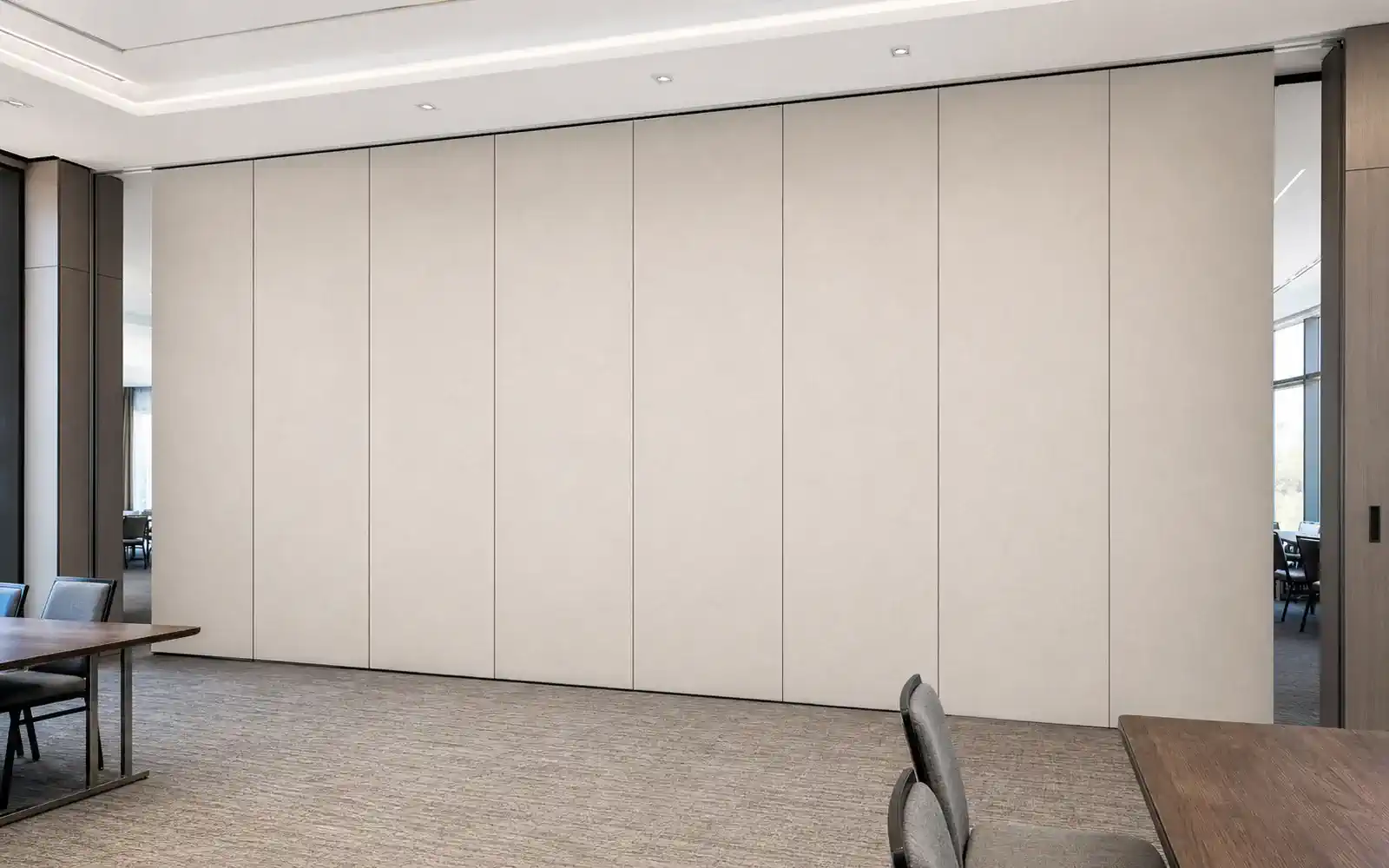
Movable partitions are top-hung and move without a continuous floor running track along the partition line. That single fact changes how a tender should be read. The overhead route, the parking position and the surrounding structure all become coordination items rather than isolated product selections.
Separating it makes the comparison more honest. It also gives reviewers a place to record what is confirmed, what is assumed and what still needs a drawing response.
Define the Interfaces Before You Open the Returns
Coordination scope: movable partition tender.
Interface risk cannot be scored consistently until the project team agrees what counts as an interface.
Interface categories to list
- Overhead support and the continuous connected route above the opening.
- Parking or stacking zone, including its relationship to adjacent rooms and circulation.
- Junctions with ceilings, walls, columns and floor finishes.
- Pass-door positions and how they interact with the panel layout.
- Documentation, approvals and coordination responsibilities.
Each category should be marked as confirmed, to be confirmed, or outside the bidder’s scope. That marking is the raw material for weighting.
A Weighted Scoring Model You Can Adapt
Checklist focus: movable partition tender.
The weights below are a starting point, not a universal rule. Adjust them to the project’s tolerance for coordination uncertainty. The important step is to score interface items separately from product and commercial items.

| Interface area | Suggested weight | What the return should show |
|---|---|---|
| Overhead route and support coordination | High | Acknowledgment of the continuous connected route and the need for project-specific support review. |
| Parking and stacking strategy | High | A layout-based parking proposal that matches the room’s usable area. |
| Junction details | Medium | Clear responsibility for ceilings, walls and floor finishes. |
| Pass-door and access | Medium | Stated pass-door requirements and how they are documented. |
| Documentation and approvals | Medium | A defined drawing review and information-exchange process. |
Score each row on evidence quality, not on confident wording.
Evidence Notes: What a Return Can and Cannot Prove
A tender return is a set of statements and drawings. Visible references can support layout discussion but do not verify hidden construction or performance. Reviewers should separate visible evidence from inferred performance.
Evidence note: a finish sample, a layout drawing or a photograph shows what is presented, not what the installed system will achieve. Acoustic, structural and dimensional outcomes require project-specific confirmation.
They describe how a system is rated under defined conditions. They do not, on their own, confirm performance in a specific opening, with specific junctions and a specific building structure.
Drawing Review Questions That Expose Interface Gaps
Use the same questions across all returns so the comparison stays fair. The goal is not to catch bidders out but to find where coordination is still open.
- Does the return show how the panels travel from the closed position to the planned parking position?
- Is the overhead route treated as continuous and connected across the full movement path?
- Are straight, turning and stacking routes reviewed from the layout rather than assumed?
- Does the return identify which party confirms support, acoustic and dimensional requirements?
- Are pass-door requirements and project documentation discussed as part of the scope?
- Does the finish proposal stay within confirmed options such as laminate, melamine, fabric, leather, glass or other approved surfaces?
Turning Scores into a Tender Recommendation
Once interface rows are scored, combine them with the commercial and product sections using the weights agreed at the start. Avoid letting a single low price override a high interface risk without a documented reason.
Decision checklist for the review panel
- Are all interface categories marked as confirmed, to be confirmed, or out of scope?
- Is the parking strategy described against the actual room layout?
- Is the overhead route shown as continuous and connected?
- Are support, acoustic and dimensional requirements assigned to a responsible party?
- Are finish selections limited to confirmed options?
- Is the documentation process clear enough to manage changes?
A recommendation should state its assumptions. That record protects the project when drawings evolve and helps the selected team close open items early.

FAQ: Scoring Movable Partition Tender Returns
What is interface risk in a movable partition tender?
It is the risk created where the partition meets other building elements, including the overhead route, parking area, junctions, pass doors and documentation responsibilities. It is scored separately because it affects coordination, not just product selection.
Should interface risk be weighted more than price?
There is no universal answer. Weight it according to the project’s tolerance for coordination uncertainty. A project with tight ceiling zones or limited parking space may justify a higher interface weight than a simple room division.
Can a tender return confirm acoustic performance?
No.
How should parking and stacking be scored?
Score whether the return shows a parking strategy based on the actual layout and whether the movement path is reviewed. Parking style is customized to the customer layout and project requirements, so a generic statement is weaker than a layout-based proposal.
What finish information belongs in the score?
Check that proposed finishes stay within confirmed options such as laminate, melamine, fabric, leather, glass or other approved surfaces.
When should the project team request more information?
Whenever an interface item is marked to be confirmed without a clear next step, or when a return implies performance that the drawings do not support. Request clarification before finalizing the score.
Conclusion: Score the Interfaces, Record the Boundaries
Define the interfaces, weight them deliberately, and score evidence rather than confidence. Keep the review tied to maintained product facts and the project drawings, and record every assumption that still needs confirmation.
For projects considering top-hung movable partitions, review the movable partition wall overview, look at relevant project references, and contact EBUNGE to discuss pass-door requirements, project documentation and the drawing information needed for a project-specific review.
Continue Exploring
More Cost and Planning Guides
- Newer guideRed-Flag Movable Partition Tender Drawings Before Pricing
- Earlier guideScore Movable Partition Tender Returns When Bidders Omit
- Related guideReview a Movable Partition Tender for Unclear Interface Ownership
- Related guideCompare Movable Partition Tender Returns When Bidders Bundle