
html body.single-post main#content.site-main{box-sizing:border-box!important;width:calc(100% – 32px)!important;max-width:900px!important;margin-left:auto!important;margin-right:auto!important;padding-left:0!important;padding-right:0!important}
Quick answer: movable partition tender
Review focus: movable partition tender.
A movable partition tender interface scope check is the discipline of confirming who supplies, coordinates and verifies every element that touches the partition system. When scope gaps remain hidden, contractors price incomplete work, architects assume someone else has detailed a junction, and owners discover coordination problems after award. This guide offers an evidence-bounded framework for reviewing tenders without inventing performance, cost or engineering conclusions.
Why Interface Scope Gaps Appear in Partition Tenders
Project review term: movable partition tender.
Movable partitions are rarely a standalone purchase. The suitability of each route and parking arrangement depends on the approved layout, circulation, ceiling interfaces and operating sequence. A tender that lists panels and tracks but omits these interfaces creates a false sense of completeness.
Interface gaps often appear because different disciplines draw different boundaries. None of these drawings may explicitly state who confirms the continuous overhead route or the parking position.
Start With the Movement Route, Not the Panel Finish
Coordination scope: movable partition tender.
Straight, turning and stacking routes should be reviewed from the layout. The tender should identify who confirms that the overhead route remains continuous and supported for the project-specific condition.
Questions to Ask About the Route
- Is the full travel path shown from the closed position to the parking position?
- Does the route remain clear of fixed elements at every turning point?
- Is the parking position dimensioned and coordinated with adjacent room functions?
- Has the project team confirmed the support condition above the entire route?
Separate Product Scope From Interface Scope
Product scope describes the partition system itself. Interface scope describes everything the partition must connect to or coordinate with. A tender review should keep these two categories separate so that missing items are visible.
Confirmed finish options include laminate, melamine, fabric, leather, glass and other approved surfaces. Finish selection belongs to product scope. The condition of the receiving structure, the ceiling interface and the parking area belongs to interface scope. Mixing them in one line item makes omissions harder to detect.

| Scope Category | Typical Tender Content | Common Gap |
|---|---|---|
| Product scope | Panels, top track, finish selection | Finish approval timing |
| Movement scope | Straight, turning and stacking routes | Route not fully drawn |
| Structural interface | Support condition above the route | No responsible party named |
| Parking interface | Stacking position and clearance | Position shown but not dimensioned |
| Documentation | Project documentation and approvals | Submittal responsibility unclear |
Check the Acoustic and Seal Language Carefully
Visible references can support layout discussion but do not verify hidden construction or performance. Project-specific acoustic, support and dimensional requirements should be confirmed before pricing.
Evidence Note
This article explains tender review concepts. It does not confirm acoustic ratings, structural capacity, dimensions or performance for any project. Those items require project-specific documentation and review.
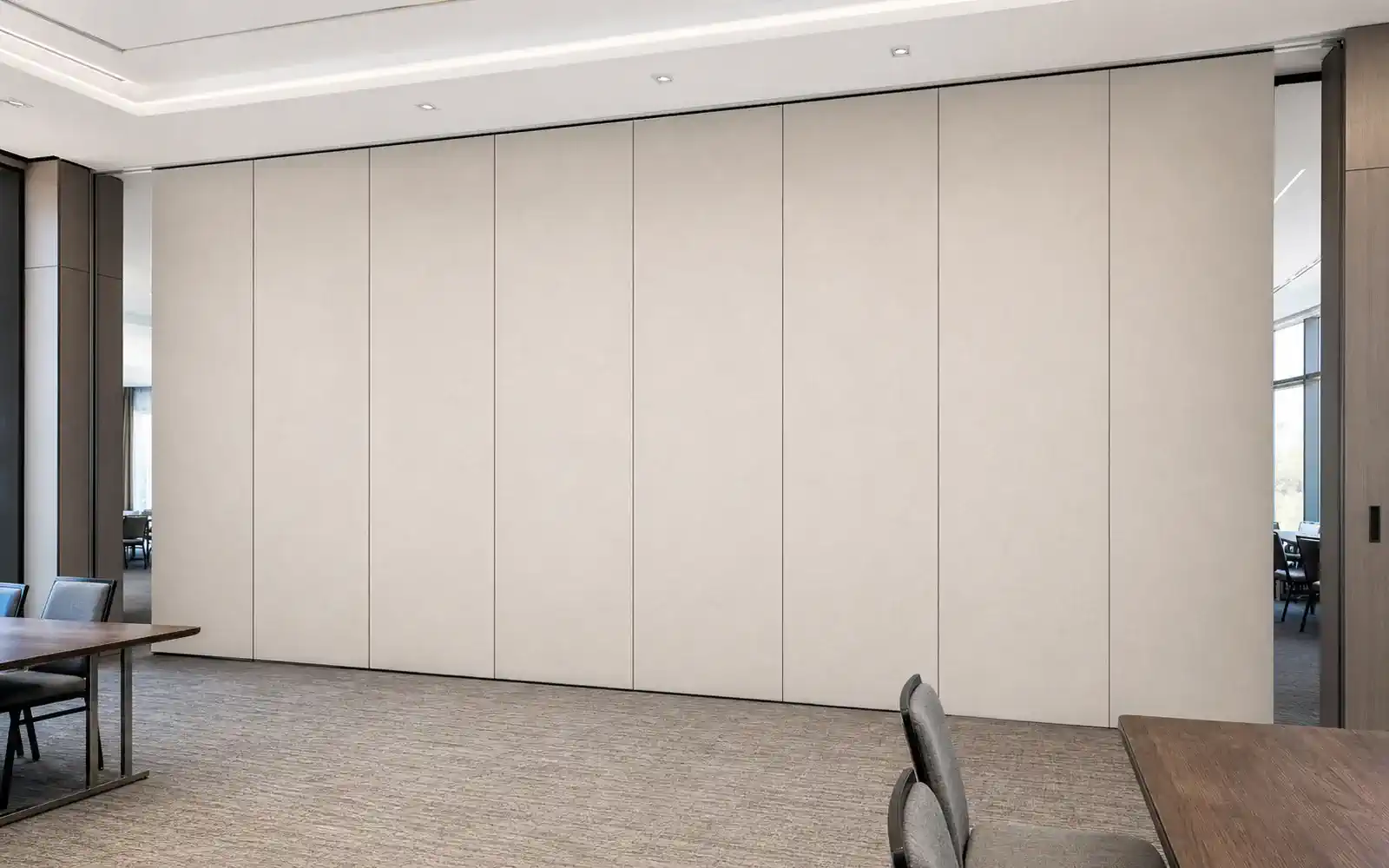
Review Pass-Door and Access Requirements
Pass-door requirements and project documentation can be discussed as part of the tender review. A pass door changes the panel layout, the movement sequence and the interface with adjacent finishes. If the tender does not mention pass doors, the reviewer should confirm whether they are required.
Access for future adjustment or inspection is another interface item. The tender should identify who confirms that the route and parking area remain accessible after adjacent finishes are installed.
Use a Numbered Tender Review Process
- Mark the full movement route, including straight, turning and stacking sections.
- List every interface: ceiling, structure, adjacent finishes, services and parking area.
- Assign a responsible party for each interface in the tender documents.
- Confirm finish options and pass-door requirements against the layout.
- The exact route, junction arrangement, continuous overhead path and parking position must be confirmed from the coordinated project drawings.
- Issue a clarification list before pricing is finalized.
Coordinate With the Wider Project Team
Each party sees different risks. The contractor may notice access constraints, the architect may notice finish transitions, and the owner may notice operational needs.
EBUNGE can discuss project documentation and pass-door requirements as part of the tender conversation. Project-specific support, acoustic and dimensional requirements should be confirmed with the responsible design team.
Internal Reference
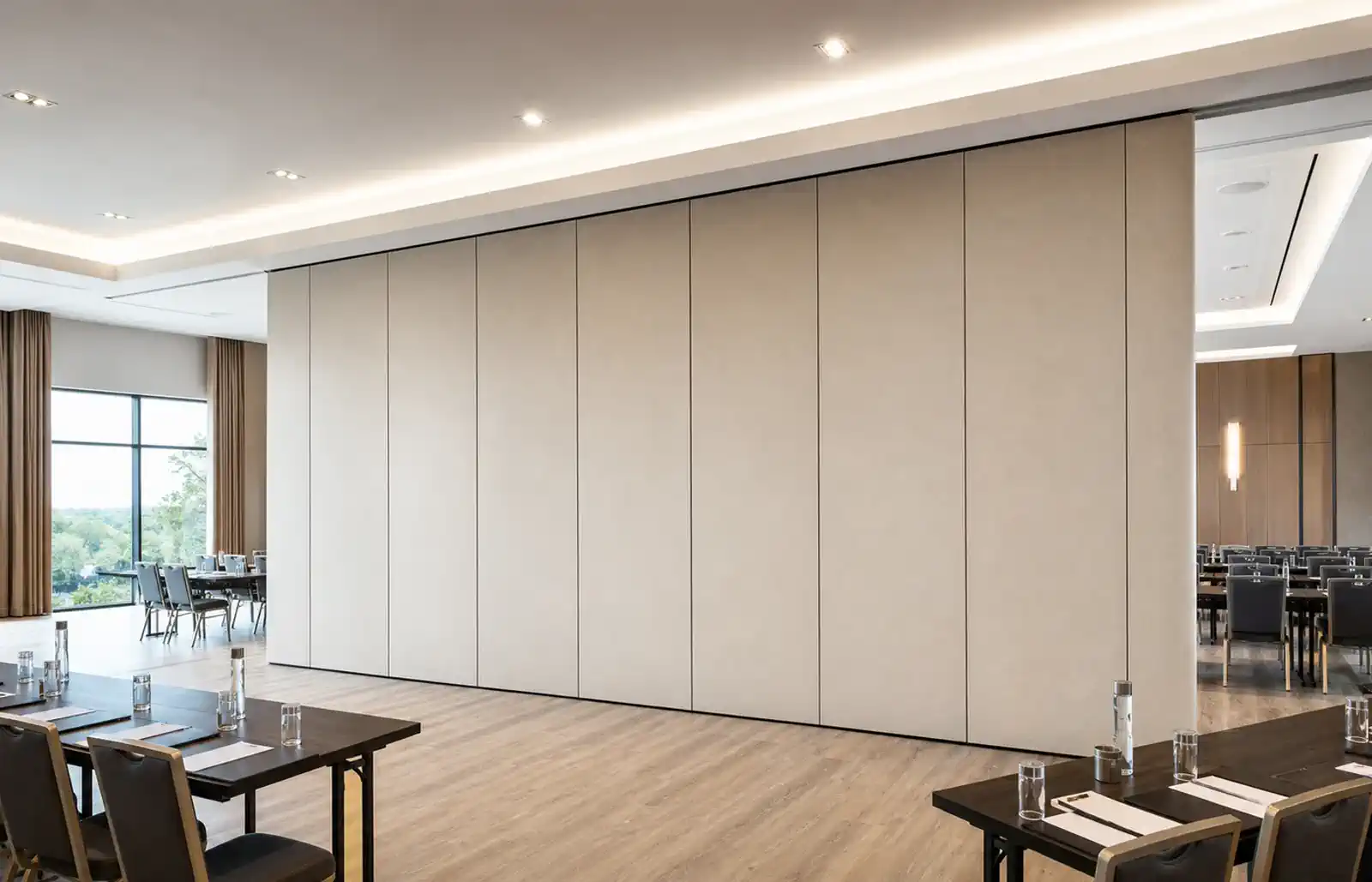
For maintained product context, review the movable partition wall page. Project examples are available in the projects section. To discuss documentation and tender coordination, use the contact page.
Frequently Asked Questions
What is a movable partition tender interface scope check?
It is a review that confirms every element connecting to or coordinating with the partition system is included in the tender.
Why is the movement route important in a tender?
EBUNGE panels are top-hung and move without a floor track, so the overhead route must be continuous and supported. If the route is not drawn or coordinated, the tender cannot be priced reliably.
Does a finish selection prove acoustic performance?
No. Finish options such as laminate, melamine, fabric, leather and glass are surface choices.
Can pass doors be included in the tender review?
Yes. Pass-door requirements and project documentation can be discussed. They affect panel layout, movement sequence and adjacent interfaces, so they should be confirmed before pricing.
Who confirms structural support for the partition route?
The responsible design team must confirm project-specific support. The tender should name that party and identify the drawings that show the support condition above the entire route.
What should be clarified before award?
Clarify route drawings, interface responsibilities, finish approvals, pass-door needs and any project-specific support, acoustic or dimensional requirements that remain open.
Conclusion and Next Step
A movable partition tender interface scope check protects the project from hidden coordination gaps. Review the movement route, separate product scope from interface scope, and confirm project-specific support, acoustic and dimensional requirements before pricing. If your team needs to discuss documentation or pass-door requirements, contact EBUNGE to continue the conversation.
Continue Exploring
More Cost and Planning Guides
- Newer guideSpot Scope Gaps in a Movable Partition Tender Before Pricing
- Earlier guideMovable Partition Tender Interface Risk Weighting
- Related guideBenchmark a Movable Partition Tender Against Prior Award Data
- Related guideRead a Movable Partition Tender Pricing Schedule for Hidden