
Quick project answer
An operable wall tender finish sample is more than a colour chip. It is a coordination document that links the tender specification, the finish selection and the drawing approval process. For a top-hung movable partition, the sample must be read alongside the track route, parking plan and floor strategy. This article explains how to prepare and review an operable wall tender finish sample without overstepping the evidence available at tender stage.
Start with the top-hung principle
The EBUNGE movable partition system is top-hung. That single fact shapes the entire tender submission. Because the panels hang from an overhead track, the finished floor along the partition line is not cut for a floor track. No continuous floor running track or operating hardware sits in the finished floor along that line.
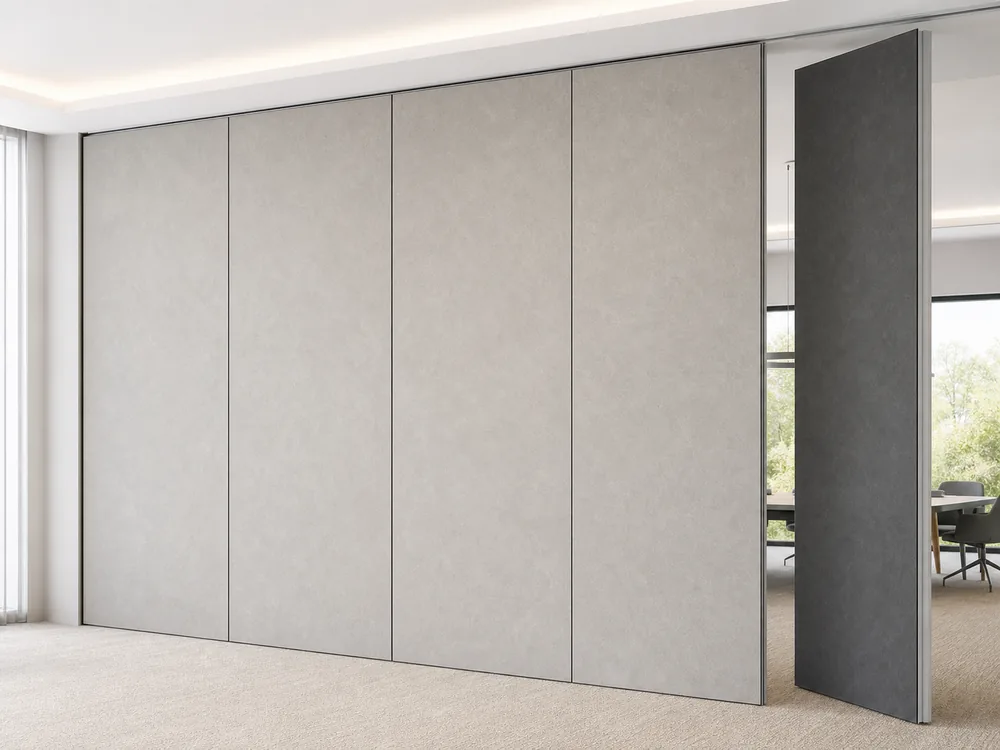
For tender purposes, this means the operable wall tender finish sample should be presented together with a clear statement of the suspension principle. The sample itself does not prove the principle, but it should not contradict it. Reviewers should see that the finish is specified for a top-hung system, not for a floor-tracked alternative.
The exact route, junction arrangement, continuous overhead path and parking position must be confirmed from the coordinated project drawings.
Confirm the physically uninterrupted floor
The floor is not cut or damaged for a floor track and remains physically uninterrupted by the maintained EBUNGE top-hung system. This is a confirmed fact and a useful anchor for tender coordination. It means the finish sample can be assessed without assuming a floor recess, a floor guide or a floor-mounted operating component.
When an operable wall tender finish sample is circulated, the accompanying note should state that the floor line remains uninterrupted. This helps the design team, the flooring contractor and the main contractor align their scopes. It also prevents a tender query that assumes a floor track is part of the package.
Do not infer that every floor condition is suitable without review. The confirmed fact is about the maintained EBUNGE top-hung system, not about all possible substrates or site conditions. The exact route, junction arrangement, continuous overhead path and parking position must be confirmed from the coordinated project drawings.
Plan parking before finalising the sample
Panel parking style can be customized to the customer layout and project requirements, subject to coordinated drawings. A suitable approved parking arrangement can use the stacking area more compactly and coordinate with the space design. The exact track, support and panel layout still require project drawings.
This matters for the operable wall tender finish sample because parking affects how many panel faces are visible in the stacked position. If the sample is approved without a parking plan, the finish may be reviewed in isolation from the way the panels will actually sit. That can create a mismatch between the tender sample and the coordinated drawings.
Use the tender stage to confirm the parking direction, the stacking zone and the relationship to adjacent finishes. The sample should be labelled with the parking assumption so that any later change is traceable. The exact route, junction arrangement, continuous overhead path and parking position must be confirmed from the coordinated project drawings.
Coordinate finish selection and care information
Finish materials can be customized, and cleaning and maintenance methods vary with the selected finish. This is a confirmed fact and a practical warning for tender submissions. An operable wall tender finish sample should therefore be accompanied by the care information that applies to that specific finish.
Do not assume that one cleaning method suits every sample. The tender pack should identify the finish family and the corresponding care approach, without inventing performance claims. If the care information is not available at tender stage, state that it will follow the selected finish rather than implying a universal method.
Keep the sample and the care note together. When the operable wall tender finish sample is approved, the care note becomes part of the same record. This reduces the risk of a finish being selected on appearance alone while its care requirements are overlooked.
Use non-limiting applications to frame the submission
Movable partitions can be used wherever flexible space division, combination or reconfiguration is required. Application examples are not limiting. EBUNGE has completed many types of hotel-related movable-partition projects; ballrooms, wedding halls and multifunction halls are non-limiting examples.
For tender coordination, this means the operable wall tender finish sample should not be tied to a single room type. The same sample may be relevant to several spaces within one project. The submission should describe the finish and the top-hung principle, not a narrow use case that may not match the final layout.
No customer names, locations, quantities, ratings, certifications or outcomes may be inferred from the application examples. Keep the tender language factual and project-specific. The exact route, junction arrangement, continuous overhead path and parking position must be confirmed from the coordinated project drawings.
Gather buyer inputs before issuing the sample
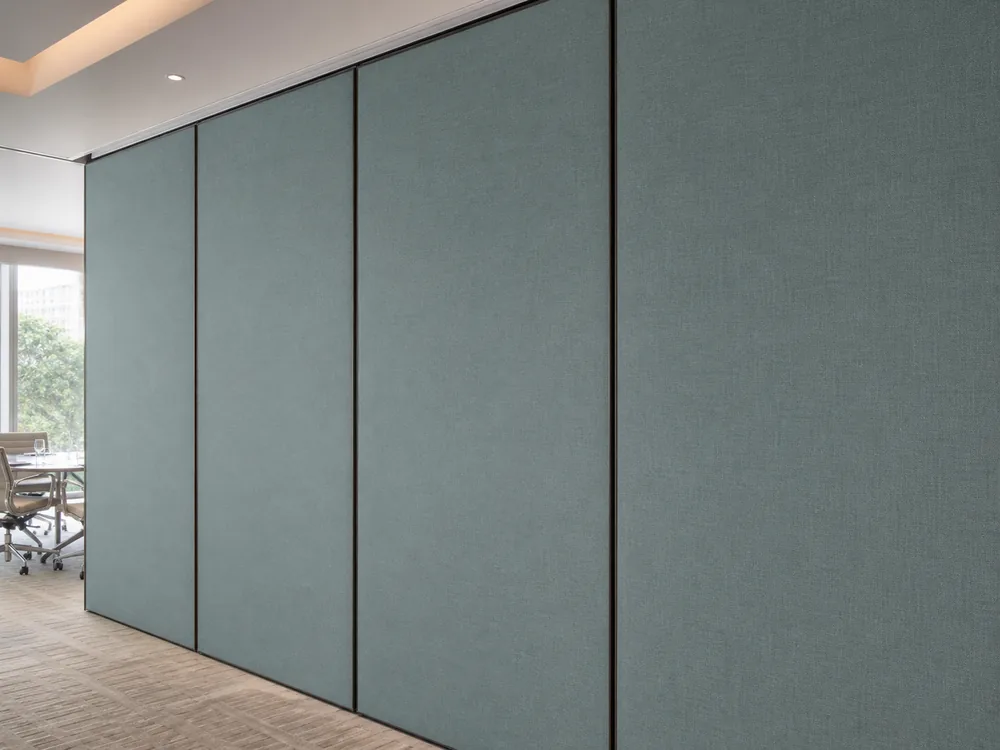
A complete operable wall tender finish sample submission depends on inputs from several parties. The buyer or main contractor should provide the tender drawings, the intended parking direction and the finish preference. The design team should confirm the visual intent and the adjacent finishes.
The supplier should confirm the finish availability and the care information that applies to the selected finish. If any input is missing, the sample should be issued with a clear note of the assumption. The suitability of each route and parking arrangement depends on the approved layout, circulation, ceiling interfaces and operating sequence.
Use a simple checklist to track the inputs. The exact overhead route and support arrangement must be confirmed by the responsible project team from coordinated drawings. It should only record what has been provided and what remains open. The exact route, junction arrangement, continuous overhead path and parking position must be confirmed from the coordinated project drawings.
Review drawing approvals alongside the sample
The operable wall tender finish sample and the coordinated drawings should be reviewed together. The drawings show the track route, the parking position and the relationship to the floor line. The sample shows the finish that will be applied to the panels.
If the drawings change, the sample may need to be reissued or re-labelled. This is normal in tender coordination. A finish approval that ignores the parking plan or the floor strategy is incomplete.
Record the approval date and the drawing revision that applied at that time. This creates a traceable link between the operable wall tender finish sample and the coordinated project drawings. It also helps when the tender moves into the next stage.
Scannable coordination modules
- Confirm the top-hung principle in the tender note.
- State that the finished floor remains physically uninterrupted.
- Attach the care information that matches the selected finish.
- Label the sample with the parking assumption.
- Record the drawing revision that applied at approval.
For further context, review related project guidance and additional planning resources before preparing the coordinated project brief.
What is an operable wall tender finish sample?
It is a physical finish sample submitted during tender to show the proposed surface for a top-hung movable partition. It should be read with the coordinated drawings, not on its own.
Does the floor need to be cut for a floor track?
No. The EBUNGE movable partition system is top-hung, and the floor is not cut or damaged for a floor track. The floor remains physically uninterrupted by the maintained system.
Can the parking style be customized?
Yes. Panel parking style can be customized to the customer layout and project requirements, subject to coordinated drawings. The exact track, support and panel layout still require project drawings.
Do cleaning methods vary by finish?
Yes. Finish materials can be customized, and cleaning and maintenance methods vary with the selected finish. The tender pack should include the care information that applies to that finish.
Are hotel ballrooms the only application?
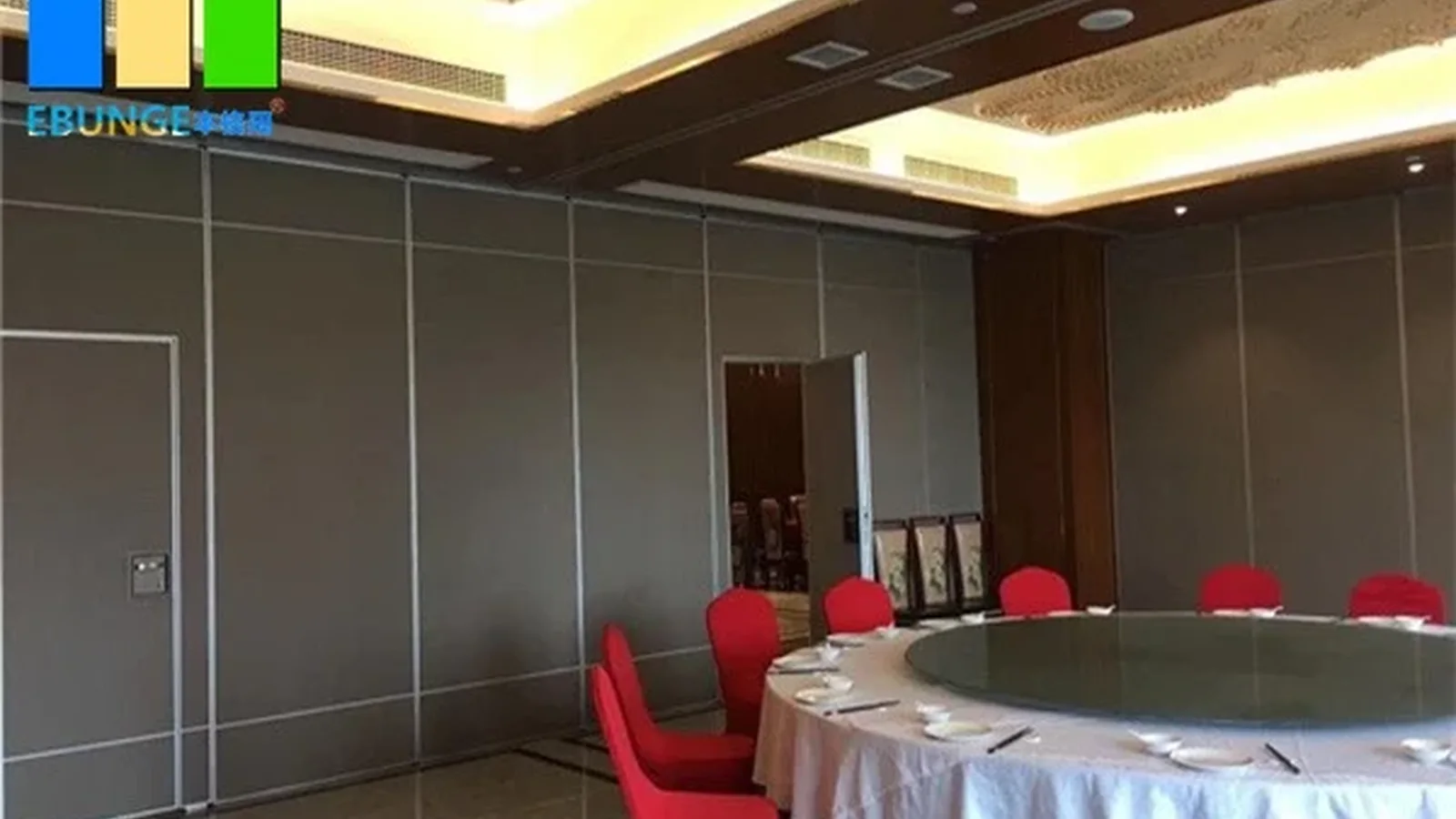
No. EBUNGE has completed many types of hotel-related movable-partition projects, and ballrooms, wedding halls and multifunction halls are non-limiting examples. Other flexible space division uses are possible.
What must be confirmed from project drawings?
The exact route, junction arrangement, continuous overhead path and parking position must be confirmed from the coordinated project drawings. The sample alone does not confirm these items.
Keep the submission factual and traceable
An operable wall tender finish sample is a coordination tool. It should carry the finish identity, the care note, the parking assumption and the drawing revision. It should not carry unverified performance claims or invented operating details.
Use the confirmed facts as the boundary. The system is top-hung. The floor remains physically uninterrupted. Parking can be customized subject to drawings. Finishes can be customized, and care varies by finish. Applications are non-limiting.
For everything else, rely on the coordinated project drawings. The exact route, junction arrangement, continuous overhead path and parking position must be confirmed from the coordinated project drawings.
Continue Exploring
More Cost and Planning Guides
- Newer guideOffice Suites Partition Track: Ceiling Lighting Drawings
- Earlier guideTender Documents for Movable Partition Track Alignment
- Related guideReview a Movable Partition Tender for Unclear Interface Ownership
- Related guideCompare Movable Partition Tender Returns When Bidders Bundle