
Quick answer: sports hall partition
Review the project drawings for sports hall partition.
Equipment carts move through sports halls at predictable times and along predictable lines. Those lines often pass close to a movable partition. This guide explains how to plan sports hall partition finishes maintenance cart routines around the impact zones where carts, trolleys and stored equipment meet partition faces, without assuming performance that has not been confirmed for your project.
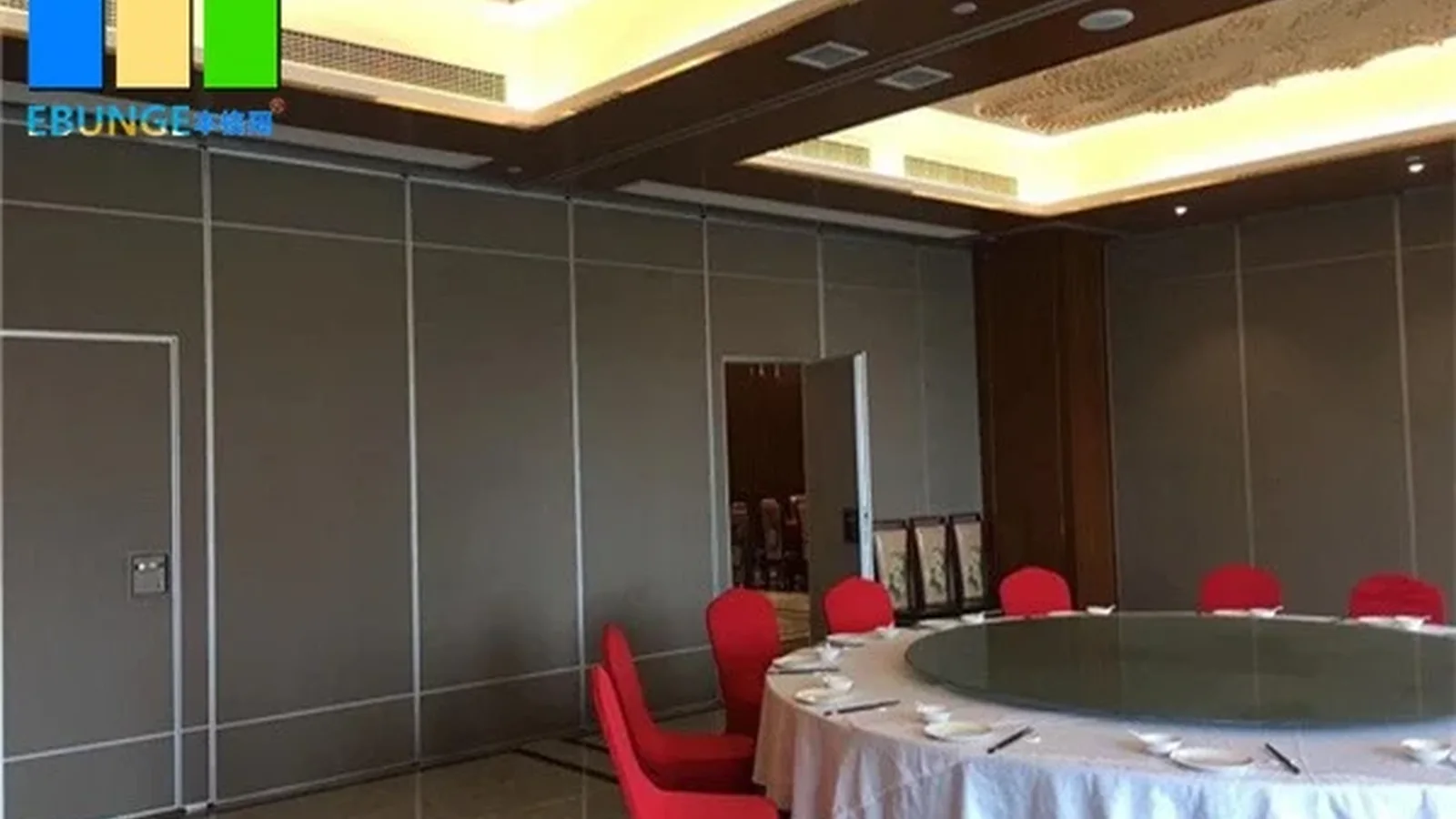
EBUNGE movable partition panels are individually movable, suspended from a top track, cross the opening without a floor track, and park at a planned stacking position. That clear-floor movement is useful in sports halls, but it also means the finish faces are exposed to everyday contact. The suitability of each route and parking arrangement depends on the approved layout, circulation, ceiling interfaces and operating sequence.
Why Cart Routes Define the Maintenance Problem
Coordinate the current drawing set for sports hall partition.
In a sports hall, the partition line is rarely isolated. It sits between storage doors, seating, score tables, mat trolleys and cleaning equipment. A cart impact zone is simply the band of the partition face that equipment can reach when it is pushed, turned or parked.
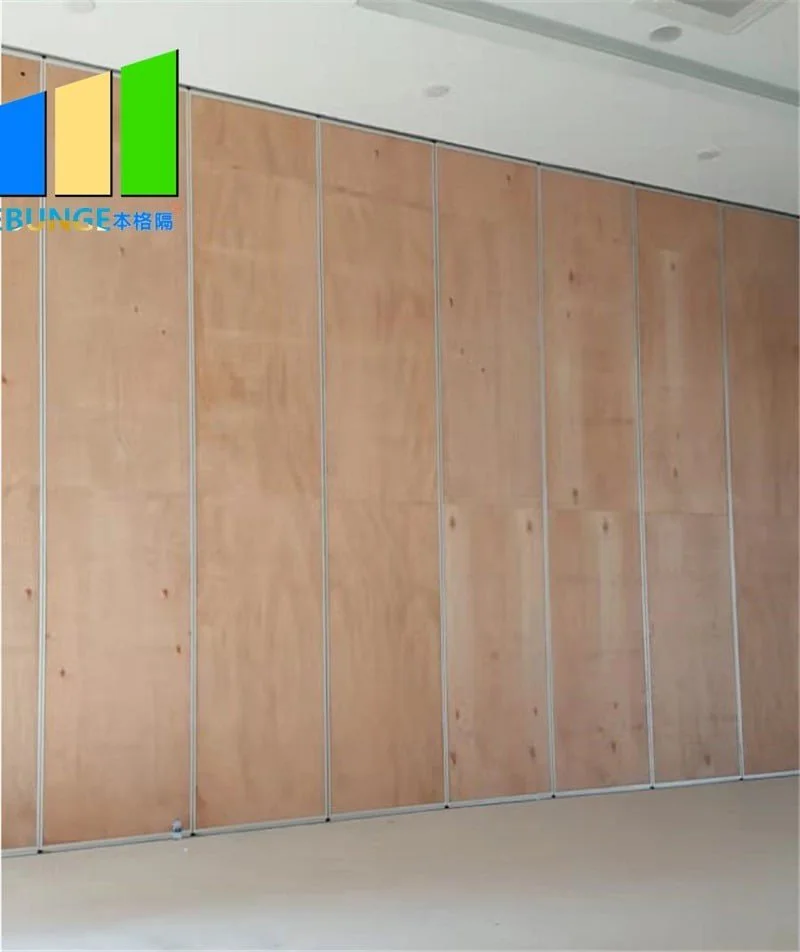
Identifying that band is a layout exercise. Review the straight, turning and stacking routes shown on the project drawings. Where a route runs parallel to the partition, the exposed band may be long and low. The exact route, junction arrangement, continuous overhead path and parking position must be confirmed from the coordinated project drawings.
What Counts as an Impact Zone
- Any partition face within the swept path of a cart, trolley or movable sports equipment.
- The area beside the stacking position, where equipment is often parked temporarily.
- Pass-door approaches, where people and equipment slow down or turn.
- Corners and panel edges that protrude into a circulation route.
This list is a planning aid, not a substitute for the project layout. Confirm the actual routes with the drawings and the people who use the hall daily.
Separating Finish Care from Structural Questions
Record the drawing revision used for sports hall partition.
A mark on a laminate, melamine, fabric, leather or glass surface tells you about the surface.
Evidence note: a visible finish condition is evidence of that condition only. It is not evidence of hidden structure, acoustic performance, fire behaviour or maintenance outcomes.
A Practical Inspection Routine for Busy Halls
A short, repeatable routine is more useful than an occasional deep clean. The aim is to notice change early, while the cause is still obvious. The steps below are generic and should be adapted to the confirmed finish and the hall’s operating pattern.
- Walk the cart route before the hall is set up, when the floor is clear.
- Look along the partition face at cart height, not only at eye level.
- Check the approach to the stacking position and any pass-door opening.
- Note new marks, scuffs, edge damage or surface changes by location.
- Record the finding with a date and a photograph for the project file.
- Ask the finish supplier or project team about suitable care before treating the area.
Keep the record simple. A location, a date and a photograph are usually enough to show whether a mark is stable or developing.
Protection Measures That Do Not Change the System
Protection should reduce contact without altering the partition’s movement or its approved finish. Options depend on the hall and must be confirmed with the project team.
Simple measures include repositioning storage so carts do not park against the partition, marking a keep-clear line on the floor, and briefing staff on the turning points near the stacking area. Where a barrier or buffer is proposed, confirm that it does not obstruct the movement path or the stacking position.
Questions to Ask Before Adding Protection
- Does the measure sit outside the swept path of the panels?
- Does it interfere with the stacking position or pass-door approach?
- Is it compatible with the confirmed finish?
- Has the project team reviewed the support and fixing implications?
These questions keep protection practical. They also prevent well-intentioned additions from creating a new maintenance problem.
Matching Care Advice to the Confirmed Finish
Confirmed finish options include laminate, melamine, fabric, leather, glass and other approved surfaces. Each behaves differently, and care advice should come from the finish supplier or the project documentation rather than from a general assumption.
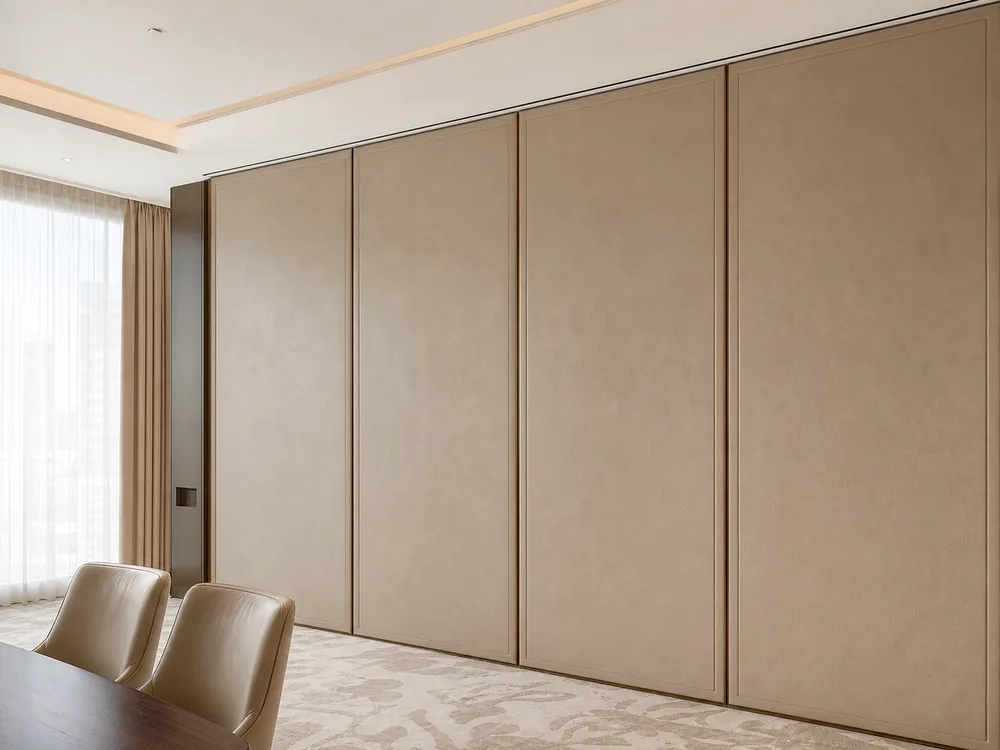
| Finish family | Typical maintenance focus | Confirm before acting |
|---|---|---|
| Laminate or melamine | Surface marks and edge condition | Approved cleaning method |
| Fabric or leather | Soiling, texture change and seams | Cleaning product compatibility |
| Glass | Marks, fingerprints and edge condition | Safe handling and cleaning method |
The table is a conversation starter. It does not replace the finish supplier’s instructions or the project’s own maintenance documentation.
Documentation That Supports Long-Term Care
Good records turn isolated marks into a maintenance history. They also help the project team decide whether a change is routine or needs closer review. Keep the layout drawing, the confirmed finish schedule and the inspection notes together.
Where pass-door requirements or project documentation need clarification, raise the question early. The movable partition wall product context and the project reference pages can help frame the discussion, but the binding details come from your own coordinated drawings.
Minimum Record Set
- Current layout showing straight, turning and stacking routes.
- Confirmed finish schedule for each partition face.
- Inspection notes with dates and locations.
- Photographs of any change in condition.
- Record of care advice received from the finish supplier.
Coordinating Maintenance with Hall Operations
Panel handling and the operating sequence must be confirmed for the selected layout and project conditions. A maintenance routine that depends on a long closure is unlikely to survive the timetable.
Brief the people who move equipment. They see the partition face at cart height every day and can report a new mark before it becomes a pattern.
Frequently Asked Questions
What is a cart impact zone on a sports hall partition?
It is the part of the partition face that equipment can reach along its normal route, including turning points and the area near the stacking position. Confirm the exact zone from the project layout.
Can I clean a partition finish without specialist advice?
Only use methods confirmed for the specific finish. Laminate, melamine, fabric, leather and glass differ, so ask the finish supplier or check the project documentation before treating a mark.
Does a scuff affect the acoustic performance of the partition?
A surface mark is evidence of surface condition only.
Can I add a barrier to protect the partition from carts?
Possibly, but it must not obstruct the panel movement path, the stacking position or a pass-door approach. Ask the project team to review the proposal before installation.
How often should the partition be inspected?
Frequency depends on hall use and equipment traffic. A short check before setup, with a fuller review during planned breaks, is a practical starting point to discuss with the project team.
What should be recorded after an inspection?
Record the location, date, observed condition and a photograph. Keep the record with the layout drawing and confirmed finish schedule so changes can be compared over time.
Conclusion and Next Step
Sports hall partition finishes last longer in daily use when maintenance is planned around real cart routes. Identify the impact zones, inspect at cart height, match care to the confirmed finish, and document what you find.
For project-specific guidance on finishes, routes, stacking and documentation, contact the EBUNGE team with your layout and finish requirements.
Continue Exploring
More Materials and Finishes Guides
- Newer guideComparing Community Hall Partition Finishes for Wall-Mounted Stage Light
- Earlier guideRestaurant Partition Finishes Need Detailing at Wall-Mounted Condiment
- Related guideWho Verifies Partition Handover Records When Trades Finish at Different
- Related guideMovable Partition Finish Sample Coordination Guide for Interior