
Quick project answer
Sports hall partition seals pa coordination affects how movable walls and ceiling speaker clusters share the same overhead zone. The EBUNGE movable partition system is top-hung and has no continuous floor running track or operating hardware in the finished floor along the partition line. This article explains the planning inputs that matter when a sports hall needs flexible division and a public-address layout above.
Top-Hung Principle for Sports Hall Partition Seals PA
The top-hung principle places the moving load and guidance above the finished floor. For sports hall partition seals pa planning, that means the partition line does not require a continuous floor track or operating hardware in the finished floor. The floor remains physically uninterrupted by the maintained EBUNGE top-hung system.

This arrangement allows the room to be divided, combined, or reconfigured without cutting the floor along the partition line. The exact route, junction arrangement, continuous overhead path and parking position must be confirmed from the coordinated project drawings.
Physically Uninterrupted Floor Along the Partition Line
A physically uninterrupted floor is a practical starting point for sports halls that host multiple activities. The EBUNGE top-hung system does not cut or damage the floor for a floor track. The maintained system leaves the floor surface continuous along the partition line.
That continuity matters when the same hall is used for court games, training, assembly, or community events. The floor is not interrupted by a fixed track, so the partition line can be planned around the room’s existing floor finish. The exact route, junction arrangement, continuous overhead path and parking position must be confirmed from the coordinated project drawings.
Ceiling PA Speaker Clusters and Partition Lines
Ceiling PA speaker clusters are often distributed across a sports hall ceiling. When a movable partition divides the room, the speaker layout and the partition line need to be read together on the same coordinated drawing set. Sports hall partition seals pa planning should show where the partition line meets the ceiling zone.
The drawing review should identify the partition line, the parking position, and the speaker cluster locations. It should also show how the top-hung track route relates to the ceiling services shown by others. The exact route, junction arrangement, continuous overhead path and parking position must be confirmed from the coordinated project drawings.
Parking Planning for Movable Partitions
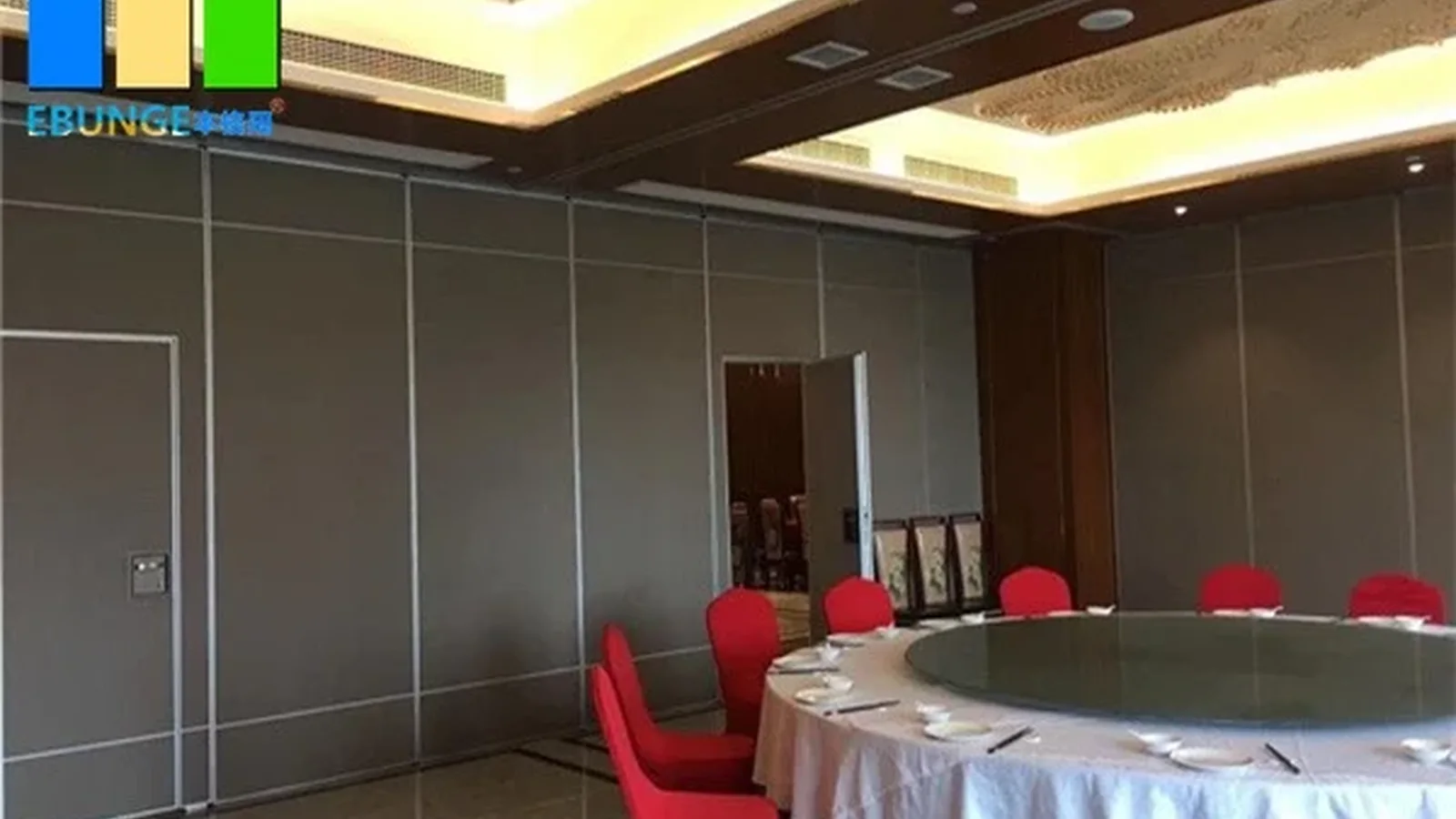
Panel parking style can be customized to the customer layout and project requirements, subject to coordinated drawings. A suitable approved parking arrangement can use the stacking area more compactly and coordinate with the space design. The exact track, support and panel layout still require project drawings.
For sports hall partition seals pa projects, parking planning should begin early. The stacking area needs to be shown on the same drawings as the partition line and the ceiling speaker clusters. The exact route, junction arrangement, continuous overhead path and parking position must be confirmed from the coordinated project drawings.
- Confirm the partition line and parking position on coordinated drawings.
- Show the top-hung track route relative to ceiling services.
- Coordinate the stacking area with the room layout.
- Review the speaker cluster locations against the partition line.
Finish and Care Coordination
Finish materials can be customized, and cleaning and maintenance methods vary with the selected finish. For a sports hall, the chosen finish should be discussed with the project team so that care routines match the selected material. Sports hall partition seals pa planning can note the finish selection on the coordinated drawings.
Because cleaning and maintenance methods vary with the selected finish, the project team should confirm the appropriate care approach for each selected material. The exact route, junction arrangement, continuous overhead path and parking position must be confirmed from the coordinated project drawings.
Non-Limiting Applications for Movable Partitions
Movable partitions can be used wherever flexible space division, combination or reconfiguration is required. Application examples are not limiting. EBUNGE has completed many types of hotel-related movable-partition projects; ballrooms, wedding halls and multifunction halls are non-limiting examples.
Sports halls are another setting where flexible division can be considered. The same top-hung principle applies when the project requires a movable partition line without a continuous floor track. The exact route, junction arrangement, continuous overhead path and parking position must be confirmed from the coordinated project drawings.
Buyer Inputs for Sports Hall Partition Seals PA
Buyers should prepare a clear brief before drawings are coordinated. Useful inputs include the required room configurations, the intended parking area, and the ceiling zones where PA speaker clusters are planned. Sports hall partition seals pa coordination depends on these inputs being available to the design team.
The brief should also identify the preferred finish direction and any known care requirements. Finish materials can be customized, and cleaning and maintenance methods vary with the selected finish. The exact route, junction arrangement, continuous overhead path and parking position must be confirmed from the coordinated project drawings.
- List the required room configurations and partition lines.
- Identify the proposed parking area and stacking zone.
- Mark ceiling PA speaker cluster locations on the plan.
- State the preferred finish direction for review.
- Confirm the drawing approval route with all parties.
Drawing Approvals and Project Coordination
Drawing approvals bring the partition line, parking position, and ceiling speaker clusters into one coordinated set. Panel parking style can be customized to the customer layout and project requirements, subject to coordinated drawings. A suitable approved parking arrangement can use the stacking area more compactly and coordinate with the space design.
The exact track, support and panel layout still require project drawings. For sports hall partition seals pa projects, the approval set should show the top-hung route and the parking position together with the ceiling services. The exact route, junction arrangement, continuous overhead path and parking position must be confirmed from the coordinated project drawings.
Sports hall partition seals pa planning should be reviewed on the coordinated drawing set before any project-specific conclusion is reached.
Frequently Asked Questions
For further context, review related project guidance and additional planning resources before preparing the coordinated project brief.
What does sports hall partition seals pa mean in practice?
It refers to coordinating a movable partition line with ceiling PA speaker clusters in a sports hall. The EBUNGE movable partition system is top-hung and has no continuous floor running track or operating hardware in the finished floor along the partition line.
Does the floor need to be cut for a track?
No. The EBUNGE top-hung system does not cut or damage the floor for a floor track. The floor remains physically uninterrupted by the maintained EBUNGE top-hung system.
Can ceiling PA speaker clusters be coordinated with the partition?
Yes, they should be shown together on the coordinated drawings. The exact route, junction arrangement, continuous overhead path and parking position must be confirmed from the coordinated project drawings.
How is parking planned for the panels?
Panel parking style can be customized to the customer layout and project requirements, subject to coordinated drawings. The exact track, support and panel layout still require project drawings.
Can the finish be customized?
Finish materials can be customized, and cleaning and maintenance methods vary with the selected finish. The project team should confirm the care approach for the selected material.
Where can movable partitions be used?
Movable partitions can be used wherever flexible space division, combination or reconfiguration is required. Application examples are not limiting, and EBUNGE has completed many types of hotel-related movable-partition projects.
The exact overhead route and support arrangement must be confirmed by the responsible project team from coordinated drawings..
Continue Exploring
More Acoustic Partition Guides
- Newer guideSports Hall Partition Seals: Multi-Sport vs Event-Only Acoustics
- Earlier guideCompare Function Room Partition Seals: Open vs Closed Kitchen Acoustics
- Related guideAcoustic Partition Ceiling Interface Zone Confirmation
- Related guideWho Confirms Ceiling Grid Line Before Acoustic Partition Track