
Understanding Restaurant Partition Seals in Open Kitchen Layouts
Quick project answer
Open kitchen designs bring energy and transparency to dining rooms. They also introduce continuous operational sound that travels freely across the space. Restaurant partition seals open kitchen planning often focuses on how movable walls can divide zones without disrupting the visible kitchen line.
The exact overhead route and support arrangement must be confirmed by the responsible project team from coordinated drawings. It also involves floor integrity, parking strategy, finish coordination, and long-term flexibility. This article compares open and closed kitchen scenarios using confirmed product facts and practical planning inputs.
The Top-Hung Principle and Floor Continuity
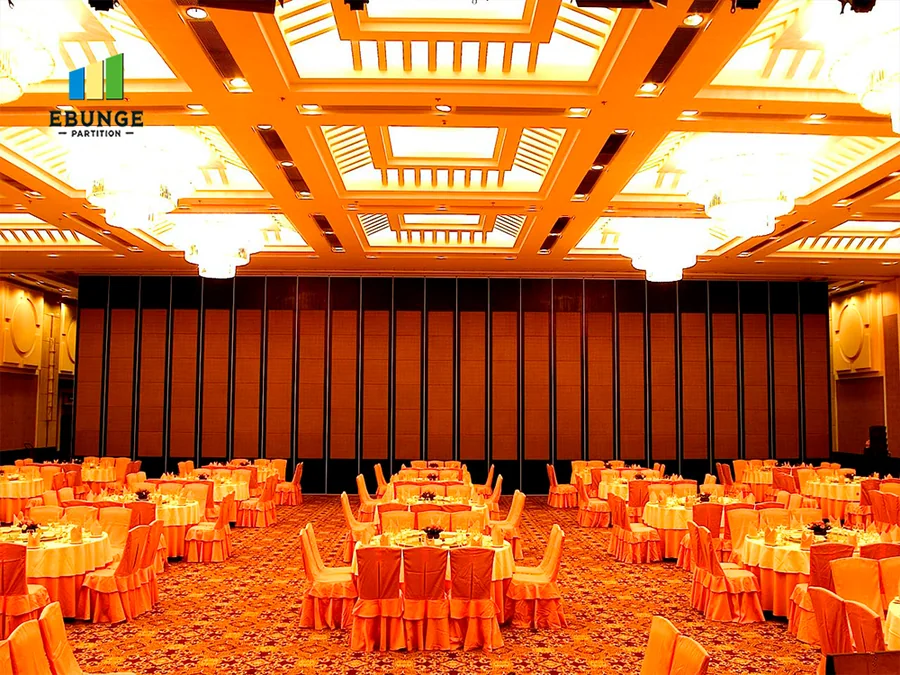
The EBUNGE movable partition system is top-hung. It has no continuous floor running track or operating hardware in the finished floor along the partition line. This means the floor is not cut or damaged for a floor track.
The floor remains physically uninterrupted by the maintained EBUNGE top-hung system. For restaurant operators, this supports open kitchen designs where floor finishes often run continuously from dining areas into service zones.
When comparing restaurant partition seals open kitchen configurations, the absence of a floor track changes how the partition line interacts with the kitchen boundary. The exact route, junction arrangement, continuous overhead path and parking position must be confirmed from the coordinated project drawings.
Open Kitchen Acoustics and Partition Placement
Visible references can support layout discussion but do not verify hidden construction or performance.
Instead, consider how the partition line aligns with kitchen activity. Placing a top-hung partition between a dining zone and an open kitchen can create a visual and physical division. The floor remains uninterrupted, which supports open kitchen aesthetics.
For closed kitchen layouts, the partition may separate a dining room from a kitchen that is already enclosed. Restaurant partition seals open kitchen discussions often highlight the need to coordinate partition placement with existing walls and openings.
Parking Planning for Movable Partitions
Panel parking style can be customized to the customer layout and project requirements, subject to coordinated drawings. A suitable approved parking arrangement can use the stacking area more compactly and coordinate with the space design.
The exact track, support and panel layout still require project drawings. For open kitchen restaurants, parking may need to avoid service lanes, cooking lines, and guest circulation paths. Early coordination helps align the parking zone with the overall floor plan.
When evaluating restaurant partition seals open kitchen options, consider how parked panels affect sightlines and operations. The goal is a workable arrangement that supports flexible space division without compromising the kitchen workflow.
Finish and Care Coordination
Finish materials can be customized, and cleaning and maintenance methods vary with the selected finish. This means the partition surface can be chosen to suit the restaurant’s design intent and operational needs.
For open kitchen environments, finish selection may consider visibility from dining areas. For closed kitchens, the finish may prioritize durability or ease of cleaning. However, cleaning outcomes are not guaranteed and depend on the specific finish and care routine.
Buyers should confirm finish samples and care instructions during project coordination. Restaurant partition seals open kitchen projects benefit from early decisions about materials that align with both aesthetics and maintenance practices.
Non-Limiting Applications in Hospitality
Movable partitions can be used wherever flexible space division, combination or reconfiguration is required. Application examples are not limiting. EBUNGE has completed many types of hotel-related movable-partition projects.
Ballrooms, wedding halls and multifunction halls are non-limiting examples. Restaurants with open or closed kitchens can also use movable partitions to adapt dining zones for events, private groups, or daily service changes.
No customer names, locations, quantities, ratings, certifications or outcomes may be inferred from these examples. The focus remains on the confirmed top-hung principle and customizable parking and finishes.
Buyer Inputs and Drawing Approvals
Successful projects begin with clear buyer inputs. Layout dimensions, intended uses, parking preferences, and finish direction are essential. These inputs feed into coordinated drawings that define the partition system.
The exact route, junction arrangement, continuous overhead path and parking position must be confirmed from the coordinated project drawings. This boundary sentence applies to all engineering details outside confirmed facts.

For restaurant partition seals open kitchen projects, buyers should also clarify how the partition interacts with open kitchen elements. Early collaboration with the project team helps align expectations and avoid assumptions about performance or installation.
Comparing Open and Closed Kitchen Scenarios
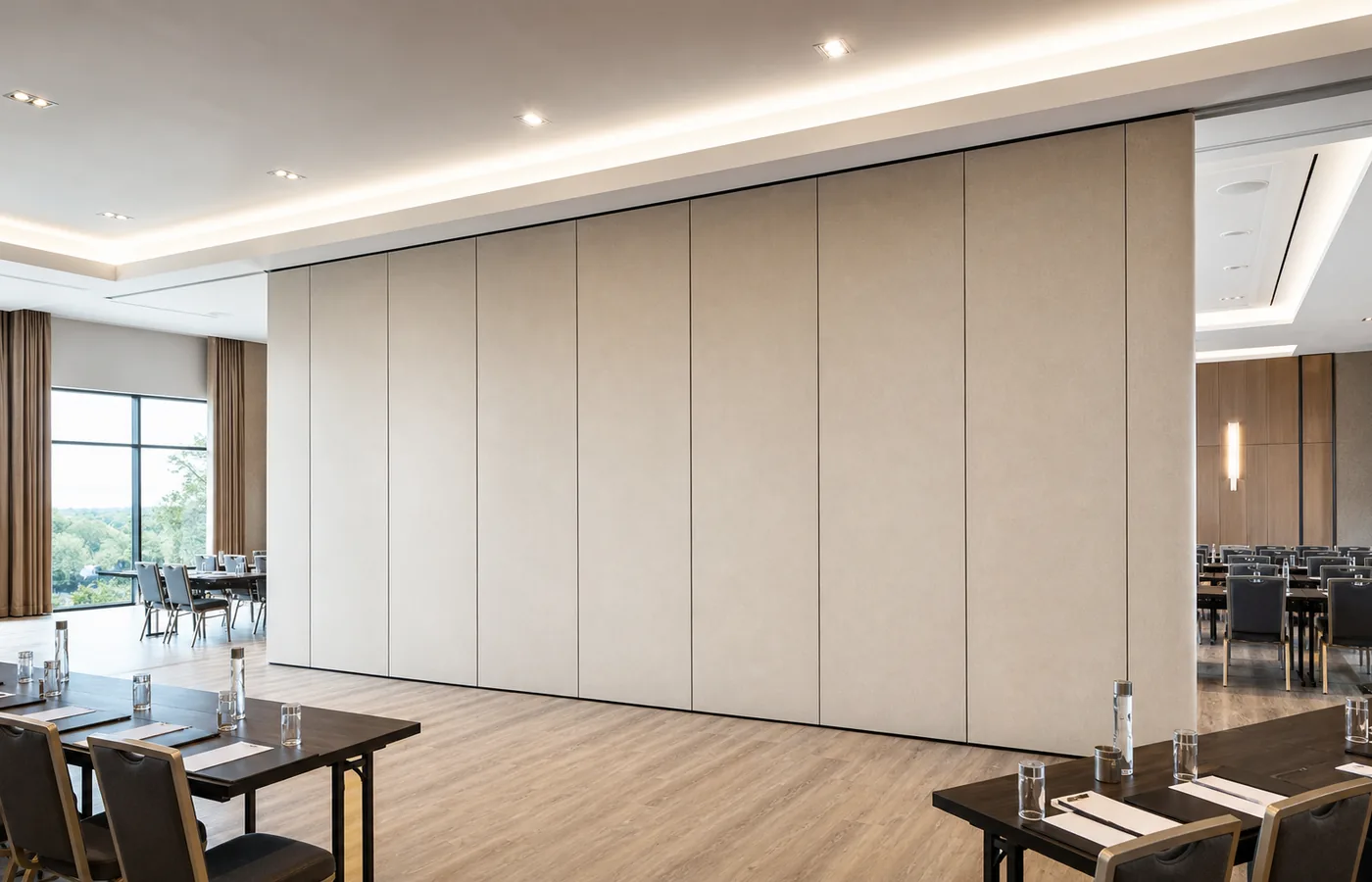
Open kitchens often prioritize visual connection and continuous floor finishes. A top-hung partition supports this by leaving the floor uninterrupted. Closed kitchens may already have physical separation, so the partition’s role shifts to internal flexibility.
In both cases, restaurant partition seals open kitchen planning should address parking, finish, and drawing approvals.
Buyers should compare scenarios based on operational needs, not assumed performance. The confirmed facts provide a reliable foundation for decision-making.
Key Considerations for Specifiers
- Top-hung system with no continuous floor track along the partition line.
- Floor remains physically uninterrupted by the maintained EBUNGE system.
- Parking style customizable to layout and project requirements, subject to drawings.
- Finish materials customizable; cleaning methods vary with selected finish.
- Applications are non-limiting; hotel-related projects include ballrooms, wedding halls, and multifunction halls.
Planning Sequence for Project Teams
- Define the zones requiring flexible division or combination.
- Identify parking preferences and coordinate with space design.
- Select finish direction and confirm care requirements.
- Provide inputs for coordinated drawings.
- Confirm exact route, junction arrangement, continuous overhead path and parking position from the coordinated project drawings.
Frequently Asked Questions
For further context, review related project guidance before preparing the coordinated project brief.
What does restaurant partition seals open kitchen mean in practice?
It refers to planning movable partitions in restaurants where the kitchen is open to dining areas. The focus is on dividing space without cutting the floor for a track.
Does the EBUNGE system require a floor track?
No. The EBUNGE movable partition system is top-hung and has no continuous floor running track or operating hardware in the finished floor along the partition line.
Can parking be customized for an open kitchen layout?
Yes. Panel parking style can be customized to the customer layout and project requirements, subject to coordinated drawings.
Are acoustic ratings available for open kitchen partitions?
Provide the current layout, opening dimensions, ceiling information, intended room use, and relevant project drawings for review. The exact overhead route and support arrangement must be confirmed by the responsible project team from coordinated drawings.
What finishes can be used?
Finish materials can be customized, and cleaning and maintenance methods vary with the selected finish.
Where can I see project examples?
You can view completed projects at /projects/. No customer names or outcomes may be inferred.
Coordinating with Acoustic Movable Partitions
/. This resource covers general principles without claiming specific performance.
Restaurant partition seals open kitchen projects require careful coordination. The top-hung design supports floor continuity, while parking and finishes are tailored to the project. The suitability of each route and parking arrangement depends on the approved layout, circulation, ceiling interfaces and operating sequence.
Continue Exploring
More Acoustic Partition Guides
- Newer guideSports Hall Partition Seals: Ceiling PA Speaker Clusters
- Earlier guideRestaurant Room Partition Seals: Ceiling Grease Filters
- Related guideAcoustic Partition Ceiling Interface Zone Confirmation
- Related guideWho Confirms Ceiling Grid Line Before Acoustic Partition Track