
Why University Training Center Partition Seal Drawings Matter
Visible references can support layout discussion but do not verify hidden construction or performance. The university training center partition seal drawings are the primary documents that communicate how the partition edge will meet the whiteboard surface, ensuring that the design intent is clear to all stakeholders. Without precise drawings, contractors may assume a standard perimeter seal that does not account for the whiteboard’s thickness, mounting brackets, or surface curvature.
Movable partitions from EBUNGE are top-hung systems that glide along an overhead track without a floor track, allowing flexible room layouts. However, the interaction between the partition panel and a fixed element like a whiteboard requires careful detailing. This article explains which drawings typically specify these seals, what information they must include, and how project teams can coordinate effectively without relying on unsupported assumptions.
Understanding the Role of Drawings in Partition Seal Specification
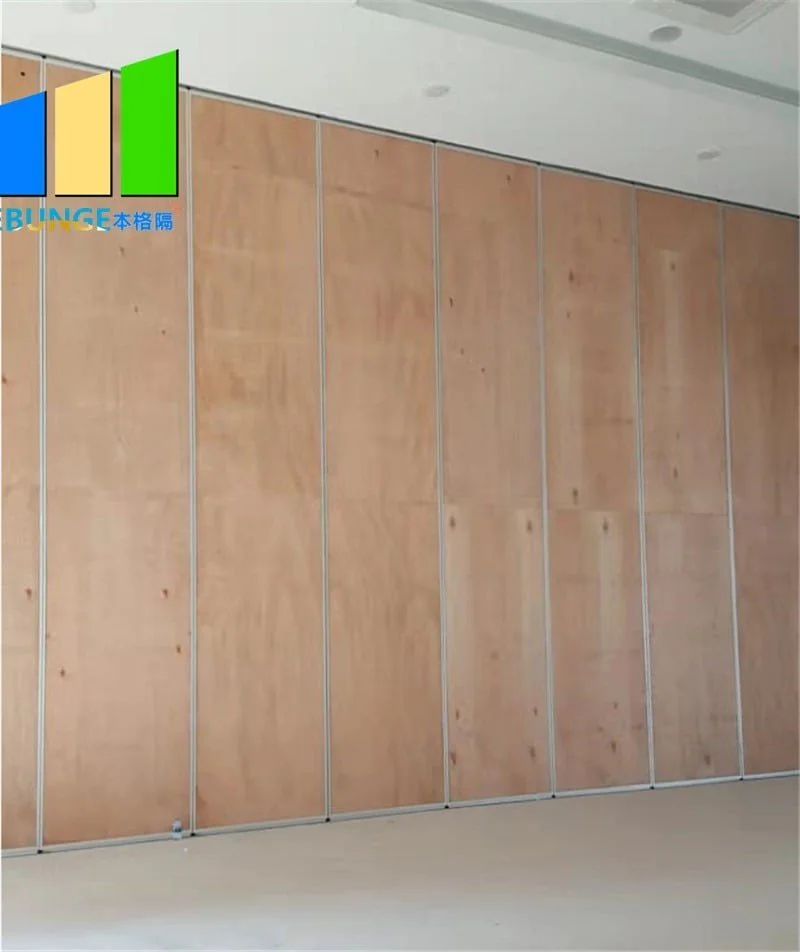
Drawings serve as the contractual bridge between design intent and field installation. For partition seals at whiteboard junctures, several drawing types may be involved, each with a distinct purpose. The key is to ensure that the drawings are consistent and that they reference the correct product data and installation requirements.
Architectural Drawings
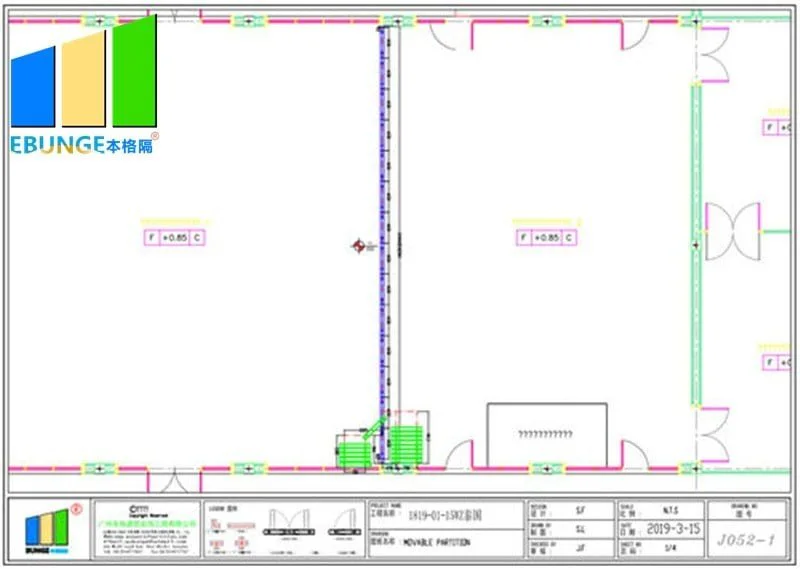
Architectural floor plans and reflected ceiling plans show the overall layout, including the partition run and the location of whiteboards. These drawings indicate where the partition will align with the whiteboard and may include notes about seal types. However, they rarely provide the detailed section or elevation needed to understand the exact junction.
Detail Drawings
Detail drawings, often at a larger scale, are the most critical for specifying the seal at the whiteboard junction. They show a cross-section or elevation of the partition edge meeting the whiteboard, including the gap, the seal profile, and the attachment method. These drawings must be reviewed by the partition manufacturer to ensure compatibility with the specific whiteboard mounting.
Share the opening dimensions, room layout and intended operating sequence for review.
Coordination Drawings
Coordination drawings combine inputs from multiple trades—such as mechanical, electrical, and architectural—to identify clashes and ensure that the partition track, whiteboard, and any services align. For a whiteboard junction, coordination drawings verify that the whiteboard does not interfere with the partition’s stacking or movement path.
Key Information Needed in University Training Center Partition Seal Drawings
To produce accurate seal drawings, the project team must gather specific information about the whiteboard and the partition system. This includes:
- Whiteboard dimensions and thickness: The seal must accommodate the exact thickness of the whiteboard panel, including any backing or frame.
- Mounting method: Whether the whiteboard is surface-mounted, recessed, or attached with brackets affects the available space for the seal.
- Partition edge profile: The shape of the partition’s vertical edge (e.g., flat, stepped, or with a groove) determines how the seal can be attached.
- Movement path: The partition must be able to move past the whiteboard without catching, so the drawings must show the clearance and any required retractable seals.
EBUNGE’s movable partitions are individually movable and top-hung, meaning they can be parked at a planned location. The drawings must indicate the stacking position and how the whiteboard junction is handled when the partition is in the stored position versus the deployed position.
How to Coordinate University Training Center Partition Seal Drawings with EBUNGE
Coordination begins early in the design phase. The suitability of each route and parking arrangement depends on the approved layout, circulation, ceiling interfaces and operating sequence. This review ensures that the overhead track is continuous and that the whiteboard does not obstruct the partition’s travel.
The drawings should be marked up to show the exact junction, and any deviations from standard details must be approved by all parties.
Acoustic Considerations for Whiteboard Junctures
Seals play a crucial role in reducing sound flanking at the partition edges. At a whiteboard junction, the seal must compress against the whiteboard surface to create an airtight barrier.
These ratings are measured under controlled conditions and may not directly translate to field performance.
Common Challenges and Solutions in Detailing Whiteboard Junctures
Several challenges arise when detailing partition seals at whiteboard junctures. One common issue is the whiteboard’s surface being uneven or having a frame that protrudes, making it difficult for a standard seal to make full contact. In such cases, a custom seal profile or an adjustable seal may be required.
The drawings must specify a seal that can accommodate slight movement without losing its sealing capability.
Review the ceiling interface, panel route and stacking position together.
Finally, the visual appearance of the junction is important in a training center. The seal should be discreet and blend with the partition and whiteboard finishes. EBUNGE offers a range of finishes, including laminate, melamine, fabric, leather, and glass, which can be coordinated with the whiteboard’s frame.
Documentation and Approval Process
The seal drawings must go through a formal review and approval process. This typically involves:
- Drafting: The partition manufacturer or the architect prepares the initial detail drawings.
- Revision: Any necessary changes are made, and the drawings are updated.
- Approval: The final drawings are approved by the architect and the owner’s representative.
It is essential that the approved drawings are distributed to the installation crew and that any field changes are documented. EBUNGE can provide support in reviewing the drawings and confirming that the proposed details are compatible with the movable partition system.
Frequently Asked Questions
What specific drawings are needed for a partition seal at a whiteboard?
Typically, you need a combination of architectural floor plans, reflected ceiling plans, and large-scale detail drawings showing the vertical section at the whiteboard junction. Coordination drawings may also be required to ensure the whiteboard does not interfere with the partition track or stacking.
Can a standard perimeter seal be used at a whiteboard junction?
Not always. The whiteboard’s thickness, mounting method, and surface profile can affect the seal’s ability to make continuous contact.
How do I ensure the partition can move past the whiteboard without damage?
The drawings must show the clearance between the partition edge and the whiteboard when the partition is in motion. The partition’s movement path should be reviewed to ensure there are no obstructions. EBUNGE can assist in reviewing the track layout and stacking positions.
What acoustic performance can I expect from the seal at a whiteboard junction?
STC/Rw ratings are laboratory measures and may not reflect field performance.
Who is responsible for producing the seal drawings?
Typically, the architect or the partition manufacturer produces the detail drawings. The responsibility should be defined in the contract documents. EBUNGE can review and provide input on the drawings to ensure compatibility with the movable partition system.
Conclusion and Next Steps
University training center partition seal drawings are essential for achieving a functional and aesthetically pleasing junction between a movable partition and a wall-mounted whiteboard. Cost and maintenance requirements depend on the selected configuration, finish and project conditions and require project-specific confirmation.
To ensure your project’s success, engage with EBUNGE early in the design process. Our team can review your layout, discuss seal options, and help you prepare the necessary documentation. Contact us to discuss your specific requirements and receive expert guidance on your movable partition project.
Continue Exploring
More Acoustic Partition Guides
- Newer guideHow to Compare University Exam Hall Partition Seals for Floor-Mounted Power Outlet Junctures
- Earlier guideWhat Drawings Specify Restaurant Partition Seals at Wall-Mounted Serving Shelf Bracket Edges
- Related guideWhat Pre-Installation Checks Matter for University Lecture Hall Partition Seals at Floor-Mounted Lectern Wells
- Related guideWhy Healthcare Training Room Partition Seals Need Detailing at Floor-Mounted Oxygen Outlet Wells