
Quick project answer
An auditorium partition maintenance schedule is often treated as a generic cleaning checklist. In practice, the schedule depends on how the partition is supported, how panels park and which finish was selected. Classroom dividers may follow a different routine because their daily use and layout constraints differ. This article compares planning priorities without prescribing a universal procedure.
Why the Top-Hung Principle Changes Maintenance Planning
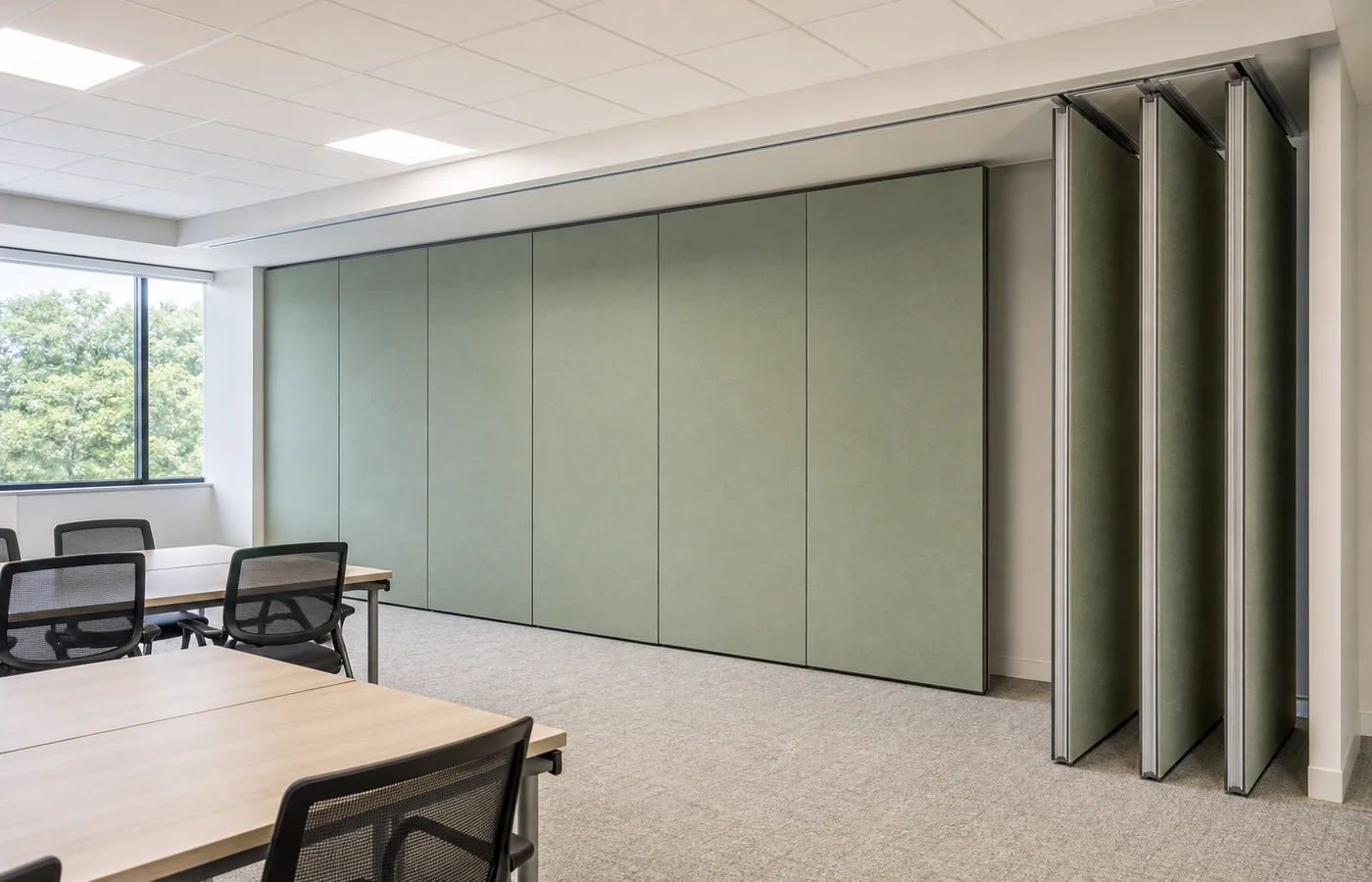
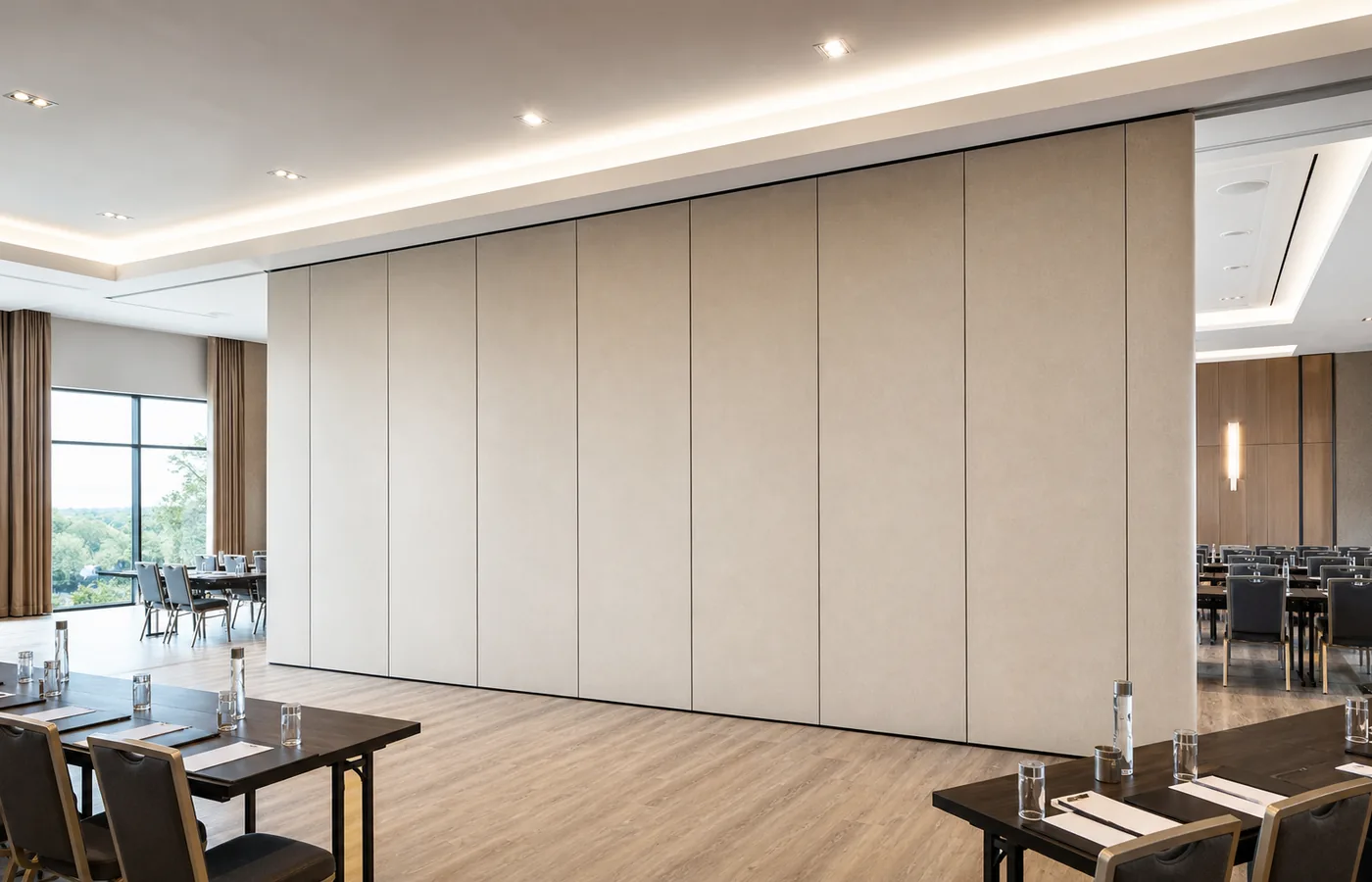
The EBUNGE movable partition system is top-hung. That single fact shapes how an auditorium partition maintenance schedule is organized. Because the system carries panels from above, there is no continuous floor running track or operating hardware in the finished floor along the partition line.
For maintenance planners, this means the floor itself is not part of the operating path. The floor is not cut or damaged for a floor track and remains physically uninterrupted by the maintained EBUNGE top-hung system. Cleaning and inspection routines can therefore focus on the partition panels, the overhead support zone and the parking area rather than on a floor channel.
Classroom dividers may be specified with different support assumptions, so their care planning can differ. The suitability of each route and parking arrangement depends on the approved layout, circulation, ceiling interfaces and operating sequence. It is about matching the schedule to the confirmed system type and the actual project drawings.

Physically Uninterrupted Floor and Daily Care
A physically uninterrupted floor changes how staff approach routine care. There is no floor track to clear of debris, and no operating hardware sits in the finished floor along the partition line. Visible references can support layout discussion but do not verify hidden construction or performance.
Finish materials can be customized, and cleaning and maintenance methods vary with the selected finish. That means the care routine for one auditorium may differ from another even when both use a top-hung system. The finish choice drives the cleaning method, not a single universal instruction.
Classroom dividers may use finishes that call for different products or frequencies. When comparing an auditorium partition maintenance schedule with classroom divider care, the finish specification is a practical starting point. It determines which cleaning agents and methods are appropriate.
Parking Planning and the Maintenance Schedule
Panel parking style can be customized to the customer layout and project requirements, subject to coordinated drawings. A suitable approved parking arrangement can use the stacking area more compactly and coordinate with the space design. The exact track, support and panel layout still require project drawings.
Parking location affects how an auditorium partition maintenance schedule is written. If panels park in a dedicated recess, the schedule may include periodic checks of that area. If they park along a wall, the routine may focus on protecting adjacent finishes during events.
Classroom dividers often park differently because the room geometry and daily timetable differ. The comparison shows why a single schedule template rarely fits both settings. The exact route, junction arrangement, continuous overhead path and parking position must be confirmed from the coordinated project drawings.
Finish and Care Coordination Across Spaces
Finish materials can be customized, and cleaning and maintenance methods vary with the selected finish. This confirmed fact applies to both auditorium partitions and classroom dividers. The difference lies in how often each space is reconfigured and what activities occur there.
An auditorium partition maintenance schedule may need to account for event-driven cleaning cycles. A classroom divider schedule may follow a term-based or daily pattern.
Because cleaning methods vary with finish, the schedule should name the approved method for each surface. It also helps teams avoid improvised methods that may not suit the selected finish.
Non-Limiting Applications and Schedule Variation
Movable partitions can be used wherever flexible space division, combination or reconfiguration is required. Application examples are not limiting. EBUNGE has completed many types of hotel-related movable-partition projects; ballrooms, wedding halls and multifunction halls are non-limiting examples.
An auditorium partition maintenance schedule may therefore appear in venues that also host banquets, conferences or community events. Each use pattern can influence how often the partition is reconfigured and how the surrounding finishes are treated.
Classroom dividers serve a different rhythm, often tied to teaching schedules. Comparing the two helps planners recognize that maintenance frequency and method should follow actual use, not a generic label. The schedule remains a planning tool, not a fixed prescription.
Buyer Inputs That Shape the Maintenance Plan
Buyers can contribute useful inputs before the schedule is finalized. These inputs help align the plan with the confirmed system and the coordinated drawings.
- Confirm the partition type and support principle, such as top-hung operation.
- Identify the selected finish and its approved cleaning method.
- Describe the intended parking area and how it is used between events.
- List the space functions that may affect reconfiguration frequency.
- Note any areas where the floor must remain physically uninterrupted.
These inputs do not replace project drawings. The exact route, junction arrangement, continuous overhead path and parking position must be confirmed from the coordinated project drawings.
Drawing Approvals and Schedule Finalization
An auditorium partition maintenance schedule should be finalized after the coordinated drawings are approved. The drawings confirm the track route, support arrangement and parking position. Without that confirmation, the schedule may describe tasks that do not match the installed layout.
Classroom dividers may follow a similar approval path, but the schedule content can differ because the room use and parking approach differ. The comparison is a reminder that maintenance planning is project-specific.
For product information, see /products/. For completed project examples, see /projects/. These pages provide context without replacing the coordinated drawings.
Comparison Summary
| Planning Point | Auditorium Partition | Classroom Divider |
|---|---|---|
| Support principle | Top-hung system with no floor track | Varies by specification |
| Floor condition | Physically uninterrupted by the maintained system | Depends on the selected system |
| Parking | Customized to layout, subject to drawings | Often tied to room geometry |
| Finish care | Methods vary with the selected finish | Methods vary with the selected finish |
| Schedule trigger | Event and use patterns | Teaching and term patterns |
The exact route, junction arrangement, continuous overhead path and parking position must be confirmed from the coordinated project drawings.
Frequently Asked Questions
What is an auditorium partition maintenance schedule?
It is a planning document that outlines care tasks for a movable partition in an auditorium setting. The schedule should reflect the confirmed support principle, the selected finish and the approved parking arrangement. It is not a universal procedure and should be finalized after the coordinated drawings are available.
How does a top-hung system affect maintenance planning?
A top-hung system carries panels from above, so there is no continuous floor running track or operating hardware in the finished floor along the partition line. The floor is not cut or damaged for a floor track and remains physically uninterrupted by the maintained EBUNGE top-hung system. This changes which areas the schedule needs to address.
Can the same schedule be used for classroom dividers?
Not necessarily. Classroom dividers may use different support assumptions, finishes and parking arrangements. Cleaning and maintenance methods vary with the selected finish. A schedule should be matched to the confirmed system and the actual room use rather than copied from another setting.
How does parking style influence the maintenance plan?
Panel parking style can be customized to the customer layout and project requirements, subject to coordinated drawings. A suitable approved parking arrangement can use the stacking area more compactly and coordinate with the space design. The exact track, support and panel layout still require project drawings, so the schedule should follow those approvals.
What finish information is needed for care planning?
Finish materials can be customized, and cleaning and maintenance methods vary with the selected finish. The schedule should identify the approved cleaning method for each selected finish. This avoids improvised care that may not suit the surface and keeps the plan aligned with the confirmed specification.
When should the maintenance schedule be finalized?
The schedule should be finalized after the coordinated drawings are approved. Those drawings confirm the route, support arrangement and parking position. The exact route, junction arrangement, continuous overhead path and parking position must be confirmed from the coordinated project drawings before the schedule is treated as complete.
Continue Exploring
More Maintenance Guides
- Newer guideRestaurant Movable Partition Maintenance Inspection Planning
- Earlier guideRestaurant Partition Maintenance Inspection for Office Schedules
- Related guidePlan Service Access to Operable Wall Tracks When Ceiling Hatches
- Related guideAcoustic Movable Partition Track Servicing Access