
Understanding Airport Partition Manual Operation Security
Quick project answer
Airport partition manual operation security is a planning topic for spaces that need flexible division without cutting the finished floor. The EBUNGE movable partition system is top-hung, so it has no continuous floor running track or operating hardware in the finished floor along the partition line. This principle shapes how a split-security-screening layout can be considered.
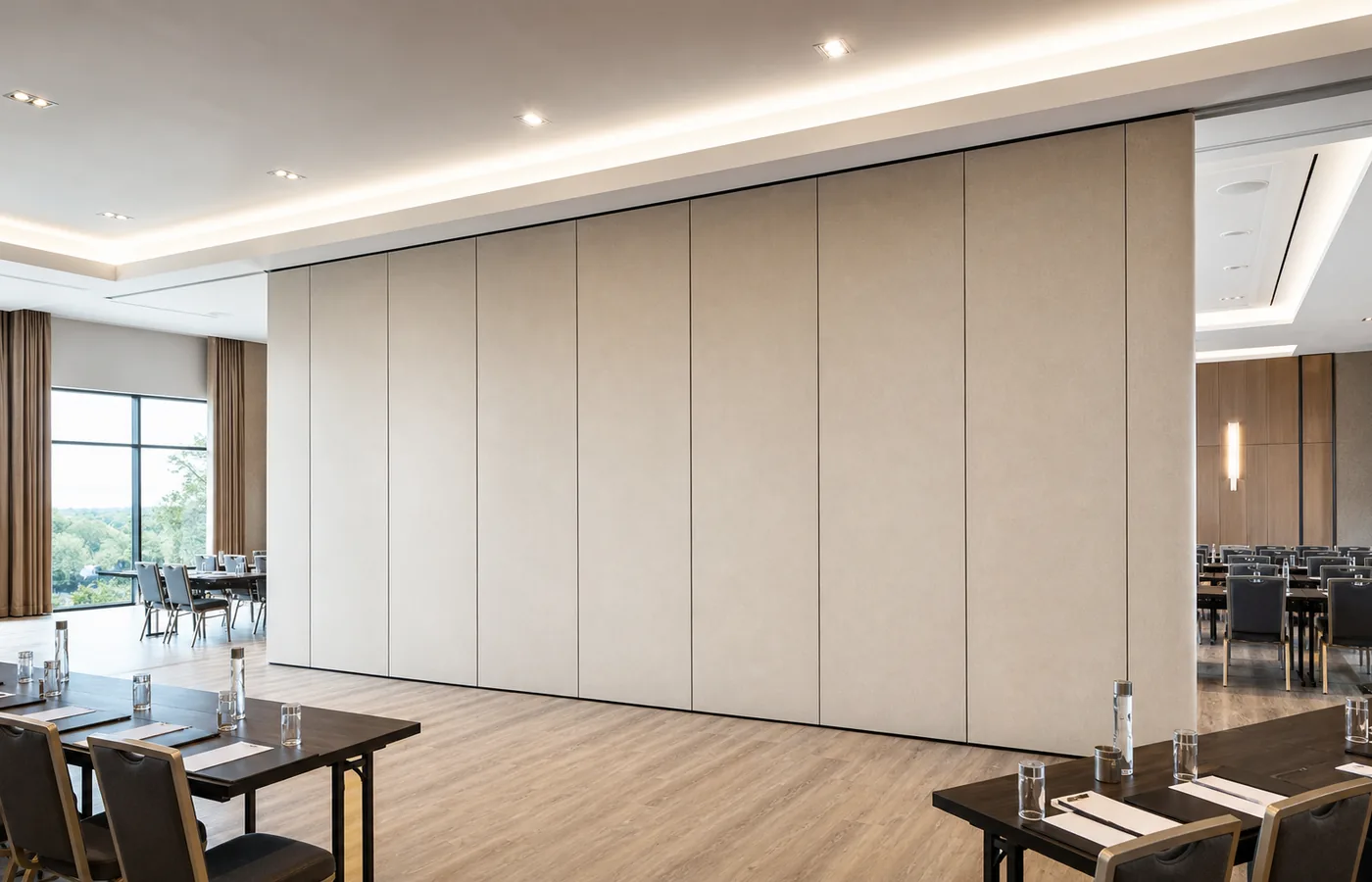
The floor remains physically uninterrupted by the maintained EBUNGE top-hung system. That single fact affects daily circulation, cleaning routines, and how a space can be reconfigured. It does not, by itself, define a complete security procedure or a universal operating sequence.
Why a Top-Hung System Matters for Security Screening Areas
A top-hung partition carries its panels from an overhead structure rather than from a floor guide. Because the floor is not cut or damaged for a floor track, the walking surface stays continuous along the partition line. For airport areas where passengers and staff move through defined zones, that continuity can support a cleaner separation between adjacent functions.
Airport partition manual operation security therefore begins with the overhead path, not with floor hardware. The exact route, junction arrangement, continuous overhead path and parking position must be confirmed from the coordinated project drawings. No generic sequence applies to every project, and no release mechanism should be assumed.
Physically Uninterrupted Floor and Split-Security-Screening
Split-security-screening areas often need to change between open and divided conditions. A top-hung system keeps the finished floor free of a continuous track, so the floor surface is not interrupted by operating hardware along the partition line. This can simplify how the floor is cleaned and maintained, because there is no floor track to work around.
However, an uninterrupted floor does not mean the partition can be moved without a planned overhead route. The panels still require a top-hung support path and a parking position. Those elements must be coordinated with the building structure and the space design before any layout is fixed.
Parking Planning for Movable Partitions
Panel parking style can be customized to the customer layout and project requirements, subject to coordinated drawings. A suitable approved parking arrangement can use the stacking area more compactly and coordinate with the space design. This is a planning decision, not a default feature.
When considering airport partition manual operation security, the parking location affects how the divided space performs during screening activities. The stacking area should be reviewed alongside the overhead path and the adjacent functions. The exact track, support and panel layout still require project drawings.
Key planning inputs for parking
- Available stacking area dimensions and location.
- Overhead path coordination with the building structure.
- Adjacent functions that must remain accessible.
- Finish and cleaning requirements for the parking zone.
Finish and Care Coordination
Finish materials can be customized, and cleaning and maintenance methods vary with the selected finish. This means the care routine for a partition in an airport environment depends on the finish chosen for the project. There is no single cleaning method that applies to every finish.
Airport partition manual operation security planning should include the finish selection early, because the finish affects daily care and appearance. The project team can then align the finish with the cleaning products and methods that are appropriate for that material.
Non-Limiting Applications in Airport and Hospitality Contexts
Movable partitions can be used wherever flexible space division, combination or reconfiguration is required; application examples are not limiting. EBUNGE has completed many types of hotel-related movable-partition projects. Ballrooms, wedding halls and multifunction halls are non-limiting examples.
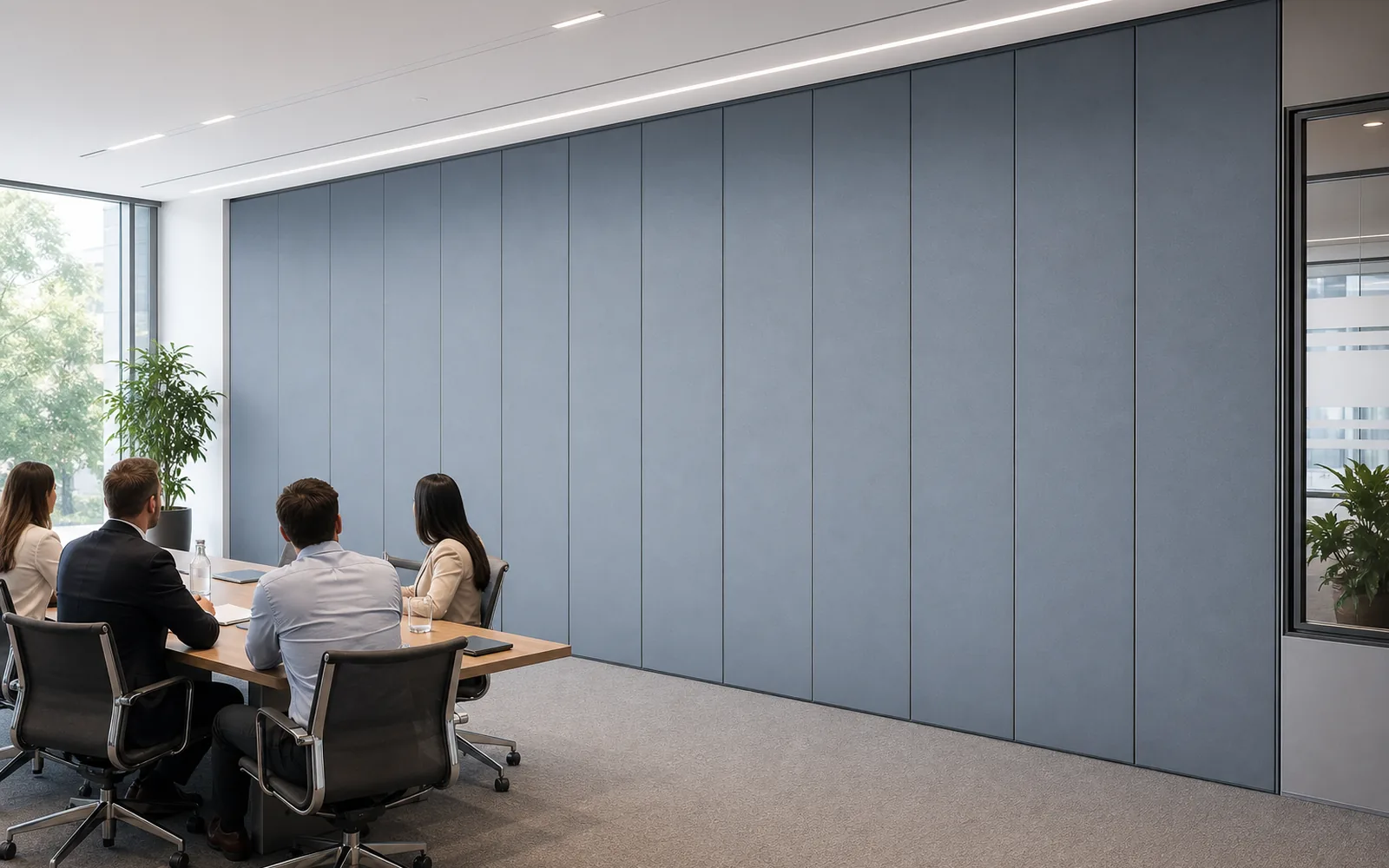
Airport areas that need split-security-screening may share similar planning questions with hospitality spaces: overhead support, parking, finish, and coordination. The same top-hung principle applies, but each project has its own constraints. No customer names, locations, quantities, ratings, certifications or outcomes may be inferred from these examples.
Buyer Inputs and Drawing Approvals
Buyers should provide the intended use, the space dimensions, the desired parking approach, and the finish direction. These inputs help the project team prepare coordinated drawings. The exact route, junction arrangement, continuous overhead path and parking position must be confirmed from the coordinated project drawings.
Airport partition manual operation security cannot be finalized without approved drawings. The drawings should show how the top-hung system relates to the overhead structure and how the panels will park. Any change to the layout should be reflected in the coordinated set before production or installation planning proceeds.
Information to prepare for coordination
- Intended use of the divided and combined space.
- Finished floor condition and any constraints along the partition line.
- Preferred parking style and stacking area.
- Finish direction and expected cleaning methods.
- Any interface with adjacent airport functions.
Frequently Asked Questions
Does the EBUNGE movable partition system use a floor track?
No. The EBUNGE movable partition system is top-hung and has no continuous floor running track or operating hardware in the finished floor along the partition line. The floor is not cut or damaged for a floor track.
How does airport partition manual operation security relate to the floor?
Because the system is top-hung, the floor remains physically uninterrupted by the maintained EBUNGE top-hung system. This supports a continuous walking surface along the partition line, but the overhead path and parking still require coordinated drawings.
Can the parking style be customized?
Yes. Panel parking style can be customized to the customer layout and project requirements, subject to coordinated drawings. A suitable approved parking arrangement can use the stacking area more compactly and coordinate with the space design.
Are finish materials customizable?
Yes. Finish materials can be customized, and cleaning and maintenance methods vary with the selected finish. The care routine should be planned around the chosen finish for the project.
What must be confirmed from the coordinated project drawings?
The exact route, junction arrangement, continuous overhead path and parking position must be confirmed from the coordinated project drawings. The exact track, support and panel layout also require project drawings.
Coordinating with EBUNGE
For airport partition manual operation security planning, the confirmed facts point to a top-hung approach with an uninterrupted floor, customizable parking, and finish-specific care. The next step is to align those elements with the project drawings. You can review the operable wall system and see projects for context.
Airport partition manual operation security is not a generic procedure. It is a coordination task that depends on the overhead path, the parking plan, the finish, and the approved drawings. The exact route, junction arrangement, continuous overhead path and parking position must be confirmed from the coordinated project drawings.
Continue Exploring
More Operable Wall System Guides
- Newer guidePartition Convention Hall Partition Stacking: Multi-Use vs Exhibit-Only
- Earlier guideAirport Operable Wall Stacking: Clearance for Security Camera Mounts
- Related guidePhase Operable Wall Work When a Renovation Adds a New Wing
- Related guideRoom Scheduling Rules That Decide When an Operable Wall Stays Open