
Quick project answer
Airport interiors often combine flexible rooms with continuous observation. When teams compare airport operable wall track ceiling arrangements with ceiling security cameras, they are comparing two different systems that share one overhead zone. One divides space; the other watches it. This article explains the top-hung principle, the uninterrupted floor, parking planning, finish care, non-limiting applications and the buyer inputs that support coordinated drawings.
Why airport operable wall track ceiling planning starts overhead
The EBUNGE movable partition system is top-hung. That single fact shapes how an airport operable wall track ceiling zone should be reviewed. The partition depends on an overhead track and support arrangement rather than a track set into the finished floor.
Ceiling security cameras also occupy the overhead zone. They are mounted for coverage, while the partition track is mounted for movement and support. Both need coordination, but they serve different purposes and follow different design logic.
For any airport operable wall track ceiling study, the useful question is not which element wins the ceiling. The useful question is how the coordinated drawings describe each element, its support and its position.

The top-hung principle and the physically uninterrupted floor
With the maintained EBUNGE top-hung system, there is no continuous floor running track or operating hardware in the finished floor along the partition line. The floor is not cut or damaged for a floor track.
The floor therefore remains physically uninterrupted by the maintained EBUNGE top-hung system. This matters in terminals and public-facing areas where the finished floor is a visible, continuous surface.
An airport operable wall track ceiling comparison should record this difference clearly. A floor-track concept and a top-hung concept are not the same, and the floor condition is one visible point of separation.
The exact route, junction arrangement, continuous overhead path and parking position must be confirmed from the coordinated project drawings.
Parking planning for movable partitions in airport spaces
Movable partitions can be used wherever flexible space division, combination or reconfiguration is required. Application examples are not limiting, so airport teams can treat them as one option among several.
Panel parking style can be customized to the customer layout and project requirements, subject to coordinated drawings. A suitable approved parking arrangement can use the stacking area more compactly and coordinate with the space design.
The exact track, support and panel layout still require project drawings. That boundary applies to every airport operable wall track ceiling discussion, because parking affects both the partition zone and the surrounding ceiling plan.
- Confirm where panels will rest when the room is open.
- Check how the parking area relates to camera coverage zones.
- Record the approved parking style in the coordinated drawings.
- Keep the floor condition visible in the same drawing set.
Finish selection and care coordination
Finish materials can be customized, and cleaning and maintenance methods vary with the selected finish. That means finish choice and care planning belong together from the start.
A finish that suits one airport space may not suit another. The confirmed position is simply that finishes are customizable and that care methods follow the finish selected.
For an airport operable wall track ceiling review, finish decisions should be recorded alongside the parking style and the overhead layout. The suitability of each route and parking arrangement depends on the approved layout, circulation, ceiling interfaces and operating sequence.
The exact route, junction arrangement, continuous overhead path and parking position must be confirmed from the coordinated project drawings.
Non-limiting applications in airport and hospitality settings
EBUNGE has completed many types of hotel-related movable-partition projects. Ballrooms, wedding halls and multifunction halls are non-limiting examples. No customer names, locations, quantities, ratings, certifications or outcomes may be inferred.
Those hospitality examples show how flexible division is used in practice. Airport lounges, meeting rooms, training areas and event spaces can raise similar questions about reconfiguration.
Movable partitions can be used wherever flexible space division, combination or reconfiguration is required. Application examples are not limiting, so each airport project should be assessed on its own coordinated drawings.
Teams comparing airport operable wall track ceiling conditions with ceiling security cameras should keep the two systems separate in the narrative. One is a partition system; the other is an observation system.
Buyer inputs that support drawing approvals
Useful buyer inputs begin with the room layout, the intended parking style and the finish direction. Each input feeds the coordinated drawings that describe the partition zone.
Panel parking style can be customized to the customer layout and project requirements, subject to coordinated drawings. A suitable approved parking arrangement can use the stacking area more compactly and coordinate with the space design.
The exact track, support and panel layout still require project drawings. Buyers should therefore treat parking, finish and overhead coordination as drawing-stage topics rather than fixed assumptions.
- Provide the room layout and the intended reconfiguration pattern.
- State the preferred parking style for review against the layout.
- Confirm the finish direction and the care method that follows it.
- Review the coordinated drawings before treating any arrangement as approved.
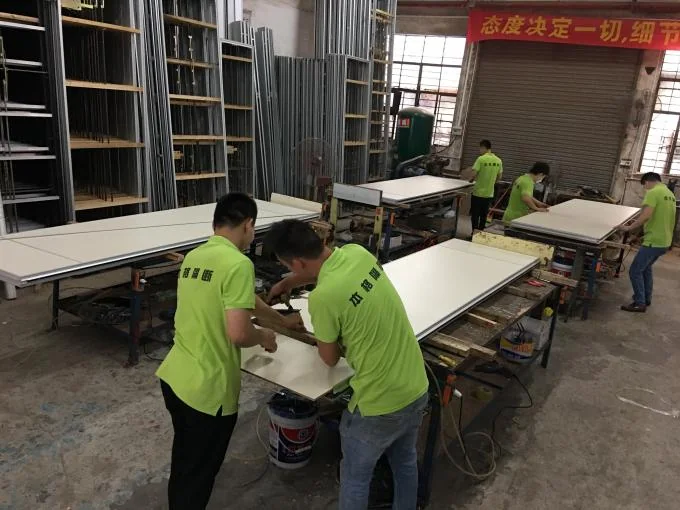
How to compare the two overhead systems
An airport operable wall track ceiling comparison is clearer when each system is described by its own function. The partition track supports and guides the top-hung panels. Ceiling security cameras support observation.
Both may appear in the same ceiling zone, so the coordinated drawings should show how each is positioned. The partition side also needs its parking position confirmed.
The exact route, junction arrangement, continuous overhead path and parking position must be confirmed from the coordinated project drawings. This sentence applies to the partition side of the comparison.
| Element | Primary function | Drawing focus |
|---|---|---|
| Top-hung partition track | Supports and guides movable panels | Route, support, parking position |
| Ceiling security camera | Supports observation coverage | Mounting position and coverage zone |
| Finished floor | Remains physically uninterrupted | No floor track along the partition line |
Review the operable wall system page for the top-hung principle, and review projects for non-limiting application context. Both support an airport operable wall track ceiling review without replacing the coordinated drawings.
Frequently asked questions
What does airport operable wall track ceiling mean in a partition review?
It refers to the overhead zone where a top-hung partition track and ceiling-mounted elements are coordinated. The partition side depends on the overhead track and support arrangement, while ceiling security cameras serve observation. The exact route, junction arrangement, continuous overhead path and parking position must be confirmed from the coordinated project drawings.
Does a top-hung EBUNGE system need a floor track?
No continuous floor running track or operating hardware is placed in the finished floor along the partition line. The floor is not cut or damaged for a floor track and remains physically uninterrupted by the maintained EBUNGE top-hung system.
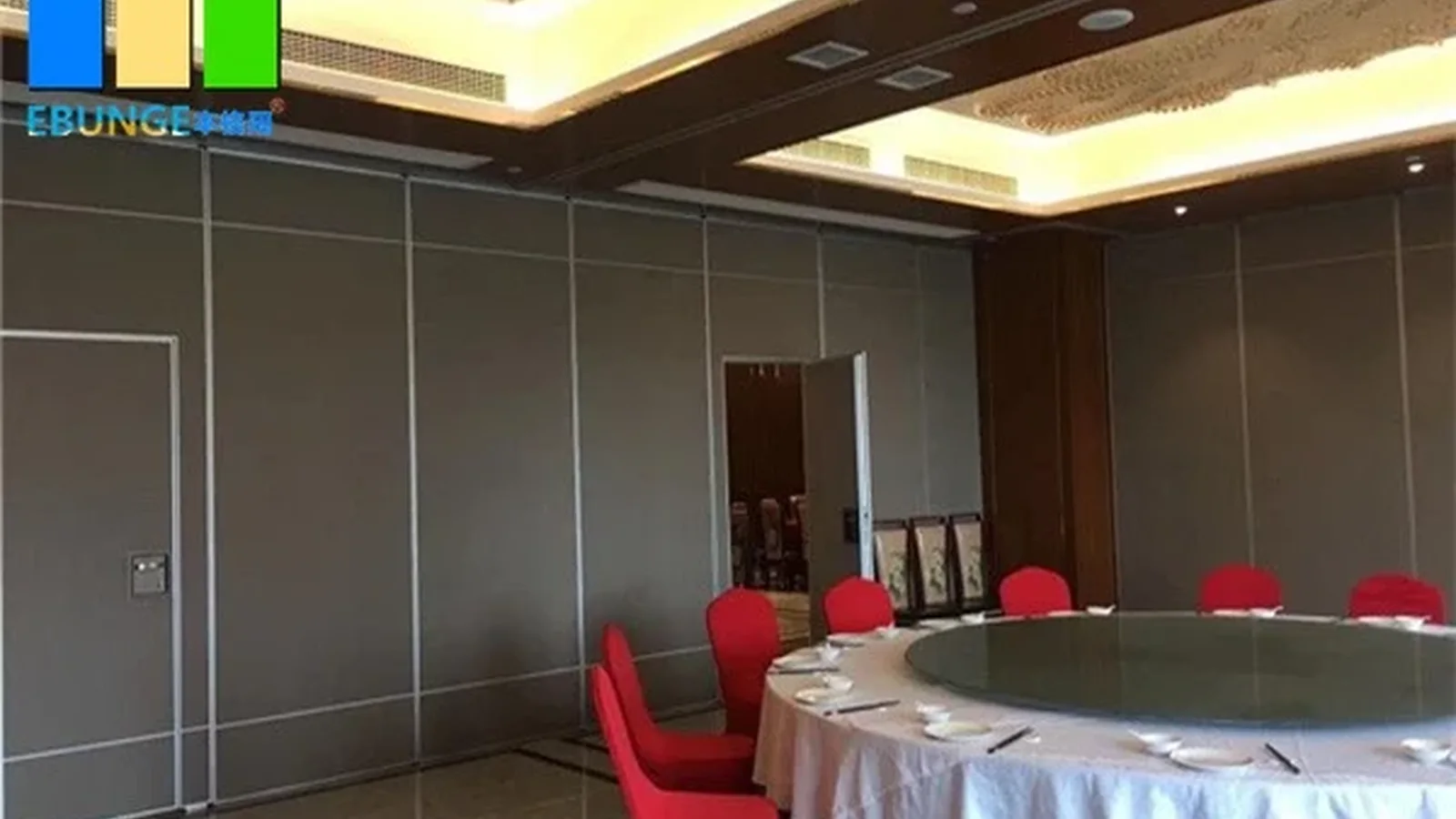
Can panel parking style be customized for an airport layout?
Panel parking style can be customized to the customer layout and project requirements, subject to coordinated drawings. A suitable approved parking arrangement can use the stacking area more compactly and coordinate with the space design. The exact track, support and panel layout still require project drawings.
How do finish choices affect care planning?
Finish materials can be customized, and cleaning and maintenance methods vary with the selected finish. The finish direction and the care method that follows it should be recorded together during drawing coordination.
Where can movable partitions be used?
Movable partitions can be used wherever flexible space division, combination or reconfiguration is required. Application examples are not limiting. EBUNGE has completed many types of hotel-related movable-partition projects, with ballrooms, wedding halls and multifunction halls as non-limiting examples.
What should buyers prepare before drawing approval?
Buyers should prepare the room layout, the intended parking style and the finish direction. These inputs support the coordinated drawings that describe the partition zone, the parking position and the overhead arrangement for the airport operable wall track ceiling review.
Continue Exploring
More Operable Wall System Guides
- Newer guideConvention Hall Operable Wall Stacking: Booth Power Clearance
- Earlier guideMovable Partition Stacking Procedures Staff Training
- Related guidePhase Operable Wall Work When a Renovation Adds a New Wing
- Related guideRoom Scheduling Rules That Decide When an Operable Wall Stays Open