
Start with the top-hung principle
Quick project answer
Staff training movable partition stacking should begin with the confirmed system principle. The EBUNGE movable partition system is top-hung and has no continuous floor running track or operating hardware in the finished floor along the partition line.
Because the system is top-hung, the floor is not cut or damaged for a floor track. The floor remains physically uninterrupted by the maintained EBUNGE top-hung system.
This principle shapes how staff understand the stacking area. The exact route, junction arrangement, continuous overhead path and parking position must be confirmed from the coordinated project drawings.
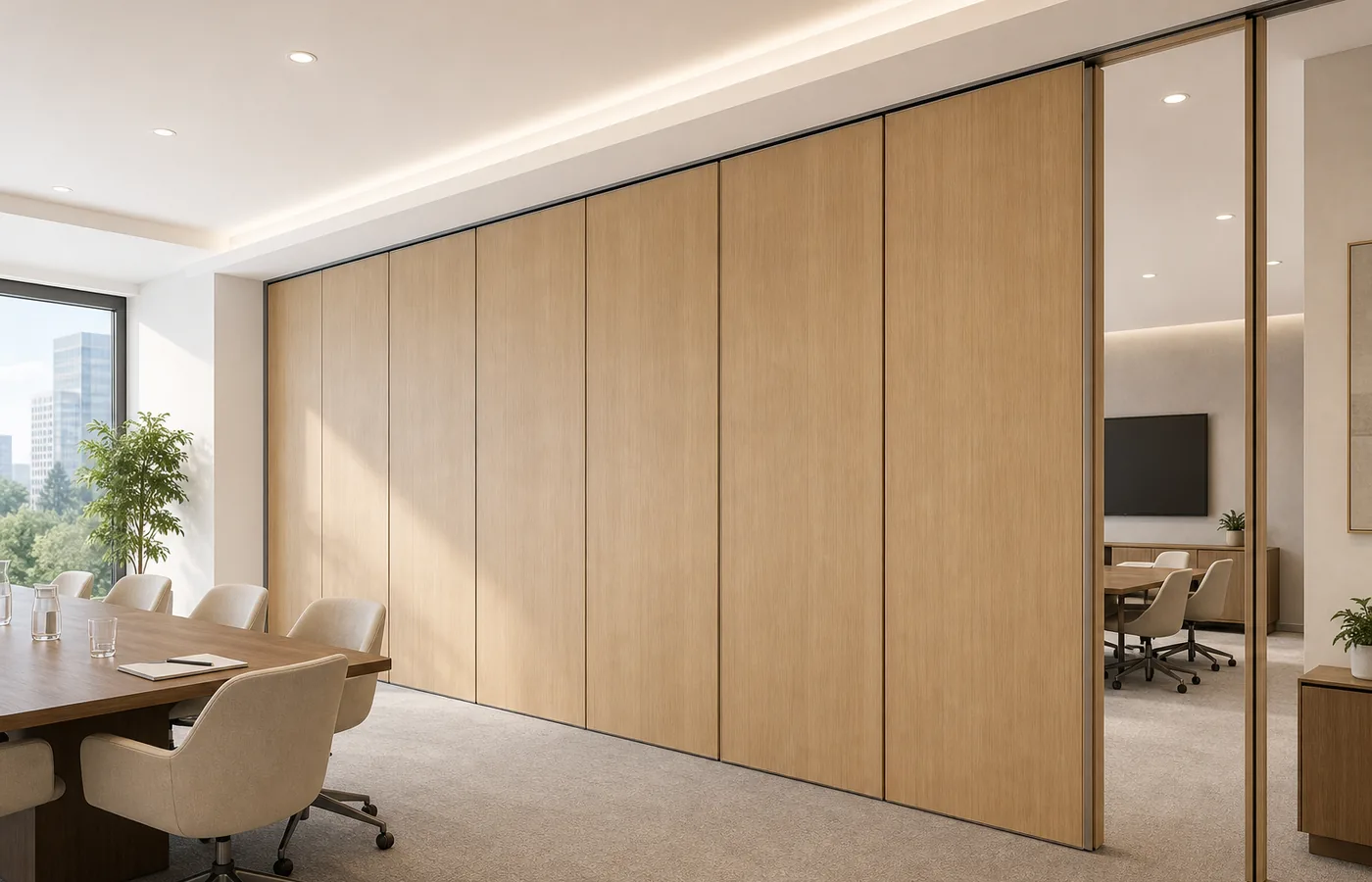
Explain the physically uninterrupted floor
An uninterrupted floor changes how a space can be used before, during and after reconfiguration. Staff should recognize that the finished floor along the partition line is not prepared for a continuous floor track.
This does not mean every floor condition is identical in every project. It means the maintained EBUNGE top-hung system does not require a continuous floor running track or operating hardware in the finished floor along the partition line.
Training should connect this fact to daily room use. Staff can describe the floor as physically uninterrupted by the maintained system, while avoiding claims about other building elements.
Plan the parking arrangement with drawings
Panel parking style can be customized to the customer layout and project requirements, subject to coordinated drawings. A suitable approved parking arrangement can use the stacking area more compactly and coordinate with the space design.
The exact track, support and panel layout still require project drawings. Staff training movable partition stacking should therefore treat the parking position as a project-specific item, not a generic sequence.
The exact route, junction arrangement, continuous overhead path and parking position must be confirmed from the coordinated project drawings.
Use scannable checks for training sessions
A training session can use simple checks to confirm that staff understand the confirmed facts. The list below is a discussion aid, not a universal operating sequence.
- Confirm the system is described as top-hung.
- Confirm the finished floor is described as physically uninterrupted by the maintained system.
- Confirm parking style is described as customizable to the customer layout and project requirements, subject to coordinated drawings.
- Confirm the exact track, support and panel layout are described as requiring project drawings.
- Confirm finish care is described as varying with the selected finish.
Coordinate finish and care topics
Finish materials can be customized, and cleaning and maintenance methods vary with the selected finish. Staff training movable partition stacking should include this point without prescribing one care method for every surface.
When a finish is selected, the care method should follow that finish. Training should direct staff to the project-specific finish information rather than a generic cleaning routine.
This approach keeps the training aligned with confirmed facts. It also prevents staff from assuming that one care method applies to every customized finish.
Review non-limiting applications
Movable partitions can be used wherever flexible space division, combination or reconfiguration is required. Application examples are not limiting.
EBUNGE has completed many types of hotel-related movable-partition projects. Ballrooms, wedding halls and multifunction halls are non-limiting examples.
No customer names, locations, quantities, ratings, certifications or outcomes may be inferred from those examples. Staff should describe applications in general terms only.
Gather buyer inputs before training
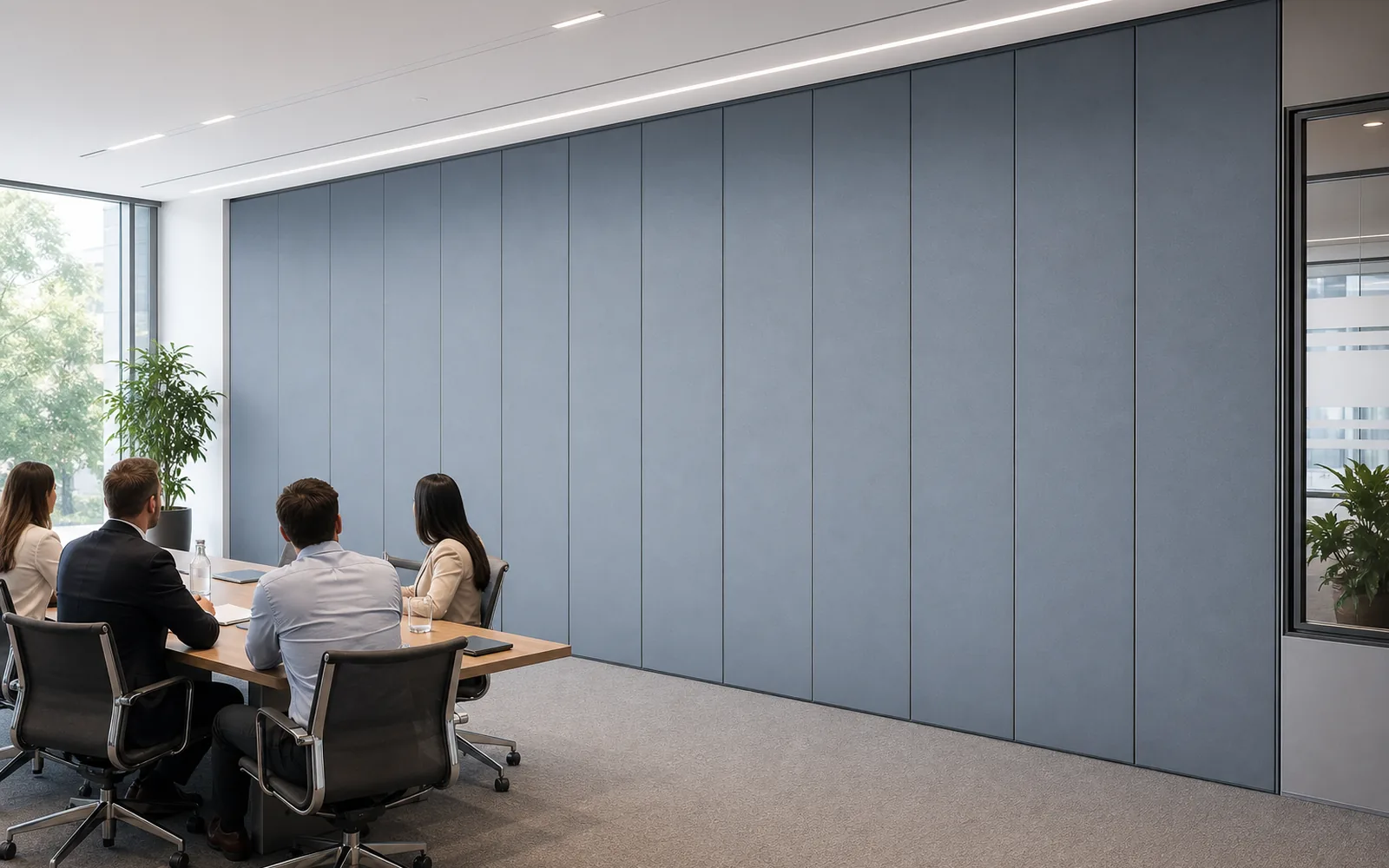
Useful staff training movable partition stacking depends on buyer inputs. The customer layout and project requirements help define the parking style, subject to coordinated drawings.
Finish selection also affects care coordination. Because finish materials can be customized, the selected finish should be recorded before staff discuss cleaning and maintenance methods.
The exact route, junction arrangement, continuous overhead path and parking position must be confirmed from the coordinated project drawings.
Confirm drawing approvals
Coordinated drawings are the reference point for parking, track, support and panel layout. Staff should not treat any of these items as fixed before the drawings are coordinated.
A suitable approved parking arrangement can use the stacking area more compactly and coordinate with the space design. That statement remains subject to the coordinated drawings.
Training should end with a clear reminder that project drawings govern the confirmed arrangement. Staff can then explain the system without inventing details.
Keep language within confirmed facts
Staff training movable partition stacking should use careful language. The system is top-hung, and the finished floor is not cut or damaged for a floor track.
The floor remains physically uninterrupted by the maintained EBUNGE top-hung system. Parking style is customizable, subject to coordinated drawings.
Finish materials can be customized, and cleaning and maintenance methods vary with the selected finish. These points form a reliable training baseline.
Link training to project references
Staff can review the movable partition wall page for general product context. They can also review projects for non-limiting examples of completed work.
These references support orientation only. They do not replace the coordinated project drawings or the confirmed facts for a specific space.
Frequently asked questions
What is the first fact staff should learn about movable partition stacking?
The first fact is that the EBUNGE movable partition system is top-hung and has no continuous floor running track or operating hardware in the finished floor along the partition line.
Does staff training movable partition stacking require a floor track?
No. The maintained EBUNGE top-hung system does not require a continuous floor running track, and the floor is not cut or damaged for a floor track.

How should staff describe the parking arrangement?
Staff should say that panel parking style can be customized to the customer layout and project requirements, subject to coordinated drawings.
Can staff choose a cleaning method before the finish is selected?
No. Finish materials can be customized, and cleaning and maintenance methods vary with the selected finish, so the finish should be confirmed first.
Which applications can staff mention?
Movable partitions can be used wherever flexible space division, combination or reconfiguration is required. Ballrooms, wedding halls and multifunction halls are non-limiting examples.
What must be confirmed from the coordinated project drawings?
The exact route, junction arrangement, continuous overhead path and parking position must be confirmed from the coordinated project drawings.
Continue Exploring
More Operable Wall System Guides
- Newer guideComparing Airport Operable Wall Track and Ceiling Security Cameras
- Earlier guideHow to Train Facility Staff on Manual Operable Wall Operation
- Related guidePhase Operable Wall Work When a Renovation Adds a New Wing
- Related guideRoom Scheduling Rules That Decide When an Operable Wall Stays Open