
Quick project answer
Movable partition finishes airport public areas require careful planning because passenger-facing zones and staff-only areas have different cleaning routines, visual expectations, and daily use patterns. The EBUNGE movable partition system is top-hung and has no continuous floor running track or operating hardware in the finished floor along the partition line. This means the floor is not cut or damaged for a floor track and remains physically uninterrupted by the maintained EBUNGE top-hung system. When specifying movable partition finishes airport public spaces, the absence of a floor track changes how you coordinate adjacent finishes and cleaning schedules.
Top-Hung Principle and Floor Continuity
The top-hung principle carries the panel weight from an overhead structure, so the finished floor along the partition line stays continuous. No continuous floor running track or operating hardware sits in the finished floor. This arrangement supports movable partition finishes airport public zones where floor finishes must run without interruption from gate areas into staff corridors.
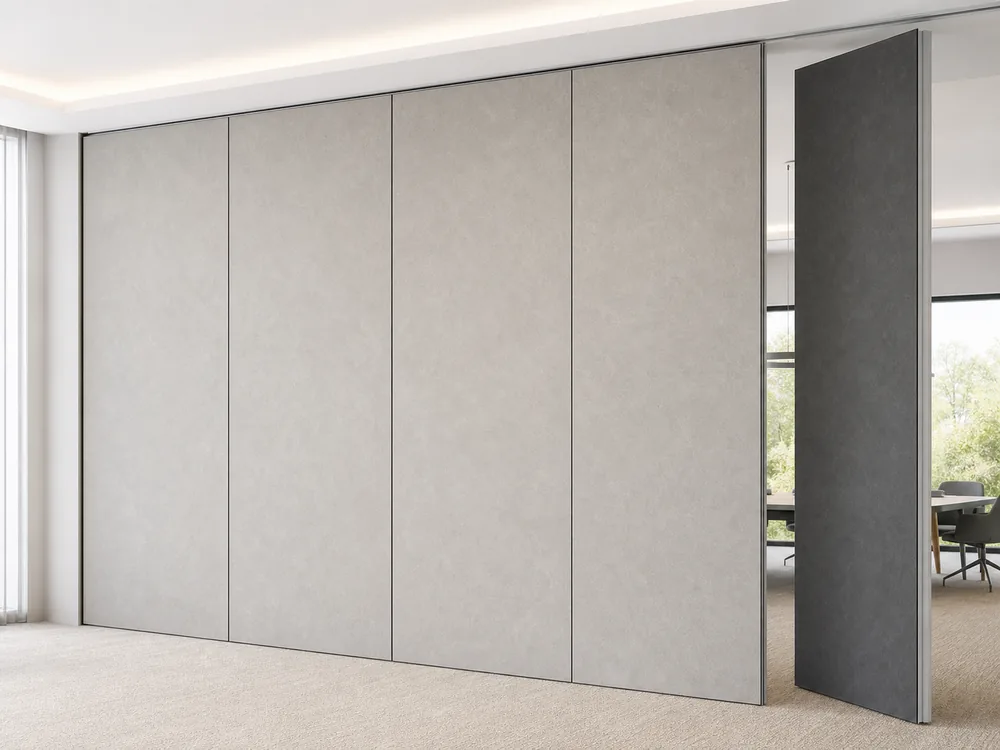
Because the floor is not cut or damaged for a floor track, the same floor finish can continue across the partition line. That continuity helps when public and staff-only zones share a terminal floor. The exact route, junction arrangement, continuous overhead path and parking position must be confirmed from the coordinated project drawings.
For more on the top-hung system, see /movable-partition-wall/.
Public vs Staff-Only Finish Selection
Finish materials can be customized, and cleaning and maintenance methods vary with the selected finish. In public zones, the selected finish may need to handle frequent cleaning. In staff-only zones, the same or a different finish may suit the area’s routine. Movable partition finishes airport public areas often prioritize visual consistency with surrounding terminal finishes.
Staff-only zones may use finishes that align with back-of-house standards. Because finish materials can be customized, the project team can choose surfaces that match each zone’s cleaning method. The cleaning and maintenance methods vary with the selected finish, so the finish choice and care plan should be coordinated together.
Do not assume one finish works for both zones without reviewing the care requirements. For movable partition finishes airport public zones, the finish selection should reflect how each side of the partition is used and maintained.
Parking Planning for Both Zones
Panel parking style can be customized to the customer layout and project requirements, subject to coordinated drawings. A suitable approved parking arrangement can use the stacking area more compactly and coordinate with the space design. In airports, parking may need to respect passenger flow and staff circulation.
The exact track, support and panel layout still require project drawings. Parking for movable partition finishes airport public zones should be planned with the same care as the partition line itself. The parking position must be confirmed from the coordinated project drawings.
Consider how parked panels affect adjacent finishes and cleaning routes. A compact stacking area can help coordinate with the space design, but the approved arrangement depends on the project layout.
Finish and Care Coordination
Finish materials can be customized, and cleaning and maintenance methods vary with the selected finish. This means the project team should link finish selection to the cleaning products and methods used in each zone. Movable partition finishes airport public areas may need a care plan that differs from staff-only areas.
Because cleaning methods vary with the selected finish, the same partition can have different care needs on each side. Coordinate the finish choice with the facilities team for both public and staff-only zones. The care plan should be documented for the selected finish.
For examples of completed projects, visit /projects/.
Non-Limiting Application Examples
Movable partitions can be used wherever flexible space division, combination or reconfiguration is required; application examples are not limiting. Airports are one setting among many. EBUNGE has completed many types of hotel-related movable-partition projects; ballrooms, wedding halls and multifunction halls are non-limiting examples.
No customer names, locations, quantities, ratings, certifications or outcomes may be inferred from those examples. The same top-hung principle applies across different settings. Movable partition finishes airport public zones are simply one planning context.
Other settings may include conference areas, training rooms, or multipurpose halls. Each setting has its own finish and care considerations.
Buyer Inputs and Drawing Approvals
Buyers should provide zone use, cleaning methods, and finish preferences for each side of the partition. Panel parking style can be customized to the customer layout and project requirements, subject to coordinated drawings. The exact route, junction arrangement, continuous overhead path and parking position must be confirmed from the coordinated project drawings.
A suitable approved parking arrangement can use the stacking area more compactly and coordinate with the space design. The exact track, support and panel layout still require project drawings. Finish materials can be customized, and cleaning and maintenance methods vary with the selected finish.
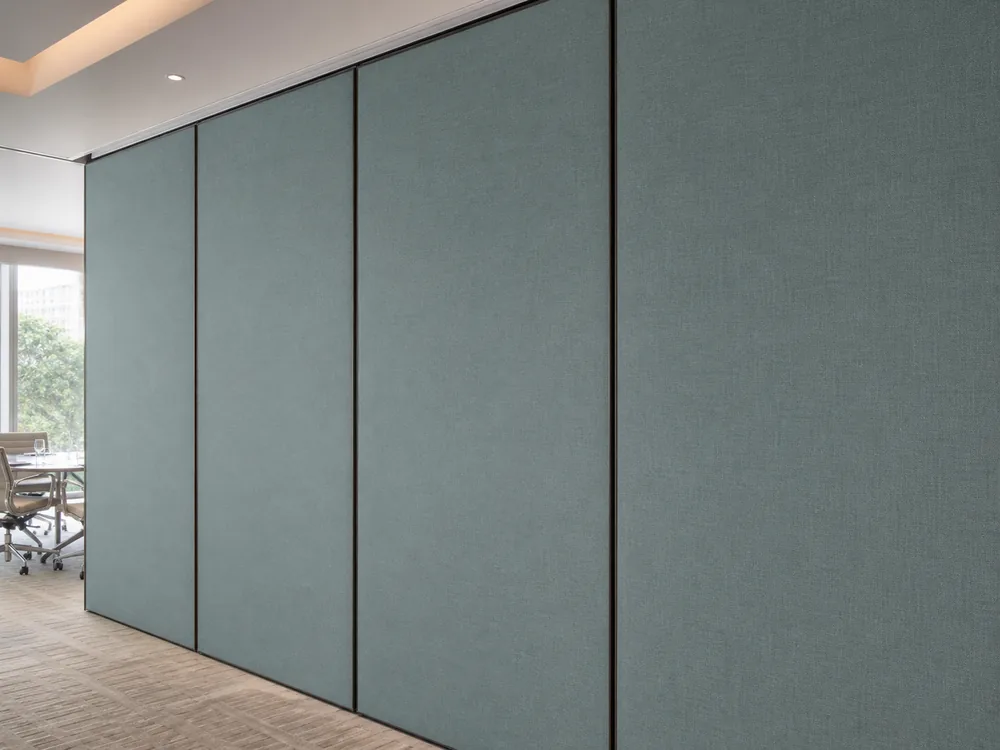
Approvals should cover the top-hung support, parking location, and finish schedule. The project drawings are the basis for confirming these items. Do not proceed without coordinated drawings.
Key Planning Checks
- Confirm the top-hung system has no continuous floor running track or operating hardware in the finished floor along the partition line.
- Verify the floor is not cut or damaged for a floor track and remains physically uninterrupted.
- Select finish materials that match each zone’s cleaning and maintenance methods.
- Coordinate panel parking style with the customer layout and project requirements.
- Confirm the exact route, junction arrangement, continuous overhead path and parking position from the coordinated project drawings.
Finish Care Comparison by Zone
| Zone | Finish Consideration | Care Note |
|---|---|---|
| Public | Customizable finish to match terminal appearance | Cleaning methods vary with selected finish |
| Staff-only | Customizable finish for back-of-house use | Cleaning methods vary with selected finish |
| Shared partition line | Finish on each side can differ | Coordinate care plan for both sides |
The exact route, junction arrangement, continuous overhead path and parking position must be confirmed from the coordinated project drawings.
Frequently Asked Questions
Does the top-hung system require a floor track in airport zones?
No. The EBUNGE movable partition system is top-hung and has no continuous floor running track or operating hardware in the finished floor along the partition line. The floor is not cut or damaged for a floor track and remains physically uninterrupted.
Can movable partition finishes airport public areas differ from staff-only areas?
Yes. Finish materials can be customized, and cleaning and maintenance methods vary with the selected finish. The project team can choose finishes that suit each zone’s use and care routine.
How is panel parking planned for airport projects?
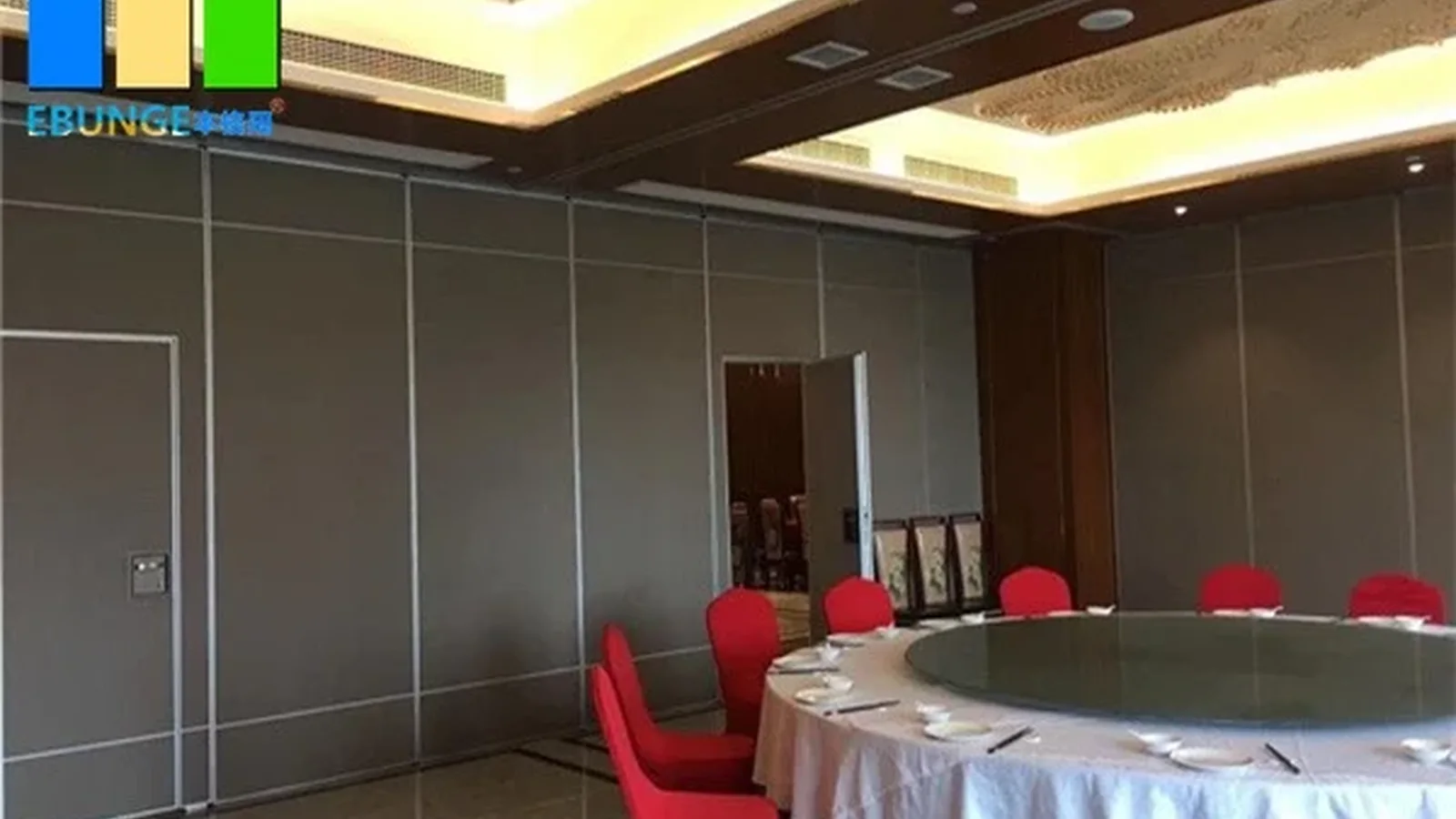
Panel parking style can be customized to the customer layout and project requirements, subject to coordinated drawings. A suitable approved parking arrangement can use the stacking area more compactly and coordinate with the space design.
What must be confirmed from the coordinated project drawings?
The exact route, junction arrangement, continuous overhead path and parking position must be confirmed from the coordinated project drawings. The exact track, support and panel layout also require project drawings.
Are there non-limiting application examples for movable partitions?
Movable partitions can be used wherever flexible space division, combination or reconfiguration is required; application examples are not limiting. EBUNGE has completed many types of hotel-related movable-partition projects; ballrooms, wedding halls and multifunction halls are non-limiting examples.
How should cleaning be coordinated with movable partition finishes airport public zones?
Finish materials can be customized, and cleaning and maintenance methods vary with the selected finish. Coordinate the finish choice with the facilities team for both public and staff-only zones.
Continue Exploring
More Materials and Finishes Guides
- Newer guideComparing Auditorium Partition Finishes for Mobile Lecterns
- Earlier guideConvention Halls vs Exhibit Floors Movable Partition Finish Planning
- Related guideWho Verifies Partition Handover Records When Trades Finish at Different
- Related guideMovable Partition Finish Sample Coordination Guide for Interior