
For healthcare training rooms, the integrity of movable partition systems is paramount. These spaces often host critical instruction, simulation, and collaborative sessions where acoustic separation and a clean, hygienic environment are non-negotiable. A robust healthcare training room partition seals maintenance inspection checklist is not just a recommendation; it is a fundamental part of responsible facility management. This guide provides a structured approach to inspecting and maintaining the seals and related components of your movable partitions, ensuring they continue to perform as intended. Always confirm project-specific support, acoustic, and dimensional requirements with your supplier.

Why a Dedicated Inspection Checklist for Healthcare Training Rooms?
Healthcare training rooms differ from typical office or hotel spaces. They are subject to more frequent use, often with movable furniture and equipment, and they demand higher standards of cleanliness and acoustic control. The seals on movable partitions in these environments play a critical role in achieving the required acoustic separation and preventing the transfer of light, dust, and sound. A proactive maintenance inspection routine helps identify wear and tear early, preventing minor issues from escalating into costly repairs or operational disruptions.
Moreover, healthcare facilities are often subject to stringent regulatory and accreditation standards. A documented maintenance history demonstrates due diligence and can be a key component of compliance audits. By implementing a systematic inspection checklist, you not only protect your investment but also ensure a safe, effective learning environment for healthcare professionals.
Understanding the Role of Partition Seals
Partition seals are the flexible components that compress against the floor, ceiling, and adjacent panels to form a continuous barrier. They are essential for achieving the rated acoustic performance of the partition system. In simple terms, acoustic ratings like STC (Sound Transmission Class) or Rw (Weighted Sound Reduction Index) are measures of how much sound is attenuated by a building element. A higher rating indicates better sound insulation. However, these ratings are only achievable if the seals are in good condition and properly adjusted. Even a small gap can significantly compromise acoustic performance.
In healthcare training rooms, seals also contribute to hygiene by reducing the passage of dust and airborne particles. Therefore, their maintenance is not just about acoustics but also about infection control and environmental quality.
Share inspection photos and interface details for review.
The Maintenance Inspection Checklist: A Step-by-Step Guide
This checklist is designed to be practical and actionable. It covers the key components of a movable partition system, with a focus on seals and their interaction with other parts. Remember, this is a generic guide; always refer to the manufacturer’s specific recommendations for your system.
1. Visual Inspection of Seals
Start with a thorough visual inspection of all seals, including those along the bottom, top, and vertical edges of each panel. Look for:
- Cuts, tears, or punctures in the seal material.
- Signs of excessive wear, such as flattening or cracking.
- Dirt, dust, or debris buildup on the seals.
- Discoloration or staining, which may indicate moisture or chemical exposure.
Any damage should be noted and addressed immediately. In healthcare environments, even minor damage can harbor contaminants.
2. Seal Compression and Adjustment
Proper seal compression is critical for acoustic performance. Over time, seals may lose their elasticity or become misaligned. Check that:
- Seals make consistent contact with the floor and ceiling when the partition is closed.
- There are no visible gaps between the seal and the mating surface.
- The compression is uniform along the entire length of the seal.
If adjustments are needed, they should be performed by qualified personnel using the appropriate tools, as specified by the manufacturer. Never attempt to adjust seals without proper training, as this could cause damage.
3. Track and Hanger Inspection
The top track and hangers are the primary support system for the panels. Inspect them for:
- Signs of wear on the track surface, such as grooves or burrs.
- Loose or damaged hanger bolts or brackets.
- Accumulation of dirt or debris in the track, which can impede smooth operation.
- Any unusual noises when the panels are moved.
Remember that these partitions are suspended from a top track and cross the opening without a floor track. This design means the top track is critical for both operation and alignment. Regular cleaning and lubrication of the track (using manufacturer-recommended lubricants) can prevent premature wear.
4. Panel Alignment and Operation
Check that panels are aligned correctly when closed and that they move smoothly along the track. Misalignment can put undue stress on seals and reduce their effectiveness. Test the operation of the panels by moving them along the full length of the track, including any turning or stacking routes. Note any hesitation, sticking, or misalignment.
This is also a good time to verify that the panels park correctly at the planned stacking position. If panels do not align perfectly, it may indicate a track or hanger issue that needs attention.
5. Pass Door Inspection
If your partition includes a pass door, inspect it thoroughly. This is a common point of wear and potential air leakage. Check:
- The condition of the door seals and gaskets.
- That the door closes and latches securely.
- That the door hardware (hinges, handles) is in good working order.
- That the door alignment is correct, with no visible gaps.
6. Hardware and Fasteners
Inspect all visible hardware, including locks, handles, and release mechanisms. Ensure that all fasteners (screws, bolts) are tight and secure. Loose hardware can cause rattling noises and compromise the structural integrity of the partition. Pay special attention to any hardware that is frequently used, such as the locking mechanisms that secure panels in place.
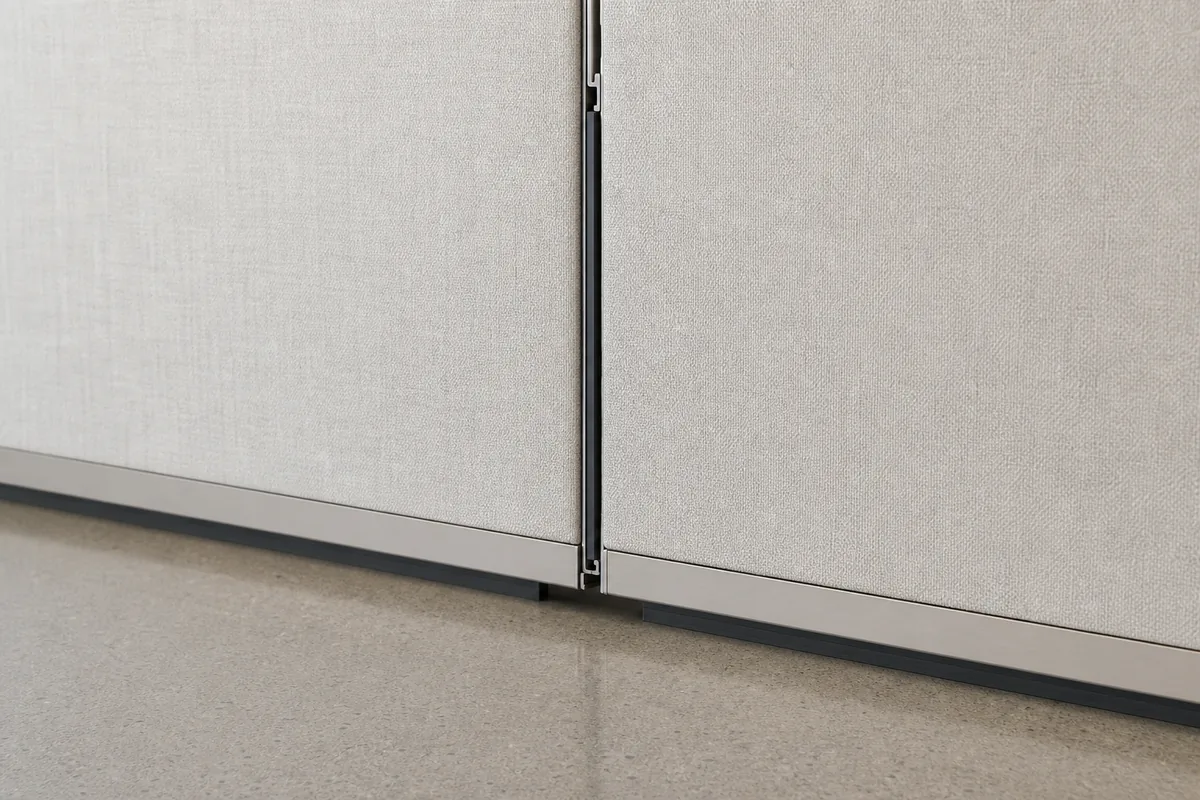
7. Cleaning and Hygiene
In a healthcare setting, cleaning is not just about aesthetics; it is about infection control. Establish a regular cleaning schedule for the partition surfaces and seals. Use cleaning agents that are compatible with the partition materials (laminate, melamine, fabric, leather, glass, or other approved surfaces). Avoid abrasive cleaners that can damage the surface or seals. For fabric or leather surfaces, use appropriate vacuuming or gentle cleaning methods.
Pay special attention to the seals, as they can accumulate dust and microbes. Wipe them down with a damp cloth and a mild disinfectant, following the manufacturer’s guidelines. Always test any cleaning agent on a small, inconspicuous area first.
Record the condition before coordinating corrective work.
Documentation and Record Keeping
Maintain a log of all inspections and maintenance activities. This log should include:
- Date of inspection.
- Name of the inspector.
- Any issues found.
- Actions taken to resolve issues.
- Any recommendations for future maintenance.
This documentation is invaluable for tracking the condition of the partition over time, identifying recurring issues, and providing evidence of proper maintenance for warranty or compliance purposes. It also helps in planning for future maintenance or replacement of components.
When to Call a Professional
While many inspection tasks can be performed by in-house maintenance staff, certain situations require professional expertise. If you notice:
- Significant damage to seals or panels.
- Persistent alignment issues that cannot be resolved by simple adjustments.
- Unusual noises or difficulty in moving panels.
- Concerns about acoustic performance.
It is advisable to contact a qualified service provider. They have the training and tools to diagnose and rectify complex issues. Additionally, if your partition system is under warranty, professional service may be required to maintain the warranty validity.
Project-Specific Considerations
Every healthcare training room is unique. The layout, usage patterns, and acoustic requirements will influence your maintenance needs. For example, a room with a straight route and a simple stacking position may require less frequent adjustments than one with complex turning routes. Similarly, a room used for high-impact simulation exercises may experience more wear on seals than a typical lecture room.
When planning your maintenance program, consider factors such as:
- Frequency of use.
- Type of activities conducted.
- Environmental conditions (humidity, temperature).
- Cleaning protocols.
Tailor your inspection checklist to address these specific factors. For instance, if your training room is used for procedures that generate fine dust, you may need to clean the seals more frequently.
Frequently Asked Questions
How often should partition seals be inspected in a healthcare training room?
We recommend a monthly visual inspection as part of routine facility checks. A more detailed inspection, including seal compression and track condition, should be conducted quarterly or semi-annually, depending on usage intensity. High-use rooms may require more frequent inspections.
Can I replace partition seals myself?
Seal replacement can be a straightforward task, but it requires the correct replacement parts and proper installation techniques. If you have the necessary skills and tools, you may be able to do it. However, for complex systems or if you are unsure, it is safer to engage a professional. Incorrect installation can compromise acoustic performance and lead to further damage.
What are the signs that a partition seal needs replacement?
Visible signs include cuts, tears, flattening, or loss of elasticity. You may also notice increased sound transmission through the partition or visible light gaps. If the seal no longer makes consistent contact with the floor or ceiling, it is likely time for replacement.
How does the lack of a floor track affect maintenance?
Because the partition is suspended from a top track, there is no floor track to clean or maintain. This simplifies floor maintenance and reduces trip hazards. However, it places greater importance on the top track and hangers, which must be kept clean and properly aligned.
What documentation should I keep for partition maintenance?
Keep a log of all inspections, including dates, findings, and actions taken. Also retain records of any repairs or replacements, including parts used. This documentation is useful for warranty claims, compliance audits, and planning future maintenance.
Can cleaning agents damage partition seals?
Yes, certain chemicals can degrade seal materials. Always use cleaning agents recommended by the manufacturer or those that are safe for the specific seal material. Avoid solvents, abrasive cleaners, and high-pressure washers. Test any new cleaning product on a small area first.
Conclusion
Implementing a structured maintenance inspection checklist for your healthcare training room partition seals is a smart investment in the longevity and performance of your movable partition system. It ensures that the acoustic separation and hygienic environment that your training rooms require are consistently maintained. Regular inspections, prompt attention to issues, and proper documentation will help you get the most out of your partitions.

For more detailed guidance or to discuss your specific project requirements, please contact our team. We are here to help you with everything from initial planning to ongoing maintenance support. Explore our movable partition products and project references to see how we can assist you in creating flexible, high-performance training spaces.
Continue Exploring
More Maintenance Guides
- Newer guideWhat Maintenance Inspection Checklist Applies to Community Hall Partition Track with Floor Recesses
- Earlier guideRestaurant Function Room Partition Maintenance vs Hotel Banquet Planning
- Related guideWhat Maintenance Inspection Checklist Applies to Office Meeting Suite Partition Track at Ceiling-Mounted Rigging Point Zones
- Related guideWhat Maintenance Inspection Checklist Applies to University Auditorium Partition Stacking at Floor-Mounted Stage Pockets